
In the Andes we talk about working with “both hands,” meaning working the “right side” and the “left side” of the path. While paqos tend to be more adept at one side of 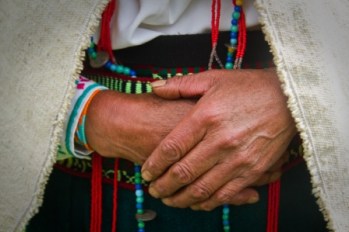 the path or the other, the ideal is to integrate the powers of both. The word mast’ay refers to bringing order, usually in relation to making a despacho. But as runa mast’ay it means to bring order and wholeness to the self. It is about putting ourselves into order through more perfect ayni—offering ourselves (our intention and energy) as perfectly as possible to the kawsay pacha, or, as the Christianized tradition would say, to the Holy One. This process of restoring or fostering wholeness begins with mastering both “sides” Andean practice.
The Right Side of the Path
The right side of the path, paña, is often called the mystical side of the work. It is a path of yachay, or knowledge. This is the work of accumulating the personal power to be able to meet with and dialogue with the spirit beings by ourselves, with no need for an intermediary. We accumulate that power by cleansing our poq’pos (energy bodies) of hucha. The less hucha (and thus the more sami, or refined kawsay) we have, the clearer our intent, the more perfect our ayni, and the more effective our abilities are as paqos. The great teacher of ayni, and a core practice of the right side, is the despacho. The despacho at its core is always a tawantin, which is the symbol or structure of wholeness.
In addition to connecting you to the spirit beings, such as the apus, inti (the sun), and other nature spirits, the right side energies also connect you to the old master paqos and their lineage. This work is associated with the misha, the “power bundle” that  usually contains khuyas (sacred stones and objects) gifted to you from teachers, acquired from other sources such as sacred sites, or selected because they are meaningful in your life. Your teachers, however, don’t only have to be humans. The apus—mountain spirits—especially are tutelary spirits. Paqos often are in “service” to one or more apus, which serve as their guiding stars. A paqo may also have a single celestial star as an anchor in this life and a guide to the next life. Being able to establish a relationship with, dialogue with, and learn from both human and spirit teachers is a mastery of right-side work.
While ayni (clear intent and a “clean” poq’po) is paramount to right-side work, most of this work is energetically initiated from the qosqo, the power center at the belly area. From the qosqo we send out seqes, cords of energy, that connect us with the world beyond ourselves. We can send cords across time and space, and these cords of energy can become conduits for the transfer of information. When I teach the paña workshop, I always send participants into the outdoors to play with their qosqo energy dynamics, practicing sending seqes to different kinds of “beings,” from a flower to a lawn chair to a buzzing bee. Most have fun with this exercise and then, I suspect, forget about it. They don’t continue to practice perceiving energy relationships after they leave the workshop. Not doing so ensures they will never master the right side of the path. Energy relations are everything in this tradition, and working with the qosqo to become exquisitely sensitive to energy connections is paramount to Andean practice. Honing this perceptual skill is a primary right-side pursuit.
We don’t just perceive through our qosqo, however. We “see” through all twelve of our ñawis (energetic eyes), although mostly through the seven primary ones (at the tailbone, belly, heart, throat, two physical eyes and seventh eye) and the four primary chunpis (belts of power). In fact, we perceive through our entire poq’po, making all  kinds of connections through it. Juan joked once that our poq’pos look like porcupines because there are seqes emerging from all directions over the entirely of our energy bubbles.
The right side is the part of the path where we also work with the three worlds: the immaterial upper world (hanaq pacha), this material world (kay pacha) and the lower world (ukhu pacha). There are many ways to work these realms, but in this context it is about our ayni flows. We pull sami from the upper world (from the perfected spirit beings and the Holy One) or this world (from Mother Earth or the beings of nature) to empower ourselves. We send sami to the beings of the lower world, who don’t know ayni, to empower them.
The Left Side of the Path
The left side of the path, lloq’e, is often called the magical side. It’s the path of llank’ay—of action. It is magical in that we harness the supernatural inside of ourselves (energy and intention) to do work in the human, material, and natural world. Thus, whereas paña is the path of knowing, lloq’e is the path of doing. It’s all about the use of your personal power right here in the human world.
The left side is predominantly the path of healing and of the chunpis (belts of power). 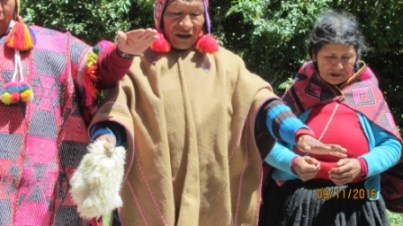 Each of the chunpis encodes or confers potential abilities. At the throat, there is rimay, the capacity to speak as who you really are; at the heart is munay, the capacity to choose love and compassion using your will, and kanay, the ability to know who you really are and live it; at the belly is khuyay, the capacity to engage the world and relationships with passion; and at the hip area is atiy, the ability to take right action at the right time according to knowing and living as who you really are and according to your amount of personal power (ayni).
The left side of the path fosters in us the ability to use our powers on behalf of ourselves and others. If you have personal power, as a paqo you are obligated to use it. You can do that in any number of ways: through offering a despacho, doing saminchakuy or hucha mikhuy on another’s energy body, and so on. One of the primary actions of the left side is healing. According to the Andean tradition, no one can trump another person’s will, so in reality all a healer can do is create the energetic conditions to help their client activate their own self-healing capacities. But the mechanism by which that happens is mysterious, often purely energetic (and thus invisible). That’s why healing can appear to be both magical and miraculous. In fact, this is partly why the left side is said to be an integration of the supernatual and the natural inside the human body.
In the lloq’e workshop, participants are taught to bring deep coherence to their poq’po and all the ñawis and chunpis. Even more important, perhaps, is the goal of weaving our energy body into a single system. For most practitioners, their energy body is compartmentalized. The separate parts of the energetic anatomy have not been integrated into a whole. They may be adept at communicating their knowledge, and so working through the belt at the throat, but unable to manage or communicate their emotions (at the belly). In the left-side work, we weave everything together so that we can work at mastering all of our gifts and all three human powers (yachay or knowledge, munay or love, and llank’ay or actions). You can think of this state as the difference between being a skeleton that is a collection of connected bones and a body that is interwoven together with muscles, tendons, nerves, and so on. There is some connectivity in the first state, but it doesn’t hum with life yet. In the lloq’e work as well we enlist the wisdom and assistance of eight spirit helpers. They hold the space for capacities within that are as yet underdeveloped in us. They model for us ways of being and doing in all spheres of our humanness.
To fully develop as a paqo and, more importantly, as a human being, we have choose conscious evolution and use the tools that help us evolve. This information provides a basic overview of the right and left sides of the Andean path and how they, together, can help us achieve the fullness of being . It is more than enough information, I hope, both to persuade you that it pays to know about both sides of the path and to motivate you to learn to work with both “hands.”
 the darkness. Within our reality everything exists through an interconnected web of relationships and the building blocks of this web are bits of information. We process, synthesize, and observe this information in order to construct the reality around us. As information spontaneously emerges from the emptiness we take this into account to update our view of reality. The laws of Nature are information about information and outside of it there is just darkness. This is the gateway to understanding reality.”
 animating energy and information is the material universe, which is called Pachamama. All we can really know is the Pachamama, although through ayni we can interact with and even influence the immaterial kawsay pacha. Quantum allows for the possibility of a participatory universe. Andean mystics would turn that uncertainty into certainty, as according to their cosmovision, energy not only is responsive to information (including intention, human consciousness) but must follow intent.
 moving).
 So entropy as information content is not in the object but on its surface area. “It is a relational property of the object in connection with the rest of the universe.” (For clarity, be aware that entropy here is from the context of information theory, not kinetic energy theories, and refers to how much information can be contained within that event. The more uncertain or random an event is, the higher its information content. But mostly we are concerned here with Vedral’s statement about boundary and surface area as being of greatest account in the relations between two objects and the information that can be gained through that interaction.)
 skin, just like we would wash the skin of our bodies.
 I have said in the past, and continue to stress, that the Andean tradition is a path of joy and well-being. But that joy and well-being don’t just happen. You have to use the practices of the tradition to achieve them. That said, the practices are not “work.”They are joyful themselves, and they don’t take a PhD to understand or use.
 is just slowed or blocked kawsay/sami. It is not dirty or contaminating, but it can affect your ability to be in effective reciprocity (ayni) with the living universe. Saminchakuy gets this slowed kawsay (hucha) moving again, and by doing so tremendously improves your capacity for well-being. You could also say, again metaphorically, that in relation to your well-being, it ramps up your energetic immune system.
 (as a result, it is also called mishachakuy: literally taking action with the misha). Like a despacho, the misha is a great eater of hucha. The downward movement of the misha (or a despacho bundle) over the body is a type of saminchakuy. They usually make sure they run the misha or despacho over all twelve ñawis (mystical eyes) and four chunpis (energetic belts), cleansing them of hucha and empowering them with sami. If you don’t know or understand saminchakuy, you might miss the actual intention of what they are doing with their mishas and despacho bundles.
 for creating a coherent and “clean” poq’po, so it directly impacts your capacity for ayni (or, to put it another way, your personal power ). It also impacts the quality of your consciousness. As you cleanse your energy body, you perfect your ayni, which in turn helps you move up the stairway of the seven steps of consciousness. This is why don Benito Qoriwaman said that with saminchakuy alone (often supplemented with the empowering companion practice of saiwachakuy), you can reach the sixth (and possibly the seventh) level of consciousness. Saminchakuy, thus, is absolutely fundamental to your practice as a paqo and your personal development as a human being.
 others—the revolution as conscious evolution starts within.
 state of being. As writer and teacher Marianne Williamson says, every moment is a choice about your “ministry.” Will it be a ministry of fear or one of love (munay)? Does it arise from respect or does it only marginalize or denigrate? Long before Williamson was a public figure, she was a cocktail waitress. She decided that her ministry was to be the best, most life-affirming waitress she could be. The bar where she worked was her “church.” She started right where she was and as who she was—a waitress in a bar at a restaurant—and did not defer her work until she had a larger stage or a different environment. Most important, she started by deciding who she wanted to be, before she started acting on that state of being.
 The medieval mystic Kabir reminds us that when it comes to outward gestures, “Why run around sprinkling holy water? There’s an ocean inside you, and when you’re ready you’ll drown.” The mystical drowning is not life threatening, but life affirming.
 those of us on the Andean path. It’s a time to do our personal inner work, so as we change, grow, and transform we contribute to the greater well-being of the world.
 than is the more domesticated mountain puma. Paqos work with the mountain cats, not the jungle cats.
 we still need to release hucha, our focus in the Taripay Pacha, as creatures of conscious evolution, is to increase the sami in ourselves and foster it in others. This is a huge conceptual shift. It is almost like making a shift from carrying the burden of original sin to celebrating ourselves as creatures of original virtue. You can see how massive a change this shift in perspective can engender as we move our focus from releasing to generating, from reducing hucha to actively increasing sami.
 The symbols of wholeness are the tawanatin and the chakana. The chakana is the Andean cross, but it is more than a symbol of an empire or a culture. It is a symbol of a living tradition—of a bridge between cultures. As Juan Nuñez del Prado says, we are each a chakana—we are people who are building a bridge between traditions and fostering the shift from one age to another, more evolved age.
 to the salka (the unrefined, the wild), although that might be stretching the metaphor a bit.
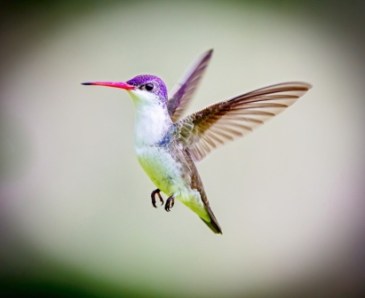
 Q'enti Wasi - House of the Hummingbird