In my last post (April 8), we took a look at how not all apus are mountains and not all mountains are apus. In this post, we will consider how both mountain apus and non-mountain apus can be sources of power for us, aiding us in our personal conscious development.
Let’s start by acknowledging that we are not Andean paqos. We are American, French, Spanish, British,  Thai, Swedish, Mexican, South African practitioners of the Andean mystical tradition. The concept of apus as paqos who after their physical death inhabit mountains to serve as guides and teachers to human beings in one sense is purely cultural, a concept indigenous to the Andes. In another sense, the apus can be “translated” into a concept that is universal, as just about every tradition or culture recognizes that natural formations can be “sacred” sites. We can make a literal equivalence to the concept of Andean apus as mountain spirits and sources of power by identifying those mountains in our area or country that have historically been recognized as being special, sacred, or otherwise called out in some uncommon way. If we trace the history of the First Nation peoples in our area, we will likely find that they related to certain mountains (and other natural formations) in ways distinct from other natural features. That’s a clue that they in some way venerated that mountain (venerated as in “esteemed” rather than “worshipped”). If that is the case, then we, too, can establish a relationship with that mountain as a source of power. From the Andean perspective, there is no issue of cultural appropriation, as sources of power are available to all human beings. We use our Andean energy dynamics to access that power, rather than appropriating the rituals of the local cultural group who might be most associated with that mountain or sacred site.
What do I mean by a “source of power”? In terms of the Andean tradition, this mountain or natural formation is a source of sami, of the life-force energy. From the Andean mystical perspective, everything in nature is sami, but “sacred” sites, including apus, are considered to be collectors of sami, so they concentrate sami and can act as runa micheqs, or shepherds of human beings. We can work with them as particularly robust generators of sami and also as beings who can teach and guide us.
Let’s look briefly at mountain apus as guides for human beings. Don Juan Nuñez del Prado says, “The apus are real beings. You can talk with them. They can talk to you. They can teach you.” How do we connect with a mountain apu as a teaching or guiding spirit? The same way we develop any relationship, by establishing a personal connection with it. We introduce ourselves and allow the apu to relate back to us. Don Juan explained this to me in very direct terms: “How do you do it? You meet me and I meet you. After I meet you [and spend some time talking with you], I can say I know who Joan Parisi Wilcox is!” The Andean energy dynamics are that simple and direct. We don’t need to do elaborate rituals; we just need to be ourselves and establish a personal ayni relationship with the spirit beings, including with apus.
From the fourth level of practice, however, the apus are more than literal mountain spirit beings. An apu can be any source of power—a temple or sanctuary, or a statue or other physical symbol of importance in the development of a place, people, and culture. We are always absorbing sami, and we can “charge” ourselves and increase our well-being by taking in the sami that is especially concentrated through this form of “apu.” Taking in this concentrated sami helps us to release our hucha (heavy energy) more quickly, and it strengthens and invigorates us. The more sami-filled we are, the more easily we can progress up the qanchispatañan, the stairway of the seven stages or levels of human conscious development. This less literal kind of apu can serve as an engine of power for our personal development. Remember, the fourth-level approach to practicing the tradition is based on the view that our poq’po, our energy body or energy bubble, is more than energy—it is an information field that can be equated to our psyches, our minds. Our energy work is all about restructuring ourselves, improving ourselves, stepping up the qanchispatañan of consciousness.
Don Ivan Nuñez del Prado beautifully explains the more abstract way we can think about what we are doing when we connect with either an actual apu or with the less literal form, such as a sacred site or other non-mountain structure (or even a person). “[When I think] of the relationship between us and the earth, with places of power and so on—for me, this is your projection, as those places are going to stimulate some part of your psyche. They will be symbols, many times archetypal structures outside the self that represent the energies projected from inside yourself. . . . You are working with those power places . . . but you are actually dealing with your inner world and energy. It’s like a big despacho—the world is like a big despacho—and you are relating with the parts and adjusting it, and these energies are going to organize the self.”
One way we work this outer source of sami as fuel for our inner development is to relate first to the “apus” of the place where we live, and then move from the local to the regional to the national, expanding our range energetically and, we hope, developing ourselves in greater ways as we do. So, we would start by working with an “apu”  that is an important carrier of the information and energy of the place where we live. This “apu” is our energetic ancestor, not in the sense of our personal bloodline ancestors, but as one of the ancestors of the place we find ourselves at currently, of our physical location on the back of Mother Earth. These “apus” are geographical and cultural ancestors, because they are creators of the poq’po—the energy bubble—of the place where we reside. We might not like the place we live right now; it might not feel like home. This emotional discomfort may have its roots in an energetic disconnect. So, we can shift that emotional state by using our will and intention to establish an ayni relationship with the bubble of that place. We can take action by working with one or more of these local “apus,” who can help us feel at home right where we are, more fully and deeply grounded with that patch of Pachamama. The connection creates an inner equilibrium so that we can work energetically without distraction or discomfort. Once we connect with the “apu” of our town, we can then work outward, expanding the energy bubbles (“apus”) we work with to our state or province and then to our country. By forming ayni relationships with these sources of power, we can enlarge our karpay (how much of our potential we are actually accessing), which helps us progress up the qanchispatañan.
Don Ivan explains the concept of the apus as energetic ancestors in this way: “You need to build a healthy relationship with the ancestors. We all need to do that. So, if you are related with the apus at different spheres and levels, you are relating with the actual people who built that bubble as an energy field. You need to have a healthy relationship with the ones who established the foundations of the bubble where you live. That is the ayni relationship with your ancestors. If you develop a healthy ayni relationship—and you know ayni is about giving and receiving—you are going to have something to offer and you are going to get something from them.”
At this more abstract level of “apu,” what is the source or engine of power? Anything that represents and connects you to the originating imprinted information and energy field. In your town, maybe there is a statue of the founder. That statue would be your “apu,” the doorway through which you connect with the founder as a source of power. (Doing research is a good idea, because maybe the founder of your town was more hucha-filled than sami-filled. If that’s the case, you can shift to working with a different local “apu.”) Once you have established a relationship with the ayllu (local) “apu,” you can then reach out and access a laqta (regional) “apu,” which would be something or someone venerated in your state or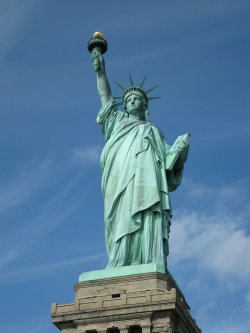 province. Finally, you can connect with a suyu (national) “apu.” We can connect with people of the past because when human beings die, their spirit returns to the hanaq pacha but their soul (experience and knowledge as a human being) is imprinted in the Earth. Through that information imprint, we can access people from the past and their wisdom.
Don Juan explains this concept of working an increasingly larger scale of “ancestor apus” as follows: “If you were [born or currently live in] in Texas, who can be your [llaqta] apu? It could be Davy Crockett! Who could be your suyu apu? Thomas Jefferson. Or John Adams or any of the founding fathers of the nation. This is the kind of ancestor we work with. We can relate with a whole scale of people who [have done] something important in your tradition; this is relating with your ancestors in the Andean way. You don’t try to use the apu structure literally, as the [physical] mountains of North America. If you follow don Benito and how Manuel Pinta was made an apu, it means every apu is an expression of the development of the tradition [the energy of the people within the tradition who helped develop it]. In that way, George Washington and Thomas Jefferson are suyu apus. They each have a character that can teach you something. Every apu has a character: Washington was a general, Jefferson was a philosopher. This is the way you work. Your [culture] didn’t develop a system like the apus [as mountain spirits] in the US. But you can make a translation. Apu Ausangate can be seen as Thomas Jefferson! The source of power can be Monticello. Washington can be your apu, and the Washington monument a source of power. You can connect with them [each] as an apu. You need to translate, but every one of them has a certain kind of property [that can teach and guide you].”
Following this path of translation—which focuses not on the literal outer representation of an “apu” but on the energy exchanges we can make with it as a source of sami and power for our personal development—just about anything that has meaning for you can be your “apu.” From a small-town statute to a national symbol to an international wonder such as Stonehenge or the Giza Pyramid. We start local, at the ayllu level, with an apu that helps us become grounded and connected right where we are, comfortable and at home. This is essential for our cultivating the inner state by which we can then consciously develop ourselves. Then we work up to greater sources of power. At the llaqta level, we are being guided by a power source of our state or region. Then we will be ready to relate to a suyu apu, a repository of power for our country and our larger culture. Finally, if we have advanced our development, we may be able to cultivate an ayni relationship with a teqse apu, a universal apu. Traditionally, these are the nature “apus” of the Sun, Moon, Wind, Waters, and Earth. But we can also take as our teqse apu a person who has lived with a capacity for enormous personal power or from great wisdom (called hamuta in Quechua) and so has influenced the development of all of humanity. A few examples of people of the stature of teqse “apus” are Jesus Christ, Siddhartha Gautama, Mohammed, the Dali Lama, Amelia Earhart, Isaac Newton, Madame Curie, Albert Einstein, and Mother Theresa. Working with mountain apus is one form of walking a path of personal development, and when we get beyond seeing the apus (or the female equivalent, the ñust’as) as literal mountains only, then our work with these sources of power goes deeper and becomes richer.
 and not every apu is a mountain. Some mountains are just geographical formations: they are not inhabited by a powerful spirit who can guide and protect human beings and communities. And there are other “honored ones” whom we call apus: for example, the seven teqse apukuna, or universal spirit beings: Jesus/the diving masculine principle, Mary/the divine feminine principle, Tayta Inti (Father Sun), Tayta Wayra (Father Wind), Mama Allpa (Mother Earth), Mama Una (Mother Water) and Mama Killa (Mother Moon).
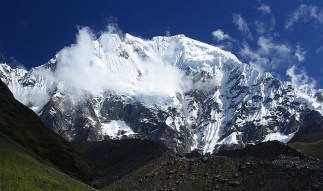 bounty. He brought back all kinds of food, which helped save the people of Cuzco. Salcantay went north, toward the jungle. In his wanderings, he came to the land of the Anti people, who had a reputation as great warriors. He spent time there, where he met a princess, Waynawillca. They fell in love and were to be married, but the Anti people disapproved. They did not want their princess to marry an outsider and leave their land. So, they banished Salcantay. But he and Waynawillca would not be separated, and they fled together, heading back toward Cuzco.
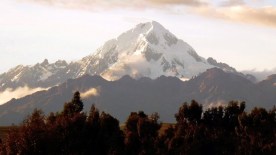 offering to a specific apu who has it within his or her power to respond in ayni to that request. We wouldn’t offer a haywarisqa requesting help with our health to an apu whose specialty is improving family relationships. There is disagreement among paqos and the local people about the specialties of each apu. For example, some people say that Salcantay is the apu to call upon for healing requests, whereas others say that he is more about helping increase freedom and with the loosening of something stuck or blocked within; still others associated Salcantay with an untamed feminine energy or with more generalized unformed, wild, and even chaotic states of energy. The general point, however, is that, according to don Juan, if we have a specific request in our haywarisqa and don’t know which apu can answer that request, then we should direct that offering not to an apu at all but to Taytanchis, or the metaphysical God. To make our request to someone, in this case an apu, who can’t fulfill it is unproductive to say the least! But in our exploration of how an apu becomes an apu, it makes sense that if individual paqos when they are alive have specialties and particular personal skills and gifts, so would the apu they have become.
 integration of feelings and will: it is the choice for love, a love that is sober and considered and subject to our intentions, rather than a willy-nilly emotion subject to the vagaries of our beliefs, desires and needs, and circumstances outside ourselves. When we integrate our Inka Seed and our munay, we access the energies of kanay: of the possibility of becoming a fully developed human being. When we express our kanay, they said, “you become more and more yourself—unique, specific.” What they mean is that we are each a Drop of the Mystery, unlike anyone else in the universe past, present, or future. We are specific, meaning that we know and live this uniqueness, not trying to be like others but fully and completely ourselves. When we allow ourselves to be directed by our Spirit, by our Inka Seed, our growth accelerates and our expression of “who we really are” is effortless. We connect with the “God within” and express those qualities right here and right now in our human lives.
 equivalent to our atiy, which in the form atini means “I can do it.” Atiy is how we perform magic, and the many unrealized aspects of the Self that are waiting in potential in our Inka Seed are the raw materials that we perform magic with.
 Call? What am I being called to? What are the consequences of heeding this Call? Can I trust this actually is a Call? When we ask questions of our Call, each of us has to be careful, as Greg Levov, author of Callings, says, not to be divided against ourselves but willing to explore how we may be divided within ourselves. Levov writes, “There is such a thing as thinking too much about a calling. . . . We can break our back against the rock of debate.” That’s why we do well to adopt the Andean view to be in harmony among all three of our human powers: our munay (love under our will), yachay (reasoning/thoughts), and llank’ay (action). The Andean view is that the Call of the Inka Seed is natural and trustworthy, and so we can cultivate a faith in the Call—faith in the Call itself and faith that we have the capacity to listen and act on that call in ways that will nourish us. Our Inka Seed is calling us to be more of who we already are, and there is nothing but a blessing in that realization.
 your particular expression of humanness can feel overwhelming. But “overwhelm” is a matter of perspective. When we access our “wise mind” (Inka Seed) instead of only our ego mind, we will find that the only “overwhelm” is that we each are “overwhelmingly marvelous.” The universe is incredibly generous and stunningly creative. The only restrictions are the ones we put on ourselves. When we dissolve these inner blocks, however gently and lovingly, we are freed to let go of the habit of living a life by default instead of living life by design. Robert Holden, PhD and world-renowned success coach, bluntly yet kindly advises his coaching clients who are paralyzed by fear, “[Y]ou can either wait for the fears to go away or face your fears now.” Human experience shows that when we face our fears, it is not our fear that changes, it is us—we don’t conquer our fears, we outgrow them. There is an old saying, “Some people go through life; other people grow through life.” The Call is a clue that you are growing. You really can’t resist growth. Just as you can’t stop your body from growing from childhood to adulthood, you can’t stop your “core” self, your marvelous self, from growing either. All you can do is suppress the Call, and accept the consequence, which is, at the very least, more of the same dissatisfaction, discontent, or whatever else it is that you are feeling when you slow your growth.
 the heart, which is the sonqo ñawi. Actually, although sonqo usually is translated literally as “heart,” in our mystical work the sonqo is the seat of our feelings. Feelings are states of being that we aspire to: they are what I call the Platonic feelings, or the highest aspects of human expression: joy, peace, compassion, and such. If we refine our energy to reach that a feeling, we rarely lose it. If, to use don Juan’s phrasing, we are “the owners” of joy, then we retain our sense of joy even if we are in the midst of a tragedy, even if on another level of our inner reality we are experiencing the emotions of sadness or even despair. It sounds a bit paradoxical, or even contradictory, but it’s not, because we don’t confuse feelings with emotions, and so we acknowledge that both can co-exist within us, just at different levels of our being. To finish defining my terms and distinguishing feelings from emotions, emotions are transitory states that arise from the meaning we
 attach to objects, situations, and people. Emotions are subject to the vagaries of moods, outer circumstances, unconscious shadow dynamics, and the like. So, today you like me and call me friend; tomorrow, when I say or do something that you strongly disapprove of, you dislike me and cut me out of your life. Emotions are reactive, whereas the higher feelings are not.
 think of khyuay is as a way of engaging or being in the world. Khuyay, don Juan Nuñez del Prado says, is the one-pointed, deeply felt engagement of two lovers sitting across from each other or of a child at play: the whole world falls away as they focus only on the person or activity that fills them with meaning and joy. Khuyay, as passion, also provides us motivation to do something that interests us and to sustain our effort over time, so we bring to completion that which we started.
 khuyay, we can be more accurate and call it “emotional intelligence.”
 be heavy or light.
 paqos! Reach high, but be real.
 means acknowledging both our gifts and our challenges, or even our deficits. It is about letting go of pretense and taking off our psychological and emotional masks—both the ones we show to the world that make us appear as “less than” we really are and those that present us as “more than” we really are. Humility means allowing ourselves to be who we are, just as we are, right now. In other words, be real! Charles Spurgeon, a nineteenth-century editor and preacher, expressed this idea succinctly and directly: “Humility is the proper estimate of oneself.” From that proper estimate of ourselves, humility helps us cultivate increased self-awareness, which at heart means we stay vigilant about being bringers of sami rather creators of hucha. Whenever we put intention into action we are acting in ayni with others and the living universe. We can’t fake our ayni. So, in practical terms, striving to create sami instead of hucha means that while we are who we are, we are also trying to live from our Inka Seed, which holds the potential for our expression of all that we can be as human beings. As the cliché goes: Practice makes perfect . . .