
I teach a class in Quechua terminology and concepts during which we take a deep dive into the “meanings behind the meanings” of the Quechua terms and concepts from the Andean mystical tradition. While I am not an anthropologist and do not speak Quechua, I am a careful researcher, and so I have relative confidence (“relative” because I am always allowing that there may be, and probably will, be mistakes or that I might take too great a leap of conjecture) in what I share. This discussion is not part of that course, but perhaps it will be in the future. I just find it all interesting, and maybe you will, too. In this post, I want to dig deeper into the “titles” of the primary practitioners of the tradition, the paqos, and terms that are closely associated with their mystical practice.
Generally, depending on your sense of how to “define” them in English, Andean paqos are mystics, shamans, or practitioners of the sacred arts. There are various spellings: paq’o or paqu being two common alternatives. In one Quechua dictionary, paqu is translated as “shaman,” with entries offering more specificity. One variation is paqu hampiq, which is defined as “shamanism” and refers not to the specific practitioner but to the metaphysical realm within which that practitioner operates or the type of practice itself. “Hampi” in this and its various grammatical forms means medicine, curing, or healing. So paqu hampiq refers to the paqo tradition as a type of healing practice and a paqo as one who is trained to be a healer. Another variation is paqu yachaq, which also is defined as “shamanism.” Yachay means knowledge, perception, first-hand experience. So, this term refers to a paqo as one who is a person of “knowledge” of both healing and of what I call the liminal realms (the “in-between” spaces), which is more in line with the mystical practices.
We most commonly know the two primary types of paqos as alto mesayoqs and pampa mesayoqs, with a third type called a kureq akulleq. I will discuss the meanings of these terms in the next few paragraphs, but here I want to point out that these designations of practice and knowledge are hierarchical, with an alto mesayoq having types of skills that a pampa mesayoq doesn’t, specifically the ability to communicate directly with spirit beings, such as the apus. Pampa mesaqyos can communicate only indirectly, such as through their misha or a dream. As such, an alternative title for these two levels of practitioners are Hatun Qhawaq (qawaq) and Pampa Qhawaq (qawaq), which roughly mean, respectively, One of High Vision/Perception (or, again roughly speaking, a Great Seer) and One of Earth Vision. A kureq akulleq is recognized as either the top-ranked alto mesayoq (as recognized by the community and/or other paqos) or any highly developed alto mesayoq.
Mesayoq comes from the Spanish word mesa, meaning table (or by association to the sacred, meaning something like an altar). It refers to the cloth bundle a paqo carries that represents his or her personal power. It is filled with khuyas, or objects of various kinds that are sacred or especially meaningful or dear to each particular paqo (called formally khuyay rumi, or stones of passion). So, we can think of the word mesayoq as meaning “one who carries a mesa,” and paqos are generally the ones who do. As we learn from don Juan Nuñez el Prado, the paqos of the last generation called this sacred bundle a misha, which means sign or symbol. This word provides the nuance that the bundle itself and the khuyas inside it are external symbols of the paqos inward personal power. The full term for this bundle is misha qhepi (there are various spellings of qhepi). Qhepi means “bundle” or “package,” so this is the bundle of the signs or symbols of the paqo’s personal power. There can be a paña misha qhepi (a “right-side of the path bundle) and a lloq’e misha qhepi (a left-side of the path bundle). I won’t get into the differences, because that will take us off course from this discussion. Let’s say focused on the word mesayoq, because from this discussion you can see how a variation of the term is mishayoq, which means, according to don Juan, “one who has signs.” The term used for the two primary types of paqos would be alto mishayoq and pampa mishayoq. “Alto” means “high,” and “pampa” refers to the plains, the flat expanses of land. So, these terms mean “the one who has the high signs,” and “the one who has the earth signs” (“the one who has the signs of the plain”). Pampa mesayoqs generally work through their cooperation with Mama Allpa, Mother Earth, so their association with the plains connects them to the earth and to their specialty as the practitioners of the earth rituals. Don Juan describes the distinction as the alto mesayoq being the mystical specialist and the pampa mesayoq being the ritual specialist.
There are three levels of alto mesayoq—the ayllu alto mesayoq, llaqta alto mesayoq and suyu alto mesayoq, a triumvirate of words that refer to another hierarchy in which alto mesayoqs achieve heightened levels of personal power, or, to put it another way, wider reaches to their power: respectively, the power to reach people in and to work with the spirit beings of a town or small area (ayllu), a larger region (llaqta), or a vast area (suyu). Suyu alto mesayoqs are rare, just as suyu apus are (there are only two  suyu apus in the south-central Andean region: Apu Ausangate and Apu Salcantay).
Kuraq akulleqs are even rarer. This title comes from the words for elder (kuraq) and the ritual or ceremonial practice of chewing coca leaves (akulliy), so it is often translated as the Elder Chewer of Coca. Generally, according to don Juan, this title is only bestowed on a paqo who has achieved a pinnacle of personal power such that he or she has incorporated the power of a universal spirit being, such as Taytacha or Mamacha, names given to universal energies, often syncretized with Christ or Mother Mary. But they can also be specifically Andean, such the universal spirit beings recognized in the Cusco region, including Taytacha Temblores and Mamacha Carmen. The kuraq akkuleq, then, also can be seen as a teqse paqo, a universal paqo, or a paqo whose reach of power is universal.
There are still other names for these practitioners of the Andean spiritual arts and the sacred bundle they carry (the misha), and even of the sacred items within the bundle (khuyays), but I hope this discussion, digging as it does at least a little into the fuller meanings behind the terms and titles, will enlighten you, and even delight you, as much as it does me.
 of sami, slowing down or blocking some of this empowering energy. This slowed or blocked sami is called hucha, or heavy energy. Hucha is sami that has lost some of its transformative power.
 become transformed through a more abstract but perceptual understanding of the dynamics those words are trying to describe.
 telephone landline wire or an electrical transmission line that carries energy through itself. If there is no seqe, there can be no connection and thus no transmission in either direction.
 connect with Mama Allpa and pull her sami up and into you. To end the practice, you disconnect the seqe/cords and “close” your bubble.
 I have written about this auspicious day in the past (posts of July 1, 2015 and July 9, 2019) and today I write again, with additional suggestions for how to work the energies of this energetic and ceremonial “New Year’s Day” for paqos. It’s a kind of New Year’s Day, because it is said that it is the day the Earth (Mama Allpa) and the mountain spirits (apus) are “awakened” most attentively to our ayni, intentions, and offerings. However, our offerings are not only to Mother Earth and the apus, but to the all-encompassing Pachamama, the Mother of the Manifest World, and to the Kawsay Pacha, the living universe.
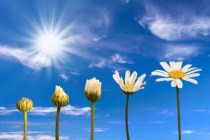 renewal of the self. As we do our daily mystical work, such as saminchakuy and saminchakuy, we are, of course, restructuring and renewing ourselves. On this day, however, we are going deeper to embrace more consciously our connection to our Inka Seed so that we can express ourselves back out in the world with greater grandeur, beauty, and power. We also nurture our potential—the fullness of ourselves as held within our Inka Seed—and empower our capacity to continue our journey up the qanchispatañan, the stairway of the stages of human development, prepping ourselves to one day express the sixth-level state of being, that of an enlightened human being. Or even reaching the seventh level, which is ranti with Taytanchis: god expressed in our human form.
 mentioned in the previous posts.
 nectar of its sami. Then stream this sami up to connect with your sonqo, and as your will and your feelings integrate through munay, reexperience the profound sense of the “real” you. Feel the munay and claim it as your love for yourself, as the way your Inka Seed/Spirit and Creator love you just as you are right now. Allow the integrated munay of your Inka Seed and sonqo to fill you, and allow your Inka Seed—the wisdom at the center of your Self—to counsel and advise you.
 connection to your Amaru, raising your power and reinvigorating yourself through your personal karpay.
 adjust easily to misfortune or change.” Through qaway, we acknowledge the “reality” of what is happening “out there” and “in here,” without distorting it or denying it, and through that clarity we achieve a measure of energetic detachment that allows us to choose a nimble, efficient, productive, and appropriate response. Sometimes that appropriate response is choosing to be non-reactive and logical, or displaying self-restraint and tempering our emotions, words, and actions. Sometimes it is expressing our will by forcefully establishing a boundary and saying “No!” or it is giving ourselves up to our grief or despair and allowing ourselves to feel this excruciating moment of our humanness. Qaway lets us be who we really are and see others and the world for who and what they really are—admittedly not so easy a task since we so often are operating from our psychological shadows and being triggered or are projecting onto others—and resilience allows us to deal what is and not be resistant to it or slayed by it.
 wrong, but the challenge of keeping conscious our choice for resiliency over resignation.
 and spiritual wisdom together from all corners of our precious planet. Humanity needs our medicine now more than ever for global awakening and transformation.
