
“There are two great days in a person’s life—the day we are born and the day we discover why.” —William Barclay
Sometimes people ask me about choosing a spiritual path, as if there are multiple choices. But for each of us there is only one path—our life. The modifier “spiritual” is not necessary, and, really, it is redundant. The core root of the word “spirit” means to breathe, to be alive—to be filled with the life force that animates physical matter. According to the Andean mystical view, we are allpa camasca: animated earth. I believe it is wise for us to honor that core truth: every life is a spiritual life by the fact that it is a life. So, from this perspective, we don’t choose a spiritual path, we become consciously aware of the nature of the one we are living.
That said, I understand that when people are asking about a spiritual path, they are really asking about a methodology or a philosophical framework by which to deepen their conscious connection to their lives. They are using the word “spiritual” in a gnostic sense: to deeply and truly experience the essence of their lives. They are seeking to revitalize their lives, to resacralize them. Let’s face it, from the factual biological perspective, we did not have a choice for life. If we are here, it is not because we did anything to be here. Our “spiritual” belief about the nature of existence is another thing entirely. To imbue physical life with a sense of the sacred is a choice, even an act of will. Since we are here, we are free to seek meaning, to understand the possible “why” of it all. The irresistible magnetism of meaning-making is what elevates us above our purely biological life and informs our humanness. Every life matters, but we alone, among all creatures, decide to consciously choose how to ascribe meaning to our lives. Doing so presupposes that we have chosen a framework to explain that “why.”
In my own exploration of the “why” of life, and as a means to sacralize my life and choose to consciously develop myself, my choice for a “spiritual” approach is the Andean tradition. That choice comes after decades of exploring, testing, and practicing in other traditions. The same might be true for you. From the fourth-level perspective, following the Andean “sacred arts,” as don Juan Nuñez del Prado likes to call the tradition, is an exploration of our inner world, but without that inner focus being either an over-absorption with the self or a rejection of the outer world. So much of what matters in the outer world is shaped by and even dependent upon the state of our inner world.
In the Andean cosmovision, we are seeking to know ourselves, called kanay: to know who we really are and, more importantly, to have the personal power to live as who we truly are. Our approach is not outwardly directed either through formulaic practices or channeling power through sacred objects. Ritual, ceremony, and supernatural connections are wonderful, and there are good reasons for them, but they also can become a distraction or even a trap. What matters is our connection to ourselves, because the quality of all that we can share with the outer world is proportional to the quality of our inner state of being. As the Vedic tradition teaches, we are not in the world, the world is in us.
Via the Andean tradition, how we engage the world is dependent of the quality of our consciousness and of the sami energy we can share through our ayni. One of the most insightful teachings I have received from don Juan Nuñez del Prado is that there can be more power in offering a single k’intu than in making and offering an elaborate despacho. Our most important work is invisible: it is inner directed and yet utterly relational to the outer world and other people. We work on the inside so that we connect more authentically with what is outside, as free as possible of our heaviness (especially the heaviness created through our projections, illusions, personal judgments, and the like).
This inward exploration is focused both on the “who” and the “why” of ourselves. In the Andean tradition, the Inka Seed is the repository of that information and knowledge. The Inka Seed is said to be the connection to our origin, which is with God, The Unknowable, The All, Wiraqocha—or whatever name you give to the non-physical force that is the bestower of the originating breath (spirit) that gives life to inanimate matter. In one respect, our Inka Seeds are exactly alike: they contain every capacity that a human being is capable of expressing. In another respect, no two Inka Seeds are alike, for each of our Inka Seeds constellates these capacities differently, so that we each truly are unique in the expression of our humanness.
For me, when it comes to the “why” of our beingness, there is a “Big Why” and a “Small Why.” The Big Why of our lives is why any of us are here at all, in human form with our astonishing human capacities. The Small Why, which to my mind is the more important one, is utterly personal: it is “why” of our individual lives, of our distinct expression of this humanness. It is this Small Why that Barclay is speaking about in the opening quotation, and it is this Small Why that can set us on the search for a “spiritual path.” We share the same common and singular path: life. But we have an amazing variety of frameworks that can help us access the personal power to singularly express ourselves and create a life that reflects our kanay.
There is an almost infinite distance between the belief that there is no meaning to life and the belief that each of our lives is imbued with sacred significance. Don Juan, and his son, don Ivan, very poetically express this latter view by saying each one us has a distinctive place in creation that no one else can fill. If we are not aware of why we are here, if we don’t know ourselves and our singular kanay—and therefore are not living our individual expression of whatever God is—then it is like there is a hole in the fabric of creation. They are not the first to express this idea (others from Eileen Caddy to Dr. Suess have said as much), but it is an idea worth being reminded of repeatedly: there is one, and only one, spiritual path—your life. There is only one of each us. Forever and forever and forever there will only ever be one you. Whether you believe that to be true or not, what a tragedy not to live as if it were true!
All of this can sound cliché. You’re unique. You’re special. You should take how special you are to heart and start acting like it.  We’ve heard it a hundred times, right?
Well, knowing and doing are two entirely different things. Which is why the “doing” of actually living your life as you is so rare. We are used to being who others think we should be, or who we think they think we should be. When we are mindless or dismissive about how we shape ourselves not to our own inner “truth of being me” but to what others’ value or prefer we be, we disconnect from ourselves (our Inka Seed) and, thus, from our lives. As Shakespeare wrote in As You Like It: “All the world’s a stage, and all the men and women merely players.” This is a quotation that tends to pop up (tiresomely) when someone wants to remind us that we are all pretty much alike, just making it up as we go along, and living our fictions, or even our delusions, of ourselves. And there is some truth to that. But, keeping with the theatre quotations, we also can live upon the stage of life as creative artists of the self. As playwright Lee Small said, “The point of theatre is transformation: to make an extraordinary event out of ordinary material right in front of an audience’s eyes.” That is the point of life as a spiritual path: to reveal the extraordinary within our very ordinariness—and then not be afraid to show our extraordinary selves to the world.
We are not being solipsistic or cultivating a false grandiosity. And our approach certainly is not to take ourselves too seriously. It is hard to be creative when we are overly serious, and life as a spiritual path is about nothing if not serial acts of creative expression. From the Andean perspective, paqos are beings who cultivate their inner joy. So, to resacrilize our lives we would benefit from cultivating two core sensibilities: that of pukllay, a sense of playfulness; and of tusuy, of performance. Life is our ritual. Life is our ceremony. Rather than find or choose a “spiritual path,” we treat our lives as the one and only path, where every ordinary moment can become imbued with a sense of the sacred. The very word “individual” comes from the root meanings of indivisible, inseparable, one, unified. For each of us, every insight into our individual kanay—into what makes you you and me me—becomes a way of more lovingly gathering the disparate or disowned aspects of ourselves into a realized whole.
However, when it comes to actually living life as a spiritual path. . . well, that is easier said than done. I will leave you with a quotation I just came across that is the perfect conclusion to this post and reminder that ayni is not just about intention, but action.
From T.E. Lawrence’s The Seven Pillars of Wisdom:
“All men dream; but not equally.
Those who dream by night in the dusty
recesses of their minds wake in the day
to find that it was vanity; but the dreamers
of the day are dangerous men, for they may
act their dreams with open eyes, to make it
possible.”
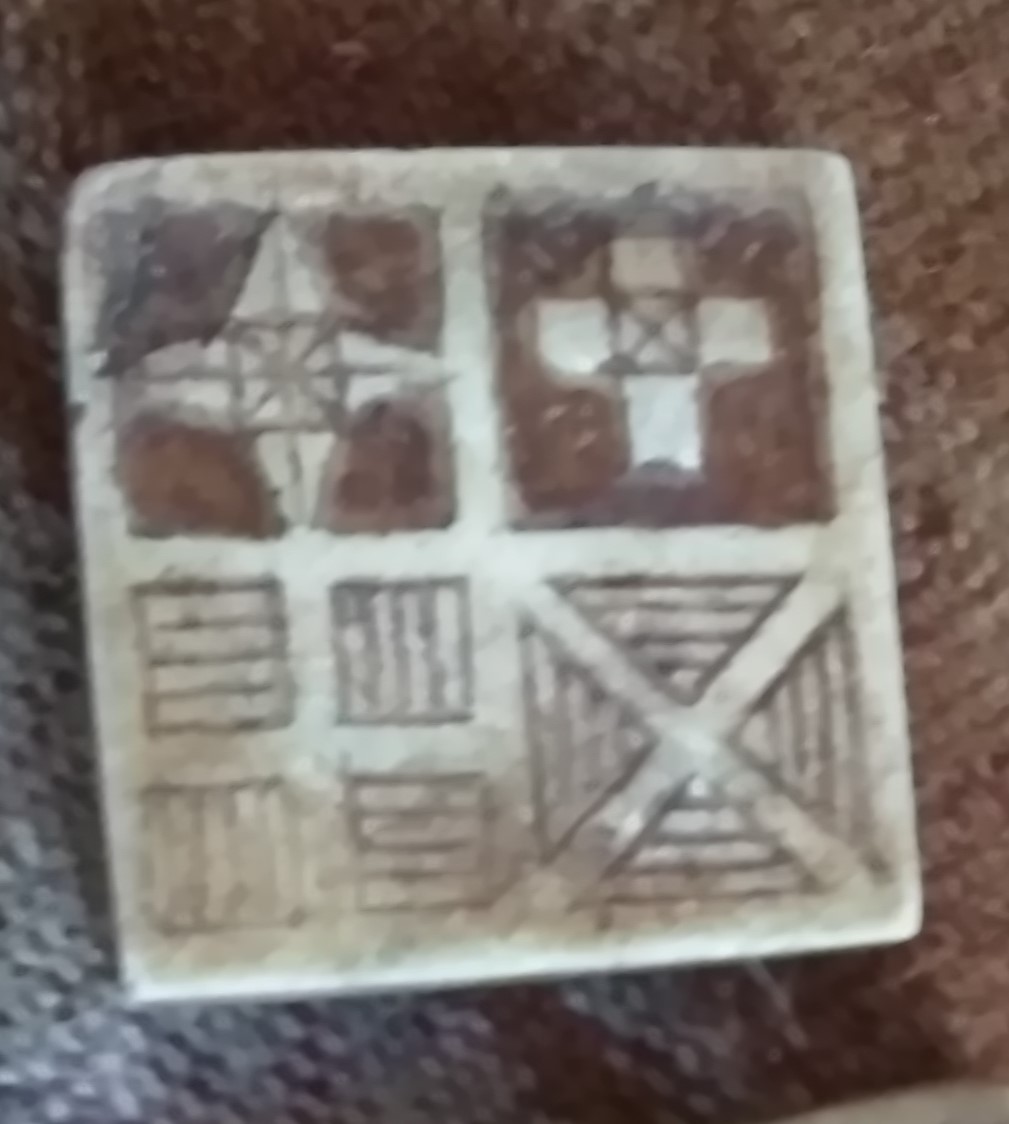 khuya that he used to teach the principles of masintin (similar) and yanantin (dissimilar but complementary) energy dynamics. It had four quadrants, with a representation in each quadrant of an object that is considered either of female or male energy. He would test his apprentices by asking them about the various masintin or yanantin relationships among the sybmols.
 and immune systems are subject to influence by our thoughts, emotions, stress levels, repressed energies, and the like. These mental and psychological influences are what most often cause us to create hucha for ourselves, which may keep us from dealing well with our health or other challenges. Thus, there almost always is an emotional component to experiencing illness: heaviness can arise because of fear, anxiety, conflicted feelings and ideas, and the like. None of those emotions or mental states automatically creates hucha. These emotions may be perfectly appropriate responses to something happening to us. But when they become chronic or are inappropriate to or misdirected beyond the immediate situation, then they can create hucha. As paqos, we are working on a person’s mystical body, and we can use many different methods, from focusing mostly on their poq’po (which we can see as their psyche) to working to clear hucha from the ñawis. As a result of improving a client’s energy field by reducing their hucha and increasing their sami, the disease also may be affected in positive ways. Remember, sami is the life-force energy, so increasing it—regardless of which method is used to do that—is a way of indirectly working on the disease itself.
 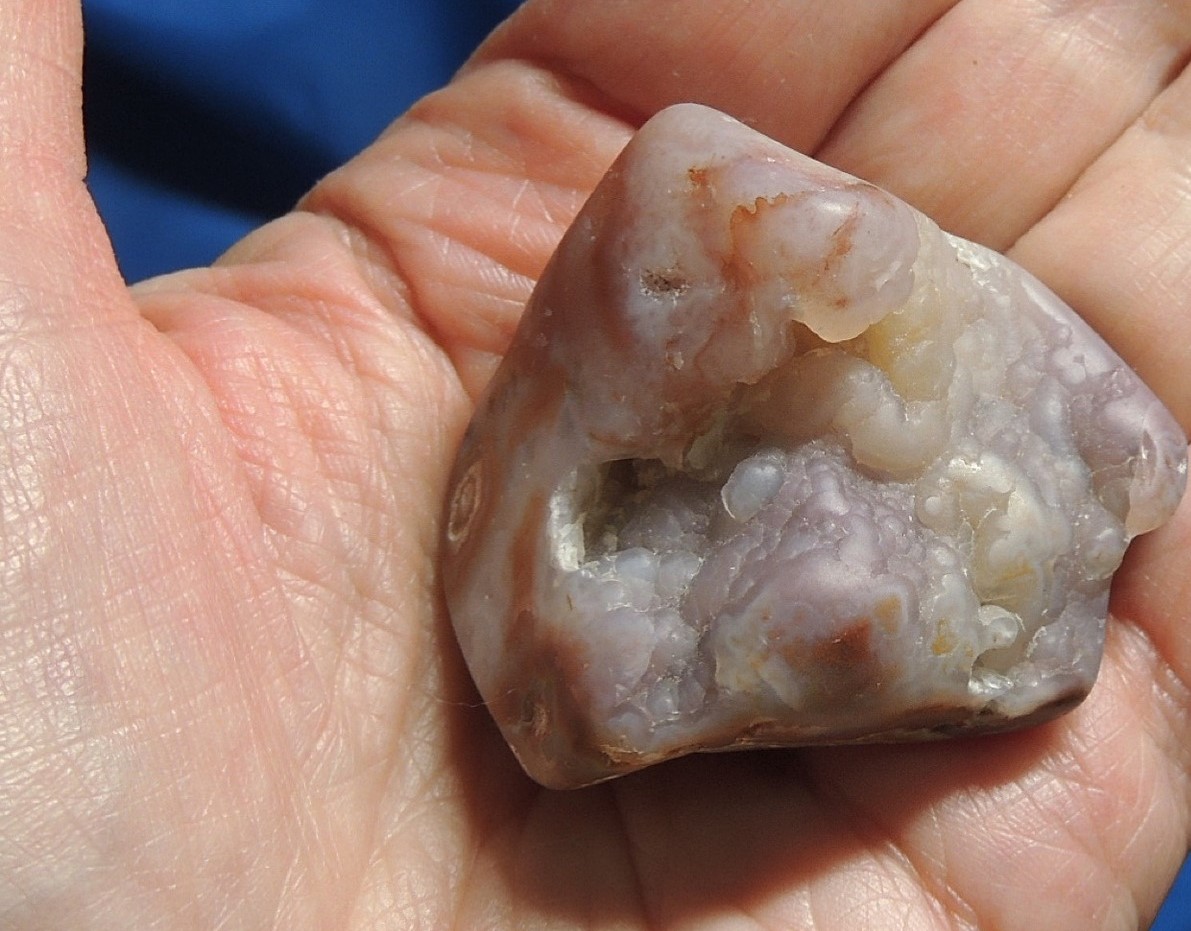 may choose to meet their expectations and provide that “healing experience” for them. We are not duping or manipulating them. We are simply undertaking the energy work just as we always do—which is invisible work, marshalling and channeling our own sami and munay, our own personal power and intent, or channeling that of a spirit being—but we can do that while also creating an outward display that meets the emotional needs of our client. There is one “must do” I tend to tell people who ask about healing through an outward ritual: the important stance is not that we do what we always do or were trained to do in a rote manner—such as always using the same methodology or ritual for each person—but that we always, first and foremost, meet the other person exactly where they are and creatively adjust what we do and how we do it to meet their individual needs.
 with each ñawi. In this variation, we might place a khuya on or near each of the seven ñawis. Then we work down each ñawi, one by one, from the top of the body to the root. As we do, we call in the specific teqse apu associated with that ñawi and use the khuya we have placed there to work with that spirit being to do a pichay at that ñawi, sweeping hucha from it. (Except at the sonqo, which has no hucha). Once the hucha release is done at a ñawi, together with the helper spirit, we pull up earth energy (in a saiwachakuy) to empower that ñawi and its capacities. Then we replace that khuya and move down to the next ñawi, using the khuya placed there and calling in the spirit being associated with that ñawi and repeat the process. And so on down the body.
 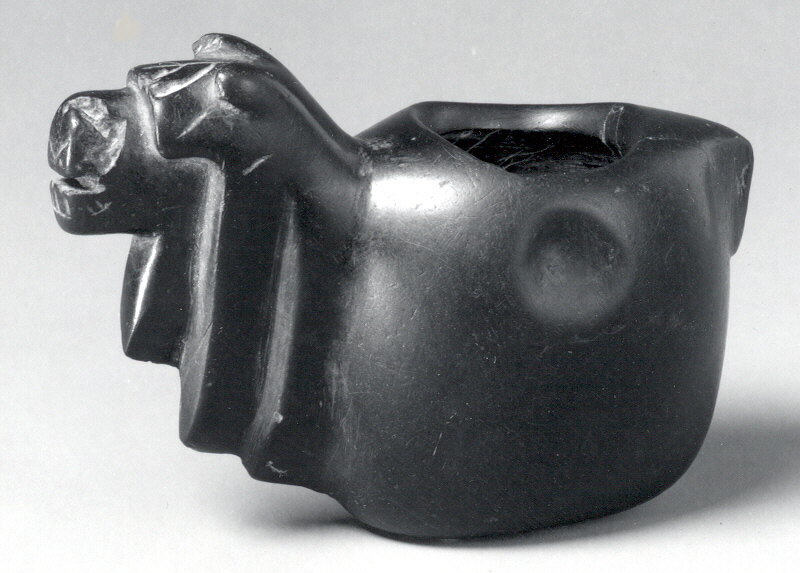 mostly were used as magical protection for herds of llamas and alpacas or in ceremonies or on “altars” for marshalling the energies to keep herds healthy and flourishing.
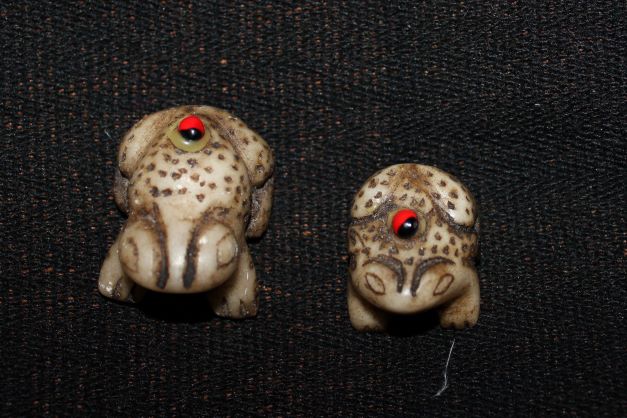 process in any way we choose. I remember paqo Americo Yábar showing me and a few others how to charge a khuya. He said it should be in our right hand and held aloft toward the hanaq pacha. Then we should pull down a stream of sami from the hanaq pacha and into the khuya, then move the khuya down toward our chest until it was touching our heart and we joined energies with it, pulling the stream of sami into ourselves as well. Beautiful! But not necessary. From the fourth-level perspective, we love to express our pukllay—our freedom and playfulness—and we can choose to do what brings us pleasure. That’s perfectly fine—as long as we are conscious that our performance is our choice and not some magical or superstitious ritualistic necessity.
 distinction between choosing to do something and thinking we need to do something. So, as with charging the individual khuyas, we can through our artistry, pukllay (playfulness), munay, and ayni decide to undertake some kind of ritual to celebrate making our first misha or to charge our misha bundle, but doing so is a personal choice and not a necessity.
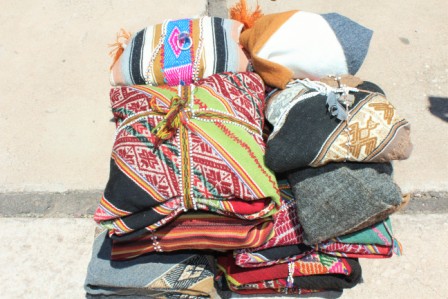 side of the path), which is focused on developing our yachay (experience, knowledge, and perception). Qhepi means “bundle.” So, our pana misha qhepi is literally the bundle of signs that we are practicing paqos and also a collection of the symbols of ourselves, as I will explain below. We might also have a lloq’e misha qhepi, or a misha holding the khuyas we associate with the llank’ay aspect of the path, which is more oriented toward action. Traditionally, the left-side misha contains the five mullu khuyas, or the five stones we use to give the karpay for weaving the belts (chunpis) and opening the mystical eyes (ñawis). Occasionally a paqo might have a left-side misha dedicated to healing, so it would contain khuyas he or she uses specifically for healing.
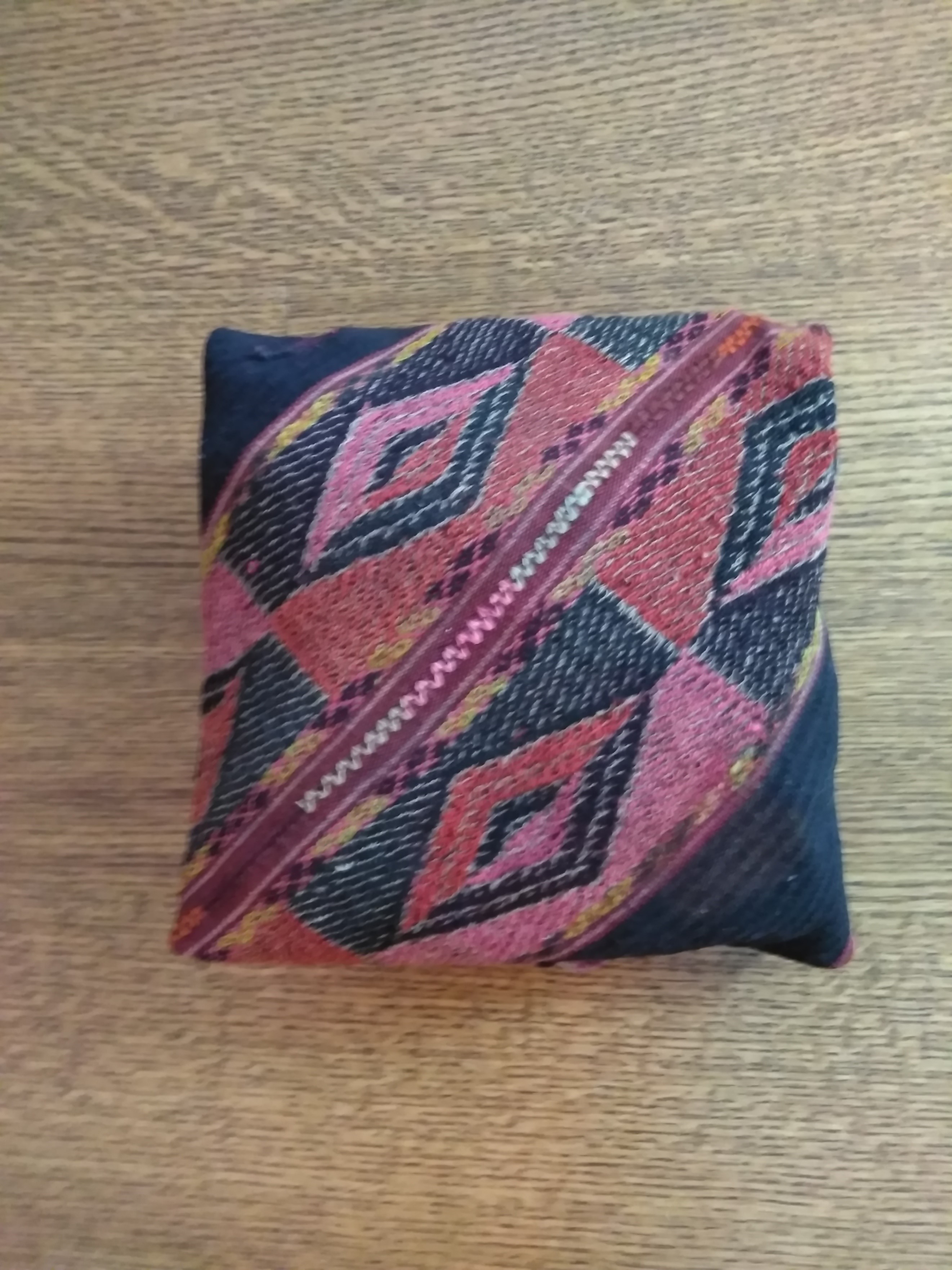 actually working with our khuyas.
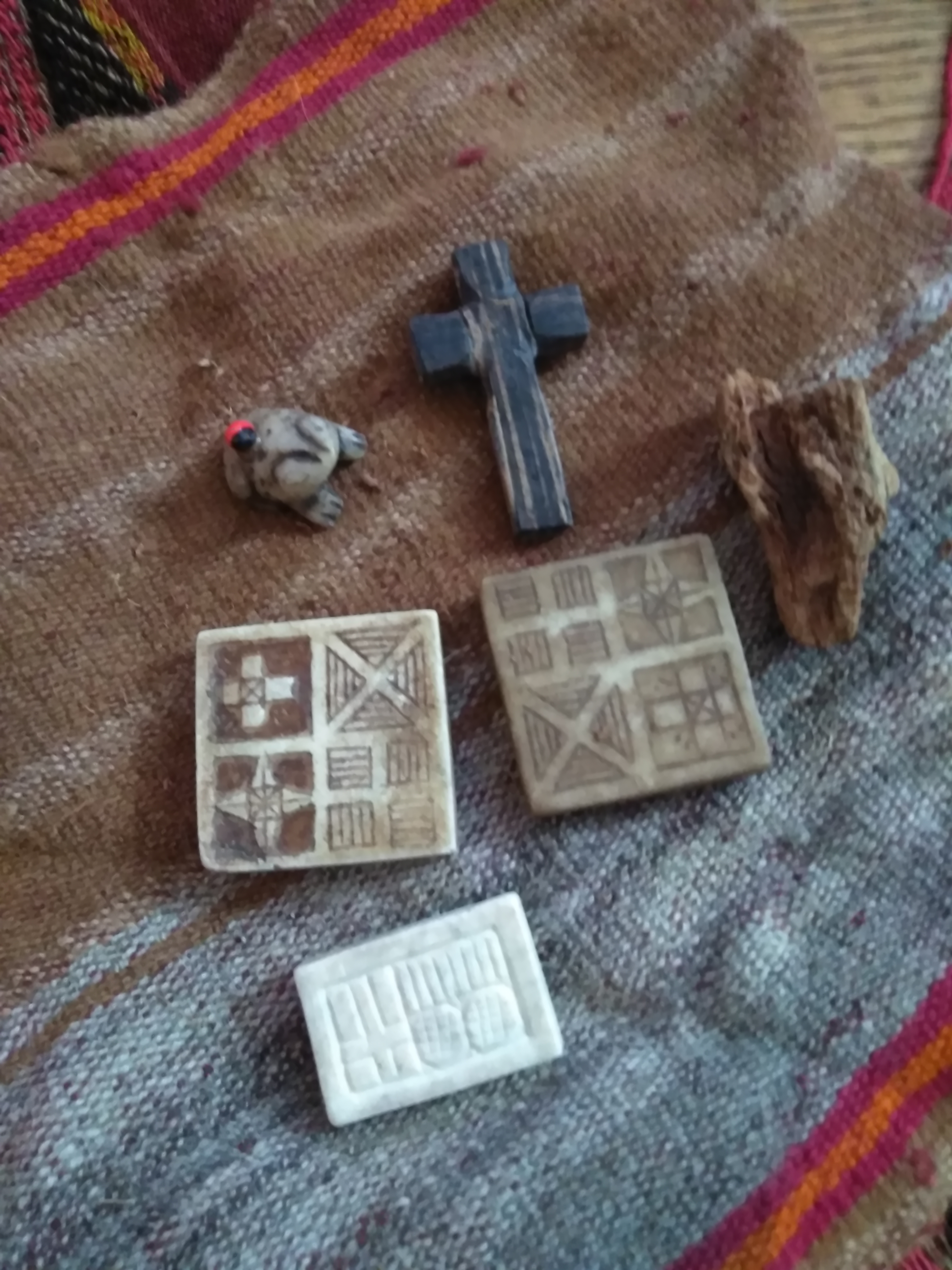 might be a stone or some other small item we were given during a karpay from our teacher. Or, one or more of our khuyas might be representative of more abstract concepts such as the four cardinal directions, the three worlds, or the three primary human powers of munay, yachay, and llank’ay. The difference between a third-level and a fourth-level approach appears in why we have selected the khuyas and in how we think about them. If we are following a schematic teaching, with everyone doing things in similar ways for similar reasons, then these khuyas can become like little fetishes, and so there are at least two potential “traps” of this third-level way of creating a misha. The first trap is when we lose the sense of our own personal relationship with the living universe. Our misha contains khuyas of the same kinds and with the same meaning as everyone else’s. Our misha becomes a “set piece” that never changes because we have ticked off the khuya list given to us by a teacher. Second, we can end up collecting khuyas like souvenirs or trophies: “This is my Apu Ausangate stone.” “This is my Machu Picchu khuya.” “Here are my four-directions khuyas.” If we fall into these potential traps, our khuyas may become devoid of our feelings and affection and become fodder for our ego. Our misha might lose its inherently personal meaning; instead of representing our personal journey, it might simply be modeled on a fixed template.
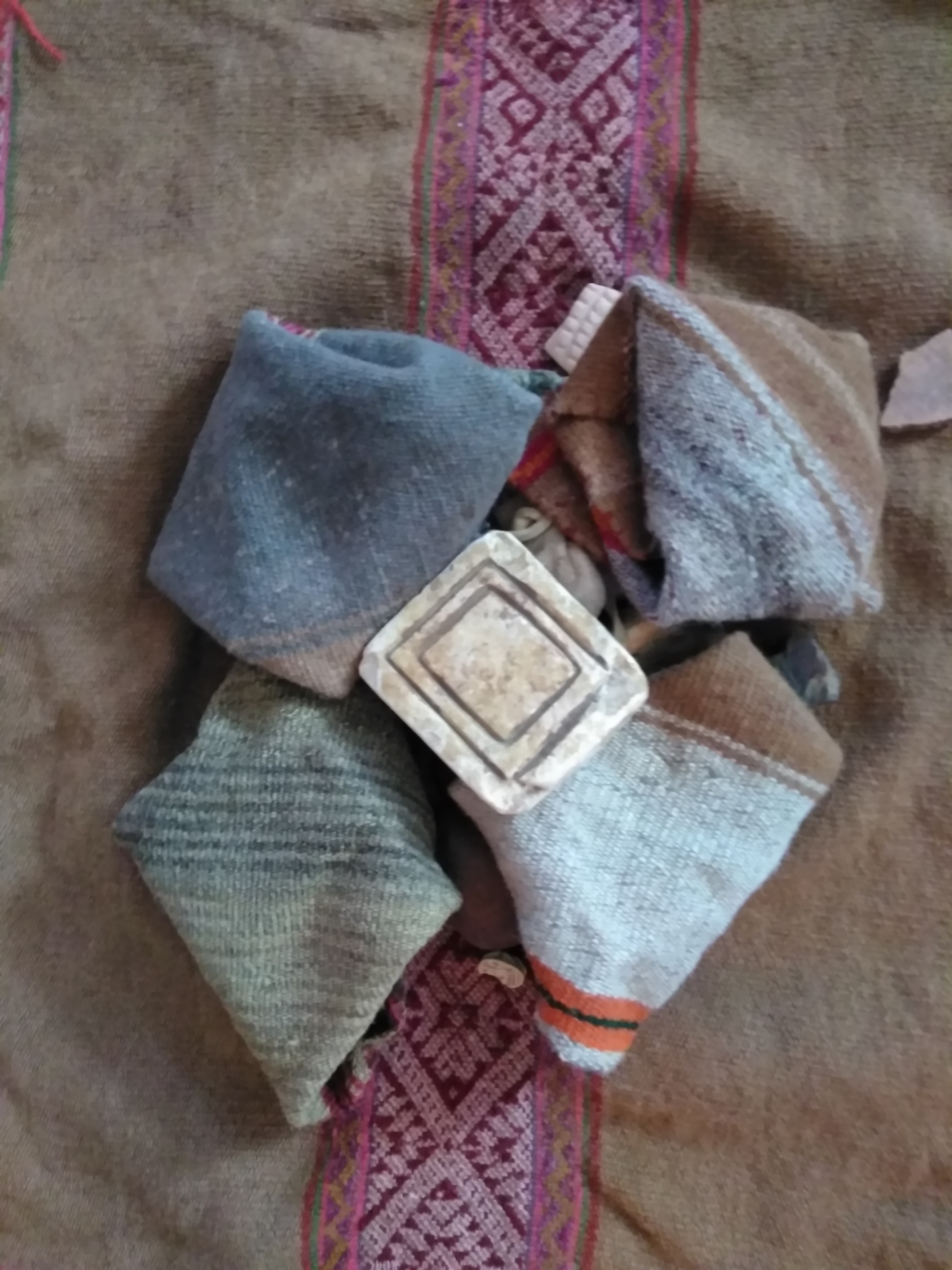 “centering” stone, as shown at right from my misha.) At the level of becoming a fourth-level energy and ayni artist, we know that through each khuya we include in our misha we are acknowledging and honoring who we are and how we have come to be as we are. The khuyas (and the bundle of them that is the misha) represent our journey as a human being, from the traumas we have overcome to the triumphs we have experienced, from family members and other people who have significantly influenced us so far in our life to paqo teachers who have mentored us and helped us develop on the path. A khuya might even represent our unfinished work and unrealized potential: the work we acknowledge we still have to do to heal ourselves or express more of our Inka Seed.
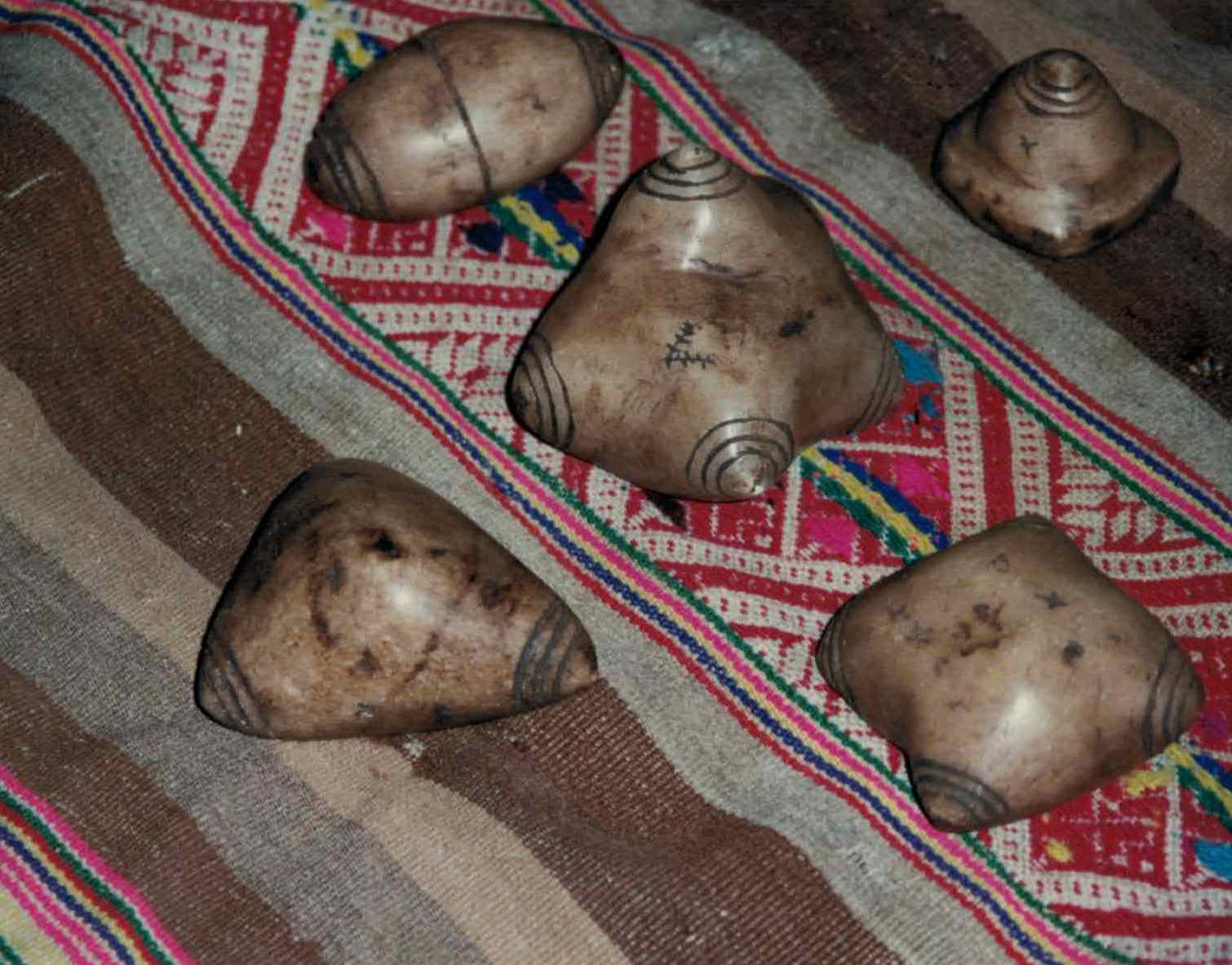 from our father, and that khuya might hold the power of our realization of how much love has passed between us or, conversely, it might represent his utter failure as a parent and how we overcame this wound or are still working to overcome it. This object becomes sacred to us either way because it holds our power to know who we are: where we came from and how we got to where we are today. A khuya might mark an especially important occasion related to a particular person, one that is deeply meaningful to us. For example, one of my most precious khuyas is a small wooden cross that was in my mother’s hand for the last week of her life. It is infused with a whole host of meanings for me, all deeply personal and highly significant to my development as a woman because of who my mother was and of our relationship—and it also represents the loss I feel of her physical presence in my life. The take-away is that from the fourth-level approach no one can advise you about what kind of khuyas should or will make up your misha. Your misha is the symbol of your life.
 what this level of consciousness and capacity looks like. (For previous general discussions that mention the seven levels of consciousness see the posts “Birds of Consciousness” and “Consciousness, Intention, and Ayni,” among others.)
 that process starts in our current state, just as we are now with all our fallibilities and frailties. We have to bring our attention to how we are not now absorbing sami and why.
 the body if we realize that potential.” A sixth-level person has achieved the realization of that potential—and there’s nothing stopping any of us from doing the same.
 ourselves to this sixth level of consciousness.
