
In this holiday season, when we spend time with those we most love and we give and receive with renewed openness, generosity, and love (munay), let us take a moment to go inward to both renew ourselves and remind ourselves that we have a trove of gifts within that we have yet to bestow upon ourselves. As this year comes to a close, let us reflect upon who we are and open to the greater measure of ourselves. We all have been through so much over the past two years, and as 2022 dawns we continue to face important decisions—about ourselves and about our relation to others and the world. Let’s take a moment to go inward so that what we direct outward has the best chance of reflecting our magnificence—the gifts of our Inka Seed.
Psychotherapist and author Robert Holden claims that in every moment we each are making core decisions about our kanay, to use the Andean word for who we are—the singular “I am” of the self. He says that through every one of our thoughts, words, and actions we are determining who we are, what we want, what we are capable of doing or achieving, and what we believe we deserve or don’t deserve. But our thoughts, words, and deeds are not the only energies driving us. There is a higher order of inner  structure that matters—the energy emanating from our Inka Seed. And in this post, I want to close out the year by reminding us of this most important inner compass and its influence on our kanay.
Our Inka Seed holds within it our unlimited potential and unconstrained grandeur. But the key word here is “potential.” We have all the tools and techniques to fulfill our potential, but we are as yet not fully realized. The movement toward that realization comes from combining our human capacities—our yachay (knowledge, experience, thoughts, and words), our feelings (munay), and our llank’ay (actions)—with our Inka Seed, which is the energetic seat of our will. Will is a lot of things, most notably conscious choice and motivation, such as the choice to increase our self-awareness and our motivation for self-improvement. As don Juan Nuñez del Prado reminds us, we don’t have to grow. Growth is a choice, one fueled by the energy of our will, of our Inka Seed.
Our Inka Seed has no hucha. It is our “true self”—the repository of our potential to be perfected, sixth-level human beings. It is always receiving a steady stream of kawsay—of the living energy, which flows from the hanaq pacha through our pukyu (energy center at the turn at the top of the forehead) to our Inka Seed. For this reason, the well of the Self—and of our will—never runs dry of sami. No matter how long we may have forgotten about or refused to visit this well of the Self, and so remain thirsty for deeper self-knowledge and self-realization, we can choose to drink from it at any moment. Kawsay, or sami—the light living energy—is, after all, called “nectar,” which the Greeks and Romans considered the drink of the Gods. Within the Andean cosmovision, we can see sami in a similar way: we are a Drop of the Mystery, an aspect if you will of Creator, and this life-force energy is always flowing to us—always filling us and moving through us.
We are this life-force expressed in matter: this life-force as action (llank’ay), this life-force as knowledge, insight, and creativity (yachay), and this life-force as the integral undercurrent of our shared humanity (munay).
The last two years have been a mixed bag, both celebratory and challenging. Our lives—from Covid to extended job layoffs to racial unrest to ruthless political partisanship and more—have provided ample fodder for both self-doubt and self-realization. Many of us have been left unmoored, or even reeling. We might say we have been engaged in a tussle, even a struggle, between our Inka Seed and our atiy (action and impulses, including most notably our survival impulses and unconscious fears and projections), or between our “better angels” and our oh-so-human selves.
As we prepare for a new year, let us stop and consider our two natures, the Inka Seed and our atiy. As I do so often, I will let don Juan Nuñez del Prado and his son, don Ivan, enlighten us about these subjects, explaining why they matter so much, especially at turbulent and uncertain times like this. In what follows I bring together in edited form comments they have made and explanations they have offered from various conversations we have had. I offer them to you for your contemplation as we all cross the bridge from 2021 to 2022.
“The seed contains all your potential. There’s a spirit that drives everything, even your impulses—it owns your being, your spirit does. The potential is that everything you can [potentially] become, you can [actually] realize in your life. It’s all there in your Inka Muyu [seed] already. So this potential is a driving power in itself. Because it’s willing to be expressed or manifested.”
“From the Inka Seed, if you are an animal, because animals also have spirits, it’s the driving power of survival that encompasses all of the animal’s instincts, especially the force to move and survive. That drive comes from the Inka Seed. And it can be expressed only physically in animals. In us, in human beings, however, this drive is only partly physical, because we are the owners of a number of higher processes. But first is the basic, survival drives. This is the basic will of the siki nawi, or the atiy. Atiy is the energy that triggers every possible thing that can happen or be expressed through or by a human being, starting with our impulses: sex, defending our territory or our space, protecting our loved ones—all these things. But from human beings, on the other end of the spectrum, is the highest direction of energy and movement: the search for God, for the numinous. Coming down [in hierarchy of action, consciousness] from this search for the numinous, which is the top, is every other impulse of life and survival. All of this is in the will of the Inka Seed, because the Seed is willing to express the full potential that is contained within it. The Seed is our starting point for driving the living energy. When our will comes out from our Seed, then we will move the energies. We will send energy out or pull it in, depending on the situation. And then all the other things we do follow from that.”
Don Juan and don Ivan go on to explain that a useful way to understand the relationship between the will of the Inka Seed and the action of atiy at the siki ñawi is by linking them to the conscious and unconscious aspects of our psyche. Our conscious processes, they explain, are part of our will, whereas our unconscious processes are what more strongly fuel our atiy. Finding harmony between these aspects of ourselves is crucial to our living our full potential. “Every human has full potential, a potential that through will can be made manifest,” don Ivan says. “This is your will. It is something permanent and 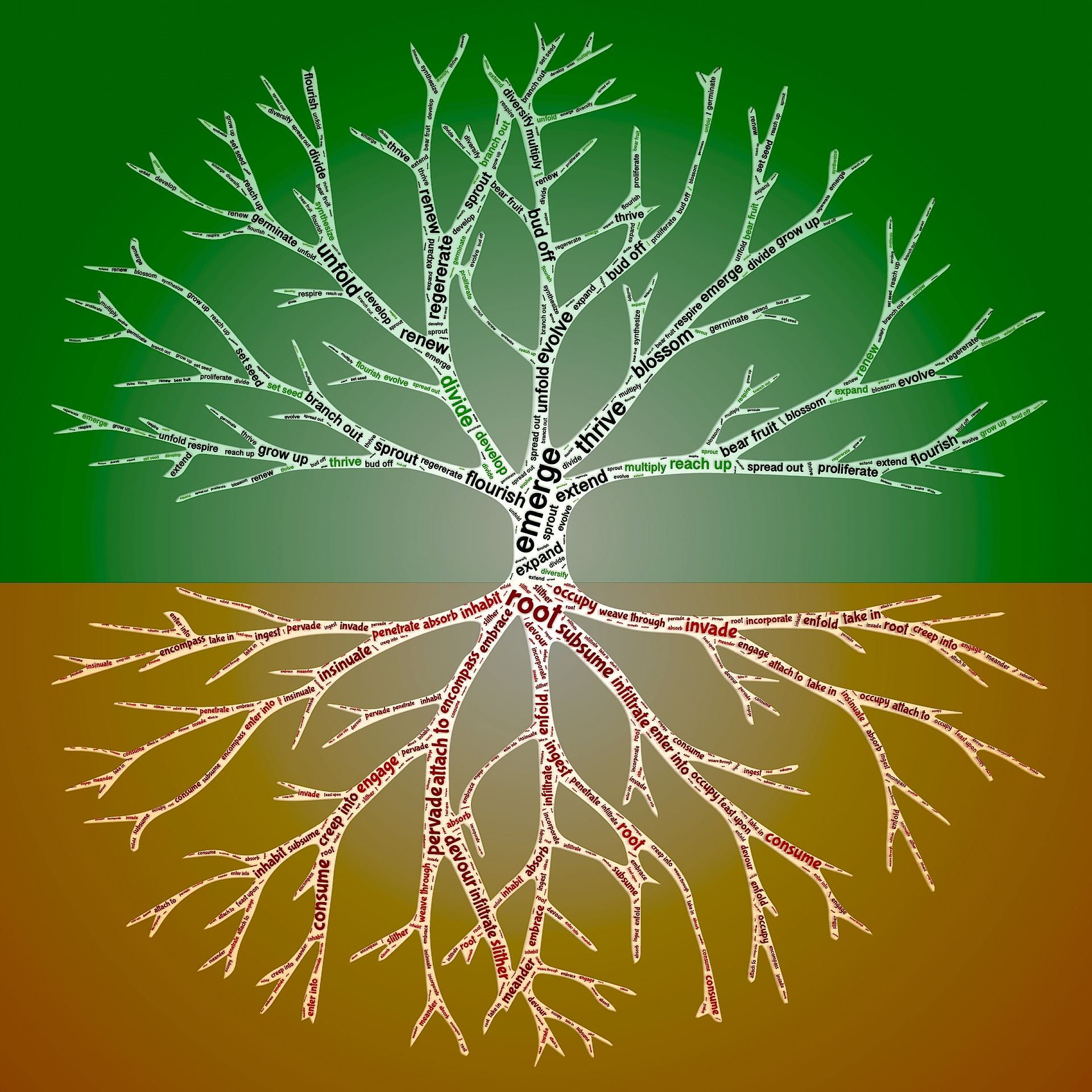 stable. It’s coming from your Seed, which is fed by sami from the hanaq pacha, and it is trying to pull you up. Then you have within you everything that remains of your animal or survival instincts: everything you receive through your genes is your animal heritage, and then you have the human unconscious drives. These are energies that are pulling you down, or keeping you at a bottom level.”
Don Juan expands on this point: “According to Carl Jung, the process of development is moving down through your conscious self until you touch deep into your unconscious. This is the whole structure of the problem. Your will comes from above [Inka Seed] and your instincts come up from below [siki ñawi, atiy]. So, there are two flows, one in one direction and the other in the other direction.” Where these two flows meet—how far along we are in allowing ourselves to be pulled up by the energy of the Inka Seed to realize more of our potential—is how we measure our karpay, or the personal power we have in the moment. Personal power is a measure of how well you are using all your human capacities. The more capacities available to you to express and use, the more personal power.
Don Ivan expands upon this concept of “measuring” your personal power in order to gauge where you are in your growth: ““Your Inka Seed is your potential and will. Will in a certain way is the center of the other pathways, and it is conscious. Like the saying that where there is a will there is a way. So, will belongs to your conscious mind through your Inka Seed. Atiy is the measure of what you have developed at the moment. It is your power in this moment. Atiy is in your siki ñawi. Atiy is more from your unconscious and it’s very basic. It is what we call an impulse, like an instinct in animals. Animals cannot go beyond instincts and basic biological needs: an impulse to eat, have sex, to be warm, to survive, to fight. It’s a spark. It’s like that. But it’s a tiny spark that comes from a very basic part of us. Still, it can trigger a lot of things. When you use that spark, you can trigger anything. But to move beyond this most basic atiy you need another path. That is the path of the will, of the Inka Seed, of your consciousness. Animals can’t move beyond impulse, but humans can. How can you measure where you are? The siki ñawi. Take a look at your atiy. You are checking the development between your Inka Seed and your instinct.”
The Andean tradition provides us ways to access the whole of us, because we are the heart of the world. As we go, so goes the world. We need our atiy—it is our capacity for motivation, action, direction. It is the “I can do it” energy that propels us into motion. However, if we stay animalistic, in our basic atiy nature, the world reflects this: there is the tendency for us to focus on competition, aggression, judgments and fears, self versus other, lack and scarcity, threats to our well-being and beliefs, and so on. But if we lift ourselves through our Inka Seed, we move these siki energies up through the other ñawis, refining them, raising the vibration of our relations with ourselves and with others. Don Juan says, “The whole Andean tradition is an immanent tradition, which means it’s a tradition that takes for granted that inside yourself is the whole project. Western culture is basically a transcendental tradition—the project is outside yourself and [something] must come down to touch you. When the Andean tradition collided with the Christian tradition, it became both a transcendental and an immanent tradition at the same time. As far as we can say, it is the only tradition in which these two main factors combine for your growth—through your instincts and your atiy and through your will and your Inka Seed. As you live and grow, you are learning to express what is in you, what is in your own Inka Seed. That is the whole goal of the Andean path—to express your whole self, all that is within you.”
For each of us this work—checking our atiy against our Inka Seed—is by necessity personal. It is not work we have to do, but that we can choose to do. Maybe now, as one year turns to the next, is as good a time as any to either begin this journey or to recommit yourself to it.
Happy New Year, and Happy New You!
 whom we may not have seen for a while. We travel home, or family and friends come to visit us. Whatever the arrangement, our congregating with those who are closest to us fosters all the sami and joy of being with loved ones—and, if we are being truthful, it potentially may cause us to create hucha, too. After all, there may be good reasons why you only see your brother once a year or you avoid staying at your parents’ home for more than a day or two! As I think about the potential for us to create hucha during these holiday visits, despite our best intentions not to, I am reminded of something Ram Dass is reported to have said: If you want to see how far along you are on your spiritual path, visit your family for a weekend!
 words or actions of the people around us). Technically speaking, other people can create hucha that we can take on ourselves, if we allow ourselves to. But we don’t have to make others’ hucha our own. If we do, it’s usually because the other person’s energy and emotional dynamics are so similar to, if not the same as, our own that there is an often unconscious “shadow” resonance between us, and the denial of ownership of the psychological sameness causes us to create hucha for ourselves.
  comes out will go through your filters, and so what comes out is a projection of the filter [and so can create hucha] rather than of the light.”
 the Andean tradition and other spiritual traditions, but that one tradition in particular was practically a mirror of the Andean tradition: the integral yoga of Sri Aurobindo. It’s not a mirror in its practices, but in its views about how we achieve the lofty goal of living as fully enlightened human beings. Don Juan’s comment sent me back to a book I had not read in a very long time:
 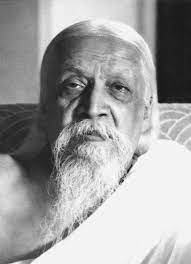 Sri Aurobindo, or the Adventure of Consciousness. What I found there was exactly what don Juan said: philosophically integral yoga very closely matches the Andean spiritual arts.
 characterized ascending traditions: “Most of spiritual history, up to now, has attempted to get us out of this world of multiplicity, forms, worldliness, embodiment, and ‘sin’ into the Transcendent Oneness that most call God, holiness, purity, or simply heaven. . . . This rather universal desire for ascent surely proceeds from our understandable, but nevertheless egoic, desire to flee this ‘vale of tears,’ to ‘get saved,’ and to feel superior and somehow above all this messy diversity and sinfulness. However, this left us in an empty and disenchanted world that was hardly worth noticing because the Divine was always elsewhere and beyond.”
 , or the stairway of the seven levels of human consciousness. This is a kind of ascension, but one whose goal is rooted fully in the human world, body, and mind. Our ascension is not to realms beyond the human, but to the heights of human consciousness. Ours is a practical tradition, not a sentimental one. Paqos would no doubt agree with Aurobindo’s view that as we progress along our energetic and spiritual path “‘on each height we conquer we have to turn to bring down its power and its illumination to the lower mortal movement.’ Such is the prize for transforming life, otherwise we would merely poeticize and spiritualize on the peaks, while below the old life keeps bumping along.”
 the hanaqpacha (upper world, what some might call the heavenlike realm of pure sami). It is to bring heaven to earth because we have realized our God nature.
 it’s the quality of your ayni that matters. Ayni is most strongly related to your actions. And you get feedback from the universe. The more conscious you are of this feedback, the better you can continue to respond to what happens. Everything that is under your power is your responsibility. Ayni is a tool to improve your life. It’s a specific action. To improve your life, you need to perform certain kinds of human actions, which is reciprocity, according to the tradition.
 until they completely lose meaning. The discovery about how quantum reality resonates with the expectations of humans—it is a discovery. But there are people who extrapolate from that, telling you that you are creating your reality because the quantum facts obey your expectations. But did it really obey? Take a look at physics: trying to find the Higgs boson and ways to control certain subatomic processes. Why did they need that huge machine [linear accelerator] if quantum physics follows your expectations in a total way? No! Reality has its own way of moving. It can resonate with you and you may be able to move it a little bit in your favor. And that little bit can be important! But it doesn’t mean you create reality. This is subjectivism that is beyond any part of reality.
 into our lives, like when we have an accident, we have to deal with it and find a way to survive. But it is not necessarily that you made it happen. That’s another important point. Because what happens? When you start to be aware of your ayni, you can start to see how everything you do has consequences and how you receive the feedback. And this is good, to receive and see that feedback. But the thing is that you may start to think that everything that happens is because of your ayni. And this is not necessarily true. And then you are going to start to feel guilty, because you [think that you] created all the things that have happened and it’s completely out of your power now because you are not able to change it.
 a reptile (cold-blooded animal), mammal (warm-blooded animal), and bird. The third-level through sixth-level helpers are human beings from the past or present who represent the qualities of that level of consciousness and so can inspire us to lift ourselves up to that level. The seventh-level helper usually represents Taytanchis, or whatever God is to you, or, less commonly, it can be a fully enlightened human being who is ranti, equivalent, to Taytanchis.
 total healer. Then comes qapaq, a king, but he must be wise because he is hamuta, which is wisdom. The fourth level is an apu, representing leadership. Then [at the lower three levels, level two down to zero) are the animals. The pisqa, a bird; then a qorikawsay, warm-blooded animal, then at the zero level the chirikawsay, a cold-blooded animal.
 they are there or not . . . what we are saying is that many people talk about how a certain amount of information is accessible in some way. So, when we work with helpers, we can say that we are not working only with the spirit being, but also with the memory of that helper [especially of human helpers, most of whom tend to be historical], which is imprinted in the earth, into the physical world. In the practice of the left side, when you choose your helpers, you are establishing a connection between yourself and the field of information—and with the ground, with Pachamama, and with those specific pieces of knowledge. So, in working with the helpers, you are working with information that you bring into your bubble.
 help you to resonate with the levels that are within you. They help you deal with that aspect of yourself. Like the ukhupacha is your unconscious, the kaypacha the conscious part, and the hanaqpacha is your connection with the spirits and gods, the metaphysical part of yourself. They help you access these. For the Andeans in general, they are at the door of each of the three worlds, as kind of gatekeepers; for you as a paqo, they also are a way to tune yourself inside of yourself to those worlds in order to tune to that reality. You deliberately choose each of your helpers, which makes it more specific, because they the ones you feel serve as the best possible way to help yourself to connect.
