Integrity and Your Poq’po

If you have integrity, nothing else matters. If you don’t have integrity, nothing else matters.

—Alan Simpson

The word “integrity” has several meanings within the Andean tradition as passed on through the lineage of Juan Nuñez del Prado. The core meaning of integrity as Abstract fractal texture wisps and lights Background design ofa paqo means being in energetic coherence, in the sense that the streams of kawsay that flow through and within your bubble do so harmoniously. When you divest your bubble of hucha through practices such as saminchakuy and hucha miqhuy, you increase your bubble’s level of sami, which is the life-creating and life-sustaining energy of the cosmos. Less hucha and more sami means your poq’po is closer to its original, natural state.

When you are in energetic integrity, kawsay flows through you unimpeded, so you are in a greater state of unity with the cosmos, Thus, your capacity to make more refined ayni exchanges is heightened. As more sami flows and energetic integrity increases, you also activate your Inka Seed, which is your divine self. It’s you as a Drop of the Mystery. Your Inka Seed encodes your true nature and fully realized self. Thus, it is the repository of your fullest and grandest capacities and gifts. But your Inka Seed grows best when the ground state of your poq’po is one of coherence.

Integrity as coherence also means you are not split within. You don’t act as often from your superego, which acts according to feedback such as approval and acceptance that comes from outside the self, or from your undirected passions and impulses. You are more aware of who you really are, and so you can more easily divest yourself of illusions, contradictions, projections, and such. Doing so releases hucha and increases sami so that you can act with the integrity of a unified self. You are not torn emotionally between your head and your heart. Between your desires and your best interests. Between your intentions and your actions. When you are in energetic integrity your thoughts, actions, words, intentions, desires, and such are more integrated. The consequence as a human being is that you are in “right relationship” with yourself and with others. You are more compassionate, confident, trustworthy, joyful, truthful, patient, and a host of other qualities that arise from inner coherence. In short, you are more “real” in the union of yourself as human being and spirit being.

Integrity also means to act with munay, with a love grounded in will. Munay is not sentimental; it is not a feeling that is subject to the whim of circumstance or emotion. Munay is a choice.  It is grounded in clear-seeing—in qaway—and so is subject to your will.  Munay is beyond the needs of the self yet within the purview of self-control.

Munay expresses itself in myriad ways: it is evident when you choose to speak kindly 3d words of faith hope and loveto someone with whom you have deep differences; it displays as compassion for someone whom you judge as suffering due to his or her own choices and actions; it does not condemn; it is not about preaching; it is not holier-than-thou, although it also is not devoid of opinion, ethics and morality. But munay always extends the benefit of the doubt. It errs on the side of kindness, charity and empathy. Because munay is love grounded in will (choice), it is not so much a feeling as it is action. Even if you do not feel loving toward another person, you act with loving–kindness. Ideally, however, munay is the perfect coherence of both feeling and action. It is, like Christian agape, the model for humanity.

Integrity encompasses each of these meanings and others. Bringing integrity—coherence—to your poq’po is a fundamental practice of a paqo. When in energetic integrity, you can live more fully and truly as a paqo who fosters joy and well-being for yourself and those around you.

Qaway: Mystical Seeing and the Flow of Time

Those of you who have undergone the Chunpi Away and Ñawi K’ichay karpay—the weaving of the belts and opening of the seven eyes—have a unique capacity to develop seeing beyond the constraints of your physical vision. This enhanced vision is called qaway, which is seeing through your mystical eyes. Your goal as a qawaq is to see reality as it really is, without the screen of projections, illusions, and self-created limitations. As a qawaq, you see the past and present clearly and without impulse or sentimental emotion. You can even see into the future.

In contrast, the future—qayapacha—is behind you, because you can’t see it. Referring to the ñawis, you have only one eye, the siki ñawi of the yana chunpi, by which to view the future. Thus, it is less unknowable, although when you developed your qawaq/seer abilities, you can sense what may be coming, especially if you increase your mastery of pushing the kawsay (influencing the world of living energy). The future also is sometimes associated with the left physical eye, the lloq’e ñawi.

Although the seventh eye faces forward, and so looks at the past, it also has an integrating capacity. When you are qawaq and seeing clearly and soberly through both your physical and mystical eyes, then the past and future fuel your vision through your seventh eye, which is in the middle of your forehead (called the third eye in many metaphysical traditions). At the seventh eye, past and future coalesceGold pocket watch and calendar into the now (called the kunanpacha). Thus, you can improve your ability to see reality as it really is in your life at the current time. This mystical vision, coupled with your personal power, allows you to be in greater well-being because you can think, speak, and act according to what is necessary at the moment, without being impulsively or unconsciously driven by the whims of circumstance.

Being a qawaq does not mean you become clairvoyant, although you certainly can develop a similar ability. Being qawaq is less about predicting what is coming and more about living in well-being in the present. Ram Dass’s famous adage, “Be here now” is a good way to describe what qaway involves, but it goes beyond just being attentive or mindful to what you are doing or what is happening around you at the current moment. It extends to being able to see beyond the “story” of the self by Illustration of woman and man with aura, chakras and healing energywhich most of us color our present life, usually in rosy hues. Seeing reality as it really is takes you beyond story and circumstance. It drops you deep into the center of your
personal power, whereby you can not only intend to be who you really are, but can actually more fully live as who you really are. It frees energy so that you can grow and change, helping you rise above any self-imposed limitations.

The Andean path is all about being able to better live up to your potential as a human being in the human world. Developing your personal power, which includes improving your mystical seeing, allows you to take greater responsibility for your life, to deal more artfully and effortlessly with the circumstances of life exactly as your life is right now. Best of all, developing your qawaq capacity allows you establish a deeper, truer, realer relationship with yourself.

Animal Spirits and the Andean Tradition

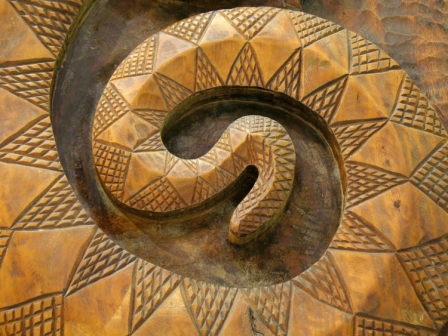
Animal spirits don’t make appearances in the Andean tradition in quite the same Wooden Snakeway they do in many other traditions, such as the Native North American tradition. Let me say off the top that I know some Western paqos work with a Medicine Wheel, and so associate animals with each of the four cardinal directions. But I have no knowledge of that being the case in Peru or as a formula used by any of the paqos I have worked with or know about.

The most common use of animals as spirit beings in the Andean tradition is as representative of the three worlds. The lower world—the ukhupacha—is represented by the snake; the middle world—the kaypacha—by the puma; and the upper world—the hanaqpacha—by the hummingbird, and sometimes by the condor.

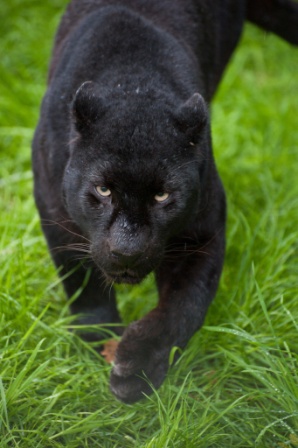
The serpent, as the amaru or anaconda, rises from the earth, and in the left-side work we raise it as representative of our personal power. It changes color as it rises up our body along the spine and positions its head over the crown of our head: shifting from green, to black, to red, to silver and finally to gold. The colors are associated with the chunpis, or belts of power, and we can call on the snake of the corresponding colored belt to quickly access the capacities of that belt. For example, we can rise the amaru as silver to access capacities of communication and holistic conceptualization at the kunka chunpi, or silver belt at the throat. Or, when we need to take quick action with decisiveness and will, we can raise the aramu in its red guise, which corresponds to the puka chunpi, or red belt at the qoqso, which is the center of personal power and kinetic action.Black leopard Panthera Pardus prowling through long grass

The puma is a representation of this material world, the kaypacha, and is mirrored in the geographical contours of the city of Cuzco, which is laid out in the shape of a puma. There are sacred sites and huacas situated along the body of the puma, some of which represent its chunpis.

The hummingbird is the messenger of the metaphysical God, bridging the upper world and this world. When we commune with spirits of the hanaqpacha—who are beings of perfect ayni—we say we are crossing the hummingbird bridge.

When we work with the chunpis and the Stairway of Seven Steps (which can be associated with the seven levels of human consciousness) we also work with eight helper energies: three of them are animals, four are humans, and one is the metaphysical God. We choose the seven animal or human helpers, so there are no universal symbolic associations with them. However, our zero-level helper is always a reptile; our first-level helper a mammal; and our second-level helper a bird.

These helpers can indeed help us! They hold the space within us for those capacities Brown Frog Isolated on White Backgroundwhich are undeveloped in us. They help us to gradually realize our fullness and use our gifts. They also can serve as protector spirits. I remember Juan telling me the story about walking in Amsterdam at night and being confused about the street path, since there was a trolley line right through it. As he walked he suddenly found himself making a leap, like a frog, off the side of the track and onto clear pavement. The movement happened spontaneously. And a good thing it did, as a trolley rounded the corner and would probably have seriously injured or even killed him if he had not leapt to safety when he did. He credits his zero-level helper, the frog, with motivating his spontaneous leap.

If you have gone through the lloq’e work of don Melchor Desa and have chosen helper spirits, don’t forget to nurture them. They are not just there for use during the workshop exercises. They are there to represent your unexpressed capacities and to help you grow into them. By nurturing a relationship with each of them, they can indeed assist you in your life and your development as a paqo.

The Energetic Dynamics of Guilt and Shame

Negative emotions like loneliness, envy, and guilt have an important role to play in a happy life; they’re big, flashing signs that something needs to change.

Gretchen Rubin

Fear is the greatest creator of hucha. Hucha, or heavy energy, always siphons off businessman rolling a giant stoneyour energy and so reduces your personal power. It weighs you down and keeps you from moving forward with well-being, grace, and ease.

Right up there with fear as wasteful of energy are two emotions that most of us have felt at some point and probably still carry with us in our poq’pos as hucha: shame and guilt.

Shame is what you feel when you have violated your own standards or hurt yourself. Guilt is how you feel when you have harmed someone else.

In the Andean tradition, your capacity to act is called your personal power. Personal power is equivalent to personal freedom and even wisdom. You can have strong or weak personal power. If you have strong personal power, you have a larger degree of personal freedom because your capacities allow you greater choices for action. The greater your personal power, the greater your capacity to influence the kawsay pacha on behalf of yourself and others. The more personal power, the more clearly you see “reality as it really is” and so the more wisely you can act and speak. If your personal power is weak, the opposite is true.

We all can look back at our lives and see when we have acted with diminished personal power and from clouded perception. We all have things that we feel guilty or shameful about—things we have thought, said, and done that keep us bound to the past because they created hucha for ourselves or others. But the Andean tradition asks that we release that guilt or shame (or, more pointedly, that we not rope binding mans handscreate hucha for ourselves because of guilt or shame). The Andean tradition would say that we should not feel guilty or shameful about things we did not have the capacity to do differently at that time. This is qawaq—being clear-seeing and perceiving reality as it really is (or was).

Usually feelings of guilt or shame come with hindsight. With the clarity of distance from the event and the passage of time, you can see the impact of your words or deeds and so judge that impact as helpful or harmful. Then you feel guilt or shame, or you don’t.  While it is valuable to admit your mistakes and shift your behavior, not forgiving yourself for them just creates more hucha.

When you judge yourself, you necessarily do so from the present, when some time has passed and you have likely developed greater capacities and so expect more from yourself. But you can’t judge your past self according to the personal power of your present self. If you do, you are failing to look back asking, “What was I capable of at the time of the event?” If you are clear-seeing, you might admit that you did the best you could at that time, even as you see now, looking back, that what you did was not beneficial to yourself or others. The Andean tradition gives you the benefit of the doubt. Should you do any less for yourself?

One way to discern whether guilt or shame is a justifiable feeling or not is to tease out from past events how much of the situation was due to your personal power (your will) and how much was due to your intention (state of your consciousness). Sometimes we are unconscious to the motivation for our actions. All the more reason not to torture yourself now for what you did then. But if, for example, you had the personal power for a large degree of choice and action, but willfully and intentionally did that which decreased the sami for yourself or someone else, well . . . then, yes . . . you might rightfully feel guilt or shame. You can then take responsibility for your lapse. You can probe to see what motivated your intention. You can learn from your mistakes and take responsibility, making no excuses for yourself. But don’t waste energy beating yourself up!

The point of self-analysis and self-revelation is not to punish yourself but to learn and grow. Long-term feelings of guilt and shame are a clue that you are stuck and here there green road signnot growing. Stuck energy is always hucha.

The path from “there” to “here” and from “then” to “now” is the path of energy flow. To move your energy in productive ways, use the two core practices of saminchakuy (to cleanse your bubble of hucha) and saiwachakuy (to empower your bubble with sami).

Consciously and energetically initiating beneficial change is a powerful way to increase your personal power and well-being.  So if you find yourself trapped in the past, feeling persistent guilt or shame or some other energy-draining emotion, use your Andean practices to begin to get the stuck energy flowing again. In the interest of integrity, make amends if you can—both with the recipient of your hurtful behavior and with yourself. But no matter what, always, always use your practices. Don’t wallow in the past, shift it by turning hucha into sami.

Are You an Andean Healer?

In a recent workshop, where participants were learning about cleansing hucha and the specifics of hucha mikhuy, there was a palpable reaction of discomfort when I Healing Hands Ayni Compresssed Dollarphotoclub_67573261said that according to Andean healing, you don’t have to ask permission to work on another person’s poq’po. Most people are so used to honoring other people’s privacy, and rightfully so, that doing anonymous healing work seems like an invasion of that privacy.

Here is the Andean answer to that concern. You can never interfere with the interior of another person’s poq’po, so there is no issue about violating someone’s privacy. Hucha accumulates mostly on the “skin” of the poq’po and that is where cleansing takes place. So you are not invading anyone’s personal space because you are not entering his or her poq’po.

According to the Andean view, the only thing that is truly yours in this life is your poq’po. It is absolutely inviolate. No one can enter your energy body without your conscious or unconscious permission. Not even God!

The key word here is “enter.” When it comes to the skin of your bubble, that meeting place between the “outside” and “inside” of the self, well . . . that’s another story. We accumulate hucha there like a tabletop accumulates dust. If we don’t cleanse it, it builds up, and our beauty becomes disguised, our well-being Hand wiping surface with pink rag isolated on whitediminished, and our ability to push the kawsay compromised.

Hucha can enter the poq’po, but that interior cleansing work is for the individual, not another person. If you are working on someone else, you are working at the skin level—unless the other person has invited you to enter his or her bubble.

So, 99% of the cleansing we do on others is at the skin level and we do not need permission to undertake it. Ask yourself these questions. Do you ask another person’s permission to send him or her positive thoughts? Do you require permission to put a person in “the light” in meditation? Do you refrain from praying for a person because you haven’t received permission to do so? Probably not. Hucha cleansing is the same. You can only “heal” another person through munay, compassion, empathy. Those are the feelings and energies that create the space for healing. They are gifts freely given. You do not need permission to give such gifts.

Another question came up concerning karma. What if that sickness, disease or emotional problem is in the “best interest” of the person’s karma? Who are we as healers to try to affect it? First, I have never heard of an Andean belief in karma, so to my knowledge this is likely a moot concern. However, even if it were a concern, it would not require you to refrain from healing because in the Andean view no one heals anyone else. All a healer can do is create the energetic space within which to support or help activate the self-healing capacities of the person who is undergoing the healing. Put another way, we can only heal ourselves. Others can assist, but they cannot force anything on us, even healing.

Dealing with Helpess, turn it offNotice that above I wrote “self-healing capacities.” As a healer, all you can do is create the opportunity for a person to increase his or her own well-being. You can only provide a trigger for that person to enlist his or her own will. Healers cannot affect a person’s free will. If the person does not have the will, desire, and capacity (personal power) to heal, he or she won’t. (Unless a fifth-level healer is working on them. But that is another story!). Thus, in the Andean view, healers are primarily working the energies (cleansing hucha) to create conditions supportive of the other person’s self-healing.

As Andean paqos we understand our responsibilities, one of which is to use our personal power/sami to increase the well-being of those around us and the world in general. It is understood that humans create hucha (slow kawsay down so it gets stuck on our poq’po), so if a paqo has the personal power to be useful, it is his or her duty to be useful. As paqos we are obligated to use our power for the well-being of ourselves and to increase another person’s capacity for well-being.

But as a healer in the Andean tradition, you must be willing to touch another person’s hucha. You must have no fear of contamination because, in truth, the efficacy of the cleansing is proportional to your capacity to connect with the other person. Fear shuts down connection, so there can be no real healing interaction. Plus, fear is entirely uncalled for, because there is nothing harmful or contaminating about hucha. Thus, there is never any reason for a healer to cleanse him- or herself after a healing session.

Finally, healing energy is proportional to a paqo’s capacity to create and drive munay. Munay is love grounded in will. You can generate it within yourself using Natural healingcertain energy practices, and you can drive it as a healing energy on behalf of the well-being of others. Generating and sharing munay is always empowering to everyone within the ayni exchange.

Having the munay to connect deeply and compassionately while touching another person’s hucha allows you as healer to gather information about the cause of the hucha. This knowledge combined with your munay-filled connection can heighten your personal power to be a great hucha cleanser or hucha eater! But as an Andean-style healer, you also realize that you are not working alone. You are working together with Father Cosmos and Mother Earth to cleanse hucha and give it to the universe as a gift. The kawspay pacha turns that hucha into sami, thereby increasing the well-being of the person you were working on, of yourself, and of the collective. Healing is always about more than the healer and the healee. As with any ayni, its effects are cosmic.

[Note: I am traveling teaching, so it will be two weeks until the next post.]