This post is a collection of excerpts from a nearly hour-long interview I did with paqo and curandera doña Wilma Pinedo, of Wasao, Peru, in August 2016. I asked permission to use information from that interview, particularly about her healing practice, and she granted that permission. However, she stressed that she wants people to know that all healing comes through God, and she gives all honor to the elders and to God.
Doña Wilma Pinedo:
Don Benito [Qoriwaman], his wife, my mother, my other relatives on my mother’s and father’s sides–we keep this tradition. I think we were chosen by the star from another dimension to keep this seed. This is a seed. We hold it and keep it alive, this medicine.
As I grew up, I was surrounded by my granduncle—don Benito— and others. Always I received the teachings of my elders. I grew up surrounded by my elders, who were in their sixties and seventies. My mom told me that since I was two years old or so, I was working with them.
In this path, I was chosen two times, or three times, by the ancestors, by our elders. When my mom was pregnant with me, she was attached [struck] by the  lightning. My elders, especially my grandmother, used to say to me, “You are a special daughter and child; you have a star, you carry the star medicine.” At that time I didn’t know what they meant. The star medicine means the medicine of the elders. When they worked, I assisted. It was very familiar. It was one more thing that we did in our lives. Very familiar. I assisted my elders, and then my parents sent me to school. At the end, when you are ready you will know what path to take. I could have chosen the career. I went to university, and that showed me how to have a career, to stay in line. But my wish was to help people. Why? Because in my dreams, even when I wanted to stop, my elders in my dreams are always talking to me.
And the condor came to me. A real, live condor, it would come to me. Twice it came to visit me when I was making the journey to my father’s family, which is twelve hours from here. . . . We were waiting for mules, to pack our things for the journey, and a very strong wind came. I thought maybe a big truck was passing by or maybe a train nearby, but it was not the sound of a train. It was a whistling of wind. I heard a voice, saying, “Hurry, hurry, move away, move away.” I didn’t know. . .I didn’t want to move away. There were the supplies we needed and I needed to stay here. No one was going to move me away from there. And suddenly the wind came and there was a condor two or three meters away. Just me and the condor. For me it was a signal. For me, that condor was alpha, the leader. So even now, when I close my eyes, I see the same face of that condor. Since that time, in my dreams, I hear, “You are already starting. Now you have to start. We were waiting for you.” I wasn’t sure why they were waiting for me, and I was scared. I talked to my elders of that area, asking them why condor came to me and time stopped. I didn’t know if what happened was five minutes or one hour or what, but time stopped for me. I see the red condor eyes, the face, everything, and for me it was face-to-face with the condor. Time stopped, and after that, in this dimension, it showed me a canyon. It flew and showed me a canyon, and it would turn to look at me and I could see its face.
After that I talked to my elders and they told me I had received the karpay. Maybe you receive your karpay from your elders, but they told me I had already received it. They took off their hats, they knelt, and they kissed the floor. They said, “You are the one who is going to carry this medicine.” At that time, I didn’t understand what was the mission of the medicine. For me, until that time it was normal to help others, to support others, the same as how I grew up in the tradition with my elders.
Men and women were taught the same medicine. All the medicines. The medicine used to be very strong! Now the energy has become soft. Before it was hard. Before, talking with my elders, they told me, healers were talked about like a joke. Not taken seriously. It was very hard as a healer. Very difficult. But they were very focused, and the medicine was strong. Today, with technology and all that, the energy can be soft. The people are distracted. They are not focused like they used to be. The power of the healing depends on the healer you work with. The healers live in the city, they do other things, so the healing can take a little while.
In a healing, every person has a different energy and so I work with a different energy. Maybe a despacho, maybe saminchakuy. Sometimes I use my mesa, sometimes I don’t. It depends on the person. The energy of the person tells me what I need. Different tools: plants, music, the quena [the flute], other things.
We work starting with the faith of the person. Nothing else can help. It is half and half. Fifty percent the faith of the person and fifty percent my faith.
Many of these teachings I received through my dreams. From my elders who passed away, they guide me and talk to me through my dreams. The apus speak to  me. I talk to them, but sometimes I don’t receive an answer. Mostly they talk to me rather than me talking to them. I work with Apu Pachatusan and Apu Manuel Pinta. Also Apu Wiraqochan. The elder apus of my area. However, only alto mesayoqs can always talk with the apus. Today, it is very, very rare to find someone who can talk with the apus. I use my condor, my guide too. My ancestors who can talk through me. I am a mediator. In Wasao we have four holy caves. In those caves, people live even until this day. People like elves or fairies. We call them machulas, elders. I call them elders. They are alive and we live with them. You don’t see them but they see you. But you can feel them. Elders from the mountains and elders from the caves. They guide us in the medicine. Every day we are learning. Nothing is finished as a student or a healer. What I recommend to my people is to meet the elders, as they are like doorways. Learn how to connect, how to deal with them. There are rules. For example, they don’t like be insulted or used. We only talk to them if they allow us. They send a message to us and allow us to talk to them. They send us a sign. They carry the medicine. And this area, this valley, is the valley of Waskar. This is the lineage of Waskar Inka. Warkarpay Lake is a top sacred place here.
We work in harmony, with apus and with the nust’as. Always we need to carry both energies. To have the masintin and yanantin energies. You need that as a healer. Even the best healer, the highest healer, anyone who carries the medicine, has to know both. Not only the left or the right, or masintin or yanantin, but both energies. Always has to be both. And there are some medicines we use only during the day, and some only in the evening. We have many tools.
With this person [who comes for healing], I [say] only that I would do my best. I can only do my best. Always with the permission. . . I ask permission of the elders, because every person when they are born, are born with a soul. The soul is represented by the mountains. Always when we do something, like a ceremony, we ask, “What is the name of your mountain? Where do you come from?” Because we ask permission of the land of the place where they come from, where they were born, because every person when they are born are blessed by the sami The first breath that we receive is from the earth, between us and the earth. And that place, that earth, of your birth [itu/paqarina] , blesses you. Without asking permission of that land, nothing can be fixed.
Be in ayni with the Great Mother Cosmos. I am only the mediator. I can receive all the knowledge, all the karpay, but mostly my mission is to be the mediator, to share, to do my best with respect. The work as a paqo—my work, for me—it is not a show. It is a ritual, a service. It is a connection with the energy and spirit, and I have to respect that.

 came to stay with me in North Carolina. During his multi-week visit, he shared this “journeying” technique with me. I now pass it on to you. Traditionally, you need to have chunpi stones (formally called mullu khuyas) for this practice. However, since everything in our practice is intention, if you
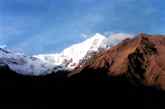 don’t have chunpi stones, you simply can find a stone that is shaped like a triangle or dome, or that has a single protrusion that is mountain-like. Work with the stone, connecting it to a mountain or apu that you feel a relationship with. Build that relationship and connection for a week or so before doing this journeying practice. When you feel ready, use the stone as outlined below for the journey.
 daily life refers to unfolding and spreading out a cloth or weaving, perhaps on the table or a bed. In the mystical tradition, it refers to bringing order, organization, or structure to something. When you make a despacho, you are doing a mast’ay. When you arrange the khuyas in your misha, you are doing a mast’ay. But you don’t only bring order to things outside yourself. You can apply mast’ay to your own beingness. When you bring greater organization to the inner self, everything in your life is affected in positive and productive ways. The inner mast’ay furthers your awareness and, thus, your potential for conscious evolution as a human being.”
 being robotic. You must develop your own way of doing things, because your ayni offering must be true to you—and there is no one else in universe like you. You are a unique Drop of the Mystery. You are who you are because of your unique life experience and path, your feelings and emotions, your beliefs and so on. Your despacho and misha must reflect you alone. They must express your ayni, which by its very nature has to be exclusively yours and not dependent on someone else’s belies or rules.
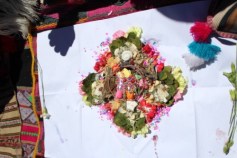 despacho is the most common way you will externalization your ayni and internal state. It absolutely cannot be a robotic performance in construction or use. It must be truly authentic to your state of being and intention. Thus, a despacho doesn’t have to contain certain items, it doesn’t have to be organized in a certain way, it doesn’t have to be offered in a particular manner. The one certainty is that it has to be representative of your ayni in the moment you are making it and offering it.
 certain tools—oils, pastels, watercolors—and learn the rules for painting a portrait or landscape (color mixing, perspective, etc.) but then they break from the rules or apply them in their uniquely original way. They create their own art. They express their own style. You can have ten artists painting the same still-life and each finished painting will look different. It’s the same with making a despacho and constructing or using your misha. Your internal state is unique, and so your external offerings will be as well.
 There are three primarily ways: as a result of conflicted and life-negating emotions, a lack of self-awareness, and a loss of integrity in your thoughts, words, and deeds.
 I have devised this example precisely because it relates an event that seems innocuous: going to an art gallery. Even seemingly simple or mundane events and interactions can cause problems if you are not conscious of your energy dynamics. One variation of the scenario creates hucha, and the other two don’t.
 walked in. What’s that about? Why am I feeling such a strong negative reaction to her as a person? Am I feeling jealous? Jealous? I am! I have to admit it. Why?”
 You have the self-awareness and self-control to monitor your emotional dynamics and so begin to explore the charge behind your hostile feelings. When you do, you discover at least part of what you are feeling is a result of your projection of unrealized dreams onto another person. You realize that while there is nothing wrong with having an opinion and you are at liberty to dislike something or someone, something more is going on. You have no objective evidence or personal interaction to justify your feelings about the artist, and that’s a clue that your shadow self (the hidden, rejected, denied aspects of yourself) is involved. This process of self-reflection allows the hostile feelings to dissipate, thus guarding against your creating hucha.
 have a clue that your feelings are arising from your shadow self and so are not truly well-formed, objective opinions or reactions. If you have an emotional reaction and then it passes—you can let it go easily—then you’re okay. But if those feelings linger, you need to pay attention. You have exposed a soft spot in your shadow and that information has irritated it. That irritation has presented itself as projection—usually of negative emotions—onto others. Through self-reflection, you can aspire—as paqos do—to be a person who “sees reality as it really is.” In this case, you see that your opinions have become embroiled with emotions about yourself and really have little or nothing to do with the other person. That person or situation simply became the trigger for that shadow emotion. When you realize this, then you can deal in a healthy way with those feelings and not create hucha.
 In the Andes, as in many wisdom traditions, there is a saying that “As above, so below.” In the Andes, one of the ways this plays out is in the mirroring of the pachas outside the self with the pachas within the self.
 bubble the world without and the world within. Don Benito’s work—the right-side, mystical, yachay-focused work—is concerned with the universe outside yourself, the God without. Don Melchor’s left-side, magical, and llank’ay-focused work is concerned with the universe within yourself , the God within. The chaupi work of don Andres Espinosa is about generating and being self-sufficient in munay, which is the human power of the kaypacha and integrates all three pachas into a whole.
 self. You can perceive it as the pacha linked to the energy of your Inka Seed that is your purest energetic state, which is one of perfect ayni. It is your potentiality as an enlightened being. It is your spirit, your divinity.
 discerning them, perceiving their state. Are they available to you? Are they hidden from you? Are you comfortable in each? Just sit with whatever you feel and perceive. This is a process of discovery. It is an invitation to get to know yourself and your poq’po better—touching in with non-judgmental curiosity. Don’t rush the process of getting to know yourself!
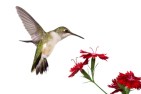 brought this coherence to your energy body, you can take time each week to reinforce this joining, and over time you will eventually feel the flowering of the self—the expansion that is taqa. As I have written about in past blog posts, as paqos we seek to become like flowers in the garden of Wiraqocha, attracting the hummingbird to drink from our munay nectar. This is an exercise that can help you to become such a flower.
