We are the cosmos made conscious and life is the means by which the universe understands itself.
― Brian Cox, particle physicist
Those of you who have studied the Andean tradition with me know that the lens 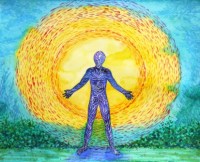 through which I teach this tradition is as a path of conscious evolution, both for the self and so as to contribute to the rise of the Runakay Mosoq, the New Humanity. To mark this New Year’s day, conscious evolution is again my subject.
If you make no other resolution this year, direct your intention to dedicating (or rededicating) yourself to your personal growth. According to the Andean tradition, your life is a gift. You did nothing to deserve it. Your mission, as held in potential in your Inka Seed, is to grow into the fullness of your personal capacities and, when your time comes, to return your life to the kawsay pacha as a grander human being.
To inspire you in this undertaking, I share some quotations that have inspired me, adding short commentary about how the information applies to your practice as a paqo.
“There is no coming to consciousness without pain. People will do anything, no matter how absurd, in order to avoid facing their own Soul. One does not become enlightened by imagining figures of light, but by making the darkness conscious.”
The darkness Carl Jung refers to is at least partially, if not solely, the personal shadow. It is that place in the unconscious where you stuff all the beliefs about yourself and others and life in general that you find offensive, unacceptable, and threatening. Your shadow “stuff” drives your behavior more than you may know (yachay—understanding). So the obvious action (llank’ay—doing) is to probe deep  within to know yourself more truly. And to love (munay) yourself more completely.
This darkness cannot hurt you, even though it may feel “heavy.” It is what we call hucha, which is slow or blocked life-force energy (kawsay). And just as you can use saminchakuy to turn hucha back into sami (actually, it is all kawsay, just kawsay flowing at different speeds), so too can you turn a practice of self-inquiry and contemplation into a light by which you can illuminate yourself more fully (kanay) and, thus, live as who you really are (as encoded in your Inka Seed).
This is not an imaginative undertaking, such as in visualization or thinking positive thoughts, although those are fine practices. It is an action (a “making,” as Jung says). The action starts with self-inquiry and self-observation. There are myriad ways to practice self-inquiry, so I won’t go into them here. The important action is that you start—that you apply your intention and energy to your own growth and self-awareness.
All change starts with the self. Author Eric Micha’el Leventhal reminds you that “the closer you come to knowing that you alone create the world of your experience, the more vital it becomes for you to discover just who is doing the creating.” So I ask you, Are you truly aware of how grand and exceptional you are and how much the world needs you?
Don’t race past that question I just asked. Spend some time contemplating it. Feeling it. Owning it. You truly are a mystery. But, more than that, you truly are a miracle.
“How can a three-pound mass of jelly that you can hold in your palm imagine angels, 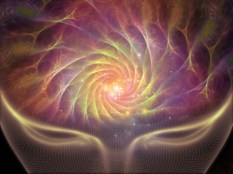 contemplate the meaning of infinity, and even question its own place in the cosmos? Especially awe inspiring is the fact that any single brain, including yours, is made up of atoms that were forged in the hearts of countless, far-flung stars billions of years ago. These particles drifted for eons and light-years until gravity and change brought them together here, now. These atoms now form a conglomerate—your brain—that can not only ponder the very stars that gave it birth but can also think about its own ability to think and wonder about its own ability to wonder. With the arrival of humans, it has been said, the universe has suddenly become conscious of itself. This, truly, it the greatest mystery of all.”
The above thoughts are those of V. S. Ramachandran, a neuroscientist, but they echo the stance of others, from physicists to paqos. One particle physicist, Brian Cox, puts the same idea more succinctly: “We are the cosmos made conscious, and life is the means by which the universe understands itself.” A paqo, don Benito Qoriwaman, framed the same idea this way: You are a drop of the Mystery, of the infinite kawsay pacha and the ineffable God Consciousness that underlies it. You have a unique mission to fulfill here on earth, and you provide the living universe an experience of life and of itself that is impossible for any other person to provide.
What an astonishing mission you have! The Latin root word from which our modern word “astonish” comes means “thunder,” as in leaving someone thunderstruck. That is what your life is to the living universe—something to marvel at, to be amazed by, to be joyously thunderstruck by. That doesn’t mean you have to do big things. It means you have to be big. As author and human potential coach Marianne Williamson has written: “Our deepest fear is not that we are inadequate. Our deepest fear is that we are powerful beyond measure. It is our light, not our darkness, that frightens us.”
Now here is a nugget from me: Love within the esoteric traditions reminds us that we are gods. There is no boundary. Creator is our Source, that field of energy from which we came and to which we will return. We are always already divine, innocent, perfected, accepted, loved. We can do nothing to earn God’s acceptance and love, for we are an aspect of God. There is only the One, of which each of us is a part.
The question you must ask yourself, then, really isn’t “Do I dare to be divine?” because you already are divine. The more astute question is, “Do I dare to express my divinity consciously?”
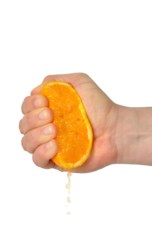 I once heard Dr. Wayne Dyer, the late author and inspirational speaker, describe our essential self as an orange. What happens when you squeeze an orange? You get orange juice. No matter the conditions—if you squeeze the orange in the dark, in bright light, in the cold or the heat—you get orange juice from an orange. Not lemon juice or grapefruit juice.
So I ask you, What will the world get when you are squeezed by life and life’s circumstances? Will joy and compassion, enthusiasm and curiosity flow from you? Or will sadness and lethargy, judgment and pessimism flavor the flow? You are an expression of a unique mix of essential qualities, but the unfortunate truth is that you can choose to express less than your potential. The root of all wisdom traditions is “Know thyself.” To live an extraordinary life you not only have to know yourself, you also have to be willing to squeeze out all the divine juiciness of yourself.
There is no better time to begin the transformation then right now. And, there is no better way to begin than by declaring yourself to yourself and to the universe.
So get started. Rise from your chair right now and declare your existence and your divinity—out loud. Start by calling out your name, centering the energy of the moment through the vibration by which you are known, which is your name. Use the power of energetic vocalization called rimay in the Andean tradition—a vocalization that is filled with your personal power. Then speak aloud all of your wonderful qualities, strengths, and gifts. Speak everything about yourself that is cause for celebration and worthy of note. Don’t make this a laundry list of your accomplishments; focus instead on your qualities, speaking from your heart about what makes you the unique being you are, about the less obvious yet marvelous qualities that form your character.
Declare yourself to yourself and to the living universe. The Holy One already knows but will no doubt be thunderstruck at the magnificence of who you really are. My wish for you in this new year is that you, too, will be thunderstruck by your own grandeur.

 The Andean metaphysical god was called Wiraqocha. Another name for God is the Taytanchis, which means Our Father. Although referred to as male, Taytanchis is beyond gender, for Taytanchis is the living God, the Great Mystery, the Inscrutable One. It is the first cause of creation. From it arose the immaterial realm of living energy, the Kawsay Pacha, and the material realm, called the Pachamama. This is the realm that includes all the matter of the cosmos, including the galaxies, stars, planets, and all of life. It is from Taytanchis that we all come and to Taytanchis that we all will return.
 poq’po is private. As my teacher Juan Nuñez del Prado says, your poq’po is the one thing in this life that is wholly yours, that you alone own. No one can enter your poq’po uninvited (consciously or unconsciously), not even God. As a result of that fundamental energetic truth, as Juan says, this is where the evangelical Christians get it right—you must invite God into your life (poq’po). Until you do, the Taytanchis cannot act as a direct living energy in your human life.
 choice. Having given you free will, Taytanchis will not trump that will. So, you must purposefully invite Taytanchis into your human life and physical being.
 becoming a fully developed human being, meaning a fully enlightened person. We are already perfected because we are Drops of the Mystery of the cosmos of living energy and our enlightened self is held within each of us as a potential in the Inka Seed. However, we do not live that potential—yet!
 tend to be doers and thinkers. We are what we do. We are skilled at abstract thinking. We value knowledge, and see it as the solution to so many of our problems.
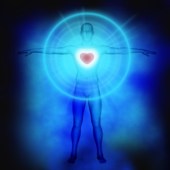 heart. There is never any need to “clean” them, as they are pure sami. Still, we have to work consciously to activate our Inka Seed and to connect our Inka Seed and heart into an integrated system in order to stimulate our development and fuel our evolution. Integration is the purpose of this modified exercise. And it is a way to not only connect these two most important energetic structures within, but to generate copious amounts of munay in the process. As you feel that munay spread through the self, you receive a taste of the purity and power of self-love.
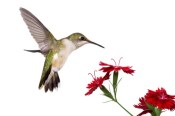 You can do this exercises many times as you need to so that you can actually perceive the flow of munay within and throughout the self. When you experience this sweetness, you will finally understand the metaphor of the paqo as exuding a nectar that draws the hummingbird. The hummingbird is the totem of the upper world, the hanaqpacha, and of God. When the hummingbird feeds on your nectar, you are deeply connected with God.
 only a few days ago in which 17 students and faculty were killed, said, “We took 17 bullets to the heart.”
 are, so is our country. We are responsible both for acknowledging the energetic violence that has us in its sights and for not perpetuating that heaviness ourselves.
 of saminchakuy to use on behalf of the conscious evolution of our country.
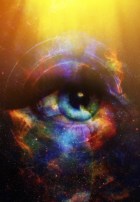 physical eyes and the seventh eye (called the third eye in some other cultures), the kunka ñawi (throat), sonqo ñawi (heart), qoswo ñawi (belly) and siki ñawi (root). The five secondary eyes are the two makis (palm of each hand), the two chakis (sole of each foot) and the uma (top of the head).
 any of our twelve ñawis.
 Knowing the state of that dynamic interplay can help us reduce hucha and foster sami.
 or incompatible with the state of our own energy body. But by tasting or touching as many kinds of energy as possible, we open ourselves without fear or hesitation and so can engage the world more easily with khuyay (passion).
