
As a paqo, you can think of your past and your future as pachas, as realms within  the space-time continuum. They have their own bubbles. The Andeans position time differently in space than we do. They say the past is in front of you because it is known. You have six ñawis (mystical or energetic eyes) facing forward: the qosqo, sonqo, kunka, paña, lloq’e and qanchis ñawis. These are, respectively, the eyes of the belly, heart, and throat; the left and right physical eyes; and the seventh eye (what some traditions call the third eye) in the forehead. Therefore, you have full view of your past. It is known. That’s why following the seqes, or energetic cords, that stream out from you through your personal past is called following the Path of Knowledge. By following these seqes through your past, using qaway (mystical seeing, which means seeing reality as it really is, without projection or illusion), you can learn from your past, extracting its wisdom. You may not be able to change your past, but you can change your relationship to it, including healing past trauma.
The future is situated behind you. You have only one ñawi facing it, the eye of the root (siki ñawi) at the black belt (yana chunpi). So while it is possible, using qaway, to know something about what “the time to come” is streaming toward you, it is difficult because you have such limited vision of it. The future is not fixed, but is a pacha of potentiality. Thus, following the seqes of the energies flowing to you from your possible futures is called the Path of Potential.
You can think of each of the seqes streaming toward you from your future as encoding a different possibility for what your life will be: what aspects of yourself  you will express, which gifts and skills you will use, what you will do with your time, who you will interact with, and the like. Even though the future is the pacha of potential, the reality is that for most us, our future will look similar to our present. We are creatures of habit. We remain fairly fixed in our personalities, needs, desires, and so on. We wear the same types of clothes, eat the same limited variety of foods, follow the same paths to the places we frequent, socialize with the same people, maintain the same beliefs, cling to the same expectations, follow the same career path for decades, etc. Writer Steve Almond says, we “choose the stories by which we construct reality.” Since our stories remain fairly fixed, so does the future we pull toward us from that creative flux of potentialities.
Our work as paqos, when it comes to manifesting a different future, is to become conscious of our stories, examine them, and then clear the energy that has us stuck in a story that may not be expressing our grandest self. Almond writes, “I’ve placed my faith in stories because I believe this to be the basic unit of human consciousness. The stories we tell, and the ones we absorb, are what allows us to pluck meaning from the rush of experience. Only through patient interrogation of these stories can we begin to understand where we are and how we got here.” And, I would add, understand where we are going.
I faced this dilemma in 2015. It was a deeply challenging year. The flesh of my life was stripped to the bone. Laid off from work and not finding anything in my field despite sending out more than a hundred résumés and making countless inquiries, I was blowing through my savings and at risk of losing my house. It was a time for both action and contemplation.
I decided early on in the challenge of figuring out “where do I go from here” that I  was going to put all my knowledge into practice, especially my knowledge of and experience with the energetics of the Andean path. I was intent on manifesting the future of my dreams, at least as regards to how I earned a living. I wasn’t going to wear rose-colored glasses, but was going to be both practical and visionary in my approach. I sent out résumés, networked, and took on small freelance jobs. But I spent most of my time working the energetics.
To summarize some of how I worked the energetics: I did saminchakuy to keep my poq’po (energy body) as clear of hucha (heavy energy) as possible. Part of that work was psychological and emotional: I examined my stories, desires, beliefs, needs. I owned my heaviness in terms of doubt, worry, insecurity, and such, and then I worked my heaviness with saminchakuy. When I felt down, I did saiwachakuy to empower myself. While I had the support of family and friends, I wanted a closer sense of support from Spirit, so I called upon my sixth-level helper—Christ—to help me learn trust. (I didn’t fully trust that any of this would actually work.) Perhaps the most important task I undertook energetically was to clear or “clean” the chaupi point of a future potential.
A chaupi is a meeting point, a place of connection or integration. Imagine two rivers flowing parallel and then merging together to become one river. That point of intersection is the chaupi point. For me in this situation, there were many chaupi points: one for all the possible futures streaming toward me and connecting with my poq’po. I needed to be clear about what the future of my dreams looked like so that I could energetically work the single seqe that encoded that particular future.
I decided to keep my intentions manageable and focus on the immediate and pressing situation of how I would earn the currency of this third-dimensional life— money. Since I am primarily a writer, and have worked as an editor for publishing companies and done other types of professional creative work in the field, I at first imagined my future as a writer. (I told you! We are creatures of habit! That’s why our future looks so much like our present and past.) While mulling over the possibilities of what this future might look like, I realized—from past experience—that my most creative imagining would be far less glorious than what the creative mind of God could conjure up for me. So I changed my intention. Instead of identifying a concrete kind of job (writer), I focus on the qualities of the job I wanted. I’d let God figure out which job fulfilled all those qualities.
As I started to do that, however, I had to stop and revamp my energetics again. I threw “keeping my intentions manageable” completely out the window! I decided that if I was going to trust God and let something much larger than myself use the energy of my intention to return an amazing ayni result, I might as well go really big with that intention. So I gave up even thinking about a “job” and earning money working in a specific profession and declared to myself and the universe that I intended there be no distinction whatsoever between “my life” and “my work.” As far as I was concerned, for each of us, our lives are our work. I didn’t want to work to live. I just wanted to live—and be well-compensated for it! So that became my first quality: I wasn’t going to expend any energy intending how I would “make a living.” My life would be my living.
I then became clear about the foundational qualities I most wanted in making my life a living. I kept my list short. I wanted to spend my “living” time being creative, not answering to anyone other than myself, not having to be on any fixed time schedule, connecting with all kinds of people from all walks of life and from all over the globe, contributing to my own soul growth and to that of others, and having fun. I kept these intentions clear and active in my consciousness, even as I continued calling on my sixth-level helper to help me trust that this could become my reality.  And I kept perceiving a single seqe—just one from the infinite field of potentiality—streaming to me from the future that encoded all of the qualities I sought. I kept cleaning the chaupi point of this seqe where it entered my poq’po at the siki ñawi. (The future is behind you so the seqe could come in anywhere on your bubble, but I felt it coming into the mystical eye at the base of my spine, since this is the only ñawi we have in the back and it looks toward the future.) I tried to be as conscious as possible of all the ways I was stuck in self-defeating stories and so creating hucha and obscuring the energy of this seqe from flowing freely through me and empowering me. I dealt with doubt, fear, low self-esteem, worry, and many other hucha-inducing emotions and stories. I cleaned and cleaned this connection point to my poq’po using saminchakuy.
The results took some time. In fact, I was taken to the very edge of both financial solvency and emotional comfort.
And the answer was an indirect one, so much so that I did not even recognize it as an answer!
One day, while I was talking to my mentor and primary teacher Juan Nuñez del  Prado (who didn’t know about the grand experiment I was engaged in) he said, out of the blue, “You know, after me and Ivan [his son], you know the Andean tradition better than anyone in the world. I would like you to open a US school.” My reactions, in a fraction of a second, were several, but my most powerful reaction was, “I couldn’t possibly!” I immediately thought of all the reasons this couldn’t be: I didn’t have a place to teach, no building or grounds, no organization, and so on. Opening a school immediately felt overwhelming.
I finally pulled it together and just told Juan I would think about it. And I did. I had taught a few workshops about the tradition many years before, and I had not found it satisfying (mostly because I never thought I knew enough). It had been more than ten years since I had taught, and I didn’t feel drawn to doing so again. Still, I realized that although I had never been “out there” as a teacher of the tradition, I had written about it in the past and I could start writing about it again. So I decided to do that. (Drum roll . . . creature of old habits. . . keeping myself in the writer box. . .sound familiar?)
A young tech-savvy friend of mine taught me how to create a WordPress blog. After the first few posts, I spent five days answering the slew of emails that came in. Most of those emails were requests to teach. Go figure!
So reluctantly I started teaching again. And this time it was a completely different experience. I had really dedicated myself to my Andean practice in the  previous six or seven years—I had been living it like never before—and it totally changed how I approached teaching. I felt a huge passion for sharing the tradition. The requests kept coming and I kept showing up to teach, accruing more than 94,000 air miles over the next two years. When that kind of travel became exhausting, I started teaching online. And the rest, as they say, is history.
I had no idea that “teaching” was how God would package the qualities I had intended, but it certainly satisfied them all: I am my own boss, I don’t watch the clock, I work from home but can travel to amazing places should I decide to go on the road, I meet fantastic like-minded people, I am growing and changing and helping others to as well, I am honoring this beautiful tradition and having fun doing so. . . . All the qualities I sought to pull from the field of the potentiality of the future have become my present—my life, not my job. And I couldn’t be happier.
There’s nothing special about me. What I did, you can do. The Andean mystical tradition teaches you to work the energies of manifestation of any kind. As Juan says, rephrasing what his teacher don Benito Qoriwaman said: The kawsay pacha is overly abundant. Everything is just energy. You can have whatever you want and as much as you want in proportion to your having the “personal power” to make interchanges with the living universe (your ayni). The only thing that can stop us is ourselves.
I don’t promise that if you use your paqo practices in this way the journey to fulfilling your intentions will be easy or the results quick. But I do promise you that by owning your stories (through qaway) and clearing your hucha (through saminchakuy)—and working the seqes of your future—you too can manifest your heart’s desire.
 the kawsay pacha—the cosmos of living energy—because we are influencing energy through our intention. As thinking, action-oriented human beings, we are in continual relationship with the energy of the kawsay pacha; however, we can unconscious to these energy exchanges. One of our primary goals as paqos is to increase our consciousness, and to bring clarity and choice to our energy exchanges. This means we have to become observers of—and ultimately masters of—our intent.
 what to believe. As author Steve Almond writes: “I’ve placed my faith in stories because I believe this to be the basic unit of human consciousness. The stories we tell, and the ones we absorb, are what allows us to pluck meaning from the rush of experience. Only through patient interrogation of these stories can we begin to understand where we are and how we got here.” This “patient interrogation” is what can help us evolve our consciousness as paqos, because in addition to keeping our poq’pos (energy bodies) “clean” from hucha, we can prevent ourselves from creating hucha in the first place by paying attention to—and healing—aspects of ourselves driven purely by our psychology (emotions, triggers, projections, etc.).
 have to stop and take a time out. In that fraction of a second between intention and actions or words, you have to remember to cease moving and just observe. Actually, you are initiating a new intention and action: to activate your observer self. This place of cessation, or stillness, of qaway (seeing energetically, understanding mystically) is the cradle of change and the energetic fount of awareness. It is the ground state of conscious creation. But you have to remember to disengage for a second or a minute from whatever is happening or whatever you are thinking. You have to stop habitual and unconscious processes in their tracks so that you can bring them to consciousness and evaluate and seek to understand. Only then can you make a new choice, if indeed a new choice is called for.
 stance. You can ask yourself a series of probing questions: Is this what I really feel? What feelings might be deeper, fueling the surface feeling? Why did I have this response to the situation? What other responses could I have had? If I had made a different response, how might I feel differently and how might the situation unfold in a different (more helpful) way? What is the story driving these feelings and this response? You can be the mediator between your knee-jerk habitual words, thoughts, feelings, and actions and new ones that might be more helpful and/or make you feel better—and fuel your ability to influence the kawsay pacha (your ayni) in more productive and efficient ways.
 huge tapestry that can be laid out in whatever pattern you wish. Each day you add a new thread to the weaving. Do you craft a curtain to hide behind, or do you fashion a magic carpet that will carry you to unequaled heights.” What Robbins doesn’t tell you (at least not in this quotation) is how to fashion a magic carpet instead of a curtain. The CALM process is one that helps you not only be a great designer, but shows you how to turn that mental design into something concrete and real in the world. Something you intend with clarity and awareness, not from outdated and habitual—and often unconscious—impulses. If energy truly does follow intention, as the paqos tells us it does, then there is nothing more important than making a deep and careful study of your intentions and what is driving them. The CALM process is a place to start.
 beautiful and apt term to describe the first stirrings within yourself that life as you know it is not acceptable to you and that you desire something more: more connection, more peace, more joy, more engagement, more service, more meaning. . .whatever it is about your personal experience and state of being that feels unexplored, unlived, undeveloped. Simply put, there is either a calamity in your life that shouts to you “Enough!” and you are propelled toward change; or there is a niggling voice within, often quite subtle, that pesters you toward change. Either way, you come to the realization that you want more, can do more, can be more. Most of us at some point in our lives feel this inner disquiet. Unfortunately, many people tend to ignore it and instead just get back to the business of life, the pull of everyday responsibilities, and the safety of the known. Those who listen to this inner call, however, have stepped onto the path of their spiritual quest.
 can be the longest stage of the spiritual quest, as there are many paths to growth and they can create inner confusion because they may provide competing and even conflicting strategies for self-development. Sometimes the cacophony of voices you listen to can be so overwhelming that the spiritual journey ends here, with you throwing up your hands in despair and taking the easy path back to what you know and the life you have lived to this point. You squelch the call and retreat to the familiar or rationalize that the spiritual quest and self-development is just not worth the effort. For those who can withstand that task of sorting through the vast reams of information and handling the often conflicting advice, the search becomes an experience rich in the widening of your intellectual, emotional, and spiritual life. The search itself becomes a journey of growth.
 reap the benefits. This doesn’t mean that you have to choose a single path forever—say a particular school of meditation, or the practices of a particular tradition such as the Celtic or the Andean or whatever—but you do have to commit to a single path or practice for long enough to use it well, perhaps even to master it, so that you incorporate its beneficial effects. You might then move on to another practice, but you then also give that practice sufficient time to help you do your inner work. The trap of this stage is also two-fold: you become dogmatic in believing you have found the single only “real” answer and become fanatical about it. Or, you don’t give sufficient time to that practice to reap its rewards.
 be a sign that you are doing your work and are ready to up your game. Here’s why: You have to walk your talk. You will be asked by Spirit to take off your rose-colored glasses and see yourself as you really are—what you have mastered and what you still need to work on. And the universe will provide that opportunity. In my trainings, when I am talking about this, I often quote from wise woman Gloria Karpinski. She wrote in one of her books, as an example of this kind of “test,” that when you put out the intention to the universe that you want to “be love”—live from love, treat others with love, etc.—the universe probably won’t send you thirty people to love. It will send you thirty people you cannot stand and say, “Love them.” Those are wise words indeed. If you truly want to walk a spiritual path, you will have to—sometimes moment by agonizing moment—put your intention into action.
 work and you make a change; 2) you reassess the people and relationships in your life to more clearly see how they are (or are not) serving you and how you are (or are not) serving them, and you make necessary changes; and 3) you reassess your place on the Mother (your home location) and you relocate. In other words, in their most dire expressions, you break up a relationship or marriage, your quit your job, and you move. Sometimes these are necessary transformations, because, after all, you are changed and you see the world (and act in the world) in a changed way. But usually such major disruptions are not necessary—at least not in an abrupt way. My best advice is that when you feel the best (and are reassessing most deeply), do nothing! At least not for a good long while. The old Buddhist adage “After enlightenment, the laundry” applies. Your goal is not to be spiritual and surrounded by spiritual people. Your goal is to be most self-actualized human being and to live in the very real world that way. The question is, “Can you take your relationship, job, and home environment to the next level of satisfaction?” Doing the work on these three most important aspects of your life may be the deepest aspects of the renewal period.
 that of self-actualization. You have taken back projections, unhooked from triggers, learned self-observation and self-monitoring (self-control), attended to incongruities within yourself and outwardly in your life (relationships, profession). You have reduced your “needs” and realize that mostly what is left is “choice.” But you may be experiencing such equanimity that choices seem pointless. You feel dispassionate about everything! You can end up lacking motivation to engage in life, instead only going through the motions and putting on a mask so your family and friends don’t worry about you. If that is the case, you may have to, as some psychologists advise, fake it until you feel it (engagement in life—meaning) again.
 passion, but emotions don’t matter. You are making a choice: to re-acknowledge your humanness and to retake your place in the human world. To steal the title of book of physics that sits on my bookshelf, you are the owner of the “deep down things” within yourself, and you are ready to rise up and explore the mysteries of being yourself in the world—really yourself. This means that while you may feel like an island, you are part of an archipelago—a community. You both choose your closest community with newfound awareness and you open yourself to the boundary-less of your connection with all of humanity (and all of life). That is not some grand sentiment. Instead, it simply means that no one is off limits, except those you choose not to invite in. Choice is imperative. You do not have to a friend of everyone to be a friend to everyone. In fact, in the reconnection, you never waste your energy pretending. You own your choices. That includes choices where you say, “No, thank you.”
 are nothing like chakras. I am adamant about this, even though very early in my training, before I knew better, I too used the word “chakra” as an analogy to explain the energetic concept of chunpis. (See the glossary definition of “chunpi” in my original book Keepers of the Ancient Knowledge and the revised and updated paperback version Masters of the Living Energy.) I was wrong. I came to know better. It is not my intention here, in this blog post, to explain or try to persuade you of why there is no connection between chunpis and chakras. I have done that in a previous post: “Chunpis and Chakras,” May 12, 2017, which provides an overview of how the chunpis differ energetically and structurally from chakras. Here I am making a different point, because many students have also been taught that there are more than four chunpis . They talk about seven, like the seven main chakras. Some students even tell me that they have been taught that our poq’pos—our energy bodies—are evolving and that in the future there will be more chunpis, up to twelve.
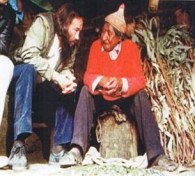 Prado. These teachers were don Benito Qoriwaman and don Melchor Desa from Wasao and the Waskar lineage, and don Andres Espinosa from Q’ero and the Inkari lineage. That leaves a vast range of knowledge from other lineages and teachers (past and present) from the Andes untapped and unknown. So, I acknowledge that I know only a tiny portion of this far-reaching and eons-old tradition. But the teaching itself that we already have is what convinces me that there will never be more than four chunpis—there simply is no need in the future for more.
 tory of the energy of future potential as fully enlightened beings. Also within our Inka Seed are all the capacities we need to express and live our unique life mission as human beings here on Earth in the physical. We don’t need anything more. We just need to develop consciously what is already within us. Our evolution is not dependent on forming new energetic structures, but on developing the consciousness to connect to and express what is already energetically part of us, especially in the Inka Seed.
 belts into our poq’pos, or energy bodies, we have everything we need to realize our enlightened selves. The four belts encode capacities that arise when we learn to harmonize and use the three human powers. When we do that, then we can consciously express our mystical powers. Compared to our mundane capacities, these mystical capacities appear to be supernatural capacities. But, really, they are not. They are our natural capacities, those already energetically encoded within us, only heightened because of our conscious evolution, which depends on releasing hucha so that our poq’po is mostly sami and thus is more harmoniously and energetically coherent.
 energy centers and not technically ñawis. They are the uma at the top of the head, the two makis (one in each palm) and two chakis (one in the sole of each foot)
 natural world we are part of. When scientists, particularly mathematicians, are seeking the fundamental laws of nature, things are very complex when they start. Their white boards are filled to overflowing with complex equations. But then they finally have the eureka moment—when they discover the law of nature—and they find they can express that law in incredibly simple terms. The wall of dense equations becomes e = mc2 or F = ma. Of course, that is not always true, but you get my point. Why complicate the beauty, grace and simplicity of the Andean tradition with overlays of philosophy from other traditions, such as Hinduism? It isn’t necessary, and, in fact, it can prevent you from developing as quickly. When you think you need to evolve more energetic capacities or mystical organs in some future time, you see yourself as incomplete in the here and now. That is not what the old paqos tell us or teach us. We are complete already. We only need to do the (hard) work of bringing to consciousness all that we are and increasing our energetic coherence to use what we already have.
 group. During that trip, as always, I learned new information and received refinements of old information about our practice as paqos and the tradition in general from Juan Nuñez del Prado and his son, Ivan. Since I cannot write directly to all my past students, I am hoping to inform them of this information here. Of course, I hope everyone who practices the tradition, former student of mine or not, benefits from this information.
 convenience sake. There are only four belts, and this area is simply an energy center comprising the three eyes. While you pull in violet light here at the end of the Chunpi Away karpay, the color of this belt, as I have always stressed to students, is the color of your physical eyes. Also, there is no cone here, as there are in the other four belts. Instead, there is a seqe (energetic cord) from each of the three eyes that converge in the middle of the head and then curve down as a single seqe to meet the spine at the top of the spinal column.
 skull with the yanantin mullu khuya are actually fields of energy, one gold (on the right) and one silver (on the left). The fields cover each side of the head, but as you draw the yanantin mullu khuya back over the skull and toward the neck, these fields narrow into cords/seqes. You then cross the gold and silver cords at the middle of the neck and pull them down to the base of the spine.
 willka as the highest nature energy, higher than huaca/waka energy (sacred energy). It is, he said, the “most sacred of the sacred.” In addition, it is the most pristine energy of nature, and it persists in nature wherever it is found no matter what happens at that place over time. In fact, willka is the natural sacred energy that infuses places identified as healing sanctuaries (such as Wanka in Peru, or perhaps Lourdes in France, etc.). And, of course, you can produce willka yourself. Whether you experience it in nature or generate it within yourself, when you touch willka energy and work with it, it can trigger visions, bring to light information you did not previously have, and reveal to you what is inside you (your state of being).
 being makes the choice to grow or not. As Ivan said, you can have a perfectly great life at the zero level as a “natural” human being. However, if you do choose to grow and to climb the stairway of the seven levels of human consciousness, then it is important to be able to know when you have achieved the next level. Juan described one way of knowing: You have reached the next level when your three powers (munay, llank’ay and yachay) are all expressed at that level. In other words, if two of your three powers are fourth level, but one is still being expressed within you at the third level, then you are at the third level, not the fourth. Only when all three powers are being expressed at the same level can you say you have achieved that level.
