
It’s more than two weeks into the demonstrations against racial injustice spurred by the police murder of George Floyd and it is clear that change may finally be imminent. Although regrettably there has been sporadic and sometime intense violence, most of the protest gatherings have been peaceful. Now that the initial intensity of reaction has worn off and those still marching are protesters who are committed to change and so are in it for the long haul, it is timely to consider what stance a paqo might take to protesting or to seeking change of any kind under any  conditions.
When I say “paqos,” I, of course, mean those of us who are non-Andeans but are practitioners of the Andean mystical tradition. We are a varied group: we are North American and South American paqos, European paqos, African paqos, South East Asian paqos, and on and on. We have adapted the Andean mystical system to our needs, time, and cultures. But we hold dear and we practice the universal core precepts of the Andean tradition. So accounting for these intrinsic cultural distinctions, we can surmise what a paqo might look like as a protestor, as a change agent.
At the heart of our protest we would strive to always be in ayni, which means we would think, speak, and behave in ways that added to the harmony of the world, especially as we seek to bring harmony to the disharmony of the problem. Don Benito said that we know what Taytanchis/God always asks of us: ayninakuychis—practice ayni.
So you can ask yourself, Am I the master of my own energy? What is the condition of my own awareness and the expression of my awareness? Am I speaking and acting from munay, fostering sami rather than hucha? Am I keeping to the forefront of my thoughts the decision to be part of the solution rather than to only be a representative of the problem? Am I rejecting the view that anything but forceful, disruptive, and even violent protest is really a form of appeasement?
The counter view is that of non-violent protest, which is a stance in accord with the Andean precept of ayni and so requires that you be a master of your energy. You will be aware of the flow of relational energy between yourself and others, including members of law enforcement and counter-protesters who don’t agree with you or your cause. There are many ways to view the unfolding of relational energy, but a core one is tinkuy, tupay, taqe. Tinkuy is the initial meeting, the touching of poq’po to poq’po. In the flash of a few seconds you have a decide how you will respond, how you will interact with this other energy. Will it be from peace and munay or from hostility and aversion? Your reaction takes you to tupay, the sizing up and response, which in the meaning of tupay usually refers to adopting a competitive or  confrontational stance. Can you avoid that kind of reaction? Too many law enforcement members and protesters cannot. Too often the relational energy at this second stage of tupay becomes one of opposition. And the relationship stays stuck at this stage of hucha-inducing interaction. But if you can avoid that kind of response, then you can proceed to the third stage of relationship, taqe, which means to join. This is the sharing of energies in a beneficial interchange. Above and beyond the need to oppose injustice to get a message across and spur action toward solutions, it is only when we as change agents assume a stance of taqe (being the joiners of energy) that the two opposing parties can move from competition to cooperation. And from there we can work together to actually find solutions and enact them.
Here’s a simple way to encapsulate the Andean precept of ayni: As human potential leader and author Marianne Williamson has said, as have many others, you cannot be part of a peace march with war in your heart. Or with hate for your opponent, no matter how heinous the crime.
I am reminded of something my primary teacher, don Juan Nuñez del Prado, told me. The Q’ero were marginalized, and worse, for most of their history since the Spanish conquest of Peru, as were all indigenous Andeans. They were treated horribly, as something akin to indentured servants to the Spanish landowners. But when asked where the landowners would go after death, a paqo said they would go to the hanaqpacha. Why? Because, he said, God is merciful. That’s the spirit of ayni—understanding that no matter the state of our human consciousness, we are all children of Taytanchis/God. And God is merciful. So how can we seek to be anything less? We can hate the sin, but we must be merciful to the sinner, understanding that people can only think and act according to their level of consciousness. There are seven levels of consciousness, and most people are at the third or below. We may not condone their behavior, but we don’t condemn the innate spirit of the person, and we work to help raise consciousness. We cannot do that if we are at the same level of consciousness as our tormentors.
Christ, who is a prototype of the sixth level of consciousness, said: “I was hungry, and you gave me something to eat. I was naked and you clothed me. I was homeless, and you took me in.” In that sixth-level spirit, our message as paqos protesters is, “You oppressed and even murdered because you did not value this life, and now I will help show you the value of every life—even the value of yours.”
Elie Weisel, a survivor of the Nazi concentration camps, has said something that might at first blush appear to be counter to Christ’s message, but to me it is not. He said, “We must always take sides. Neutrality helps the oppressor, never the victim. Silence encourages the tormentor, never the tormented.” Paqos always have opinions, and so they choose their cause (what Weisel is calling a “side”). They don’t remain silent. But they raise their voices not as counter-oppressors meeting their opponents at the same level of consciousness, but as liberators from habit and entrenched thinking, as stewards of a higher vision.
That said, paqos are not naive. We cultivate our qaway, our ability to see reality as it really is. So the words of former slave and activist Frederick Douglass come to mind: “Those who profess to favor freedom and yet depreciate agitation, are people who want crops without ploughing the ground; they want rain without thunder and lightning; they want the ocean without the roar of its many waters. The struggle may be a moral one, or it may be a physical one, or it may be both. But it must be a struggle. Power concedes nothing without a demand. It never did and it never will.”
But at the fourth and higher levels of consciousness in relation to protest, struggle is  not violence, power is not domination, demand is not insistence on others’ agreement with you. What Douglass’s words speak of, from a paqo protester’s perspective, is clarity of purpose, perseverance, and patience. Revolution might feel good, as a release of pent-up passion, but the work of revolution takes decades. The work of righting the wrong of systemic racism and other such deeply embedded cultural biases will start after the protests end and everyone goes home to their communities. It really begins in earnest when they get down to the delicate, and often fraught, work of talking and working with those they view as their opponents. So, the question becomes, Will I be there, face to face with those I think caused the problem, in ayni to help eat the hucha and be a bestower of sami? That’s when you truly become a paqo protester.
 light living energy—and allowing it to freely flow through you and back out, empowering you as it does. We each are always doing this, but sometimes not so well. Your psychological self—your messy and often unconsciousness emotions, beliefs, needs, and the like, coupled with your conscious thoughts, words, deeds, and so on—interfere with your absorption of sami, causing you to slow some of the sami down so you do not absorb it. Some of it may even get stuck on the surface of your energy body (the poq’po), causing you to feel “heaviness” in yourself and the quality of your life.
 kawsay.” I came across a beautiful example of this recently while reading Deepak Chopra’s new book, Metahuman: Unleashing Your Infinite Potential. In it he describes an episode that pointedly and dramatically demonstrated to him the power of intention. For us as practitioners of Andean mysticism, this episode also demonstrates ayni—reciprocity—and reveals how your intention is only half of the equation. When you put out an intention, something must respond (or not). So, the other half of the ayni equation is the universe—the living cosmos—or some aspect of it. Its response will be proportional to the quality and clarity of your intention, to what the tradition calls the amount of “personal power” you have. Power is not insistence, dominance, or will. It is simply the effectiveness and efficiency of your intention—how well you can be in ayni with the living cosmos. Here’s the episode, quoting from Chopra’s book and leaving out only a small section that is not important to the point:
 more refined level of awareness and consciousness. This stairway of consciousness is called the qanchispatañan. (See my post “The Birds of Consciousness, May 11, 2016). At each level of consciousness, your ayni is more powerful because you have less hucha. Another way of saying that is that you can more perfectly absorb sami, the life-force energy, and radiate it, not slowing it down to the density of hucha. At each level, because you have less and less hucha, your “supernatural” (above the human norm) abilities increase. These enhanced abilities are what Deepak Chopra calls “metahuman” abilities. As examples, in the Andean tradition at the fifth level of consciousness you can become an infallible healer, healing any kind of illness or problem every time. At the sixth level, you will have achieved a state commensurate with the Christed One or Buddha Nature—to what is commonly called enlightenment. At the seventh level, you are equivalent to God in human form.
 his ideas and intentions.
 of how awareness matters at all levels of manifestation.
 prefer to dive into a good book. At this time when many of us are self-isolating because of the coronavirus, when some of us may have lost jobs and are reeling with worry, picking up an inspiring and thought-provoking book—one that can help us step up the qanchispatañan (the stairway of seven steps of conscious evolution)—is the perfect antidote to a potentially hucha-inducing situation. So in this post I offer a recommendation for three books that can both inspire and educate. Each of these books shows us some of the precepts of Andean mysticism in action, although no one but a paqo would notice.
 committed and communal life. In our mystical tradition we say you have to take responsibility for yourself first. Once you are attending to your own healing and growth, then you find your place in the ayllu (community) and make your contribution there. This journey is at the heart of the primary metaphor of Brooks’s book: of moving from the first mountain of “me” to scaling the second mountain of “we.” He talks about how to scale the second mountain in four primary areas of life: family and intimate relationship, vocation, faith, and community. If you do nothing else but absorb the ideas, never mind put into practice the strategies, proposed by Brooks (and the many other researchers, philosophers, and writers he refers to), you will go a long way to furthering your progress up the qanchispatañan.
 produced some of the finest coffee beans in the world. Big deal, you might say. Well, it was a big deal for Eggers. In a fit of yachay (intellect), Eggers begins to research the connection between coffee and Yemen, and his yachay quickly turns into khuyay—a passion to revive the faltering and nearly moribund coffee production in Yemen and bring the finest coffee to the United States. That passion launches Eggers on a journey that is both harrowing and redemptive. Harrowing because of the lack of support from others, the growing dangers of the looming war in Yemen, and the enormous, and indeed the seemingly insurmountable, obstacles of breathing new life into a nearly dead industry. But nothing stops Eggers. His khuyay and atiy are forces of ayni that cannot be stopped.
 world as we deal with the Covid-19 pandemic. While I have family members who are recovering from the virus in a state that is being hit hard, I live in a state that, as yet, is not severely impacted. There seem to be two realities: there are the Centers of Impact and then there are the Outer Bands, and people are experiencing different realities depending on where they live. There’s an all too familiar “us versus them” mentality at play across the land in the United States, and I suspect in other countries as well.
 people (in the level’s unhealthy, or hucha-inducing, expression) view almost everyone outside of their clique as “other.” This “separation mindset” leads to all kinds of other transactional responses: I win, you lose; I get more, you get less; I’m right, you’re wrong; you’re either with us or against us, and so on. It’s a thinking style focused on competitiveness, exclusion, scarcity-thinking, stereotypes and prejudices, and the like. I think we can all agree that these kinds of energetic impulses have predominated across the world.
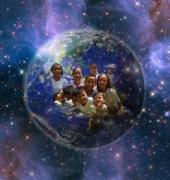 lifetime. I call it fourth level because unlike any other challenge I can think of—except for climate change, which I will discuss later—this pandemic is truly global. This isn’t about a tornado in the American heartland or a tsunami on the coast of Japan. This isn’t a terrorist attack in Brussels or wildfires in California or across Australia. This is not a regional Ebola or SARS epidemic. Covid-19 is teqse, meaning universal. There are 195 countries in the world, and as of today 182 of them are experiencing Covid-19 outbreaks. Because of airplane flight and other modes of travel, there are no boundaries or easy ways to respect boundaries. A contagion against which we have no immunity cannot remain local or even regional. We have never faced a situation like this before. To my mind, this is truly a fourth-level event, as it is common to all of humanity.
 all kinds to think and act from the fourth level, but we have never risen to the challenge. But now perhaps we are in “practice” mode. Perhaps we have taken a step up on the qanchispatañan, the stairway of the seven levels of consciousness. To tackle this crisis that is indeed what is required of us. Perhaps now, somewhere in our collective unconscious, we know we need to up our game and so we have finally “manifested” a crisis that will help us evolve as a species, as the Andean prophecy of the rise of the Runakay Mosoq (the New Humanity) tells us we are able to do. We are in the Taripay Pacha, an energetic period ripe for such a collective evolution. So, what if now through Coid-19 we truly have manifested a type of teqse, or universal, crisis that can serve to lift us to a new level of understanding, perception, and behavior?
 togetherness for granted? Maybe the isolation you are feeling will help you cultivate a deeper gratitude for family and friends. If you have stocked up on food and supplies, are you thankful for the bounty that is available to you? Do you acknowledge that there are millions of people who don’t share that bounty? If you have lost your job, are you able and willing to overcome fear and even despair, able and willing to allow others to help? Are you reaching out to help your neighbors? Are you aware of the countless acts of kindness that are happening all around you? Are you expressing your feelings of appreciation and love to those who matter most to you? Are you receiving with an open heart the expressions of kindness and love others may be showing you? Are you realizing your yanantin nature—that you are both a physical human being and a divine spirit, and that you must take care of and express both aspects of yourself? Are you also realizing the masintin reality among people across the world—of our common humanity?
 inner state. I suspect that you, like me, are seeing or experiencing three general varieties of response. One view is, “What’s the big deal? Not my problem. I’m not changing how I live my life.” Another is, “Stay six feet away, because you are a threat to my well-being. What if I get sick and I can’t get a test or a hospital bed or a ventilator if I need one?” A third is, “Take care of yourself and I will take care of myself. Let me know how I can help, and I will call on you if I need help. We are all in this together.”
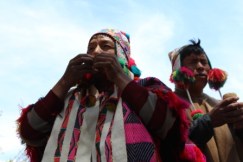 and physical immune systems. We can use hucha miqhuy to reduce the fear or anxiety we experience or that is being experienced by those we love or care about. We can send sami to our leaders, from our town mayor to our president to other decision makers. We can send sami to the first responders, from EMTs and pharmacists to nurses, doctors, and the other health professionals on the front lines of our health care systems. We can send sami to those who support our sustenance and well-being while we are under “stay at home” orders, from the grocery store clerks to the restaurateurs who are making food for pick up or delivery to the people still picking up our trash and the employees still processing our health insurance and other claims. We can send sami to the volunteers who are making masks on their home sewing machines, the companies retooling their plants to provide protective gear, and the artists of all stripes who are posting songs, comedy routines and the like online to boost our spirits.
 videos of the many ways people are marshaling their compassion and creativity to say, “We are all in this together. I see you. You see me.” Italians singing from their balconies. American nurses in non-Covid wards waving and making funny faces and fashioning their hands into heart symbols through the closed glass doors to their colleagues in the sealed-off Covid-19 wards. The children writing letters and drawing pictures of appreciation to their teachers, local health professionals, first responders, and others. A son talking by phone on one side of a window to his grandmother on the other side. The neighbors of a cul de sac standing at the end of their driveways with their kids, each family group separate by together saying the Pledge of Allegiance before they start their home-schooling day.
 Q'enti Wasi - House of the Hummingbird