
God is a comedian playing to an audience that is too afraid to laugh.
― Voltaire
I heard a former military flight engineer, Tony Woody, say in his YouTube video about his spiritually transformative experience that the message he received was plain but powerful: “God is insanely in love with you. He is insanely in love with you.”
That’s a lot of love!

Do you know that? Believe it? Live from it?
That God (Universal Intelligence, Wiraqocha, Great Spirit) loves us is the spiritual message of the Andes. Paqos play at the level of the kawsay pacha—the Godhead revealed in the material world. They play at that level of munay, where love is sacred and the sacred is love—a level that is not solemn and serious but deeply and wildly passionate. This kind of passion is called khuyay (you can learn about it in my past post about it: “Khuyay: Living with Passion”). It’s a passion that arises from the certainty that you are a Drop of the Mystery, as encoded in your Inka Seed, and you choose to live powered by the sacred thrill of being an integral and participatory part of the living universe, or God if you will.
As I have said so many times in these posts, the Andean tradition is a path of joy. Pukllay is sacred play, which is the spirit of our interaction as paqos with the kawsay pacha. The universe of living energy is woven from the fabric of love and joy; it is overly abundant and we can take from it anything we want with no limits. There is no scarcity at all—not of love, not of joy, not of anything. And it all starts with our relationship with who we really are—which is a part of the Godhead.
You might not be used to hearing a teacher and practitioner of the Andean tradition talk about God (or whatever you want to call the Great Intelligence of the Universe). I am the exception. I talk about God all the time, because the Inka Seed inside me is my energetic connection to God. I am, and you are, a Drop of the Mystery manifest in human form. But how much do you live from that knowing? How does that wildly amazing truth infuse joy into your practice as a paqo?
As paqos we are learning to be at play in this grand, infinite field of energy, knowing that energy must follow intention. It must! That is the law of ayni. Yet as much as I know that, I also know that too often I am shy about marshalling my personal power to meet God on  this equal playing field of love, joy, and manifestation.
Sometimes I feel the best thing we can do as paqos is to lighten up—figuratively in terms of our approach to our Andean practices and literally in allowing our individual soul light to shine brilliantly for all the world to witness and share.
Now that I am on the road teaching the Andean mystical tradition, I am aware that if there is one “error” people learning the tradition make it is being too serious. They work so hard! They wonder to the point of worry about images and perceptions they see or feel: What does it mean? How should I interpret this? How should I react? If there something I have to do? Am I being called to Peru or by an Apu? They stress themselves about doing the practices correctly or not. They admonish themselves if they judge that they are not “perceiving” the energy clearly enough or at all.
I say. “Relax!” Yes, practice—and take your practice seriously, as that is the commitment to growth and conscious evolution. But breathe into the practice—play and have fun. Pukllay doesn’t mean you are not being serious about your intent; it’s more about living that intent with joy, playfulness, self-nurturance, and so on. To put it boldly: Don’t be afraid to laugh your way to enlightenment!
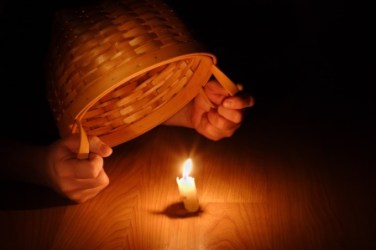 This is a message I have to constantly remind myself of. I am aware that I do not laugh enough in my life. I feel joy, but I tend to keep the expression of that joy inside. Too often my joy is private. That’s like keeping a light under a bushel basket. The glow barely escapes. . .
We can fake a laugh but we can’t manufacture true feelings of joy. We have to cultivate the playful and passionate aspects of ourselves just as we cultivate other skills and talents. The first step is awareness. By observing ourselves we can sit outside ourselves not as critics but as cheerleaders. Heller Keller said, “One can never consent to creep when one feels the impulse to soar.” Our path as paqos is conscious evolution so that we stop creeping and start soaring—and not only as individuals but as a species.
Joy is generated as much from the sacralized world as from the purely human one. Paqos are focused like a laser on the human world—on living as a fully realized human being. The writer and adventurer Jon Krakauer, writes: “You are wrong if you think Joy emanates only or principally from human relationships. God has placed it all around us. It is in everything and anything we might experience. We just have to have the courage to turn against our habitual lifestyle and engage in unconventional living. My point is that you do not need me or anyone else around to bring this new kind of light in your life. It is simply waiting out there for you to grasp it, and all you have to do is reach for it. The only person you are fighting is yourself and your stubbornness to engage in new circumstances.”
I would add that it is more than circumstance and a desire for the unconventional that facilitate an openness to experiencing joy; it is a developing awareness. It is a way of looking at and perceiving the world, even in its most conventional guise. The Andean tradition can help us cultivate both a new approach to engaging the world and greater levels of awareness to perceive it through. Then we can witness and, more importantly, experience what Pierre Teilhard de Chardin says of joy: “Joy is the infallible sign of the presence of God.”
We can wait for joy or we can cultivate it. Writer Shauna Niequist gets to the heart of the matter when she says: “I want my everyday to make God belly laugh, glad that he gave life to someone who loves the gift.”
Your life is a gift from the kawsay pacha. One day you will have to return that gift. The question is what the “in-between” of that ayni exchange is going to look like, feel like, be like. I propose that we burn the candle of joy from both ends: laughing through this life along with our joyful God and living our joy in honor of God’s gift of our life.
Of all the spiritual traditions that I have studied, I find that the Andean tradition best embodies this dual point of view that we are both recipients and givers of joy. My counsel to those learning the path is to strip Andean mysticism down to this deep playful and passionate core, and from there to develop their practice. All the rest will fall into place more effortlessly and naturally—and joyfully.
 You are a drop of the Mystery. There is no one else like you. Your life is a gift of the cosmos. In ayni, some day you will give that life back. Your goal as a paqo is to ensure that you return as a grander, more marvelous, and fully realized you.
 Munay is the treasure of the Andes. Love is not an impulse but a choice. It is under the control of your will. It is an energy in which you are always self-sufficient and that you can make more of at any time. It is beyond the needs of the self. It is a force of personal and natural evolution.
 The only thing that is absolutely yours in this lifetime is your poq’po— your energy body. No one can enter it without your permission—not even God. Your intention, through ayni, activates your relationships with all beings, from God and the Spirit Beings (teqse paqos) to your fellow humans to the creatures of this world. Cleansing your poq’po and bringing coherence to it propels your conscious evolution and enhances your capacity to live with khuyay (life passion).
 Your responsibility as a paqo is to live with joy and well-being, and to foster joy and well-being in others. A paqo is always striving to be a fully developed being in the human world. So whatever personal power you have accumulated, it is your duty to use that power on behalf of yourself and the world. You don’t have to ask permission to use your power for the well-being of another. Well-being is fueled only by love/munay, and you never have to ask permission to share munay to another.
 The kawsay pacha is gloriously abundant! Energy has no moral overlay except the ethical and moral code you choose to live by, so you can manifest anything you want from the universe of living energy according to your own values.
 of your intention out into the universe so it can be more easily manifested.
 Another helpful metaphor is that of a filter. When our filter is clogged, not as much energy flows through us. When our filter is unclogged, we can freely absorb and radiate kawsay/sami and so have more unrestricted personal power. As our personal power increases, so does our effectiveness at influencing the cosmos. Energy more effortlessly follows our intentions and we become better at manifesting our desires.
 be done.”
 By keeping my affirmation general in content but crystal clear in quality, I allow the universe to direct me toward my goal of becoming the most consciously evolved human being I can and of living with the greatest amount of well-being. I know the kawsay pacha is overly abundant and that joy is the natural state of human nature, so I don’t sweat the details because I know that by affirming to the universe that I want to realize its highest vision for me it will no doubt infuse that journey with its own highest qualities: abundance in all forms, love and joy, and overall well-being.
 answer by asking a question: What are you extracting?
 Masters of the Living Energy. Although I used the word “extraction” there once, that is not a accurate word choice. We are not extracting anything, even though we use all kinds of linguistic metaphors to describe getting the kawsay to move freely again. We talk about cleansing hucha, eating it, digesting it, pulling it, pushing it, unblocking it, and so on. Really, all we are doing is helping people get what is slow within them to move more naturally, which means faster. You are helping them unlock their own self-healing potential, which is subject only to their will, not to yours.
 kawsay pacha using nothing but their intent. I ask them to view everything outside of their intent as a “fetish.” Using fetishes—whether a khuya, feather or even the misha—can be fun, but they are not necessary. Using them is a choice, and as consciously evolving human beings we want to make conscious choices. Once you can move energy using your intent, then you are free to do anything and use anything because you know you don’t need it but simply choose it. In this way you always maintain and act from your own personal power and you assist your clients to access and use theirs as well.
 Christians, without any contradiction. Their devotion to Christianity is not a relic of the Spanish Conquest of so long ago, when the Christian faith was forced upon much of the indigenous population. With the passage of time it has clearly become a choice. These paqos are not anomalies. Most paqos were able to quickly assimilate the message of Christianity. Some people take offense at that fact. I wonder why? Notwithstanding the brutal oppression imposed on indigenous Andeans by both the Spanish conquerors and the Catholic Church, if you delve into the mysticism of the Andes, you can quickly discern correspondences that would make aspects of Christianity amenable to the local population, especially the paqos.
 material universe, sometimes also the name of the planet Earth).
 third commandments are to love others as you love yourself and to love your enemies. This requires not a sentimental love, but a love that depends on conscious choice. That is exactly what munay is: love under the power of your will. It is the willingness to love, even those who are very different from you. It is no wonder that the paqos and indigenous Andeans could see Jesus’s messages as aligned with the most fundamental of Andean beliefs. Today, Jesus, and Holy Mother Mary, are placed at that the top of the Andean hierarchy of teqse paqos (universal paqos). Jesus is seen as an apu, the Apu Jesucristo; and as Juan Nuñez del Prado writes, he is seen as the Apuyaya or Taytacha, the guardian of the universe. He is also seen as a sixth-level being, one who glows. It is said that the candidate for Inka who glowed was the one who was elected. Glowing is a hallmark of the sixth level of consciousness in the schema of the Andes, where there are seven levels that humans can evolve through, the seventh level being God in humans.
 include the Catholic practice of honoring the saints, which would find its correlation in the Inka practice of the worship of the ancestors, most specifically the mummy bundles. One of the most obvious correspondences is the way Christians rely on priests as intermediaries between God and humans. Paqos take on this role in the Andean culture. In Christianity, there are sacred places and shrines, and holy icons and relics. In the Andean tradition, there are hundreds of wakas (huacas): natural sites and man-made objects that are the repositories of the sacred.
 Q'enti Wasi - House of the Hummingbird