
And do you see how beautiful and graceful the birds are when they are flying and soaring? The ground has many comforts for them to enjoy . . . But in the sky they are truly what a bird is meant to be. So it is with the human heart.
— Aleksandra Layland, novelist
Birds are common metaphors for the loosing of spirit, for the untethering of an earthbound soul. There is a similar use of this metaphor in the Andes, where there is a bird spirit helper associated with many of the levels of human consciousness. According to the  teaching of don Benito Qoriwaman, there are seven levels of consciousness that can manifest in humans on earth, although currently we have manifested only four and are eagerly awaiting the fifth level, which is part of prophecies that foretell the rise of the New Humanity.
While Andeans generally don’t work with totem animals in the way that many Central and North American indigenous and Native peoples do, they have a concept of spirit helpers that include animals and birds.
There is a specific kind of bird associated with a specific level of conscious, and they can assist you in at least two ways in your personal growth to a higher level of consciousness:
1) If you have already achieved that level of conscious development, you can choose to work with the bird associated with that level as a spirit guide, to learn more about that state of consciousness and to continue to develop.
2) If you have not yet reached that level of development, you can be called by the bird of that level. If you accept that bird as a tutelary guide, it will help you grow to that level of consciousness.
Before discussing the levels of consciousness, however briefly, and identifying the bird associated with it, it’s important to understand that we tend to slip back and forth between levels in our daily lives. We tend to be inconsistent in our behavior and mindset, which change depending on context. Rather like the “persona” of psychology—the face we show the world in order to fit in and be accepted—our “lived consciousness” can be context dependent. We might act from the second level at work and from the fourth level at church. We might slip into third-level consciousness in our politics and descend back to the first level in our love relationship.
Generally, however, we seek to grow and develop by stepping up the qanchispatañan—the 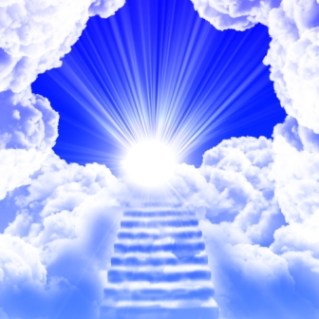 Stairway of Seven Steps. This stairway of consciousness starts at the zero level, which is the ground floor from where you step up and onto the first step.
Here are the levels of consciousness and the birds associated with them. It’s a valuable exercise to see which “step” you are on in various areas of your life. If you want to climb the qanchispatañan, then you might consider working with the bird spirit helper of that level.
The 0 level is how we all come into human form as a baby, where we have no sense of a separate self or individuality, no “I.” However, people may be at the 0 level later in life. The qualities of the zero level include having little sense of personal power or autonomy, of going along with the crowd or with the majority at the expense of making up your own mind or finding your own identity. It’s the herd mentality, where you prefer what others prefer, seek to fit in at almost any cost, and are most comfortable being part of a group. In its worst expression, this is the mob. In its more positive aspects it can vary from being almost totally identified with a group (a hippie, a Goth, a war protester, an environmental activist, a Catholic, a humanist) to the extreme of being immersed in oceanic consciousness so deeply that you remove yourself from human interaction or renounce the world (the guru in the cave). There is no bird associated with this level.
The 1st level allows for greater autonomy but your sense of self is still heavily influenced by others, and your own need for others makes you dependent. This behavior includes codependence in all its forms. You are especially invested in those you see as authority figures (doctors, ministers, teachers) and you rely on them (consciously or unconsciously) to help direct your thinking, mold your belief system, and form your sense of self. You can tend to take more than you give, as you don’t have a strong will or the personal power to think you can help yourself. You think you need a teacher, leader, or guide and, in this respect, this is the level of the fetish—whatever the fetish is (a person, religion, organization, ideal) if you lose it or it is taken away, you feel you have lost your power and th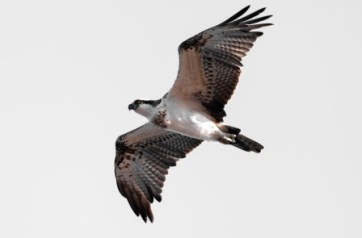 e ability to direct your own personal destiny. In the Andes, the bird of the first level is the killichu, a small falcon.
The 2nd level can be understood as the adolescent (this can be applied, as can all the levels, to an individual, society, nation, or culture). It’s the power of the “in group” and the clique. It’s the belief that “You’re either for us or against us.” It’s black and white thinking, but also contains the element of group-think. You can put your teacher or authority figure on a pedestal (hero worship), but then complain about the authority figure or teacher behind his or her back while not having the courage to face that person and speak your truth. It doesn’t feel safe to upset the apple cart of your belief system or threaten your status as an insider. You are making an effort to learn, expand, and grow, but you may quickly latch on to one truth at the expense of other possibilities, because you are less open to testing or questioning. This us-versus-them mentality can create discord and foster jealousy, incite conflicts of ego, and promote unhealthy competitiveness. The Andean bird associated with this level is the waman, the royal falcon.
At the 3rd level, you have more personal power and autonomy, are more open to acquiring diverse knowledge, and tend to at least listen to or consider the views of many teachers and authority figures. However, you tend to eventually attach yourself to or identify with the power of one tradition at the expense of others. You feel an exclusive connection and think you have found the “right” path; all others are wrong or misguided. Whereas people at level two are more group minded, the people at level three are more single minded, although the “single mind” is attached to a specific group or a particular belief, etc. It’s the “There is on e truth and I have finally found it” mentality. This is the level of consciousness most common in the world at the current time. It drives the most common religious and political agendas. It displays as stubborn nationalism (democracy is the best system, the U.S. is the best country), narrow views of spirituality (“X” is the only path to salvation), and intensely committed political affiliation (the rabid communist, socialist, Libertarian, Republican, Democrat). Very often this mindset drives one to become the “savior” of others, who don’t yet have the truth and so must be shown the way. The anka, or eagle, is the Andean bird of the third level of consciousness.
At the 4th level, you move toward what may be called the mystical mindset: you trust your personal experience, have the capacity to transcend symbolical and ritual patterns, and can overcome boundaries. You can find common cause and connections. You develop a sense of harmony with self and cosmos. You can, for example, experience the power of the “God” connection in a church, mosque, synagogue, teepee, or cave because you can look deeper than outward appearances, symbolic constructs, and particular doctrines. You take responsibility for your autonomy, so that at this level you understand that authority  figures and teachers can be guides but can’t solve problems for you—you need to find the answers through your own personal experience and insight. A fourth-level teacher guide students but allow students total freedom; they teach so the student can leave and walk their own walk. While you find your own way and see beyond boundaries, this is not an “anything goes” level of consciousness. You choose your personal beliefs and have opinions, but they are subject to change as you change. You stand up for what you believe in, but you don’t insist others believe as you do and you never belittle or ostracize others who hold different views. You are totally yourself and allow others to be totally themselves. The kuntur, or condor, is the Andean bird of the fourth level.
At the 5th level, you are so in tune with nature and have acquired such personal power that you can push the kawsay to dramatically influence the material world, especially as a healer. This is the level of the infallible healer, who has the ability to heal any disease or condition every time. This is the level of the “miracle.” Healing examples would include 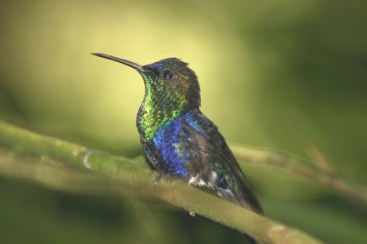 those found in the Bible in the Book of Acts, including raising people from the dead. At the fifth level you can also manipulate matter in others ways (such as manifesting a gemstone out of thin air) and can overcome the constraints of time and space as we know it (such as by teleporting or bilocating yourself). You can move in realms beyond the current known laws of physics. The bird of the fifth level is the q’enti, the hummingbird.
The 6th level is that of the Inka Seed and the Taytanchis Ranti, where you become nearly the equivalent of the God of the seventh level. At this level of consciousness you are recognized by others as an enlightened being, literally as one who glows. This is the divine potential within each of us, but sixth- level beings are living that power in the human world. They are “awakened.” Buddha and Jesus are examples. There is no bird associated with this level.
The cosmovision of the Andes does not provide information or description about the 7th level of consciousness except to say that this is more than a level of god-consciousness. It is a level where god is actually in human form and humans are gods. It is my personal speculation that this could be the level where we live in the human world as pure energy beings. It might also be what happens to humans when, in the words of Terence McKenna, we evolve such that we experience an “exteriorization of the soul.” There is no bird associated with this level.
 and teach it. It’s a path of conscious evolution, both for each of us individually and for us collectively as a species. According to the prophecies of the tradition, we are accumulating the personal power to birth a grander self and the “new humanity.”
 tale. It is about being the passionate yet sober energetic warrior who lives from his or her Inka Seed. Expanding your personal power may not be easy or comfortable. For whatever reason, we humans tend to learn and grow through challenges. As paqos we strive to “see reality as it really is,” and sometimes reality appears to be a opponent rather than a ally. Our work as paqos is to look beyond appearances to what physicist Bruce A. Schumm calls the “deep down things.” The power is qaway.
 The law of ayni can be surprising! Using Karpinski’s example, as we develop munay, we may indeed draw to us those we can easily love. But we might just as easily draw to us those whom we struggle to love. Both results fulfill the law of ayni, although the latter is decidedly more difficult a lesson in the ayni of self-awareness and growth. No rose-colored glasses here! But no need for them either, as you, as a paqo, have all the practices and tools you need to meet the challenge (or, more accurately, the opportunity) the kawsya pacha has seen fit to offer you.
 The whole point of this post is to urge you to pay attention to more than the surface roads of your work as a paqo along life’s journey. Your destination is certain—you will one day return the gift of your life back to the kawsay pacha. The question is if you will have evolved as much as you can through your practice. Have you discovered and then used all of your gifts? Have you shared them with the world?
 this equal playing field of love, joy, and manifestation.
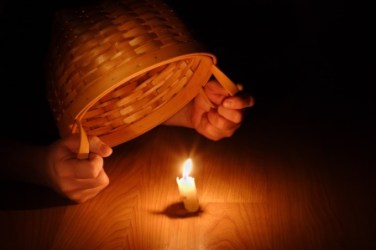 This is a message I have to constantly remind myself of. I am aware that I do not laugh enough in my life. I feel joy, but I tend to keep the expression of that joy inside. Too often my joy is private. That’s like keeping a light under a bushel basket. The glow barely escapes. . .
 experience what Pierre Teilhard de Chardin says of joy: “Joy is the infallible sign of the presence of God.”
 You are a drop of the Mystery. There is no one else like you. Your life is a gift of the cosmos. In ayni, some day you will give that life back. Your goal as a paqo is to ensure that you return as a grander, more marvelous, and fully realized you.
 Munay is the treasure of the Andes. Love is not an impulse but a choice. It is under the control of your will. It is an energy in which you are always self-sufficient and that you can make more of at any time. It is beyond the needs of the self. It is a force of personal and natural evolution.
 The only thing that is absolutely yours in this lifetime is your poq’po— your energy body. No one can enter it without your permission—not even God. Your intention, through ayni, activates your relationships with all beings, from God and the Spirit Beings (teqse paqos) to your fellow humans to the creatures of this world. Cleansing your poq’po and bringing coherence to it propels your conscious evolution and enhances your capacity to live with khuyay (life passion).
 Your responsibility as a paqo is to live with joy and well-being, and to foster joy and well-being in others. A paqo is always striving to be a fully developed being in the human world. So whatever personal power you have accumulated, it is your duty to use that power on behalf of yourself and the world. You don’t have to ask permission to use your power for the well-being of another. Well-being is fueled only by love/munay, and you never have to ask permission to share munay to another.
 The kawsay pacha is gloriously abundant! Energy has no moral overlay except the ethical and moral code you choose to live by, so you can manifest anything you want from the universe of living energy according to your own values.
 of your intention out into the universe so it can be more easily manifested.
 Another helpful metaphor is that of a filter. When our filter is clogged, not as much energy flows through us. When our filter is unclogged, we can freely absorb and radiate kawsay/sami and so have more unrestricted personal power. As our personal power increases, so does our effectiveness at influencing the cosmos. Energy more effortlessly follows our intentions and we become better at manifesting our desires.
 be done.”
 By keeping my affirmation general in content but crystal clear in quality, I allow the universe to direct me toward my goal of becoming the most consciously evolved human being I can and of living with the greatest amount of well-being. I know the kawsay pacha is overly abundant and that joy is the natural state of human nature, so I don’t sweat the details because I know that by affirming to the universe that I want to realize its highest vision for me it will no doubt infuse that journey with its own highest qualities: abundance in all forms, love and joy, and overall well-being.
