
The most important kind of freedom is to be what you really are. You trade in your reality for a role. You trade in your sense for an act. You give up your ability to feel and, in exchange, put on a mask. There can’t be any large-scale revolution until there’s a personal revolution, on an individual level. It’s got to happen inside first.
—Jim Morrison, The Doors
In my previous post I talked about how a paqo can approach the current political environment from the fourth-level. In this post, I want to talk about one of the ways that we can continue to evolve to reach the fourth level. Our voices might unite to 
I recently gave a talk on the power of our stories, because getting to the bottom of your stories is one way to deepen your knowledge of “who you really are.” As Jim Morrison says, the revolution starts inside. It is individual before it is collective. The Andean mystical system says the same thing. One of our main goals is to know “who we really are” and to have the “personal power” to live as who we really are. So if we want to help foster positive change in our political situation—or in any other situation—we would do well to take a self-inventory of our own inner “stories” before, or at the same time, that we are marshalling energies to change our outer world. Doing so is a fourth-level way to shift the energy both inside and outside the self or our national story.
At tax time you take an inventory of your financial situation. For a job interview you take inventory of your career. But how often have you stopped and done a thorough self-inventory of your stories? If you haven’t, then there is a good chance you don’t know who you really are.
We all have stories, multiple stories. We are experts at telling our stories and at knowing which story slots into which area of our lives. For example, you have one  story about who you are when you are at a job interview, another when you are stepping out to a nightclub, another when you are sitting with a group of other parents as you watch the kids play, and so on. You are quite literally a different person depending on the situation you find yourself in. That’s not to say that you don’t have a stable core personality, belief system, point of view, and so on. You do. But you parse the facts of that inner landscape and, just like a novelist, play up one aspect of the self at the expense of another depending on the needs of the present moment. Your career path highlights different facets of the self than does your dating style than does behavior at a family reunion. So one way to take a self-inventory is to examine the stories you tell about yourself, where and when you tell which story, and how stories shift according to your emotional state.
The reality is that you are not the sole author of your stories. Three aspects of the self start writing your story shortly after your birth, and your story is pretty much stabilized by the time you are ready for elementary school.
Psychology outlines a fairly universal path of human development, and it starts just after birth with the development of the id, the first author of your story. The id is a largely unconscious aspect of our mind that is concerned with life and death. It’s the way an infant gets its needs for food, warmth, safety, nurturing, and love. So the id is about me, me, me, and now, now, now, and pleasure, pleasure, pleasure. The id tends to be illogical, unreasonable, self-indulgent, fantasy-prone, and even chaotic and irrational. Still, the id is crucial to your survival when you are an infant, and you don’t grow out of your id—you just learn to, more or less, control it. It is a core part of your unconscious mind, and in later life turns its survival focus to sex, aggression/protection against threats, and such, even as the infantile imprints remain.
The id is what says to you, “You have been dieting for three weeks. Go ahead, treat yourself to that chocolate cake. It won’t hurt to have one piece.” The id is what says,  “Gosh, I have been working so hard. I am going to tie one on tonight!” The id is what says, “I love those shoes, and they’re on sale! Another $50 of my credit card is not going to break the bank. Those shoes are mine!” The id inserts itself in your life in all kinds of ways, and it pays to look for its voice in your stories. The id tends to surprise you, even ambush you. It’s what we tend to call “losing self-control.” The id is a great companion when you really do need to cut loose and lighten up, stop being so serious or overloaded, and need to take a break. Pleasure is fine. Self-indulgence within limits is healthy. But if your id has taken over the writing of any portion of your story, it’s worth a look at why, how, where, and when so that you can bring yourself back into balance.
As you grow past infancy, you start to learn autonomy, and one of the first challenges is how to negotiate the often wide divide between self and others. Your story begins to be modified by your environment—your physical environment and your relational one with parents, caregivers, siblings, playmates, and others. As the outer world presses in, you begin to develop an ego. Your ego helps you make sense of the world and others, helps you negotiate the world and relationships, and helps you learn the rules, mores, and norms of that world. The ego helps to keep your id in check, so that you learn some measure of balance, the value and even necessity of delayed gratification, the consequences of selfishness, and so on.
The ego is both conscious in that it is designed to help you learn to think things through, understand cause and effect, and develop plans and strategies; but it also has an unconscious part to it. When you run into trouble with the world and relationships,  there are going to be parts of yourself that you reject, deny, and even repress. These aspects of the self—that you learn or believe are not acceptable to the world or others—get stuffed down into the “shadow self.” They are alive and well there, below the threshold of consciousness. Part of the path of self-actualization is to return these denied aspects of the self to the light of awareness, acceptance, or understanding. The methods of doing that are too complex and numerous to discuss here, but they include identifying your emotional triggers, taking back your projections, probing for the emotions and wounds fueling the story, and gaining access to as yet unexpressed gifts and talents. The ego and the shadow are the main author of our stories, so it’s almost impossible to write the story of “who you really are” without doing shadow work.
Between the ages of three and five, you are also developing a superego, which has two parts to it: the conscience and the ideal self. Your conscience is what keeps you in line with your own expectations and those of others, your culture, your religion, and other influences. It expects you to be the good boy or girl. The good student. The gifted athlete. The kind daughter or son. The loyal friend. When you fall short of those expectations, you feel “less than.” You may feel that you are a failure, stupid, lazy,  guilty, shameful, and so on depending on the situation and expectation. Bottom line is that you feel you have let yourself or others down. Your conscience also stirs you toward living up to the concept of your ideal self: toward expressing compassion, empathy, good deeds, etc. Your ideal self is just what it says it is: the “perfect” you. Your belief about what constitutes perfection is heavily influenced by your families, friends, culture, mass media, religion, and so on.
Even though realistically you can never live up to your ideal of perfection, you waste a lot of psychic energy trying to. And as you fall short, your superego can judge you harshly: you’re not pretty enough, thin enough, rich enough, thoughtful enough, talented enough, etc. Or, to put it more harshly, your superego tells you that you are ugly, fat, poor, self-centered, stupid, a loser.
You can see why it is important to probe into our stories to discover how our ego and superego are helping our id to write those narratives. It’s only when we learn to integrate all aspects of our psychology (move toward greater self-actualization) that we can be more of “who we truly are.” Until we get there, we are a hodgepodge of fictions with a little non-fiction thrown in for good measure.
One of the primary fictions is that your stories are all your own. They are not! For  instance, many of your core beliefs about yourself and the world are projected onto you, and you accept those projections. Who you are as a child may be the figment of others’ imaginations! As a child, your parents projecting their own beliefs, judgments, and stories onto you, and you take all of that on as if it were really who you are. Maybe you were labeled the quiet one, or rebellious one, or smart one, or athletic one, or stupid one, or mouthy one, or kind one. Chances are that the way your parents saw you is the way you see yourself at the unconscious shadow level, and those beliefs rear their unruly heads in your adult stories, no matter who much you try to edit them out or revise them.
I have barely scratched the surface of what it means to examine our stories in an effort to take a self-inventory. But doing so is a giant step in managing a successful “self-revolution” that can help each of us climb the stairway of consciousness evolution and make a more positive impact in the world. We certainly can work toward change in the world, but we have to concurrently delve deep into ourselves. As Vedic wisdom tells us, “You are not in the world. The world is in you.” And part of that world inside of yourself are the stories you tell to yourself and about yourself. It is liberating to stop, breathe into them, and see if they are really true for you now, as an adult and as a paqo.
 administration and how much fear they feel imagining what the next four years holds for our country.
 “there’s nothing I can do” attitude many of us have shared. A renewed time of self-reflection to determine personal opinions, beliefs, and boundaries. A renewed sense of civic duty and purpose. A renewed demand that our elected officials have to give up partisan power plays for a return to good old-fashioned statesmanship.
 words, change isn’t easy. And during change, there can be a messy transition as the old morphs into the new.
 squeeze an orange, what do you get?” Orange juice, of course. Exactly what you would expect. In other words, the quality of your “beingness” is commensurate with the effect you can have in the world.
 dive into—and begin to own up to and heal—our shadows. He can be seen as the perfect foil to force us to inquire about and explore our individual and collective shadow.
 what level of consciousness they are at. You cannot reason at the fourth level with someone on the second level. It’s like talking French to a Hindi speaker. So don’t waste your energy. You would be better off trying to deeply understand where that person is—and where you are—and acting from the level you are on rather than descending to the other person’s level (as so many protestors are). Better yet, find a fourth-level way to communicate at the second level so that person will hear and understand.
 For the new times, the totem has changed to the hummingbird, which is a producer of sami. While there is still plenty of hucha around, the focus has shifted from eating hucha to making sami—and that’s a seismic shift.
 Working to increase the sami in an already hucha-filled field doesn’t mean you won’t be distressed by the words and deeds of Trump and Bannon and others when they espouse discriminatory and even hateful views or try to pitch lies and half-truths as policy. But it does mean that you don’t do similar things—such as shout vile slogans or get emotionally overheated by your own rhetoric. The stance of the paqo is that we do a personal mast’ay—we organize ourselves. And once we do, then we can contribute to the collective mast’ay. A mob cannot create a state. But a group of individuals who are doing their own inner work—and doing it as a paqo within the field of the Taripay Pacha—can come together and fuel an incredible transformation in the public body.
 on the kawsay pacha—the world of living energy—is impressive in its relevance to modern science. For instance, the word pacha means, among other things, both space and time as two aspects of one field, just as modern physics discovered with the fourth dimension, that of the space-time continuum. The kawsay pacha is an immaterial energy field, but from it arises the landscape of space-time—the Pachamama, which is the material world.
 poq’po, or energy body. Thus, the practices of the Andes are all about refining the state of our energy body—our poq’po, or personal energy bubble—and aligning our energy with our intention. We must be conscious of how this dynamic interplay works. This is why I say so often that a paqo is someone who is on a path of conscious evolution.
 what to do, why you are doing it, and perfecting your technique. If you are true to the practice, you should see improvement in your well-being quickly. Furthermore, the practices—from saminchkauy and saiwachakuy to hucha mikhuy to despachos—are not complex, but, in fact, are rather simple and, certainly, direct, even as the cosmovision that underpins them has an impressive level of richness and comprehensiveness. The practices are ones that use intention to move energy, so there is no long learning period of complex techniques. The primary “technique” is perfecting your ayni exchange and the various methods of becoming conscious of those exchanges and using them to improve the condition of your energy body can be taught quickly. In fact, I would say that one of the biggest surprises to those new to the tradition are just how simple (but not simplistic) the core practices are.
 gloriously and fruitfully—as a paqo. Thus, it is a path of power but not of ego.
 practices, you can be a Buddhist paqo, a Christian paqo, a Jewish paqo, or any other kind of paqo. You can practice the Andean techniques without having to give up Reiki, holotropic breathwork, meditation, yoga, Wiccan or shamanic techniques, or any other set of practices you keep in your metaphysical toolbox.
 cloth or weaving, perhaps on the table or a bed. In the mystical tradition, it refers to bringing order, organization, or structure to something. When you make a despacho, you are doing a mast’ay. When you arrange the khuyas in your misha, you are doing a mast’ay. But you don’t only bring order to things outside yourself. You can apply mast’ay to your own beingness. When you bring greater organization to the inner self, everything in your life is affected in positive and productive ways. The inner mast’ay furthers your awareness and, thus, your potential for conscious evolution as a human being.
 good student and learn well), but you must ultimately make it your own.
 and Andean ones, such as Qoyllurit’i. There are rituals to honor the animals and herds, and the planting and harvesting of crops. There are ceremonies for coming-of-age and joining the community as an adult instead of a child. But unlike these, the mystical ceremonies, no matter what their formal outward appearance, ultimately must embody your own state of consciousness and ayni. They rely on your making an intimate and personal exchange with the kawsay pacha, not a rote one.
 the gift wrapping of the self. They are concerned only with the contents of the self.
 splinters and the wounded aspect of the self goes into hiding. Soul retrieval is just what the term implies—the process of coaxing the split aspect of the self to return and integrate back into the self.
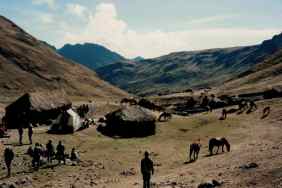 I recently was in Peru and had a chance to talk, over a three-hour dinner, with two anthropologists about many subjects, including both soul retrieval and “secret knowledge” among the Q’ero. One of them has been living among and gathering information from the most respected and reliable paqos in Q’ero. Still, I was not provided much information, really only a few minutes of our hours’ long visit, but what I was told is intriguing.
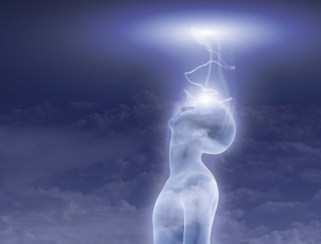 is in the paqo’s intent and munay, not in any ceremony. That’s all I ever knew about soul retrieval for almost twenty years.
 complex methods. Or, more accurately, the practices moved from “informal” to “formal.” You try the informal, and quickest, method first, and if that doesn’t work move to the more formal methods. I received only the broadest outlines, but my interpretation is that the calling back of the soul by whispering in the ear is the first approach—the most informal—of practices for a soul retrieval. Another first-line practice is to throw the coca leaves to try to divine what has happened, why the soul split, and how best to recover it.
 hearing about it provoked myriad feelings. I felt humbled by how little most of us who are not native to the mountains of Peru actually know about the tradition. I marveled at how deeply connected to nature and energy the paqos are. I felt chagrin that so much misinformation is flying around the Internet about Andean soul retrieval (at the very least, as regards claims that certain practices are Andean when they clearly are not). I felt honored to have learned this information. And, despite the incredible Italian food and wine I was consuming, I felt hungry for more information, for renewed contact with the paqos, and for an even deeper understanding of the tradition. So, ever the student, my practice continues, as does my learning.
