
Recently don Juan Nuñez del Prado, and his son, don Ivan, gave a beautiful teaching about kanay and munay: about accessing and using the energies of our Inka Muyu (Inka Seed or Spirit) and our feelings to reach our highest potential as a human being. The Inka Seed is the center of our will, and our sonqo, of the “eye” of the heart, is the center of our feelings. Munay, or the Andean conception of love, is an  integration of feelings and will: it is the choice for love, a love that is sober and considered and subject to our intentions, rather than a willy-nilly emotion subject to the vagaries of our beliefs, desires and needs, and circumstances outside ourselves. When we integrate our Inka Seed and our munay, we access the energies of kanay: of the possibility of becoming a fully developed human being. When we express our kanay, they said, “you become more and more yourself—unique, specific.” What they mean is that we are each a Drop of the Mystery, unlike anyone else in the universe past, present, or future. We are specific, meaning that we know and live this uniqueness, not trying to be like others but fully and completely ourselves. When we allow ourselves to be directed by our Spirit, by our Inka Seed, our growth accelerates and our expression of “who we really are” is effortless. We connect with the “God within” and express those qualities right here and right now in our human lives.
This teaching inspired me to think more deeply about the process of kanay, of becoming more of who we really are, and to understand that what Andeans call the pull of the Inka Seed is what we in the West, and in our psychological and spiritual parlance, term the “Call.” And this “Call” is the subject of this long post.
Transforming our lives—either the whole kit and kaboodle or just one aspect of it—begins with “the Call.” It is an inner energetic pull that may have the power of a shout—ear-splitting, even soul-shaking—or a whisper—a barely discernible longing, a subtle feeling of pressure building within, a faint glimmer in our peripheral inner vision of something enticing us from off in our inner horizon. The Call is the urge for change, a tug away from the “what is” toward the “what could be.” And always, always, always it is a call to the marvelous.
The root of the word “marvelous,” mīrābilia, means “worth wondering at” and has various ties to the words “wonderful” and “unbelievable.” Those words sum up many people’s feelings about making deep and abiding life changes—wonderful and unbelievable. It’s no surprise then that mīrābilia also is the root for the word “miracle.” For many of us, pondering even small changes feels overwhelming, which is why to be truly marvelous, we have to be a little outrageous. We have to be willing to push the boundaries of convention, of tolerance, even of rationality. We have to take risks, with our beliefs and the comfort zone of others’ beliefs. To be truly marvelous, we have to be a little bit brave and a little bit foolhardy. We have to reconnect with a childlike wonder that there is magic in the world and inside the self, so we don’t play at being magicians but actually are magicians. The word “magic,” in its deep roots, comes from the Old Persian word magush, which means “to be able” or “to have power.” In the Andean tradition this is equivalent to our atiy, which in the form atini means “I can do it.” Atiy is how we perform magic, and the many unrealized aspects of the Self that are waiting in potential in our Inka Seed are the raw materials that we perform magic with.
When we hear the Call to transformation and begin to ask questions of it, we are already changed. As poet David Whyte says, “The marvelous thing about a good question is that it shapes our identity as much by the asking as it does by the answering.” When we hear the Call, from the Andean perspective we have only to drop into our Inka Seed and listen, and follow where it leads. It always tells us the truth and turns us in the direction of realizing our highest potential. But for most of us, before we trust that energetic path, we probe with our yachay, our mind. And it is okay, and even wise, to respect the Western gift of yachay: to ask questions, lots of questions—especially about our “identity,” because the summons is to be our most marvelous self and not many cultures in the world encourage us to realize that. It is better if we are all alike, stay within safe cultural boundaries, perform as expected, are predictable and thus more “reliable.” Our authority figures—whether a father or mother or a president or prime minister or a priest or an iman—see themselves of shepherds of a flock. Flocks are of a kind. When we insist that a flock can be a plethora of “kinds,” they are quick to remind us of the dangers of individuality, standing out, being different, upsetting the status quo. And if even if they don’t do this explicitly, social cohesion at some level demands that we maintain a stable consensus. Our spiritual selves, however, know that the power of the marvelous is that our kanay—knowing and living as who we truly are—threatens nothing and no one, because it lifts us to a higher perspective where we are a loving part of a common humanity.
Still, because of the forces aligned against kanay, the Call to the core Self may present itself as a struggle—sometimes even an epic battle—between ourselves and consensus reality and cultural beliefs, between our conscious and unconscious, our head and heart, our practicality and abandon, our disbelief and belief, our doubt and hope. Transformation often is thought of as being difficult, but I think that a better word is “uncomfortable.” When we question who we are, where we are, and what we are doing, the process of inquiry can feel unsettling and even disturbing. When we are feeling the Call, we are telling ourselves that we are ready to ask the toughest and truest questions of our lives so far—and we might tremble at the truth that the answer is not out there, but in here, within ourselves. And because of kanay, my answer cannot be your answer. So our inquiry begins and ends within the “me.” And that can make our knees go weak.
While moving toward heeding our inner Call to the Self, it is wise to consider our yachay, or intellectual, concerns. Yet, we also have to set boundaries about how much power we are going to give to our yachay. Often our early questions about any inner conflict are likely to include: How can I be sure this is really a  Call? What am I being called to? What are the consequences of heeding this Call? Can I trust this actually is a Call? When we ask questions of our Call, each of us has to be careful, as Greg Levov, author of Callings, says, not to be divided against ourselves but willing to explore how we may be divided within ourselves. Levov writes, “There is such a thing as thinking too much about a calling. . . . We can break our back against the rock of debate.” That’s why we do well to adopt the Andean view to be in harmony among all three of our human powers: our munay (love under our will), yachay (reasoning/thoughts), and llank’ay (action). The Andean view is that the Call of the Inka Seed is natural and trustworthy, and so we can cultivate a faith in the Call—faith in the Call itself and faith that we have the capacity to listen and act on that call in ways that will nourish us. Our Inka Seed is calling us to be more of who we already are, and there is nothing but a blessing in that realization.
Author Po Bronson says, in his book What Should I Do with My Life?, the relevant questions are not really so much about “what you will do, but who you want to become.” As Bronson explains, “. . .of all the psychological stumbling blocks that keep people from finding themselves, the most common problem is that people feel guilty for simply taking the question seriously. . . . It [feels] self-indulgent.” This feeling of guilt or self-indulgence is the beginning of dividing yourself against yourself. That’s why, as Bronson acknowledges, waiting to Know Thyself until it is convenient, until we can clear the decks and not be distracted, until we have enough security to risk upsetting the apple cart of our lives, is a fool’s game. Bronson interviewed hundreds of people who felt the call and took action to transform their lives. One of those people wisely noted that we follow our dreams not when we have gained utter surety or have enough money socked away and so feel we can safely make a change or realistically take a risk, but when we “ache for meaning.”
The Call is a call to meaning—from the Andean perspective it is the Call of the Self, for each of us to know our own place within the very essence of Creation and to take our place fully, completely, and joyfully in the vastness of “I AM.” Until we own this sense of Self, being a human being and wanting to be more of your particular expression of humanness can feel overwhelming. But “overwhelm” is a matter of perspective. When we access our “wise mind” (Inka Seed) instead of only our ego mind, we will find that the only “overwhelm” is that we each are “overwhelmingly marvelous.” The universe is incredibly generous and stunningly creative. The only restrictions are the ones we put on ourselves. When we dissolve these inner blocks, however gently and lovingly, we are freed to let go of the habit of living a life by default instead of living life by design. Robert Holden, PhD and world-renowned success coach, bluntly yet kindly advises his coaching clients who are paralyzed by fear, “[Y]ou can either wait for the fears to go away or face your fears now.” Human experience shows that when we face our fears, it is not our fear that changes, it is us—we don’t conquer our fears, we outgrow them. There is an old saying, “Some people go through life; other people grow through life.” The Call is a clue that you are growing. You really can’t resist growth. Just as you can’t stop your body from growing from childhood to adulthood, you can’t stop your “core” self, your marvelous self, from growing either. All you can do is suppress the Call, and accept the consequence, which is, at the very least, more of the same dissatisfaction, discontent, or whatever else it is that you are feeling when you slow your growth.
There is nothing wrong with you now. If you are feeling the Call of your Inka Seed, however, there is more of you to experience than you are currently experiencing. There is more to know about yourself and love about yourself and share about yourself. The Call is about your readiness to finally embrace your marvelous one-of-a-kind life.
Don Juan and don Ivan said recently that because we are each a Drop of Mystery, the universe has created each one of us to fill a place in creation. Without you, creation is incomplete. If you are not expressing your kanay—living as who you really are—then it is if a place in creation is left empty. When I heard that I have to admit I thought, “Whoa! Nothing like putting a little pressure on us!” I wasn’t really joking. It might be momentous, and even a bit frightening, to our “small” selves—to our ego—to think about being an integral and necessary and irreplaceable part of creation. But it’s just the nature of reality to our Spirit, our Inka Seed. We hear the Call of our Inka Seed, and then our Inka Seed serves as our compass, which is always pointing to the True North of the Self. As Scottish author William Barlcay has said, “There are two great days in a person’s life – the day we are born and the day we discover why.” The Call is our Inka Seed coaxing us toward making that marvelous discovery.
 the heart, which is the sonqo ñawi. Actually, although sonqo usually is translated literally as “heart,” in our mystical work the sonqo is the seat of our feelings. Feelings are states of being that we aspire to: they are what I call the Platonic feelings, or the highest aspects of human expression: joy, peace, compassion, and such. If we refine our energy to reach that a feeling, we rarely lose it. If, to use don Juan’s phrasing, we are “the owners” of joy, then we retain our sense of joy even if we are in the midst of a tragedy, even if on another level of our inner reality we are experiencing the emotions of sadness or even despair. It sounds a bit paradoxical, or even contradictory, but it’s not, because we don’t confuse feelings with emotions, and so we acknowledge that both can co-exist within us, just at different levels of our being. To finish defining my terms and distinguishing feelings from emotions, emotions are transitory states that arise from the meaning we
 attach to objects, situations, and people. Emotions are subject to the vagaries of moods, outer circumstances, unconscious shadow dynamics, and the like. So, today you like me and call me friend; tomorrow, when I say or do something that you strongly disapprove of, you dislike me and cut me out of your life. Emotions are reactive, whereas the higher feelings are not.
 think of khyuay is as a way of engaging or being in the world. Khuyay, don Juan Nuñez del Prado says, is the one-pointed, deeply felt engagement of two lovers sitting across from each other or of a child at play: the whole world falls away as they focus only on the person or activity that fills them with meaning and joy. Khuyay, as passion, also provides us motivation to do something that interests us and to sustain our effort over time, so we bring to completion that which we started.
 khuyay, we can be more accurate and call it “emotional intelligence.”
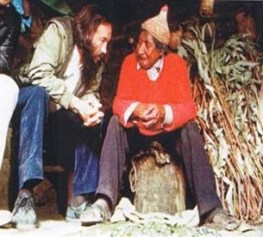 be heavy or light.
 paqos! Reach high, but be real.
 means acknowledging both our gifts and our challenges, or even our deficits. It is about letting go of pretense and taking off our psychological and emotional masks—both the ones we show to the world that make us appear as “less than” we really are and those that present us as “more than” we really are. Humility means allowing ourselves to be who we are, just as we are, right now. In other words, be real! Charles Spurgeon, a nineteenth-century editor and preacher, expressed this idea succinctly and directly: “Humility is the proper estimate of oneself.” From that proper estimate of ourselves, humility helps us cultivate increased self-awareness, which at heart means we stay vigilant about being bringers of sami rather creators of hucha. Whenever we put intention into action we are acting in ayni with others and the living universe. We can’t fake our ayni. So, in practical terms, striving to create sami instead of hucha means that while we are who we are, we are also trying to live from our Inka Seed, which holds the potential for our expression of all that we can be as human beings. As the cliché goes: Practice makes perfect . . .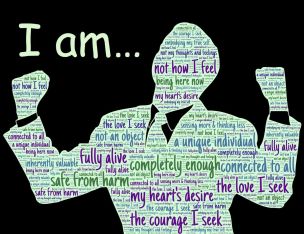
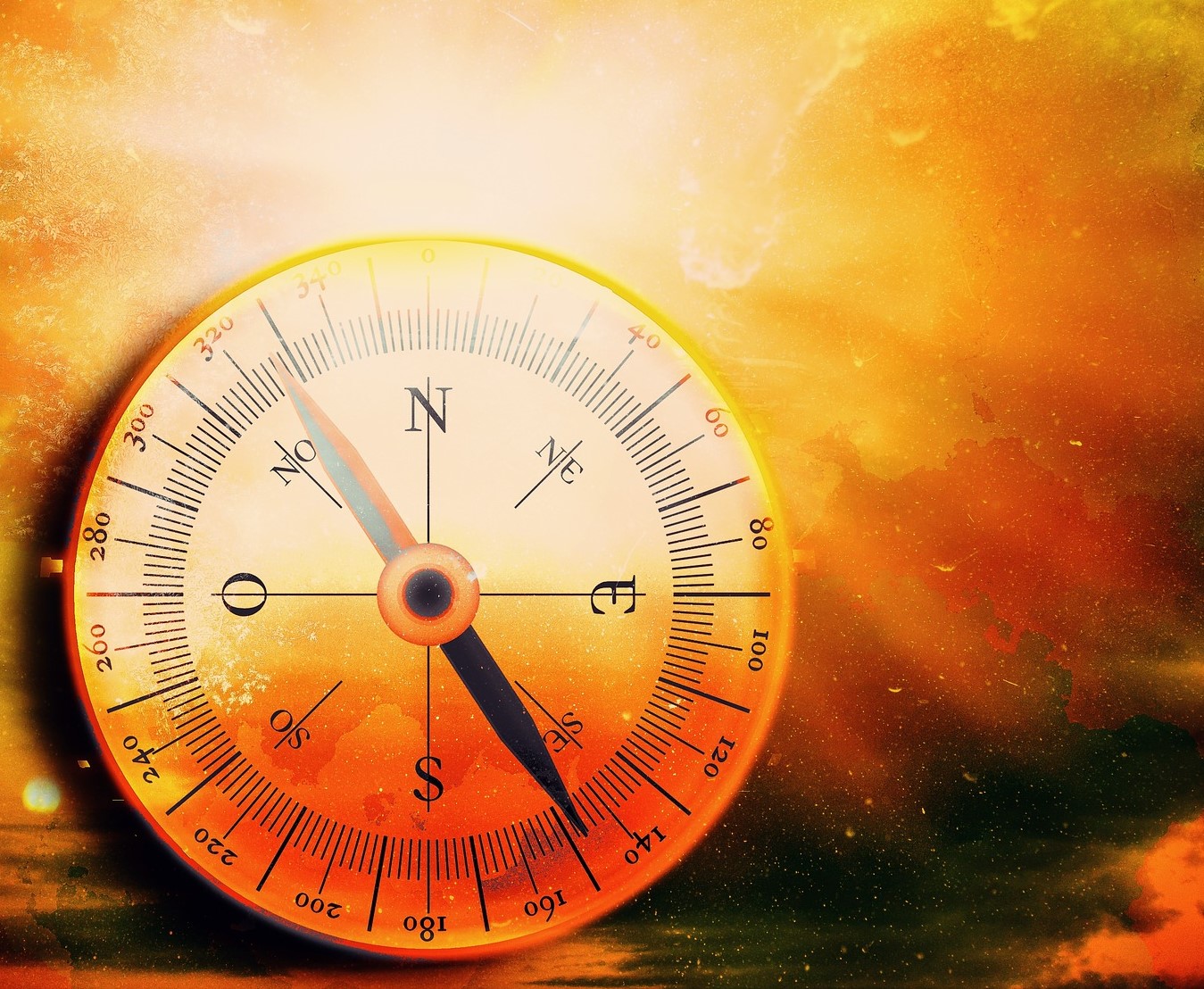 structure that matters—the energy emanating from our Inka Seed. And in this post, I want to close out the year by reminding us of this most important inner compass and its influence on our kanay.
 aspect if you will of Creator, and this life-force energy is always flowing to us—always filling us and moving through us.
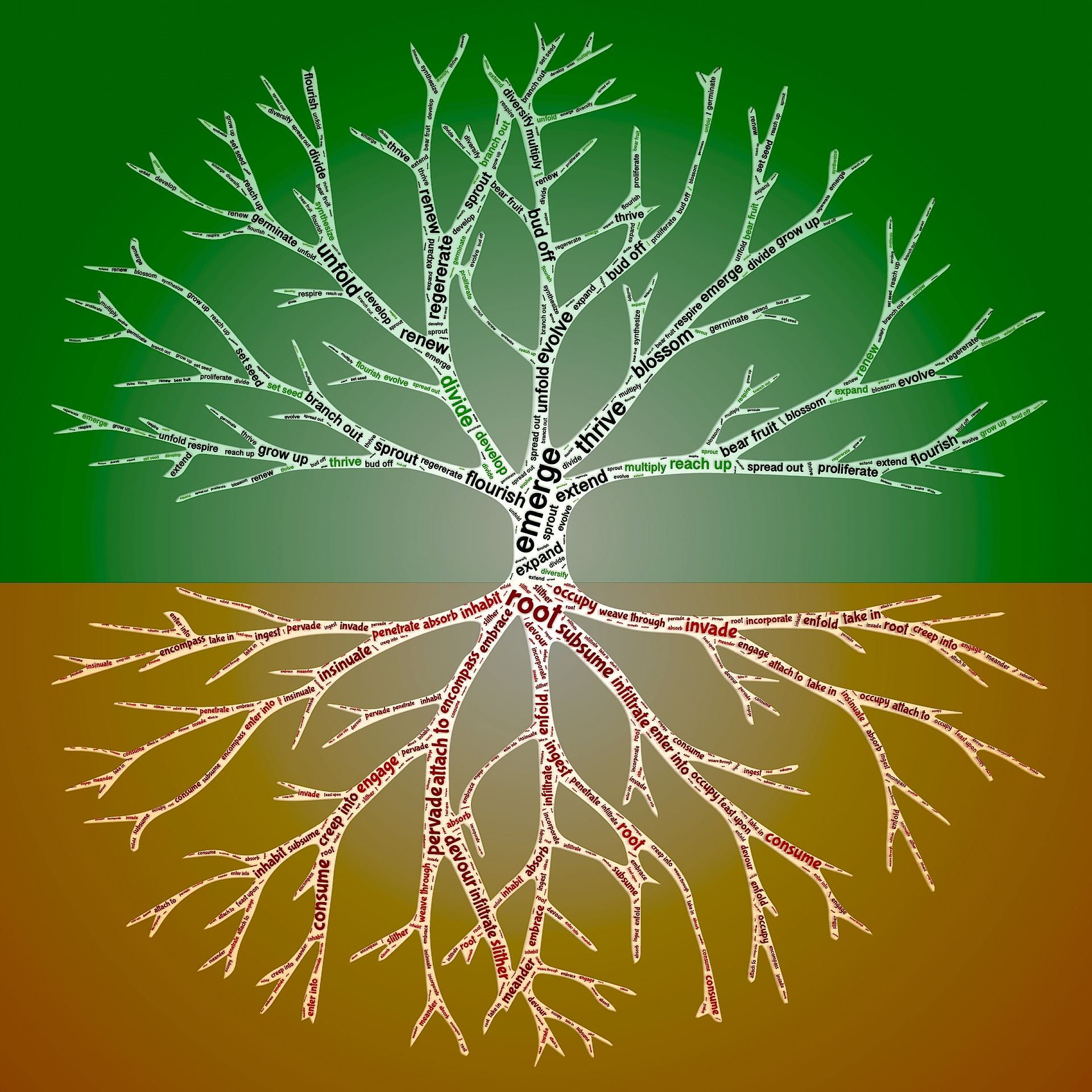 stable. It’s coming from your Seed, which is fed by sami from the hanaq pacha, and it is trying to pull you up. Then you have within you everything that remains of your animal or survival instincts: everything you receive through your genes is your animal heritage, and then you have the human unconscious drives. These are energies that are pulling you down, or keeping you at a bottom level.”
 “I can do it” energy that propels us into motion. However, if we stay animalistic, in our basic atiy nature, the world reflects this: there is the tendency for us to focus on competition, aggression, judgments and fears, self versus other, lack and scarcity, threats to our well-being and beliefs, and so on. But if we lift ourselves through our Inka Seed, we move these siki energies up through the other ñawis, refining them, raising the vibration of our relations with ourselves and with others. Don Juan says, “The whole Andean tradition is an immanent tradition, which means it’s a tradition that takes for granted that inside yourself is the whole project. Western culture is basically a transcendental tradition—the project is outside yourself and [something] must come down to touch you. When the Andean tradition collided with the Christian tradition, it became both a transcendental and an immanent tradition at the same time. As far as we can say, it is the only tradition in which these two main factors combine for your growth—through your instincts and your atiy and through your will and your Inka Seed. As you live and grow, you are learning to express what is in you, what is in your own Inka Seed. That is the whole goal of the Andean path—to express your whole self, all that is within you.”
 whom we may not have seen for a while. We travel home, or family and friends come to visit us. Whatever the arrangement, our congregating with those who are closest to us fosters all the sami and joy of being with loved ones—and, if we are being truthful, it potentially may cause us to create hucha, too. After all, there may be good reasons why you only see your brother once a year or you avoid staying at your parents’ home for more than a day or two! As I think about the potential for us to create hucha during these holiday visits, despite our best intentions not to, I am reminded of something Ram Dass is reported to have said: If you want to see how far along you are on your spiritual path, visit your family for a weekend!
 words or actions of the people around us). Technically speaking, other people can create hucha that we can take on ourselves, if we allow ourselves to. But we don’t have to make others’ hucha our own. If we do, it’s usually because the other person’s energy and emotional dynamics are so similar to, if not the same as, our own that there is an often unconscious “shadow” resonance between us, and the denial of ownership of the psychological sameness causes us to create hucha for ourselves.
  comes out will go through your filters, and so what comes out is a projection of the filter [and so can create hucha] rather than of the light.”
 Q'enti Wasi - House of the Hummingbird