
The Festival of Mother Earth, Pachamama Raymi, takes place on August 1 and is a day to celebrate the bounty, blessings, and support of Mother Earth. For paqos, however, it is a day of ceremonial significance. I have written about this auspicious day in the past (posts of July 1, 2015 and July 9, 2019) and today I write again, with additional suggestions for how to work the energies of this energetic and ceremonial “New Year’s Day” for paqos. It’s a kind of New Year’s Day, because it is said that it is the day the Earth (Mama Allpa) and the mountain spirits (apus) are “awakened” most attentively to our ayni, intentions, and offerings. However, our offerings are not only to Mother Earth and the apus, but to the all-encompassing Pachamama, the Mother of the Manifest World, and to the Kawsay Pacha, the living universe.
On August 1, we set aside some personal time to do a deep hucha clearing and then to drop into our Inka Seed and move our energy in the spirit of kanay, of who we really are as spirits and as souls (as “divine” energetic beings and as earthly human beings). We act with khuyay (a deep, sincere engagement) and speak with rimay (expressing with integrity and power our personal experience and sense of beingness).
In this post, I am not going to repeat the ceremonies detailed in the other two posts, but will offer additional ideas for how to make this a deeply personal and meaningful day of reverence and connection both within and without the self. However, I do urge you to look at the past posts, especially the July 9, 2019 post, to review what I consider an essential part of the work of this day: the stating of intention for the coming year using the “I am what I speak, not what I have spoken” rimay statement from the late Q’ero don Julian Pauqar Flores.
The work of this day is that of mast’ay, a reordering or restructuring of the self. It is also a conscious  renewal of the self. As we do our daily mystical work, such as saminchakuy and saminchakuy, we are, of course, restructuring and renewing ourselves. On this day, however, we are going deeper to embrace more consciously our connection to our Inka Seed so that we can express ourselves back out in the world with greater grandeur, beauty, and power. We also nurture our potential—the fullness of ourselves as held within our Inka Seed—and empower our capacity to continue our journey up the qanchispatañan, the stairway of the stages of human development, prepping ourselves to one day express the sixth-level state of being, that of an enlightened human being. Or even reaching the seventh level, which is ranti with Taytanchis: god expressed in our human form.
Beyond the work I describe in the previous posts, you may choose other practices to revisit on this day, choosing according to your state of being and the condition of your life as they are right now. Remember, we don’t do ceremony for ceremony’s sake. We don’t work through the whole menu of practices just because they are available. We drop into ourselves, clarify our intention and ayni, and then choose specific practices according to our needs at the moment. In addition, it is the quality of our ayni that matters, not how many practices we do. As don Juan Ñunez del Prado once said, if you are seated in your Inka Seed and flowing in integrity with your ayni, then there can be more power in a single k’intu you make and offer than in an entire elaborate despacho.
The suggestions below are all practices from what I call the “Foundation Training” in Andean mysticism. If you have not taken that training, some of these practices may be unfamiliar to you. Once again, the practices discussed below are ones you might consider for your Pachamama Day ceremony that go beyond saminchakuy and saiwachakuy, working with your misha, offering a despacho, using rimay to state new intentions (using don Julian’s incantation), and recapitulating the past to rebirth yourself as a whole, healed human being situated anew in the present moment (wachay) and other practices mentioned in the previous posts.
Chunpi Away and Ñawi K’ichay: Pachamama Day is a great time to reweave the chunpis and reactivate your ñawis. The chunpis are energetic “belts of power” that surround our physical body and “hook up” the mystical eyes, our ñawis, into an interconnected whole and integrated system. The belts do not exist until we weave them, and their power is not inherent in themselves but in their capacity to wire together our ñawis. That is their primary function. In contrast, everyone is born with a mystical body, including the ñawis, although most people don’t know about, and thus don’t learn to use, their mystical eyes. The chunpis fade over time, so we are wise to reweave them at least once a year. This helps keep the interconnections among the ñawis strong and vibrant. At the end of the practice, when your wasi (poq’po and body) is filled with the violet energy of the cosmos, sit in ayni with the living universe free of all seqes to anything or anyone outside of yourself, drop into your Inka Seed, and remember who you really are, which reenergizes your kanay for the coming year.
Yanapakuna: During the Foundation Training, in the work of the left-side, we choose eight helper spirits as prototypes of the seven stages of the qanchispatañan. They help tune us to these levels. They hold the space for those potentials that lie in wait within us to be developed. During your ceremony on Pachamama Day, work through the practices of tuning with your yanapakuna, moving them down through the ñawis in the series of practices we do in the lloq’e training to tune our qaway (three upper eyes capacity), rimay (kunka ñawi capacity), khuyay (qosqo ñawi capacity), and atiy (siki ñawi capacity). Or, work with one or more of your helper spirits to tune and charge yourself in specific ways: choose the spirit at the level of consciousness development that you most need to be empowered by at this time of your life. You can even invite that helper to sit in the seat of your Inka Seed and speak its wisdom to you, guiding you to solve a problem or providing insight into how to fulfill a dream or desire. Finally, be the tusoq and have some Pachamama Raymi (festival) fun by dancing and singing your helpers, allowing them to tune you as you embrace them in the spirit of playfulness (pukllay).
Inka Muyu and Sonqo: Revisit the left-side practice of activating your Inka Seed, filling yourself with the  nectar of its sami. Then stream this sami up to connect with your sonqo, and as your will and your feelings integrate through munay, reexperience the profound sense of the “real” you. Feel the munay and claim it as your love for yourself, as the way your Inka Seed/Spirit and Creator love you just as you are right now. Allow the integrated munay of your Inka Seed and sonqo to fill you, and allow your Inka Seed—the wisdom at the center of your Self—to counsel and advise you.
Other practices to consider are the Mallki practice, by which you build the sacred tree and tune yourself to and touch your sixth-level energy potential. Or, the Tawantin practice whereby you align your cool and warm energy centers, integrating them in masintin pairs through the sami of Mama Allpa, and then integrating them as yanantin pairs to generate the wondrous tawantin energy, the energy of harmony and wholeness. Use that tawantin energy to integrate all aspects of yourself and touch the energy of your tawantin potential for inner and outer wholeness. You can even infuse the two spinning disks you have created from the energies of these centers with an intention that you project out into the living universe as you turn yourself into a living despacho. As a final suggestion for a practice, you could revitalize your connection to your Amaru, raising your power and reinvigorating yourself through your personal karpay.
In the fourth-level way of practicing as a paqo, we are not energy technicians, but energy artists. We each can honor our uniqueness as a Drop of the Mystery by creatively expressing ourselves in our own way during this day of ayni ceremony. We each have a different karpay and so must discover the best way to reach forward in time and space to touch (and own) our personal potential.
No matter which series of practices we decide to incorporate into our Pachamama Day ceremony to let go of our personal hucha and foster our continuing development, we mustn’t lose sight of the fact that it is a day of ayni with the spirit beings who are always there to support and guide us. So, in addition to doing our own work, let us incorporate into our ceremony a sweet ayni exchange with the Earth, the apus, and other spirit beings for all the blessings they bestow upon us.
 adjust easily to misfortune or change.” Through qaway, we acknowledge the “reality” of what is happening “out there” and “in here,” without distorting it or denying it, and through that clarity we achieve a measure of energetic detachment that allows us to choose a nimble, efficient, productive, and appropriate response. Sometimes that appropriate response is choosing to be non-reactive and logical, or displaying self-restraint and tempering our emotions, words, and actions. Sometimes it is expressing our will by forcefully establishing a boundary and saying “No!” or it is giving ourselves up to our grief or despair and allowing ourselves to feel this excruciating moment of our humanness. Qaway lets us be who we really are and see others and the world for who and what they really are—admittedly not so easy a task since we so often are operating from our psychological shadows and being triggered or are projecting onto others—and resilience allows us to deal what is and not be resistant to it or slayed by it.
 wrong, but the challenge of keeping conscious our choice for resiliency over resignation.
 and spiritual wisdom together from all corners of our precious planet. Humanity needs our medicine now more than ever for global awakening and transformation.
 Thai, Swedish, Mexican, South African practitioners of the Andean mystical tradition. The concept of apus as paqos who after their physical death inhabit mountains to serve as guides and teachers to human beings in one sense is purely cultural, a concept indigenous to the Andes. In another sense, the apus can be “translated” into a concept that is universal, as just about every tradition or culture recognizes that natural formations can be “sacred” sites. We can make a literal equivalence to the concept of Andean apus as mountain spirits and sources of power by identifying those mountains in our area or country that have historically been recognized as being special, sacred, or otherwise called out in some uncommon way. If we trace the history of the First Nation peoples in our area, we will likely find that they related to certain mountains (and other natural formations) in ways distinct from other natural features. That’s a clue that they in some way venerated that mountain (venerated as in “esteemed” rather than “worshipped”). If that is the case, then we, too, can establish a relationship with that mountain as a source of power. From the Andean perspective, there is no issue of cultural appropriation, as sources of power are available to all human beings. We use our Andean energy dynamics to access that power, rather than appropriating the rituals of the local cultural group who might be most associated with that mountain or sacred site.
 to be ourselves and establish a personal ayni relationship with the spirit beings, including with apus.
 that is an important carrier of the information and energy of the place where we live. This “apu” is our energetic ancestor, not in the sense of our personal bloodline ancestors, but as one of the ancestors of the place we find ourselves at currently, of our physical location on the back of Mother Earth. These “apus” are geographical and cultural ancestors, because they are creators of the poq’po—the energy bubble—of the place where we reside. We might not like the place we live right now; it might not feel like home. This emotional discomfort may have its roots in an energetic disconnect. So, we can shift that emotional state by using our will and intention to establish an ayni relationship with the bubble of that place. We can take action by working with one or more of these local “apus,” who can help us feel at home right where we are, more fully and deeply grounded with that patch of Pachamama. The connection creates an inner equilibrium so that we can work energetically without distraction or discomfort. Once we connect with the “apu” of our town, we can then work outward, expanding the energy bubbles (“apus”) we work with to our state or province and then to our country. By forming ayni relationships with these sources of power, we can enlarge our karpay (how much of our potential we are actually accessing), which helps us progress up the qanchispatañan.
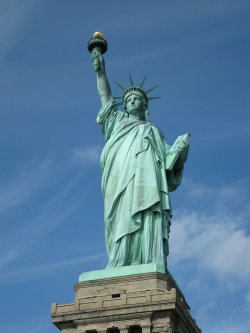 province. Finally, you can connect with a suyu (national) “apu.” We can connect with people of the past because when human beings die, their spirit returns to the hanaq pacha but their soul (experience and knowledge as a human being) is imprinted in the Earth. Through that information imprint, we can access people from the past and their wisdom.
 and not every apu is a mountain. Some mountains are just geographical formations: they are not inhabited by a powerful spirit who can guide and protect human beings and communities. And there are other “honored ones” whom we call apus: for example, the seven teqse apukuna, or universal spirit beings: Jesus/the diving masculine principle, Mary/the divine feminine principle, Tayta Inti (Father Sun), Tayta Wayra (Father Wind), Mama Allpa (Mother Earth), Mama Una (Mother Water) and Mama Killa (Mother Moon).
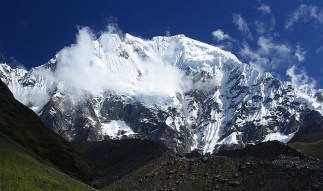 bounty. He brought back all kinds of food, which helped save the people of Cuzco. Salcantay went north, toward the jungle. In his wanderings, he came to the land of the Anti people, who had a reputation as great warriors. He spent time there, where he met a princess, Waynawillca. They fell in love and were to be married, but the Anti people disapproved. They did not want their princess to marry an outsider and leave their land. So, they banished Salcantay. But he and Waynawillca would not be separated, and they fled together, heading back toward Cuzco.
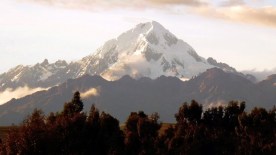 offering to a specific apu who has it within his or her power to respond in ayni to that request. We wouldn’t offer a haywarisqa requesting help with our health to an apu whose specialty is improving family relationships. There is disagreement among paqos and the local people about the specialties of each apu. For example, some people say that Salcantay is the apu to call upon for healing requests, whereas others say that he is more about helping increase freedom and with the loosening of something stuck or blocked within; still others associated Salcantay with an untamed feminine energy or with more generalized unformed, wild, and even chaotic states of energy. The general point, however, is that, according to don Juan, if we have a specific request in our haywarisqa and don’t know which apu can answer that request, then we should direct that offering not to an apu at all but to Taytanchis, or the metaphysical God. To make our request to someone, in this case an apu, who can’t fulfill it is unproductive to say the least! But in our exploration of how an apu becomes an apu, it makes sense that if individual paqos when they are alive have specialties and particular personal skills and gifts, so would the apu they have become.
 Q'enti Wasi - House of the Hummingbird