
What Are the Mullu Khuyas?
A few people have asked me to write about the chunpi khuyas, which are more formally called the mullu khuyas. Let’s start by examining the terminology.
Chunpi means “belt” in Quechua, In the mystical tradition this refers to the four “belts of power” of the energy body. More on that later. . . Depending on which Quechua dictionary you are using, the word may be spelled with an “m,” as chumpi.
Khuyas as stones that are infused with your affection. The word “khuya” literally means affection. The five chunpi khuyas are infused with your sami, personal power, and munay. In this way, they are holy stones.
Mullu refers to the spondylus, otherwise known as the thorny oyster or spiny oyster. As far back as 4200 BC, the shell of the spondylus was used to make sacred or ceremonial items, and during the Inka Empire was fashioned into jewelry for the royal families. Chunpi stones were originally made from f this shell, which ranges in color from dark red to an orangey pearlescence. There is some indication that this shell was prized even more highly than gold. There was plenty of gold in Peru, but the spondylus was scarce. It lived only in the waters off the northwestern  coast of Peru, and most of it was probably imported or traded into Peru from what is now Ecuador and other countries north of Peru. The flesh of the oyster was considered as the food of the Gods.
While I am not going to overview the karpay that weaves the energetic belts—the chunpis —and opens the mystical eyes—the ñawis—I will briefly go over the belts. There are four of them: one is around the lower trunk of the body, called the yana chunpi or black belt; another is at the belly area, called the puka chunpi or red belt; the belt at the chest and heart level is called the qori chunpi or gold belt; and the one around the throat is the qolqo chunpi, or silver belt. When you open the three eyes of the head—the two physical eyes and seventh eye in the middle of the forehead—you pull in violet energy, so this area around the head at eye level is sometimes referred to as the kulli chunpi, or purple belt, although it is not formally considered a belt.
To perform the karpay, which is called Chunpi Away (the second word means “to weave” and is pronounce rather like “ah-why”), you are literally creating the belts, weaving them into your energy body. They do not exist before they are woven in the karpay. Also, they made fade over time, so it is a good idea to perform the karpay occasionally and to work the belts often. Each belt contains an “eye,” called a ñawi. These already exist in your poq’po (energy body) but they are awakened during the chunpi  ceremony. This aspect of the karpay is called Ñawi K’ichay, which literally means opening the eyes.
The only other point I will make about the karpay itself is regarding the black energy that is pulled down the spine and then wrapped around the hips and through the legs to make the yana chunpi. What many people don’t realize is that this is willka energy. Willka is the black light energy that is considered by many paqos to be the highest expression of sami in nature. In the karpay you actually make willka! This is accomplished by pulling gold and silver cords of cosmic energy into the head and down the spine, crossing these cords of light at the neck, and then pulling green earth energy up into the root of the spine and up the spine to the base of the neck. When you have these three cords in place, you then blend them into black light energy and pull the black light down the spine to make the yana chumpi. The important point of understanding here is that when you integrate cosmic energy and earth energy inside the human body, you make willka energy.
There are five mullu khuyas used in the karpay to weave the belts. Each has a specific number of points or protrusions, from one to five. The names of the stones follow the sequence, using the Quechua word for that number (but beware that dialects of Quechua vary). The stone with one protrusion is called ch’ulla. According to some scholars, this word means “single foot.” The two stone is called yanantin. This stone doesn’t use the literal number of the points as a name, as yanantin refers in the mystical tradition to the complement of differences—to two things that are different but that can be integrated harmoniously. The stone with three points is kinsantin, literally “three.” The one with four points is tawantin. Tawa means four, but of course this word is loaded with meaning. The Inka Empire was called the Tawantin because four nations were integrated into one Empire. It also refers to the sacred integration of four factors. A despacho, or nature offering, is always based on a tawantin. Many other aspects of the mystical work are based on a tawantin. Finally, the stone with five protrusions is named after the number five, pisqantin. (The picture is of my set of mullu chunpis, which, according to the estimation of my teacher, Juan Nuñez del Prado, were probably made in the late 1800s. The stones are pretty large, with the five stone filling the palm of my hand.)
Although these khuyas as used during the karpay to weave the belts, they are not necessary. Remember, nothing outside of your own intent and personal power are necessary in the Andean mystical tradition. If you think that you lose the power to perform the karpay because you don’t have a set of these khuyas, then you are turning them into fetishes. Energy follows intent in this tradition, so you can perform the karpay using only your intent to follow the the instructions for weaving the belts and opening the mystical eyes. If you receive the karpay from someone who has a set of mully khuyas and uses them in the karpay, but you don’t have a set yourself, no problem either. You can later refresh the belts using only your own intent and following the protocol of the karpay.
So that’s something about the mullu khuyas. If you have questions about other aspects of the Andean path, I am happy to try to answer them and share what I have learned about the tradition.
 deeper, the meaning expands to bring light to what an Andean initiation is really all about—and it takes us beyond the initiation itself into the heart of this energy tradition.
 Your karpay is your capacity for personal power at the current time. It is related to atiy, the capacity at the yana chunpi (the belt around the lower trunk of the body) and the siki ñawi (mystical eye at the base of the spine), where you measure your power at the current time and under the current conditions. You can only energetically accomplish what you have the personal power to do, so your karpay is your capacity for pushing the kawsay at the current time. The quality and amount of energy you transmit and receive in a karpay as initiation is proportional to your own capacity for radiating, absorbing, and using energy—which is another way of saying it is your personal power.
 of sami—to help you be successful next time you try.
 his own personal power as it relates to this client and the client’s energetic capacity to participate in his or her own healing with don Benito.
 At a recent workshop I was teaching, I mentioned that I think doing some psychological “shadow” work can propel you along the Andean path toward conscious evolution much faster.
 Jung’s Map of the Soul, “the shadow is the image of ourselves that slides along behind us as we walk toward the light. The persona, its opposite, is named after the Roman term for an actor’s mask. It the face we wear to meet the social world around us.”
 shadow. You can see, then, how important shadow work is to your endeavor as a paqo. One of your goals as a paqo is to be qaway—to see reality as it really is. If you are not exploring your shadow self, you cannot easily realize that goal.
 In his book High Country: The Solo Seeker’s Guide to a Real Life, depth psychologist David M. Alderman quotes Cal Jung about the value of fostering union with the inner and outer self—the conscious and unconscious selves. As a paqo, you can think of this as a yanantin pursuit that reaches japu. “Through the union of the opposites within us, we are able to discover our true selves beyond what our conscious awareness alone could ever make of us. . . . Through the conscientious union of the opposites within us, the true self emerges spontaneously into the conscious light of day; the conscious ego-based ‘I’ is literally transcended, and in its place arises a real, self-renewing, living being.”
 sonqo ñawi) have no hucha. Therefore, there is no need to ever “clean” these areas. They are pure sami, and so while you can bring more sami to them for additional empowerment, you never have to clean them.
 hate, admiration, jealousy, joy, disappointment, and on and on.
 to be easily influenced by what we are experiencing and they change over time. Emotions, thus, are a major generator of hucha.
 your approach to cleansing your poq’po. Perhaps you will see progress with emotional hucha that has until now been intractable. When you work on the centers that really matter—especially the qosqo—perhaps you will find your well-being radically increased. As interesting will be the effect in clients for those who work in the healing fields. If you are working at the level of the heart with clients, perhaps your effectiveness at helping them activate their self-healing capacities might be enormously increased through this shift of awareness and focus to the qosqo as their emotional energetic center. I would love to hear from you about this!
 teaching of don Benito Qoriwaman, there are seven levels of consciousness that can manifest in humans on earth, although currently we have manifested only four and are eagerly awaiting the fifth level, which is part of prophecies that foretell the rise of the New Humanity.
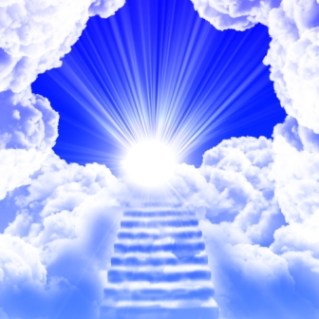 Stairway of Seven Steps. This stairway of consciousness starts at the zero level, which is the ground floor from where you step up and onto the first step.
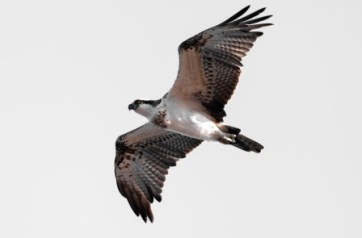 e ability to direct your own personal destiny. In the Andes, the bird of the first level is the killichu, a small falcon.
 e truth and I have finally found it” mentality. This is the level of consciousness most common in the world at the current time. It drives the most common religious and political agendas. It displays as stubborn nationalism (democracy is the best system, the U.S. is the best country), narrow views of spirituality (“X” is the only path to salvation), and intensely committed political affiliation (the rabid communist, socialist, Libertarian, Republican, Democrat). Very often this mindset drives one to become the “savior” of others, who don’t yet have the truth and so must be shown the way. The anka, or eagle, is the Andean bird of the third level of consciousness.
 figures and teachers can be guides but can’t solve problems for you—you need to find the answers through your own personal experience and insight. A fourth-level teacher guide students but allow students total freedom; they teach so the student can leave and walk their own walk. While you find your own way and see beyond boundaries, this is not an “anything goes” level of consciousness. You choose your personal beliefs and have opinions, but they are subject to change as you change. You stand up for what you believe in, but you don’t insist others believe as you do and you never belittle or ostracize others who hold different views. You are totally yourself and allow others to be totally themselves. The kuntur, or condor, is the Andean bird of the fourth level.
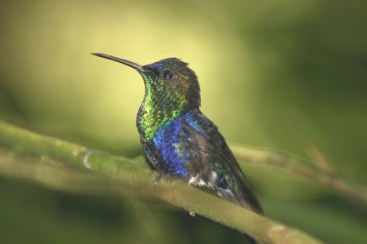 those found in the Bible in the Book of Acts, including raising people from the dead. At the fifth level you can also manipulate matter in others ways (such as manifesting a gemstone out of thin air) and can overcome the constraints of time and space as we know it (such as by teleporting or bilocating yourself). You can move in realms beyond the current known laws of physics. The bird of the fifth level is the q’enti, the hummingbird.
 Q'enti Wasi - House of the Hummingbird