
In last month’s blog post, I discussed khuyas contextually and introduced the process of working the Andean practices from the fourth level, an approach that moves from a rote way of relating to your ayni, misha, and khuyas to a more personal and artistic expression of them. I stress that these posts about the meaning and use of khuyas present one way of approaching the tradition and its practices. I do not claim they are the only way or even the definitive way.
In this post we will look at using the khuyas by focusing on application rather than concept. However, if you have not yet read Part One in last month’s post, I urge you to do so before reading this post so you will have a firm foundation in the fourth-level way of thinking about and using khuyas. I am going to proceed by asking questions about using khuyas and then providing answers, which present just one perspective and so are by no means representative of the variety of personal styles of paqos in the Andes.
And, I discovered while writing about this topic that I couldn’t cover all I wanted to in two posts. So, the last post of the year in December—Working with Khuyas: Part Three—will complete this discussion.
What are khuyas used for?
In the Post-Conquest Andes, the word for a khuya was, among others, conopa, which for the most part referred to a stone or baked clay figurine or amulet, usually shaped like a llama or alpaca with a hole in the top or center. Conopas were considered connections between human beings and the mystical world, between human beings and nature—as able to connect us to what one anthropologist calls the “animating in-between” of the material, physical human world and the universe of living energy. They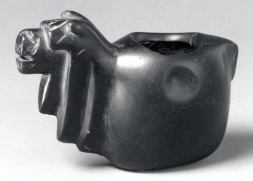 mostly were used as magical protection for herds of llamas and alpacas or in ceremonies or on “altars” for marshalling the energies to keep herds healthy and flourishing.
For us as paqos, khuyas also are representative of our connection to the “animating in-between,” but they take on other, different meanings and uses. For the most part, they represent our development as human beings and as paqos. Each one represents an important milestone, event, person, or karpay along the path of our practice. Each khuya is infused with our affection, and when gathered together they comprise the “bundle of signs” that is our misha, which itself represents our personal power and our kanay (our truest selves). Beyond that, the most common use of a khuya is for healing, which will the subject of the December post.
How do we “charge” a khuya?
Our khuyas are important symbols of our growth as human beings, and so each one represents a person, place, event, and so on that has shaped us in deep, meaningful ways. We say that each khuya is infused with our affection and love, but how do we “infuse” each one or, as more commonly expressed, how do we “charge” each one with that particular feeling and meaning? The methods vary, but believe me when I say that over the last twenty-seven years I have heard about ways of charging khuyas that couldn’t possibly have come from the paqos or even from the Andes of Peru, as they were tinged with all kinds of metaphysical and supernatural ritual complexities. I can offer the advice that if you struggle to discern what feels or seems more authentic to the Andean tradition, remember this: the paqos are always practical, efficient, and grounded. When it comes to moving or tuning energy, simpler is always better. Paqos are masters of driving the kawsay (the living energy), and a foundational tenet of practice is to never waste your energy. That means moving the most kawsay in the most effective or powerful way with the least amount of effort. This same approach applies to “charging” khuyas.
We charge khuyas by infusing them with our feelings. Our work is mostly internal, and there is very little, if any, outward display or ceremony. Our ayni is personal—your ayni is not my ayni, because we each have a unique Inka Seed, and so our expression of our ayni is unlike anyone else’s. Thus, our work is mostly private and interior to ourselves. So, to charge a khuya, we simply hold it and infuse it with our finest energy, especially with our munay. The energy arises from our state of being—our love, appreciation for, and honoring of the person, event, place, spirit being, or other factor represented by that khuya—and we simply use intention to infuse that state of being and those feelings into that khuya, which from that moment forward carries that energy. When we place that khuya in our misha, we are in effect adding that particular “feeling relationship” to the bundle of symbols that represents who we are.
Although the charging process is so simple, as fourth-level paqos we are free to express ourselves playfully and artistically in that 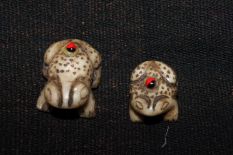 process in any way we choose. I remember paqo Americo Yábar showing me and a few others how to charge a khuya. He said it should be in our right hand and held aloft toward the hanaq pacha. Then we should pull down a stream of sami from the hanaq pacha and into the khuya, then move the khuya down toward our chest until it was touching our heart and we joined energies with it, pulling the stream of sami into ourselves as well. Beautiful! But not necessary. From the fourth-level perspective, we love to express our pukllay—our freedom and playfulness—and we can choose to do what brings us pleasure. That’s perfectly fine—as long as we are conscious that our performance is our choice and not some magical or superstitious ritualistic necessity.
In addition, since we are working in a particular tradition through a particular lineage of paqos, we also tend to infuse a khuya with our affection/munay for the lineage of paqos of which we are a part. Therefore, we need to know what and who our lineage is. For example, if you take what I call the Foundation Training through don Juan Nuñez del Prado and his son don Ivan, me, or another teacher trained by don Juan and don Ivan, you will be part of two lineages: the Waskar lineage of the Cuzco Wachu and the Inkari lineage through the Q’ero Wachu. So, to charge a khuya, after infusing it with our affection as described above, we also establish a loving energetic connection with those two lineages of paqos and pull the sami we associate with those lineages from them, through ourselves, and into the khuya. In this way, as don Juan says, each khuya “always keeps you connected to the masters.” (As an aside, we especially make this lineage connection with the khuya we use as the “center” of our misha.)
So charging is that simple: we touch deeply into our munay and infuse our feelings into the khuya. Then we connect with our specific lineage(s) and pull their power into the khuya (and in ayni we also may infuse our munay for those paqos who came before us into the khuya).
My answer about charging a khuya would not be complete without talking briefly about the related term, khuyay. For those not familiar with khuyay, it is the capacity associated with our qosqo ñawi, the mystical eye of our belly area. Khuyay is passion, meaning how our energy motivates us both to initiate action and to sustain that action over time. It also is what motivates us to make connections to others and the world. Don Juan and don Ivan explain the relationship between khuyas (the objects in our misha) and khuyay (passion as motivation and connection) as follows. Don Ivan says, “Khuyas are empowered by your khuyay, your passion. I think khuyay is [the energy] to create bonds with things, to connect with things. It is an attachment.” Don Juan then offers us a deeper insight about what a khuyay attachment is when he says, “Khuyas represent power through your passions—not with your passion but through it. Your passion—your khuyay—is not just your appreciation, love, and munay. It is how those feelings and energies motivate or move you to act and be in the world.” So, each khuya itself is the sign or symbol of a particularly important and meaningful occurrence or relationship in our lives, and as we charge a khuya we are infusing it with the depth of feeling connected to that occurrence or person and how as a result of that engagement we are able to move forward in life in a more conscious and sami-filled way.
Do I also have to “charge” my misha?
People often ask about charging their entire misha bundle in addition to the individual khuyas. My answer is to point out that from the fourth-level perspective, our misha is the khuyas it contains. It has no meaning or existence separate from them. So, it is already charged and activated through those khuyas. However, as I have already pointed out, at the fourth level we make a clear distinction between choosing to do something and thinking we need to do something. So, as with charging the individual khuyas, we can through our artistry, pukllay (playfulness), munay, and ayni decide to undertake some kind of ritual to celebrate making our first misha or to charge our misha bundle, but doing so is a personal choice and not a necessity.
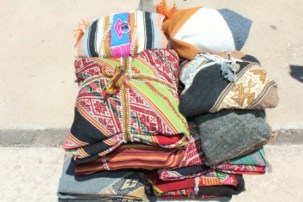
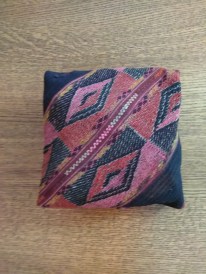
If there is any ritual at all around the misha—and it is a stretch to call this a ritual—it is another form of khuyay, or connecting. When we wrap the mestana (woven cloth) over our khuyas to make the misha qhepi (bundle), we may want to blow through it three times, which traditionally is a way of infusing the misha with our kawsay (life-force energy). We blow through or into it three times, with one breath carrying our finest munay (love and affection), another our yachay (knowledge, intellectual capacity, experience), and another our llank’ay (ability to act in the world). There is no order to which breath carries which energy. Sometimes in those same three breaths we also are connecting with and honoring the three worlds: hanaq pacha (upper world), kay pacha (this world), and ukhu pacha (lower world or inner world). Finally, since the misha represents our development as human beings and our path as paqos, we also might connect to and honor our lineage(s): we can blow our energy through the misha bundle with the intent of sending our munay to those paqos who came before us and whose company we now keep energetically.
What do I do if I lose a khuya?
No problem! Simply choose another stone or object to replace it, and infuse that replacement with the same meaning, intention, and feeling as the one that was lost.
This is where I will end the discussion for this post. In the final December post, I will discuss using khuyas, especially for healing.
 side of the path), which is focused on developing our yachay (experience, knowledge, and perception). Qhepi means “bundle.” So, our pana misha qhepi is literally the bundle of signs that we are practicing paqos and also a collection of the symbols of ourselves, as I will explain below. We might also have a lloq’e misha qhepi, or a misha holding the khuyas we associate with the llank’ay aspect of the path, which is more oriented toward action. Traditionally, the left-side misha contains the five mullu khuyas, or the five stones we use to give the karpay for weaving the belts (chunpis) and opening the mystical eyes (ñawis). Occasionally a paqo might have a left-side misha dedicated to healing, so it would contain khuyas he or she uses specifically for healing.
 actually working with our khuyas.
 might be a stone or some other small item we were given during a karpay from our teacher. Or, one or more of our khuyas might be representative of more abstract concepts such as the four cardinal directions, the three worlds, or the three primary human powers of munay, yachay, and llank’ay. The difference between a third-level and a fourth-level approach appears in why we have selected the khuyas and in how we think about them. If we are following a schematic teaching, with everyone doing things in similar ways for similar reasons, then these khuyas can become like little fetishes, and so there are at least two potential “traps” of this third-level way of creating a misha. The first trap is when we lose the sense of our own personal relationship with the living universe. Our misha contains khuyas of the same kinds and with the same meaning as everyone else’s. Our misha becomes a “set piece” that never changes because we have ticked off the khuya list given to us by a teacher. Second, we can end up collecting khuyas like souvenirs or trophies: “This is my Apu Ausangate stone.” “This is my Machu Picchu khuya.” “Here are my four-directions khuyas.” If we fall into these potential traps, our khuyas may become devoid of our feelings and affection and become fodder for our ego. Our misha might lose its inherently personal meaning; instead of representing our personal journey, it might simply be modeled on a fixed template.
 “centering” stone, as shown at right from my misha.) At the level of becoming a fourth-level energy and ayni artist, we know that through each khuya we include in our misha we are acknowledging and honoring who we are and how we have come to be as we are. The khuyas (and the bundle of them that is the misha) represent our journey as a human being, from the traumas we have overcome to the triumphs we have experienced, from family members and other people who have significantly influenced us so far in our life to paqo teachers who have mentored us and helped us develop on the path. A khuya might even represent our unfinished work and unrealized potential: the work we acknowledge we still have to do to heal ourselves or express more of our Inka Seed.
 from our father, and that khuya might hold the power of our realization of how much love has passed between us or, conversely, it might represent his utter failure as a parent and how we overcame this wound or are still working to overcome it. This object becomes sacred to us either way because it holds our power to know who we are: where we came from and how we got to where we are today. A khuya might mark an especially important occasion related to a particular person, one that is deeply meaningful to us. For example, one of my most precious khuyas is a small wooden cross that was in my mother’s hand for the last week of her life. It is infused with a whole host of meanings for me, all deeply personal and highly significant to my development as a woman because of who my mother was and of our relationship—and it also represents the loss I feel of her physical presence in my life. The take-away is that from the fourth-level approach no one can advise you about what kind of khuyas should or will make up your misha. Your misha is the symbol of your life.
 what this level of consciousness and capacity looks like. (For previous general discussions that mention the seven levels of consciousness see the posts “Birds of Consciousness” and “Consciousness, Intention, and Ayni,” among others.)
 that process starts in our current state, just as we are now with all our fallibilities and frailties. We have to bring our attention to how we are not now absorbing sami and why.
 the body if we realize that potential.” A sixth-level person has achieved the realization of that potential—and there’s nothing stopping any of us from doing the same.
 ourselves to this sixth level of consciousness.
 common alternatives. In one Quechua dictionary, paqu is translated as “shaman,” with entries offering more specificity. One variation is paqu hampiq, which is defined as “shamanism” and refers not to the specific practitioner but to the metaphysical realm within which that practitioner operates or the type of practice itself. “Hampi” in this and its various grammatical forms means medicine, curing, or healing. So paqu hampiq refers to the paqo tradition as a type of healing practice and a paqo as one who is trained to be a healer. Another variation is paqu yachaq, which also is defined as “shamanism.” Yachay means knowledge, perception, first-hand experience. So, this term refers to a paqo as one who is a person of “knowledge” of both healing and of what I call the liminal realms (the “in-between” spaces), which is more in line with the mystical practices.
 power. It is filled with khuyas, or objects of various kinds that are sacred or especially meaningful or dear to each particular paqo (called formally khuyay rumi, or stones of passion). So, we can think of the word mesayoq as meaning “one who carries a mesa,” and paqos are generally the ones who do. As we learn from don Juan Nuñez el Prado, the paqos of the last generation called this sacred bundle a misha, which means sign or symbol. This word provides the nuance that the bundle itself and the khuyas inside it are external symbols of the paqos inward personal power. The full term for this bundle is misha qhepi (there are various spellings of qhepi). Qhepi means “bundle” or “package,” so this is the bundle of the signs or symbols of the paqo’s personal power. There can be a paña misha qhepi (a “right-side of the path bundle) and a lloq’e misha qhepi (a left-side of the path bundle). I won’t get into the differences, because that will take us off course from this discussion. Let’s say focused on the word mesayoq, because from this discussion you can see how a variation of the term is mishayoq, which means, according to don Juan, “one who has signs.” The term used for the two primary types of paqos would be alto mishayoq and pampa mishayoq. “Alto” means “high,” and “pampa” refers to the plains, the flat expanses of land. So, these terms mean “the one who has the high signs,” and “the one who has the earth signs” (“the one who has the signs of the plain”). Pampa mesayoqs generally work through their cooperation with Mama Allpa, Mother Earth, so their association with the plains connects them to the earth and to their specialty as the practitioners of the earth rituals. Don Juan describes the distinction as the alto mesayoq being the mystical specialist and the pampa mesayoq being the ritual specialist.
 suyu apus in the south-central Andean region: Apu Ausangate and Apu Salcantay).
 of sami, slowing down or blocking some of this empowering energy. This slowed or blocked sami is called hucha, or heavy energy. Hucha is sami that has lost some of its transformative power.
 become transformed through a more abstract but perceptual understanding of the dynamics those words are trying to describe.
 telephone landline wire or an electrical transmission line that carries energy through itself. If there is no seqe, there can be no connection and thus no transmission in either direction.
 connect with Mama Allpa and pull her sami up and into you. To end the practice, you disconnect the seqe/cords and “close” your bubble.
 Q'enti Wasi - House of the Hummingbird