
Joan: Continuing our discussion of willka. . . As a metaphor, other traditions focus on the white light, on radiating the energy of all visible light frequencies, which results in radiating white light. But for me the power of the Andean tradition is that it is focused on the exact opposite energy dynamic. Before you can radiate all frequencies, you have to be able to freely absorb all frequencies—without blocking anything. The Andean focus is on being a perfect absorber of energy.
Don Ivan: Absolutely.
Joan: Well, the perfect absorption of all the frequencies of visible light, again using the visible light spectrum as a  metaphor, is the color black. For us, that is the black light energy, or willka. It moves down our spines and creates the yana chunpi [black energy belt], filling the siki ñawi [mystical eye] at the root of the body. Talk more about actually working the willka energy of the siki, moving it up on what we said previously was like an evolutionary scale.
Don Ivan: We use the mullu khuyas [stones used for weaving the four chunpis] in the Chunpi Away karpay. We use those khuyas as our raw material [for weaving the chunpis]. Then by pulling up the energy [from the siki ñawi/yana chunpi] and making all of the other chunpis, you are going to be developing that energy, tuning it, making it rise higher and higher.
Don Juan: Higher and more vertical.
Don Ivan: You start at the ground, which is the base for everything, and then you go higher. The two most important parts of your psyche are your feelings and your thoughts, but they are not possible if you don’t have a body. So that’s the scale. Feelings and thoughts are the top energies, but our Andean scale is upside down in terms of power. The very top [of the energy power hierarchy] is at the siki ñawi, and the willka that is there is the lowest frequency of energy but the most powerful.
Don Juan: We [understood all of this] basically as a result of practice, of weaving the belts of hundreds of people. After doing that, sometimes you discover you have the whole thing as a protocol. How do you start? What do you do [in the karpay of weaving the chunpis]? You start at the top [of the body/head] and pull in the cosmic energy and then you come down the spine using material cords—the spine is the material. You have connected the metaphysical with human matter. Then you absorb the grounding power of green [earth energy] and pull it up, and you merge them [cosmic and earth energies] together. You are merging the top and bottom. You are becoming the absorber. You are, we could say, becoming the black cord. Then you start to come up again [create the chunpis] at the front of the body. This black belt connects you to the power of your base part, then you move up.
Don Ivan: It’s important that you can tune with this black energy [willka]. It’s the potential state of the absolute absorption of reality—receiving everything directly inside. But this energy can be found outside, too.
Joan: So, according to this process, is that why once you, don Juan, told me that willka is of nature but not in nature? Because we create it?
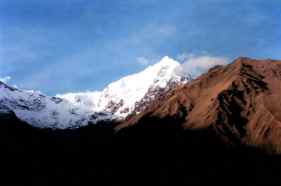 Don Juan: In a certain way it a phenomenon, an emergence of. There are things that are going to manifest that are not already here. Energies can change and emerge. One of these processes is the emergence of willka inside human beings. But willka as sacred energy is found, for example, in some of the sanctuaries. You can make a connection to a waka [sacred object or place, including the sacred sanctuaries] that is associated with willka and pull it to you, and that will help awaken you. As examples, Waqay Willka [an apu] or Willka Ñust’a [Urubamba/Vilcanota river, also called the Willka Mayu], or more specifically in the left side of the path there is Willka Uta, an apu of the left side that is in the south of Peru. This is the House of Willka, an apu in the south of Peru. [Uta means “house” in Aymara.]
I like to ground these things. So, let us ground this speculation, because the Andean spiritual tradition is always grounded. I talked with a friend, another anthropologist, (Jean-Jacques Decoster, a professor at the university in Cusco) and he has a very interesting statement on the tradition: he says that the Andean tradition is geodesic. He told me about his theory of Andean geodesic spirituality. By this he means that for the Andean people the spiritual power is always grounded in a specific place on the surface of the earth.
If you take a look at the Hatun Karpay Lloq’e of don Melchor Desa, [a formal cycle of rituals and energy work], one of the places we work is Machu Picchu, which is the most sophisticated creation of Pachakuti Inka. It is surrounded by the Willka Ñust’a, the sacred river [known variously as the Urubamba, Vilcanota, and Willka Mayu]. If you follow the course of the river upstream and to the south, you will reach La Raya, which is the point of the watershed between the sacred valley and Lake Titikaka. To the east of the watershed and just above it is the snow-capped mountain Willka Ñust’a, from where the river of the same name goes to Cusco and another river called Pukara is born and goes to Lake Titicaca, making a connection with this. Pucara means “fortress” but this is not a fortress with walls. It is a fortress of energy, a source of power! It is a source of power creating protection around you. If you continue along the shore of the lake towards the south, near the border with Bolivia, you will find the sacred place called Willka Uta, which in Aymara means the house or abode of willka, which is the last sacred place in the southern direction of the Don Melchor ritual itinerary.
In this place there is a vertical rock, whose surface has been carved in a flat square canvas of about four meters on a  side, and on the center of the lower side of the square, the negative silhouette of a head that emerges from the ground has been sculpted and the two vertical sides are flanked by cylindrical cavities that resemble two rods, also negative. It is one of the largest representations of the Andean sacred character known as The Lord of the Rods, whose head emerges from the earth [also called the Lord of the Staffs].
So there is a connection between the House of Willka [Apu Willka Uta]and the original image of God, which is represented by the carving of the Lord of the Rods. This is related to the Inkas but also with the more ancient civilization of Tiahuanaco, in the south of Peru.
Joan: So, you are saying that really the whole Inka empire—no, not just the empire, the whole civilization—was connected and surrounded by willka, by this creative and protective energy—and still is!
Don Juan: Yes. For the Inkas, the name of the Creator God is Wiraqocha. The Lord of the Rods in the tradition of Tiahuanaco is called Wiraqocha. But there is a more ancient name for God in the Tiahuanaco civilization and that is Thunupa.
Also at Titicaca Lake, Thunupa created Inkari and Qollari [also called Manqo Capac and Mama Oqllo]. But Thunupa is said to have travelled from Titicaca Lake to Cuzco. He went many other places, and he was seen as a white man with a beard who was dressed all in white. He eventually disappeared, his whereabouts unknown. But the point is that from this geodesic point of view, everything is sacred and is related with the surface of the earth. And what is the surface of the earth? It’s the meeting of the power of Wiraqocha and Pachamama [the cosmic and earthly], the point of creation on the surface of the earth [which is what willka is].
Don Ivan: I am thinking of the relationship between us and the earth, with places of power and so on. For me, this is our projection, as those places are going to stimulate some part of our psyche. They also will be symbols, many times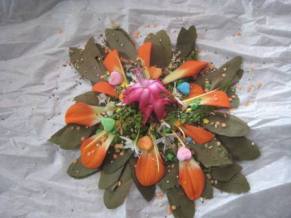 archetypal structures from the outside that represent the energies inside, or that are projected from inside yourself to the outside. And also, with the work that we do with our body and bubble [poq’po]—all of the energies we create can be thought of as inner projections of yourself outwardly. In a certain way what happens is that we somatize certain aspects of our mind on our body. Those are our ñawis: your psyche, your psychic self, creates a universe from within your body. Parts of it will represent aspects of your mind. There may also be links to physical parts of our brain, of our neurological system, so it’s a whole. You are working with those power places that are related with those energies like willka, and you also at some level may be working with energies that are inside yourself and projected outward onto the place. But you are actually dealing with your inner world and energy. It’s like a big despacho, the world is like a big despacho, and you are relating with the parts and adjusting them, and these energies are going to organize the self.
Joan: This is such a beautiful interpretation and translation of the tradition, one from the fourth-level view. You need to write this down—to include this in the book you are writing to preserve it!
Don Juan: Do you know—this is your fault! We are writing a book with your help, and we are thinking and putting together things. The process with you is reminding us of things. We are generating an overview that was not there for us five or six years ago.
Joan: And I, too, am thinking in new ways and learning so much in the process of these discussions. You have no idea! So, thank you. And I am sure my blog readers thank you, too.
 kawsay. This is the runa kawsay pacha, the world of human living energy. [Runa means people or human being.] In that term, human energy is emphasized as a specific part of the kawsay pacha—the energy specifically related with humans.
 down the power of God—it’s like the drink of life. It’s like a trigger of life.
 doesn’t mean that at all, as this intriguing conversation makes clear. The first part of this conversation is intellectual, referring as it does to several theories from academics. I add comments and explanations in square brackets to help readers follow along and understand better. Later in the conversation, things lighten up as bit as we ground the knowledge in the practicality of the Andean tradition.
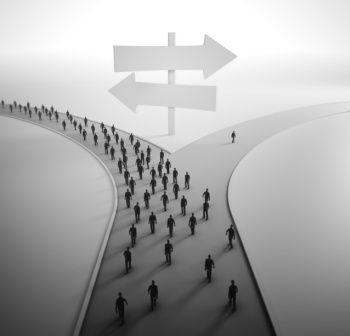 herd mentality, and it is based on a kind of neurotic psychological contagion. In short, then, there is no contradiction between being full of hucha and having power. But this power, the Mimetic type of power, either leads to routine behaviors or destructive behaviors.
 What is this a lower level [of consciousness]? Carl Sagan talked about the development of the human brain: the reptile brain, the mammal brain, the limbic zone, the right and the left hemispheres. . . You can take a look at that in Andean terms as the development of atiy (impulses), khuyay (passions, attachments, emotional intelligence), yachay (thoughts, reason) and munay (love under your will). The human powers. But the lower energy is that of the reptile brain, which makes you a person of the first level. When someone identifies with that, when he allows the lower part of the brain to drive him [the primal impulses], he expresses himself with the lower, least developed aspects of being a human. Other people then identify with that. . . It’s difficult to identify with people who are higher than you in consciousness. You identify with people at your own level or lower.
 and even death. And when truth and justice fall victim to propaganda, disinformation, and even lies. It seems like politically, at least, we are devolving instead of evolving.
 through our munay and other powers. Let’s talk about this, starting with a general view of connecting in this way.
 between you that is important. Sometimes the image is not so important; it can be a projection or something like that. What we are developing is our ability to perceive energy flows. What meaning you take from it, what it means to you, that is personal because it’s ayni, which is personal.
  conscious or unconscious permission, so it’s just touching you and you decide whether you let it in, whether that intention is conscious or unconscious.
 it was a year that challenged—and perhaps even undermined—our physical health, our economic security, our emotional equilibrium, and our core beliefs and values.
 which we evolve to our highest expression of self here in the human world.
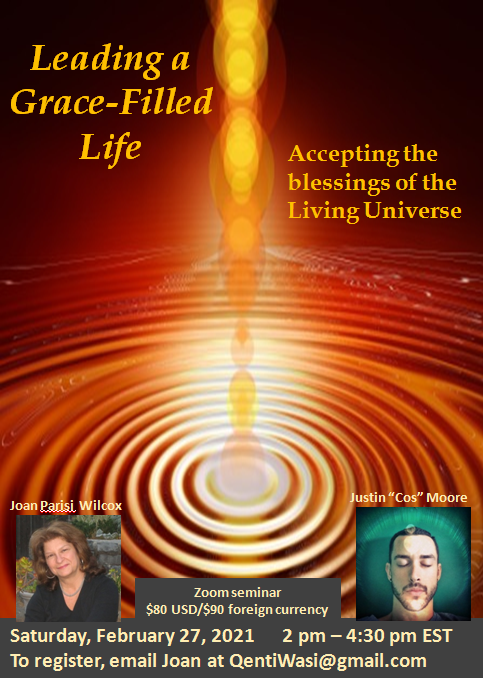 ramifications, I and fellow paqo Justin “Cos” Moore have decided to offer a seminar on this topic: to gather together a group of people who are curious about grace and perhaps ready to invite Creator and grace to work in their lives. If you are curious to know more, I invite you to join us.
