All About Your Inka Seed: Part 1

In the Andean mystical tradition, the essential energy dynamic is that of the qanchispatañan: the stairway or pathway of the seven levels of human consciousness. It actually is eight steps, since we start at the zero level, that of the purun runa, or the natural, undeveloped self that we all are as infants. We develop physically, psychologically, intellectually, and emotionally, such that we become increasingly self-aware and increasingly free agents of creating “who we are” as adults. Even though we are shaped by many external forces, such as family, culture, environment, and more, part of the developmental process is our ability to self-regulate: to choose our responses to all these influences (that is, if you believe in free will, stages-of-life-cropped Pixabay 1287959_1920which many contemporary scientists do not). How we self-regulate places us on a “stair” or “level” of the qanchispatañan.

While we bounce around from level to level on the qanchispatañan depending on our response to specific real-time situations, events, interactions, and such, we can generally identify ourselves as having reached a certain level of development in our overall sense of self, beliefs, behaviors, and other personal characteristics. Space prohibits my detailing the qualities of consciousness at each level of the qanchispatañan—both those deemed to be generally beneficial to our functioning in a sami-filled way (being in ayni, or reciprocity, such that we are supporting our own well-being and that of the people we interact with) and those seen as potentially detrimental and thus causing us to produce hucha, or heavy energy (lack of ayni such that we are more interested in our own well-being at the expense of others). To learn more about the qanchispatañan, please see my post “Birds of Consciousness,” posted on May 11, 2016. However, what is important to understand is that we cannot say we have achieved a level of consciousness until all three of our core human capacities—yachay (intellect/thoughts), munay (love under our will), and llank’ay (actions)—are each developed to that level.

The qanchispatañan is the map of our journey of personal growth, and what we are seeking to develop is the Inka Muyu, or Inka Seed. Inka refers to the male ruler of the Inca Empire, so we could translate Inka Muyu as Seed of the King. For females, the term would be Qoya Muyu, or Seed of the Queen, but this is not a term you ever hear used, so I will use the more common term of Inka Seed, although I use it in a gender-neutral way.

While the energy dynamics of the Inka Seed are primary in our practice of the Andean mystical tradition, just what is it? The remainder of this post will answer this question from several perspectives, some from outside the tradition and some from within it.

First, the Inka Seed is an energetic structure that sits in the middle of our physical and mystical body. The tradition teaches that we have seven ñawis, or mystical eyes, each of which are associated with core human capacities. The four core ñawis are located in the trunk of our body. The eye of the neck—the kunka ñawi—comprises the capacities for yachay (reason and intellect, especially as developed through first-hand personal experience) and rimay (the integrity of how we express ourselves and of how we communicate our personal experience and knowledge). Below that is the sonqo ñawi, the eye of our heart. The connection here is not to our physical heart but to our feelings, especially to munay. Munay usually is translated as love under our will and refers to our ability to make the choice to be kind, compassionate, and loving. Further down is the qosqo ñawi, eye of the naval or belly, which is the center of our personal power and khuyay, or passions. Passion in this sense relates to motivation, to what moves us from intention to action. Khuyay also is related to emotional attachments, to what we focus on and choose to relate to and how we do that in either healthy or unhealthy ways. At the root of our body is the siki ñawi, which is the seat of both our atiy (our ability to take action in the world and the timing of our actions) and our impulses, which are the mammalian aspects of ourselves, including our base emotions (such as fear, dominance, competitiveness, defensiveness) and our core survival needs (such as food, shelter, procreation, nurturing or relationship).

Our Inka Seed sits in the middle of these four ñawis, situated between the two upper ñawis and the two lower ñawis of the trunk of the body. It rules from the center of the mystical self. Or, in the terminology of don Juan Nuñez del Prado, the Inka Seed is the “owner” of our wasi, which is the “house” or “temple” of the Self. When we integrate the sami of our Inka Seed with the munay at our sonqo ñawi (our feeling center), we stimulate the energetic capacity of kanay, which means “I am” and comes from the rootidentity self-worth pixabay compressed-g4e6c4c066_1920 Quechua word that means “to be.” Kanay is the capacity of knowing who we are and who we have the potential to become if we choose to grow into the fullness of our humanness.

Second, we situate the Inka Seed at the center of the inner and the outer—of how we relate our inner world to the outer world. So, let’s look outside of the mystical realm for a moment to see what one view from psychology tells us about this aspect of our development. Chris Allen, PhD, in Psychology and Human Relations, provides a useful accounting of the processes that contribute to our forming a wholistic sense of self within and without ourselves. What he has to say correlates well with the three universal human powers, so I will insert those powers into the quotation. Remember, we have to develop all three of our human powers equally to move up a step on the qanchispatañan. Allen writes, “The I first sees itself as an embodied actor in social space [munay and ayni]; with development, however, it comes to appreciate itself also as a forward-looking source of self-determined goals and values [llank’ay], and later yet, as a storyteller of personal experience, oriented to the reconstructed past and the imagined future [yachay]. To ‘know thyself’ in mature adulthood, then, is to do three things: (a) to apprehend and to perform with social approval my self-ascribed traits and roles, (b) to pursue with vigor and (ideally) success my most valued goals and plans, and (c) to construct a story about life that conveys, with vividness and cultural resonance, how I became the person I am becoming, integrating my past as I remember it, my present as I am experiencing it, and my future as I hope it to be.”

This psychological process requires that we develop several core traits at a minimum: increasing levels of self-awareness, an enhanced ability for both introspection and action, an empowered sense of personal autonomy, a refined use of our will, an expanded aptitude for both self-critique and self-acceptance and self-love, and the ability to bring ourselves to the world with integrity.

Moving back to the mystical developmental journey, we will find that as we bring increasing mastery to our ability to be who we are right now (kanay), we simultaneously increase our ability to express more of our potential. So, third, we can think of the Inka Seed as a kind of information field that encodes within it all that it is possible for us to express—the full measure of what is means to be a human being. As we work to consciously develop ourselves, we can think of each level of the qanchispatañan as an increasing ability to express more of our human capacities—to access and express more of our Inka Seed. The way I like to describe this evolutionary process of conscious development is that as we climb the qanchispatañan, we are not better than we were at a lower level, we are more than we were.

How far can we develop? How much more can we be? This brings us to the fourth point about the Inka Seed—it also encodes our metaphysical self and is equivalent to our Spirit. At the moment we are conceived, we are created both from the DNA of our parents and from the energy of Spirit, or for convenience’s sake what I will call God. As don Juan terms it, we are a “Drop of the Mystery.” Literally, whatever “God” or “Creator” is—everything that It is—is held in potential within our Inka Seed. I express the promise of this aspect of the tradition by quoting Sri Aurobindo, who was the developer of Integral Yoga. He said that we humans are where “God-Spirit meets God-matter” and “divinity is in the body.” Through the Inka Seed, we literally are God-Spirit in the flesh, for the Andean mystical tradition tells us that the full expression of our humanness is to express God-like capacities while in the body and in this world.

That we are ranti (energetically equivalent) to God is why the Inka Seed is pure sami—it is always and only the light living energy. It has no hucha, or heavy energy. Our Inka Seed is always connected to, and being fed by, a stream of this “God energy” through the pukyu, a small energetic opening at the turn of the top of the forehead. So, the Inka Seed literally is both a repository for and a source of the light living energy within us. As don Juan says, it is our capacity to one day express our God Within. If we so choose, we can consciously develop ourselves by removing our filters and screens (hucha) so that we block none of the light living energy that is flowing into our Inka Seed and we also block none of the light living energy emerging from our Inka Seed. The flow of sami is both into us and out from us to the world and our fellow human beings. We seek to allow ourselves the full measure of sami so that we can express our kanay—who we really are.

Until we express the fullness of our Inka Seed, we are functioning as a reduced or partial version of ourselves. This is what karpay means. While this word can be translated as “initiation,” it more accurately means how much personal power we have available to use at any given moment. Personal power is comprised of our yachay, munay, and llank’ay and the quality of each of these three core human capacities. Stepping up the qanchispatañan means we have more of our capacities available for our use and that each of these capacities is more highly developed or refined. So, to summarize this point, another way to understand the qanchispatañan is that our place on it reveals the measure of our power, or karpay. With each step up, we have accumulated more personal power; we have increased our karpay. We have done so because we are living more from our Inka Seed. Our increased personal capacity means we can be in ayni—making conscious interchanges with the living universe, spirit beings, and our fellow human beings—more effortlessly and with greater efficacy.

If we reach our full karpay, this means we have ascended to the sixth level of the qanchispatañan: we will be perfectly expressing both our human nature and our God nature. We will be “enlightened” human beings. But we still will retain our unique expression of Self, our unique expression as a Drop of the Mystery. We would each be an individual expression of the enlightened state. Buddha and Jesus were both considered enlightened human beings—they had fully developed Inka Seeds—but they were decidedly different manifestations of the enlightenment state, and there is no mistaking one for the other.

Thus, it is not too grandiose to say that we each are a unique expression of Creation. In Islam, Iman Ali was credited with saying, “Dost thou reckon thyself only a puny form / When within thee the universe is folded?” As don Juan has said, if we are not living our kanay—if we are not each individually expressing who we really are—than we are leaving our part of Creation unrealized. The metaphor I use is that we each are a thread in the tapestry of Creation, and if we are not fulfilling our individual expressions of our Inka Seed, then we are leaving holes in the fabric of the Whole.

How can we think of the Inka Seed—this tiny energetic structure—as being of such enormous importance, of containing within it such enormous potential? To answer this question, I make the comparison to DNA. DNA is a tiny energetic structure that is a huge information field. It encodes within an infinitesimal physical container the mind-boggling complexity and grandeur of the human body and psyche. In the same way, the Inka Seed is a tiny energetic structure that encodes the astounding beautybean seed germination and power of the physical and metaphysical expression of ourselves.
I will conclude Part I of this discussion by reminding you of two core metaphors of the Andean tradition—wachu and phutuy. In the Andean tradition there is the concept of the kawsay wachu, which can be translated as “field of living energy.” A wachu is a furrow in a field in which seeds are planted. For those of us using the techniques of the tradition to develop ourselves and climb the qanchispatañan, the metaphor shows how we each are a seed (Inka Seed) planted in the metaphysical field of living energy and in the material realm of Pachamama. Our impulse, just like the impulse of all living things in nature, is for phutuy—for life, for growth, and literally in this metaphor for “flowering.” We are seeking to germinate our Inka Seed and grow to our full potential. The living universe provides the sami—the nectar or water—that feeds our Inka Seed through the pukyu so that it can flourish: so that it can germinate, grow, and blossom to reveal each of us in all our glory.

How do we engage with our Inka Seed and stimulate our growth? That will be the topic of Part 2 of this discussion, which will be posted next month. Here, I leave you with a question from “The Summer Day,” a poem by Mary Oliver, that brings together the points made in this post and provides a teaser for what will come in next month’s post: “Tell me, what is it you plan to do / with your one wild and precious life?”

The Yanantin of the Solstice

Many of us soon will be marking the solstice, a day when the “sun stands still.” This literally is the meaning of the two Latin roots from which the word “solstice” comes. There are a multitude of Sun winter-Petra - Pixabay -3323879_1280ceremonies being held for the solstice, both for marking the start of winter and honoring this as the day of the year with the longest period of darkness. We see this solstice as a metaphor for going deeply within and emerging anew—as a kind of shamanic or spiritual journey of death and rebirth. Our metaphor is based on ancient metaphoric overlays, such as the winter solstice marking the death of the sun and its almost immediate resurrection. We connect it with the rhythms of nature, especially with plants that go dormant or animals that hibernate, experiencing a physical cessation of outward activity even while within they are recharging themselves for reentry into life.
But the “sun standing still” cannot be understood in a singular way. A solstice is a yanantin event: what for some people is a descent into darkness is for others an emergence into the light.

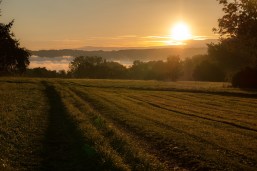
I think many of us forget that a solstice is the same event with completely different effects (and meanings and metaphoric overlays) depending on where you are in relation to the sun. A solstice marks the exact moment when half of the Earth is tilted the farthest away from the sun. At that same moment, half theSunrise-Thomas Picabay 954604_1280 Earth is tilted closer to the sun. So, for those of us living in the Northern Hemisphere where the tilt is away from the sun, the December solstice marks the first day of winter and is the day with the longest period of darkness. But for those in the Southern Hemisphere, who are tilted toward the sun, this solstice marks the first day of summer and is the day with the longest period of daylight.
Yanantin is a relationship of two dissimilar but complementary energies, entities, or characteristics. Light and dark. Up and down. In and out. Love and hate. Joy and sorrow. Body and spirit. Each aspect of the duality maintains its innate individual character, while together they make up a unified whole, usually a whole that is greater than the sum of the parts. The challenge when experiencing a yanantin is perceiving the unity within the apparent duality. That unity is the japu (Quechua), or the harmonious relationship of the two different aspects into a singular wholeness without subtracting anything from the completeness of each of the two energies. As writer Alan Watts says, and I think as most paqos would agree, “Every explicit duality is an implicit unity.”

The yanantin nature of a solstice is a reminder of how so much of the Pachamama—in this context meaning the entire physical world or cosmos—is comprised of yanantins. There are the distinctly physical yanantins, such as the juxtaposition of light and darkness at a solstice or the great ayni and yanantin of birth and death. And there are the distinctly human ones, such as feeling both the joys and pains of life or of our capacity to be both kind and cruel. We are yanantin beings both physically and psychologically (and in many other ways). I concur with screenwriter Joss Whedon’s opinion that “to accept duality is to earn identity.”

The core duality in relation to having identity is the distinction of self and other. For example, we negotiate the twin impulses of knowing and living as our authentic selves and of blending our sense of beingness into a shared communal identify. That yanantin is the motto on US currency: E pluribus unum: out of many, one. That is an ideal—a statement of a japu—and it is, of course, still an aspiration in the puzzle-Piro - Pixabay 3476931_1280United States. But it does remind us of another important yanantin—that the world is both “out there” and “in here.” Each of us chooses how to be in the world, and the state of the world is the way we present our combined individual selves as a collective.
At the risk of stating the obvious, if we don’t like the state of the world out there, because of the nature of the yanantin we must look within ourselves to find the causes and to make the requisite changes. The state of the world—our collective expression—reflects our individual yanantin energies: we each are both light and dark, both sami and hucha, both beatific and horrific, both awake and asleep. Just as the solstice is both a period of long darkness and of long light depending on where we are on the Earth, each of us is both long in darkness and long in light, depending on the state of our inner “tilt.”

What are we tilted toward and away from? Our inner sun is the integrated Inka Seed (what we might call our drop of Creator or divine spirit) and sonqo ñawi (the energetic seat of our feelings, especially our capacity for love/munay). Together, these are the center of our mystical selves, and they are comprised only of sami, the light living energy, the most refined frequency of kawsay, which is the life-force energy. The Inka Seed and sonqo ñawi have no hucha—they never produce any heavy living energy, which is slow or sluggish sami/life force. Thus, when these two aspects of ourselves are integrated, they act like our “inner sun,” illuminating our sense of self and together generating our capacity for “identity.” One of the terms in Quechua for this identity is kanay, which roughly translates to “I am,” although it is imbued with the energy of the unfolding self, with the process of becoming who we “really” are. When we achieve kanay, we say that we not only know who we are but we also have the clarity of vision and the personal will to liveOpposites dark light tunnel-Joe Pixabay 7484734_1920 as who we are (rather than as how our culture or others see us or want us to be).

I hope you will notice that when I ask “what are we tilted toward and away from?” I used the conjunction “and” instead of “or.” We are simultaneously partially in touch with and screened from our kanay. None of us are fully developed human beings, what in the tradition we would call beings of the sixth-level of consciousness, which is the level of the enlightened ones. At the sixth level we have reached japu (inner unity), but until then we are struggling to harmonize our yanantin aspects. The dual aspect of a solstice—where half the world is experiencing the darkest day of the year and the other half of the world is experiencing the brightest day of the year—is an apt metaphor for our yanantin inner world. The japu is that this yanantin it is all about the sun, which is always and only a source of light, although when it is screened, we experience shadow and even darkness. When in the shadows, we might forget that darkness is only possible if there is first a continual, stable light source.

The Inkas were the Children of the Sun, but for those of us on the Andean path today, it is not the physical outer sun that concerns us, but our inner light—our sami, which is the light living energy. As less than enlightened human beings, we have put up screens and filters around our Inka Seed so that our kanay energy is diminished or partially deflected, or even stalled or blocked. Einstein said that nothing happens until something moves. So, at this solstice, during this fleeting moment of “standing still,” perhaps as part of our ceremony we might undertake a self-examination of the yanantin nature of ourselves and our lives so that we can work through our darkness and shine with our greater light.

Part of our self-inquiry might be asking the following questions: How far am I tilted toward the self-illumination provided by an integrated Inka Seed and sonqo? How far am I tilted away from acknowledging and taking responsibility for my hucha? What are the causes of these deviations from my center, and what would it take to realign myself or course correct? How do I choose to move into the next season of my life?

Acknowledging and taking responsibility for our hucha—for how we are slowing the flow of or even blocking the movement of our life-force energy—is a glorious endeavor, for it helps us realize that there is unlimited light living energy available to us and within us. Perhaps as we honor and mark the solstice this year, we could take speaker, author, and former pastor Rob Bell’s advice to heart: “Why blame the dark for being dark? It is far more helpful to ask why the light isn’t as bright as it could be.”

Gratitude as Action

Thankfulness is the beginning of gratitude. Gratitude is the completion of thankfulness. Thankfulness may consist merely of words. Gratitude is shown in acts.

– Henri Frederic Amiel, Swiss Philosopher and Poet

I am grateful that I live in a nation that sets aside a day of thanksgiving. And . . . you know what I am about to say . . . every day is a perfect day to appreciate our blessings. Among my favorite aphorisms is one I saw posted on a message-board outside a small, rural North Carolina church: “Millions of people are praying for what you take for granted.”

Kind of stops you in your tracks, doesn’t it? It did me.

We who have so much tend to take our bounty for granted. So as our Thanksgiving Day approaches, let us explore gratitude not as something that we need a national holiday to prompt us into feeling, but as thanksgiving-stilllife compressed pixabay 2903166_1280an aspect of our kanay—of our beingness—that permeates all that we think, say, and do.

The English word “gratitude” comes from roots meaning “thankfulness,” “pleasing,” and “grace.” It is usually defined as our feeling thankful for all the good things, people, and situations in our lives. But just feeling gratitude does not do justice to the meaning of this word. As the Amiel quotation at the top of this post reminds us, gratitude is thankfulness in action.

From the Andean mystical perspective, gratitude engages all three of our human powers, which are yachay, munay, and llank’ay. Yachay is knowledge gained through personal experience. It is the doorway to gratitude, for we experience something and feel good about that or even feel blessed by what happened. We are uplifted by having had that experience. The experience could be anything: from winning the lottery to meeting an amazing person to overcoming a bad habit to surviving a terrible accident or a dire health diagnosis. If our acknowledgment of our good fortune is not fleeting, as most emotions are, then it blossoms into a deeper feeling.

Feelings take us to our power of munay, which is love under our will, the conscious choice to think, speak, and act from love. It is the capacity at our sonqo, which is the energetic heart center. The sonqo is the center of our feelings, and munay in its fullest expression is the pinnacle of human feelings. However, munay can be expressed along a continuum of intensity, from tenderness at one end of the spectrum to devotion at the other. If the energy of gratitude expands from our thoughts into our feelings, then we really begin to “own” the state of gratitude as an aspect of our kanay, not only as how we know ourselves but also as a power that we are capable of expressing out in the world. We not only feel gratitude, but can act from gratitude. As American writer William Arthur Ward once said, “Feeling gratitude and not expressing it is like wrapping a present and not giving it.”

What does it mean to be gratitude in action? I claim no expertise! This is work I continue doing within myself. But I can imagine that like munay, gratitude expresses itself along a spectrum, in gestures small and large, and everything in between. To act from gratitude is to make the choice to find something, no matter how small, that is “pleasing” in every person and every situation. We don’t have to wear rose-colored glasses, repress heavy feelings, or deny reality, but even taking a homeopathic dose of “pleasing”grateful-Pixabay - John Hain 2940466_1280 can reduce the power of a knee-jerk judgement that a person or situation is going to be difficult, disagreeable, upsetting, or challenging. Through the choice to acknowledge that there is something “pleasing” even in the ugliest of situations, we make room for the “grace” that underlies gratitude. Grace cannot be earned. It is not offered only to those whom we deem worthy or deserving of it. Grace is given from one person to another freely, without condition. Grace may be what gratitude in action actually is: If we are looking, grace may be the crack through which we glimpse even the tiniest light of something “pleasing” shining through and into our awareness. As the Leonard Cohen lyric goes: “Forget your perfect offering. There is a crack, a crack, in everything. That’s how the light gets in.”

However we choose to express our gratitude and to act from that gratitude, I think that if we keep practicing it eventually we come to a realization, as the Buddhist proverb goes, that “enough is a feast.” That proverb may have been referring to material possessions, whereas I am applying it to what we think of ourselves and others. I am suggesting that by acting from gratitude, we change not only how we engage others and life, but how we engage with ourselves. Gratitude shows us how we are always already “enough,” whatever condition we find our life in or whatever the current state of being we are experiencing. We each are a feast of enoughness! If we really believe that, then we will give thanks for whatever measure of grace we are capable of offering in our relationships, our work, our service, and more. And if we believe we are “enough” right now, just as we are, then we increase our capacity to receive grace from others. This is the ayni, or reciprocity, of gratitude as action.

When we say we are looking for a spiritual path to follow, whether it be the Andean tradition or some other tradition—I say that we don’t have to look for a spiritual path. We already have one. Our life is our spiritual path. An “attitude of gratitude,” as the saying goes, is among the spiritual superpowers—not just as an attitude in our thinking and feelings, but in our actions. The biblical concept of spiritual gifts as charismataTwo love hearts in being protected in a nest. Conceptual design is defined as “grace coming to visible effect in word or deed.” One of the aspects of the Andean tradition that I love most is that it is rooted deeply and firmly in the human world. We are seeking to develop ourselves not just for our own benefit but to the benefit of others and as a visible effect in the world. When others develop themselves, we benefit from their having made the choice to have their own sami-filled visible effects in the world. Again, this is ayni. Practicing gratitude as ayni prompts us to look and engage both inwardly and outwardly: we recognize our own uplifted state and we acknowledge the source person or event that fostered our upliftment. Through the continuing cycle of ayni—which is always a two-way exchange—we can then give back what we have received.

So, as we gather around the Thanksgiving table, let us realize that “enough is a feast” and find something pleasing “enough” in everyone and every event—and then let us express it through our actions. If Uncle Joe is telling the same old family story again, for the tenth year in a row, let him know that the yearly retelling has created a tradition and a person has to be pretty special to create a tradition. When the gravy runs out—as it inevitably does—instead of complaining or looking accusingly at those who overindulged to everyone else’s expense, compliment the chef on a spectacular gravy that is always, without fail, every year, the most popular food at the feast. Of course, there is no “gratitude” unless it is real and in integrity. But seeing the “enough” in everyone and every situation always, somehow, in some amazingly unexplainable and magical way, fosters just enough gratitude that by its own force it easily flows out of us and into the world. And for our choice—and ability—to do that, we give thanks.

Postscript: My gratitude to all the seekers and light-bearers who have attended my classes this year and in years past, and who follow this blog. I am enriched by you as I hope you are by me. May we continue to work together to create a sami-filled forcefield that spills out with visible effect in the world.

Refining Energy Through the Ñawis

In last month’s post, we talked about virtue—about cultivating tolerance, kindness, and concern for the well-being for ourselves and others. I described how virtue is not just a moral value that we hold but is the active practice of that value. “A value is a choice about what who we want to be. Virtue, like ayni, is an application of will to apply that value—or cluster of values—to reveal how we actually show up in the world.”

In this long post, I want to follow up on that thought with a discussion of an energy dynamic for developing our virtue and refining how we show up in the world. The process involves our ñawis (our mystical eyes) and a capacity called qaway—clear-seeing, which we develop and access at the three uppermost ñawis: the physical right eye or paña ñawi, physical left eye or lloq’e ñawi, and the seventh eye in the middle of our forehead, the qanchis ñawi (what is called in some other traditions the third eye). Qaway is, as don Juan Nuñez del Prado has said, “seeing reality as it really is.”

To be like the hummingbird as a bringer of sami, rather than only the condor who eats hucha, we want to practice virtue without also screening ourselves from the harsh realities of the human world. While optimism is a worthy value, it serves no one if we wear rose-colored glasses. Clear-seeing means facing the human heaviness—and even horrors—that we inflict on each other.

It can be emotionally challenging to focus on our heaviness. Yet if we won’t bear witness to our own and humanity’s heaviness, we won’t cultivate the will to work for inner and outer change. By cultivating qaway, we strengthen our ability—and also our willingness—to see what is real, no matter how difficult. By developing and using qaway, we not only understand more accurately what is happening, we also reinforce our ability to not be buffeted—or brought to despair—by circumstances and conditions. Qaway allows us to acknowledge hucha—and even human depravity and evil—but not be overcome by it. Don Juan counsels us that only by turning toward human heaviness can we bolster ourselves to dispassionately deal with the world as it is. As former Supreme Court Justice William J. Brennan once said, “We must meet the challenge rather than wish it were not before us.”

Qaway is an energetic power that helps us meet challenges. It is a capacity distributed among the three uppermost ñawis. The qanchis ñawi allows for mystical and creative vision: to see the world of energy, poq’pos, seqes, and spirit beings, as well as to inform us through visions, imagination, dreams, and creative insight. The two physical eyes add more worldly energetic capacities to the mix. The right eye (paña ñawi) mystically helps us to see what is happening around us and to respond with rationality and yachay (knowledge and the wisdom that can come only through personal experience). It helps us to see past all the extraneous data, drama, and diversions so that we can become laser focused on the relevant facts of the matter. Once we understand the core of the issue, then the mystical aspects of the left eye (lloq’e ñawi) help us to respond with practicality and llank’ay (action). Instead of being overwhelmed by a dizzying array of possible responses, we quickly grasp the essentials of the issue and respond in the most efficient and effective way to deal with, diffuse, or resolve the situation. If we can learn to simultaneously process the input from all three of these uppermost ñawis, then even as we stand witness to human heaviness, we can think, feel, and act with greater understanding, effectiveness, impact, sobriety, and tolerance.One way to develop qaway is to move our energy up from the base of the body—from the siki ñawi (the mystical eye at the root of the body)—through all of the ñawis until we reach the top of the body and the three uppermost mystical eyes. This is a long and usually difficult energetic journey. It asks that we be self-aware and self-motivated. But it is worth the effort, for if we don’t raise our energy to use our qaway, instead of bringing sami to the world we tend to generate more heaviness. Let me provide an example from the Israel-Hamas war.

When destruction rained down on the courtyard of the Al-Ahli Arab Hospital in Gaza, the response, rightly so, was outrage and horror at the hundreds of needless civilian deaths and injuries. The next response for tens of thousands of people in the region and around the world was—without any forensic or other evidence—condemnation of Israel for either deliberately or errantly bombing a civilian target. The belief that the Israeli Defence Force was to blame prompted calls for protest and a push for retaliation. That reaction was a purely siki ñawi response, as it usually is when we are shocked, outraged, or traumatized.

The siki ñawi is the place of our impulsive and instinctual energies, our raw humanness, and our survival instincts. While this energy is usually left unexamined and so unconscious to us, it is felt powerfully when it is stimulated by such things as a strong primal desire or a perceived threat. When this energy erupts, it Shadow Self 2 compressed AdobeStock_100724347activates our atiy—our capacity for action—and the energy rushes from the siki up to the qosqo ñawi—the eye of the belly or naval, which is our primary power center from which we then take action. If we perceive a threat and the need to defend ourselves through the siki ñawi, we act to counter the perceived threat and defend ourselves and our loved ones through the energy of the qosqo ñawi. There are times when we must marshal these energies, when defending ourselves is necessary. However, too often this siki ñawi energy flares because we have misperceived someone or some event as an enemy or threat when, in fact, they were not. Sometimes we don’t wait to determine who is responsible and instead unthinkingly react by lashing out at someone, anyone. That someone or anyone usually is a person or group against which we already hold prejudices and toward whom we already feel suspicion or animosity. So, the energetic process at the siki ñawi in its hucha-inducing aspects is an impulsive, almost animalistic reaction that usually is unhinged from our yachay (rationality).
What are we to do? We can train ourselves to move the energy of our base impulses up to higher ñawis and give ourselves the opportunity to refine the energy so that we act less harshly, unproductively, or even incorrectly. Don Juan calls this process of refining our energies “taming” our “wildness,” with our wildness being our more animalistic, overly emotional, and non-rational siki ñawi impulses. If we can move these energies up all the way to the three uppermost eyes, we can stimulate our capacity for clear-seeing. In the case of the Gaza hospital tragedy, doing so would have meant alleviating the suffering of the wounded while withholding blame about who and what caused the destruction until evidence was available to do that rationally. It turns out that current evidence suggests, not conclusively but persuasively, that the destruction was caused not by a bomb dropped by the Israelis, but by a missile misfired by a jihadist group sympathetic to Hamas.

That is one current situation where qaway—clear-seeing—was woefully lacking. We can all name countless others. This kind of impulsive reaction is unfortunate although understandable, as there are so many ways that we in our humanness prevent ourselves from refining our siki ñawi energies. In the aftermath of the Gaza hospital tragedy, doing so would not have lessened our outrage and grief at the loss of life, but it would have prevented bias and untruth from becoming more fuel for the fire of conflict.

Following this example, how might moving our siki energy up through the other ñawis influence our potential reactions to such things as threats and challenges?  Let’s move the energy and see. The next ñawi is the qosqo ñawi, the eye of the naval or belly. This is our primary power center, from which we take action in the world. The main capacity at the qosqo is khuyay, a passion that motivates us to do things in the world and to persist even when the going gets tough. Khuyay also is related to what we call our emotional intelligence, particularly to how we make emotional attachments. Our attachments to people, groups, beliefs, opinions, ideas, causes, and so on can be healthy or unhealthy, sami-filled or hucha-inducing. By examining this aspect of our khyuay and personal power, we can probe how we are acting in the world. Are our relationships supportive or controlling? Are we stubbornly attached to a belief even when the facts run counter to it? Are we asleep to our own biases, but awake to everyone else’s? If we can bring some measure of clarity to the many kinds of attachments we make (and how and why we make them), then we can use our will to make other choices for how we use our personal power. In the case of the hospital tragedy, we might have been able to see that placing blame and raising calls for protest were premature since there was not yet any evidence indicating who the perpetrators were. Instead, in the throes of a siki impulse, many people were blindly attached to their animosities and biases, which led to erroneous assumptions and actions that heightened the hostilities.

We can refine our siki energy higher still, from the qosqo to the sonqo ñawi. This is the mystical eye of the heart or, more accurately, the eye of our feelings. Having engaged our personal power at the qosqo to become aware of the often unexamined (and unhealthy and even destructive) ways we are blindly attached to groups, ideas, beliefs, and so on, we can now bring the capacity of munay to bear on the impulse.

Munay usually is translated from Quechua to English as “love.” A better translation is “love under our will.” Munay involves the conscious choice for cultivating the range of feelings associated with being loving, such as tolerance, respect, kindness, and compassion. Munay doesn’t ask us to like everybody, but it does ask us not to hate anyone. Munay, even in its most tenuous expression, is transformative.

One way that transformation might unfold is as follows. Having moved our outrage at an injustice up from the siki ñawi to the qosqo, we tamed the impulse toward an unthinking or even violent reaction with a choice of how to use our power—to not allow ourselves to be controlled by our outrage but instead toheart- compressed Gerd Altmann Pixabay 1982316_1920 exert some personal control over it. We still feel outraged at the injustice, but rather than tear the house down in a wild rage, we can direct our energies in a more productive way to tip the balance toward actions that support both reasonable accountability and greater justice. When that energy then moves into the sonqo, we can further temper our outrage by deliberately using our will to bring compassion to the equation. We don’t have to condone an action, but we can begin to generate sami toward both parties: for those who are suffering from the injustice and for those who for whatever reason have rationalized their need to perpetuate it. This equanimity is the doorway to transformation. Munay helps us build a bridge from our raw, undeveloped selves to our more conscious and equanimous selves.

The next ñawi is the kunka ñawi, the eye of the neck. The two main capacities here are yachay and rimay. Yachay is what we know and understand through firsthand experience. Our experiences and what we make them mean have led to us to being in the world in particular ways that make us who we are, different from everyone else. Rimay is our ability to communicate what we know and who we are with clarity and integrity.

When our outrage is tempered at the kunka ñawi by yachay, our perception of the cause of the outrage morphs from the abstract to the personal. Through both munay and yachay, we are able to identify vicariously both with those who perpetrate injustice and those who are subject to it. Our self-righteousness is softened by the realization that at some time we all have abused our power and acted unjustly toward others, and we all have been on the receiving end of being treated unjustly. Through this personalization, we can admit that we all have hucha and have acted from that heaviness. We are able to feel and understand more truly, deeply, and honestly how we all are imperfect human beings. And with this understanding, we can seek accountability in a more productive way: instead of taking sides we can put our own preferences aside and begin to consider the need for reconciliation between the parties. We can use our energy to work toward understanding the root wounds underlying the conflict. No doubt both parties contributed to the conflict, so both parties must be part of the solution. Communication goes from being one-way to two-way. This is the gift of rimay, the other capacity of the kunka ñawi. Rimay’s power is embodied through the honesty and integrity with which we express ourselves and allow others to express themselves. Rimay speaks truth, while acknowledging that there may be a gulf between our truth and another’s truth. Yachay and rimay together make room for both truths and reveal the common ground between the two.

The final lift up the ñawis is to the three uppermost eyes, the two physical eyes and the seventh eye, which together confer the capacity for qaway, clear-seeing. Following our example, by the time our outrage reaches the upper ñawis, we still feel the pain of a tragedy, but we are not subsumed by it. Through qaway, we can, as don Ivan Nuñez del Prado says, hover high above the storm: we see it clearly below us as present and real, but we are not swept up in its fury. From the vantage point of qaway, the world feels and looks different because we feel and see not only with our human eyes but also with all seven of our ñawis, our metaphysical eyes. We are of the world but not in the world, at least for a time, and a host of insights can arise to help us find our way when we feel lost and bring light to both our inner and outer darkness.

The physical human world and the metaphysical realm of the living energy are in yanantin relationship—they are different but complementary. If we can develop qaway, we can eventually achieve a japu, a perfect harmonization of these two aspects of reality. Perceiving from both realms—the physical and the metaphysical—we double our capacity for creative insight, honest and effective communication, and productive action. We can become chakarunas—bridge builders. We can realistically acknowledge the hucha that drives people apart and use our energies artfully to foster the sami that helps draw people together. Rather than stoke the energies of separation and condemnation, we work the energies of reconciliation and understanding. This truly is how we walk not between two worlds, but simultaneously in both worlds.

A Paqo in a Turbulent World

Recently, students and fellow paqos in several classes I teach or co-teach have expressed their dismay at the state of the world, especially the state of the information universe as created by podcasters, news-media pundits, and politicians in the United States. They ask, “How did we get to this level of complaining, exaggerating, lying, shaming, ostracizing, tribalism, anger, and even violence? And, how can so many people be swayed, persuaded, even fooled by the outlandish conspiracy theories and easily-refuted misinformation that floods the online landscape and television airways? What happened to logic and reason, to debate and compromise? When did we lose respect for moral standards, tolerance, and just plain old politeness?

Good questions. There are no easy answers, but these conversations prompted my thinking about good old-fashioned manners. And that led me to thinking about the human value called “virtue,” which not only is out of fashion, but by today’s standards seems downright Victorian.

Don Juan Nuñez del Prado and his son, don Ivan, have said that in order to better develop munay, we would do well to first develop virtue (among a few other values). Virtue, to define it as directly and simply as possible, is behavior fueled by high moral standards. Morality, of course, is a concept itself that is difficult to pin down, for usually it arises from a world view or even an organized dogma. There are various “moral universes.” In terms of virtue, there is the religious sense of virtue, the humanistic sense of virtue, the atheistic sense of virtue, the utilitarian sense of virtue, and on and on, including standards that we adopt not from an established system of authority but from our own individualistic value system. So, when we talk about virtue as high moral standards, we have to ask ourselves to whose standard are we seeking to conform?

To answer this question, I turn to the point of view of a group of Santa Clara University professors, who co-authored an article “Ethics and Virtue.” They write, “For many of us, the fundamental question of ethics is, ‘What should I do?’ or ‘How should I act?’ Ethics is supposed to provide us with ‘moral principles’ or universal rules that tell us what to do. Many people, for example, are passionate adherents of the moral principle of utilitarianism: ‘Everyone is obligated to do whatever will achieve the greatest good for the greatest number.’ Others are just as devoted to the basic principle of Immanuel Kant: ‘Everyone is obligated to act only in ways that respect the human dignity and moral rights of all persons.’”

These scholars then ask: “But are moral principles all that ethics consists of? Critics have rightly claimed that this emphasis on moral principles smacks of a thoughtless and slavish worship of rules, as if the moral life was a matter of scrupulously checking our every action against a table of do’s and don’ts. Fortunately, this obsession with principles and rules has been recently challenged by several ethicists whoDos And Donts Button Style argue that the emphasis on principles ignores a fundamental component of ethics—virtue.”

They list certain “virtues”—honesty, courage, compassion, generosity, fidelity, integrity, fairness, self-control, and prudence—and explain that virtue is not something we choose based on an idea or ideal, but is something we develop through our own experience. (I am pulling together various points they make into the following paragraph.) “Virtues are developed through learning and through practice. Virtues are habits. That is, once they are acquired, they become characteristic of a person. At the heart of the virtue approach to ethics is the idea of ‘community.’ A person’s character traits are not developed in isolation, but within and by the communities to which he or she belongs, including family, church, school, and other private and public associations. The moral life, then, is not simply a matter of following moral rules and of learning to apply them to specific situations. The moral life is also a matter of trying to determine the kind of people we should be and of attending to the development of character within our communities and ourselves.”

That explanation sounds a lot like what the Andean mystical tradition calls ayni. Ayni is often translated as reciprocity, but we have to dive into it a little deeper to discern its broader meaning. Ayni is intention coupled with action, which are then followed by both awareness that there will be an outcome and a commensurate new action/response in relation to that outcome. For indigenous Andeans and Quechua peoples, ayni is a value that serves, among other purposes, to strengthen social cohesion. When you search through the various definitions beyond reciprocity, ayni refers to doing a favor and returning the favor, or doing something for someone and expecting nothing in return (although the energy dynamic is that the living universe will return sami to you). So ayni always involves self and other, such that our choices are based on a consideration of how both parties can benefit. Ayni as an application of virtue, then, is a lived value. A value is a choice about who we want to be. Virtue, like ayni, is an application choice signs compressed Gerd Altmann Germany Pixabyof will to apply that value—or cluster of values—to reveal how we actually show up in the world.

As CS Lewis explained the relationship between a value and a virtue (as presented by Terry Glaspey in his review of Lewis’s teachings, Not a Tame Lion), “A ‘value’ is an idea we hold in our head about how things should be, it is a morally neutral term which specifies a preference. ‘Virtue’ in the other hand, is a quality of character which leads to action. All too often, values are something we only argue about; virtue is a way of living.”

Even the Buddha has something to say about virtue as action: “Just as treasures are uncovered from the earth, so virtue appears from good deeds, and wisdom appears from a pure and peaceful mind. To walk safely through the maze of human life, one needs the light of wisdom and the guidance of virtue.”

Virtue, as a  kind of ayni, is a stepping stone to munay, because munay is not the emotion of love, but the choice for love. It is love under your will. CS Lewis (again through Glaspey) says we should be wary of our emotions, because they are fleeting and changeable. “[I]f we wait to act with virtue until we feel like it, we might wait for a very long time. We don’t have to feel charitable to act with charity. I may feel no love for a difficult neighbor, but I may be called to help him or her.”

Whether you call this value virtue or ayni, it’s clear that it is much needed in the world today. Instead of practicing commonly shared values, we tend to be steeped in a kind of moral relativism where there is no consensus about the conventions by which we measure our words and actions as useful, helpful, and uplifting or not. At the extreme, there seems to be a complete absence of the awareness for the need for moral standards. Despite the complexity of any discussion about moral standards, I think we can all agree that when there is a lack of moral sensibility, we teeter on the precipice not only of social chaos, but also of personal inner turmoil. As Yeats writes in his poem “The Second Coming”: “Things fall apart; the centerCrumbling - hole-croppsed Pixabay2489333_1920 cannot hold; / Mere anarchy is loosed upon the world, / The blood-dimmed tide is loosed, and everywhere / The ceremony of innocence is drowned; / The best lack all conviction, while the worst / Are full of passionate intensity.”

Sounds a lot like our world today. . . 

This “center” is our moral center, the capacity for shared values that lift us up and fuel both our individual evolution and that of our collective humanity. The individual cannot be cleaved from the collective without losing an essential quality of what it means to be human: that we each are our brother’s and sister’s keeper. If ayni teaches us anything, surely it is this.

A chakaruna in the Andean tradition is one who builds bridges: between him- and herself and others, between communities, between traditions, between heaven and earth. When two groups find themselves separated by a turbulent river, each group gathered on opposite sides, the chakaruna—through an application of will, of ayni or virtue—begins building a bridge.

With that thought in mind, perhaps deep down it is not our disappointment or despair about the media onslaught of misinformation and our distrust (or disgust) at the people creating and perpetuating it that really disturbs us. Perhaps, deep down our discomfort is that we are witnessing, in unprecedented ways, the cleaving of the individual and of the warring “tribes” from awareness of our personal and collective responsibilities to each be productive and compassionate members of a human family. The disintegration of social cohesion can take us down one of two paths: it either leads to a potentially disastrous dissolution of collective bonds or to our collective transformation. Our discomfort right now may be that it is an entirely open question to which end we are racing.  

So, in our brief discussions of these topics in classes, my students and fellow paqos and I tend to agree that there is only one certain approach. It’s not an earth-shattering insight. It is the age-old adage that we have heard from Buddha, Christ, Gandhi, and so many others: take responsibility for yourself.

If each of us chooses to be a bringer of sami rather than of hucha, to be chakarunas—if we choose to cultivate our munay and improve our ayni  (and act from virtue in whatever measure we can)—then we Healing Hands Ayni Compresssed Dollarphotoclub_67573261each are undertaking a truly revolutionary act, and no doubt even an evolutionary one. Intention alone is not enough. Without action, we practice neither ayni nor virtue. Retreat from the social or political sphere certainly is an option, but one that, to my mind, is an abdication of responsibility both to the personal and the collective. None of us can thrive alone. But we cannot thrive collectively if we don’t agree to honor our common humanity, which starts with treating each other with tolerance, compassion, humility, and kindness.

As I tell my students, “You don’t have to like everyone or be friends with everyone, but you want to be able to bring some measure of sami to every interaction, no matter how challenging or difficult. Some of us choose not to do that. But some of us, because of our state of consciousness and the amount of hucha we carry, are unable to do that. If we are not able to do that, then choice ceases to be a factor and we have lost some of our personal power. If we are able to (despite our very human emotions), then we have acquired greater personal freedom.