Paqos Are the Flowers of Wiraqocha

In this post I am going to provide you a teaser of a new book, tentatively titled Andean Mystics: The Supernatural World of the Andes. I am working on the life Juan Nunez del Prado 1997story—and full training—of Juan Nuñez del Prado, and some of the story of his son, Ivan. We hope the book will be out late next year, but that depends on the publisher. It is an incredibly detailed record of the entire tradition as passed on to Juan from don Benito Qoriwaman, don Andres Espinosa, and don Melchor Desa, among other paqos. This is the “real deal” of the tradition, and I am honored to be helping Juan preserve the tradition and make it widely available through the written word. Until the book in your hands, here is a little taste of what you will find there. (The “me” refers to Juan. Please note that like all the posts in this blog, this story is copyrighted.)
During the car ride back from Machu Picchu, don Melchor told me the story of the hummingbird as the messenger of God. It went something like this: Once the birds gathered to choose a king. As Andean birds, they called an ayllu meeting. All the different kinds of birds came. Because they were Andean birds, they had no false Big group of different birds. Color vector illustration. Eps 8.modesty! Everyone expressed their powers, capacities and virtues. One by one they talked of their kaypay, their personal power. The last bird to speak was the condor. He said, “I should be king because I can do something none of you can. I can fly the highest—to the very border of the hanaqpacha.”

The other birds were suitably impressed, admitting they could not fly that high. They decided the condor should be king of the birds. But at that moment a tiny bird arrived and spoke up. “Wait! You cannot make him king, because I am capable of flying to the very center of the hanaqpacha. He cannot.” This bird was the hummingbird, and all the birds were amazed that the tiny hummingbird had challenged the condor. But beyond that, being Andean birds, they were skeptical. They did not believe hummingbird could fly farther than the condor. So they asked for proof, for a demonstration, but they decided to do that later. Everyone has tired and hungry. They wanted to rest or have lunch or go home to take care of all the things that must be taken care of. So they decided to postpone the demonstration until the next day.

The next day, early in the morning, the first bird to arrive was the condor. Soon all the other birds arrived. But the hummingbird did not. Because they were Andean birds, they were very patient. They waited and waited, but hummingbird did not show up. It was almost noon, and everyone was getting hungry and they had things they had to do in their homes. So they agreed they wouldn’t wait anymore. But being Andean birds, they were not only skeptical but had given their word, and they would have to follow through on their word. So they told condor that he had to show them how high he could fly.

Condor began a slow flapping of his enormous wings, and then lifted off into the Condor compressed Dollarphotoclub_59379204sky. He flowed with the currents, flying higher and higher. He flapped his wings, and flapped some more. Soon he was very high, but also was very tired, almost exhausted. He was just reaching the border of the hanaqpacha when out from his feathers zoomed the hummingbird. The hummingbird flew off, higher and higher, leaving condor behind, until he reached the center of the hanaqpacha.

At the center of the hanaqpacha was Wiraqocha. He is a great gardener, and he as out gardening—watering the flowers, trimming the bushes, pulling the weeds—when hummingbird arrived flying so fast that he flew right into Wiraqocha, smashing into him. In that moment, he made a direct connection with the energy of Wiraqocha.

Because of his feat of flying so high, to the very center of the hanaqpacha, and Humming bird fliesbecause of his energetic connection with Wiraqocha, hummingbird was elected king of the birds. And he also became the carrier of the Mosoq Karpay—the karpay to the fifth-level of consciousness—to the paqos. Paqos are the flowers of Wiraqocha, and when a paqo produces refined sami—an extremely fine quality of “nectar”—then that paqo will attract the hummingbird, who will come to drink from his or her energy. Through this touch of the hummingbird, the paqo establishes a personal connection with Wiraqocha.

The Secret Behind “The Secret”

“Your personal vibration or energy state is a blend of the contracted or expanded frequencies of your body, emotions, and thoughts at any given moment. The more you allow your soul to shine through you, the higher your personal vibration will be.”
— Penney Peirce from Frequency

I haven’t read the book Frequency, but I came across this quotation from its author and it got me thinking about how often there is almost a chicken-and-egg syndrome when it comes to metaphysical traditions and their conceptions of energy.

The first sentence in the quotation is in alignment with the teachings of the Andean masters. The amount of refined energy (sami) and heavy energy (hucha) you carry in your poq’po (your energy body) does indeed comprise your personal vibration. In the Andes, we would call this vibration your “personal power.”

But the second sentence in the quotation is completely opposite of what the Andeans teach, and I think it is worth our time to consider how your personal vibration and your soul interact.

According to Peirce, by allowing your soul to shine through, you raise your vibration. Sounds good. But how exactly do you let more of your soul shine through? If you knew how, wouldn’t you be letting it shine like a million suns?

In the Andean tradition, the energy equation is completely opposite what Peirce proposes. It’s the condition of your poq’po—the vibration of your energy bubble—that determines how much you live as who you really are—as your wholeness, your soul self.

The soul is complete, whole, coherent, always at maxim “power.” The Inka Seed links your personal energy body and physical body to your soul; it is your connection with the divine.

Your personal energy body, however, acts like a meter or a filter, which lets some, or more, or all of your soul shine through depending on the quality of your poq’po sun rays streaming through the storm clouds(its proportion of sami to hucha).

No matter how much you want more of your soul to illuminate your experience and life, your desire and intention are stymied by the state of your energy body/personal vibration. Maybe Peirce’s book shows how to up that vibration and let more soul through, but even if that is true, it still means that personal vibration comes first. Desire to shine more soul into your life is pointless if your filter is clogged. That’s why I think Peirce has the energy equation backwards.

As I said, in the Andes your personal vibration is called your “personal power.” While your soul has unlimited capacity, your personal power is limited by the state of your energy body. You can only do or manifest what you have the personal power to do or manifest, no matter how much you intend, wish, imagine, or visualize doing more.

This is where the Law of Attraction as it is commonly known falls short. Intent is paramount in the Law of Attraction, as it is in the Andean tradition. But it is only half the equation because intent is fueled by energy. You have to work your energy. You can say affirmations and declare your intentions until the cows come home, Geometry Abstractionbut if you don’t have the energy (personal power), you will not manifest that affirmation or intent.

This is why I feel the Andean practices are the “secret” behind The Secret/Law of Attraction. It teaches energy practices that refine your awareness, cleanse and empower your bubble, and provide the energy to manifest your intentions—to “push the kawsay.”

Really, you don’t have to will more of your soul to shine through. It does so naturally as you raise your vibration by accumulating personal power. Living more fully as “who you really are” (revealing your soul) is a natural consequence of undertaking the practices of the Andes, which is a path of conscious evolution. That’s why I practice and teach the tradition, even as I meditate and pray and use a host of other energy and spiritual tools, all of which are useful. But, for me at least, none are as simple, elegant, and produce as powerful results as the energy practices of the Andes. Andeans truly are masters of the living energy.

Beyond Dogma and Doctrine

There is nothing hidden or exclusionary about the Andean Path. It is not a dogma or a doctrine, so you can practice it while holding a multitude of beliefs. You also Religion Word Magnifying Glass God Spirituality Faith Beliefcan happily practice the Andean energy techniques no matter what other practices you undertake. You can be a Hari Krishna, Protestant, Jew, Catholic, wiccan, shaman, yogi, rishi, atheist, agnostic . . . whatever, and the Andean path
welcomes you.

That’s not to say there is not an accompanying cosmovision. But in terms of practice, the energy techniques are simple and sober ways to add to your energetic “toolbag” without conflict with any other practices.

No matter how many traditions you belong to or are exploring, it helps to commit to one path at a time. If you divide your attention, you tend not to learn well. So it’s best to choose to apply yourself to one path at a time and to commit yourself to learning that path and those techniques. For example, I have followed the Andean Path for more than 20 years. But I also meditate, having learned when I was 17. I also have a deep Christian faith and regularly pray. But I fully immersed myself in each tradition, one at a time, because part of every path is devotion.

Intention is the main tool of the Andean tradition. Our “medicine” is inside Trail of bulbs and man before Keyholeourselves already.  Our practice is not about transcending the human to touch the divine, but about empowering ourselves to be fully human and to unleash the divine within ourselves.

When you are coherent within, you can live with integrity; and integrity in this sense means being exactly who you are to the fullest possible extent in this lifetime. It’s about accessing and living your glory, about releasing or shedding illusions about yourself so you can better know and live as who you really are. In this way, the path applies to all human beings, no matter what their beliefs.

Paqos teach no dogmas, but they do encourage “attitudes” that help you journey along this path. Those attitudes are confidence, courage, respect, and love. But most of all, they encourage you to cultivate joy. The word for the sacred work of the Andes is pukllay, which means play. Play is not a dogma! When we flow with our intention and direct our energies, we experience kuyay, the cosmic dance of Father and son playing on the beachayni that is alive with a sober passion (a directed, life-affirming passion, not a wild, romantic impulse). We are at play in the kawsay pacha, in our lives, in our relationships with others, and with the world at large. Spiritual play, as the Andeans mean it, is not fooling around, goofing off, etc. It is living with a spiritual and energetic passion that deepens the appreciation for the gift of life.

The danger of dogmas and doctrines is that they can trap you. If your doctrine is the “truth” then anyone who doesn’t share it is excluded, deluded, or damned. This is third-level thinking. It restricts your world and can even chain you in place. It’s hard to move forward when you have a belief to defend and protect. Fourth-level thinking involves choosing your beliefs (we all have to have them), and neither imposing them on anyone else nor rejecting others who don’t agree with your choice. You are secure enough in our own beliefs to not be threatened by the choices others make. Fourth-level thinking frees us to new options and opens the world to us.

Here’s an example that illustrates this point in a round-about way. While doing an intuitive reading for a woman, I saw that she had been badly abused as a youngster, and I described her wound like a chain around her ankle that stretched out behind her and was attached to a stake in the ground. She believed that she could only go as far as the length of that chain. She acknowledged this as her current condition—chained to the past and to beliefs about what her life could be chainbased on the tenacious hold of that wound. But she couldn’t figure out how to get that chain off her ankle once and for all.

I told her, “You can’t undo what has been done. And perhaps you can’t remove the chain from your ankle. But you can pull up that stake! Once you do, you can go anywhere you want, as far as you want, even though you still have a chain around your ankle.” She looked startled, as if that thought had never occurred to her. Suddenly she knew that even if she couldn’t fully heal the past, she didn’t have to be immobilized by it. Once her belief shifted, so did her life.

The Andean path is sort of like that—acknowledging that we all have a stake in the ground, and even a chain or two around our ankle, but that we can move anyway. There’s more than enough kawsay for everyone. It doesn’t matter what you believe, which other practices you enjoy and find useful, what your personal history is—you can free your energy to propel yourself as far as you can imagine. When you have little to protect and defend from others, you have almost unrestricted freedom of movement and greater peace of mind and heart.

Of all the sacred traditions I am aware of, the Andean mystical path is the most open and inclusive. So take its illuminating message to heart: there is nothing in this practice that will cause you to exclude anyone, nor can you be excluded. There is nothing that will hold you (or anyone else) back from increasing your human joy and fulfilling your divine nature.

The Tawantin Inside and Out

The Inka Empire was called the Tawantin Suyo because it united four previously separate regions into a single state. “Tawa” in Quechua means the number four, and “ntin” is a linguistic convention indicating things are joined together. In the mystical vocabulary, a tawantin takes on added meaning, relating to wholeness, harmony, beauty, and fullness.

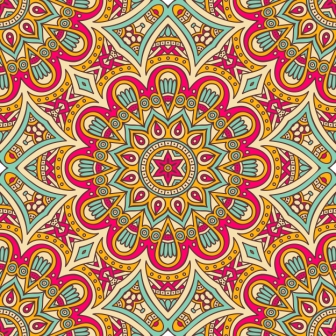
A mandal, in the Hindu and Buddhist traditions, is a geometric figure that represents the universe, and in its most basic form it incorporates the number four in its design. The Tibetan word for mandala means “that which contains or encircles the center,” and a basic mandala has a center and four gates. A mandala as a symbolic structure mirrors the deep internal order of nature and the cosmos.

The Inka concept of tawantin shares similarities, as does graphical depictions of a tawantin. In the Andean mystical system, a tawantin represents the whole, and specifically the relationship of the parts to the whole. As such, paqos often refer to the tawantin as the organizing principle not only of the outside, but of the inside—of the self.

It’s interesting that when Q’ero paqo don Andres Espinosa built and became the “headmaster” of a paqo school tucked away high in the Andes, behind the main building was a huge square courtyard with a smaller building positioned at each of the four corners and a huge flat stone in the center of the courtyard with a depression in the middle where despachos were burned. We don’t know if the design of this paqo school was intentional, but it takes the form of a tawantin “mandala,” mirroring the organizing principle of the cosmos on earth.

The despacho (hayway to use the Quechua term) is always, at its most basic, a tawantin. To my knowledge, the simplest, more core form of a despacho is the karpay despacho, which consists of shell placed in the center of the paper and Q'ero despacho to the Apustopped with a cross, and with four k’intus laid in around it. The shell and cross represent the core yanantin energies of the divine masculine and feminine principles . The four k’inuts represent the four cardinal directions  and honor the four suyu apus (Ausangate, Salcantay, Saqsaywaman, and Wanakauri).  Even if a despacho gets a lot more elaborate, this tawantin mandala is always the foundation upon which it is based.

The most obvious Andean representation of the tawantin is in the chakana, the Andean cross, which has four arms of three “steps” each around a central circle. chakanaThe word “chakana” means bridge. The symbol represents the constellation of the Southern Cross, which the ancient Quechuas and the Inkas believed was the center of the universe. The symbol or parts of it, especially the three-stepped arm of the cross, is ubiquitous in Inka architecture. While the three steps represent many triads in the mystical tradition, such as the three worlds (hanaqpacha, kaypacha, ukhupacha) and the three aspects of the self (yachay, llank’ay, munay), the symbol in its entirety is a tawantin—the union of these three with the cosmos into a whole.

Just as there is order outside the self, there is also order inside the self. According to Juan Nuñez del Prado and his masters , we also are tawantin. While the harmonious organization of the self in Jungian psychology encompasses the conscious self/ego, the unconscious self/shadow, the united animu and anima/royal couple, and actualized Self, for the Andean masters it incorporates the four main chunpis, or energetic belts. The throat represents yachay/thoughts, the heart munay/feeling, the belly khuyay/passion, and the pelvic area atiy/impulse. When we harmonize these four aspects of ourselves into a whole—into a tawantin— we can best express “who we really are.”

There are also energy practices that are tawantin. They usually involve the yanantin of men and women who work together to move energy in particular ways. One of these tawantin practices has two men and two women in the center, with men and women flowing outward from them, the men behind the men and women behind the women. As they flow energy long these “arms” from the center, this whole human mandala is set in motion, like a giant pinwheel. The flow of this moving energy creates munay.

Another tawantin energy practice involves creating two flows of energy within yourself—a saminchakuy flow of sami down from the cosmos to your Inka Seed and a saiwachakuy flow up from the earth to your Inka Seed. As the two energies meet at this center of the self, taqa occurs—an expansion of the personal bubble hands and plantand of the self in four directions—to family, to humanity, to the past, and to the future.

In the wachuy exercise of recapitulating your life and returning to the moment of your birth, or even to your conception, there is an energetic flow that centers on the Inka Seed but that encapsulates your male and female aspects and your itu and paqarina. The itu and paqarina relate to the spirit beings of the place where you were physically born and also represent the male/female aspects of yourself. In this exercise, your male/female aspects (including the yanantin of your biological parents) and itu/paqarina form the tawantin.

As you can see, the concept of the tawantin runs deep within the Andean mystical tradition, creating an Inka mandala that is both physical and energetic, both personal and universal.

Fill Yourself to the Brim

My last few posts have been about kawsay and how it supports your intentions to live as your grandest self. In this post I want to focus on kawsay in relation to Dream Big Conceptmoral and ethical frameworks.

Because most of you reading this post have been raised in a Western or Westernized culture, you likely have incorporated into your life, implicitly or explicitly, two core values or beliefs (among a host of others):

  1. Scarcity is the norm: There’s not enough for everyone, so if I get more, you get less.
  2. Riches and material possessions are valorized as emblems of success, but wanting material things is shallow and not spiritual.

According to the Andean tradition each of those values or beliefs is false. To live by them is to misunderstand the nature of the kawsay pacha and deny yourself its blessings. Here is what the Andean masters teach.

Abundance is the norm. The true nature of the kawsay pacha is that light living energy is overly abundant. There is more than enough for everyone. Kawsay cannot be depleted, so you can have as much as you want.

Absorbing kawsay is never selfish. In fact, it is your natural propensity. Kawsay is the fuel of life and evolution. You can’t do anything without it. Your ability to “push” the kawsay to manifest your intentions is directly proportional to how much sami—the most refined kawsay, the “nectar” of the universe—you have in your bubble and thus at your disposal. So it is always to your benefit to fill yourself to the brim with sami.

Your having more of anything does not mean anyone has to have less. The kawsay pacha has no accountants on duty, tallying up the books to see if you have taken more than you are due. It also has no referees, because there is no need for competition. There are no spiritual scorekeepers awarding you bonus points because you have lived ascetically or squelched your worldly desires.3d words of faith hope and love

Of course, the condition of your heart is as important as the condition of your energy body, but your morals and ethics are independent of the kawsay pacha as a fount of sami. We are social creatures, and to live in harmony we have to have rules and agreements. We seek to foster well-being at all levels of our lives, from our family to our community to our nation and the world. Because we live on the material plane—on Earth—it is to our benefit to take care of our planet and use our resources wisely and for the benefit of all of us, not just some of us. As humans we can accumulate hucha, and we often do because of we don’t live according to the “golden rule.” But at the fundamental energetic level of the kawsay pacha, everything is available to us, whether we know it or not, accept it or not, or partake of that abundance or not.

Remember, energy is just energy; it has no moral overlay. Since kawsay is the raw material of everything in the universe, then everything that is created from it in the material realm is devoid of moral labels. From an energetic perspective, the desire to live in a mansion or drive an expensive sports car are not “less than” the desire to build an orphanage or farm a field of organic vegetables. A diamond ring is the same energetically as a sacred book. There is no energetic difference between a diva’s fur coat and a Tibetan monk’s robe. Energetically, the universe will just as soon support your efforts to accumulate a mega bank account for security in your old age as it will to fund your non-profit human hand watering money treeto help people in need or right a social injustice.

You can have anything you want. While you are the arbiter of what objects and endeavors mean to you and thus whether they are worth attracting into your life, those things themselves are readily available and energetically equivalent. You can deny yourself or fill yourself to the brim, and the kawsay pacha has no judgment either way.

I leave you with two quotations that I hope will inspire you to both take abundantly and give abundantly, to both fulfill your grandest desires and to live with meaning, fully and deeply.

“Whatever we do in life starts with us. To be replenished, we need to keep emptying ourselves to receive more. In that way, we become vessels, holding up one hand to receive the blessings and then opening up the other hand so that we become channels, letting those blessings flow into the lives of others.”

—Bear Heart, The Wind Is My Mother

“There is only one way to be prepared for death: to be sated. In the soul, in the heart, in the spirit, in the flesh. To the brim.”

—Henry de Montherland, “Explicit Mysterium,” Mors et Vita