
“Good luck is science not yet classified; just as the supernatural is the natural not yet understood.”
— Elbert (Green) Hubbard, Writer, Artist, Philosopher
When we talk about the mystical (paña, or right-side of the Andean path) and the magical (lloq’e, or left-side of the Andean path) we are talking about perception and experience (paña) and action in the world (lloq’e). But the description of the left side as “magical” prompts many people to wonder about how the supernatural fits into the ecology of our energy environment. How common is it to experience supernatural events when we are in ayni (reciprocity) with the living universe? Should we expect to have them? How should we relate to them when they do occur? Here I offer up for consideration some of the ways I answer these questions.
The word “supernatural” comes from roots meaning “above” or “beyond” nature. Something supernatural is inexplicable because it defies known natural laws, and thus some scientists would say that belief in the  supernatural is inexcusable—it is “magical thinking.” Yet, I prefer to think of what is called the “supernatural” not as inexplicable but as anomalous. Something that is an anomaly deviates from the normal, known, or expected. Science itself progresses because of anomalies, which hover on the border of the known and unknown. They not only draw attention but often beg for explanation. Discoveries frequently are made because during an experiment some parameter deviates from the likely or expected result or range, and then the scientists engage their curiosity and keep probing. Sometimes that probing leads to a eureka moment—something that was formerly unknown becomes known. Over time, it may become accepted and even incorporated into the mainstream. What was once above or beyond nature reveals itself to be an aspect of nature.
The crown jewel of such a situation is the double-slit experiment in physics. To this day there is no universally accepted explanation for why a subatomic (and now atomic) entity appears to be a wave or a particle only because of how it is “observed,” which is to say how some device or human being decides to measure it. Perhaps right up there with wave-particle duality in the anomalous stratosphere (and some might say teetering on the border of the seemingly supernatural) are entanglement and non-locality. Two particles that share a connection (a quantum state) remain connected no matter how far apart they are—two inches, two hundred miles, two light-years. Although no known type of signal passes between them, when the state of one particle of the pair is changed, the other particle instantaneously changes in a commensurate way. The quantum weirdness of deep-down nature has prompted many scientists to both marvel and frown. As Neils Bohr, a pioneer of quantum mechanics, so famously said: “Those who are not shocked when they first come across quantum theory cannot possibly have understood it.” Richard Feynman, another physics pioneer, especially in quantum electrodynamics, went further and said, “It is safe to say that nobody understands quantum mechanics.” Einstein rejected the idea of nonlocality, calling it “spooky action at a distance.” Perhaps it is not too much to say he found it supernatural, and so he was convinced there was an explanation that did not defy the known laws of physics. He never found it. And, after trying for many decades, scientists still have offered no adequate explanation for non-locality, although its existence is proved beyond a reasonable doubt.
I offer that discussion to rally you toward thinking about the supernatural as simply something that is (right now) anomalous—unexpected and thus open to inquiry, but beyond the grasp of current consensus knowledge and the physics of the academy. I mean . . . if quantum can rule the subatomic (and increasingly the atomic) landscape, then it is not so big a leap to think that strange, wonderful, and even shocking “supernatural” events might be evidence of some kind of other deep-down nonlocal dynamic.
Of course, anomalous events are neither unusual nor unexpected within the domain of the mystical and shamanic. As part of our Andean energy practices, especially ayni (making conscious interchanges with the living universe), we expect feedback from the living universe, and we often experience that feedback in a way that defies rational explanation and violates the norms of consensus reality. The supernatural/anomalous takes us beyond known natural laws. That is no surprise, as “meta” in the word “metaphysics” literally means “above,” “beyond,” or “after” physics. Metaphysics operates not in defiance of physics as much as in ways that extend and expand it.
 In fact, I cannot even call what mystics and shamans experience occasionally as “anomalous,” for the ways of the liminal realms—those “in-between” realms in which we most often work— may be mysterious but they are played out in what is our normal operating theater. Their liminal nature intersects with our more mundane world, so the separation between “there” and “here” eventually blurs. What appears to be a “magical” event to those who don’t know how to work or live in shamanic or mystical ways is considered more or less normal for those of who do.
Andean paqos, especially those of the last generation, work “magically” in the most mundane and practical ways. They do not consider their mystical abilities to be anything special. My primary teacher, don Juan Nuñez del Prado, has shared several experiences of witnessing what was possible for the old paqos. And every one of these stories recounts events that were more or less just normal operating behavior for them. For example, don Juan describes what happened when he asked don Benito Qoriwaman if they were living in the time of the harmonic convergence. That was reputedly an auspicious time in the 1980s during which a particular alignment of celestial bodies would energetically impact Earth and we humans in beneficial ways. What was don Benito’s response to that question? He said, “Let’s go and see.” He walked outside and stood looking toward Cusco. Then he shook his head and said, “No.” When don Juan asked how he knew, don Benito said that the energy bubble around Cusco had not fully risen to cover the city. Only when it had done that would the time be auspicious for such energetic shifts to occur. He asked if Juan could see that himself, and when don Juan said “No,” don Benito told him to sit next to him and take hold of his leg. When he did and then looked toward the city, don Juan too could “see” (qaway, mystical vision) the energy bubble of Cusco. What this event tells us is that “supernatural” abilities were simply the norm for fully developed paqos. They were no big deal. They were useful. And they were only utilized when there was a specific purpose.
Don Juan tells of other, even more “supernatural” events he experienced while with his paqo teachers. Every one of those events occurred in the normal course of living, as part of a mundane unfolding of life. We can develop the same skills. These abilities are not unusual, the province of the few. They are a kind of metasense that we can develop. After we get over the startling acknowledgment of our own mystical abilities—after we get past our amazement and delight—we, too, mature into understanding them as simply another type of sensory awareness. They become another set of tools we can use in our lives and another cluster of abilities with which we may engage life more fully.
I believe there is an important lesson for us in understanding the way the paqos used their personal power and the types of things they could do with that power. For most of us, when we first begin a shamanic, mystical, or similar type of training, we are unfamiliar with and unsure about the “supernatural,” but also curious. We might eagerly try to trigger such experiences. Having a supernatural experience can be helpful in that it can rock our worldview, propelling us beyond the constraints of consensus reality. Transcendent or unusual events can open us to accepting that there is more to the living universe and ourselves than we have been told or taught about. Having such an experience can motivate us to study and practice. But afterwards, when we are trained and living in ayni in a metaphysical universe, these “magical” events and metaphysical abilities become normal aspects of our lives. We use our abilities in the way that best fits the moment—in other words, in useful ways. We also use these abilities sparingly, when they are appropriate or necessary. That is how it was for don Benito and the other paqos with whom don Juan trained and worked, and that is how it becomes for us.
Sometimes, it is not we who are “driving the kawsay”—influencing or perceiving the world energetically (mystically) in a particular way—but the living universe that reaches out to us. And we may have no idea why. After enough of these experiences, however, we come to trust them rather than to question them. 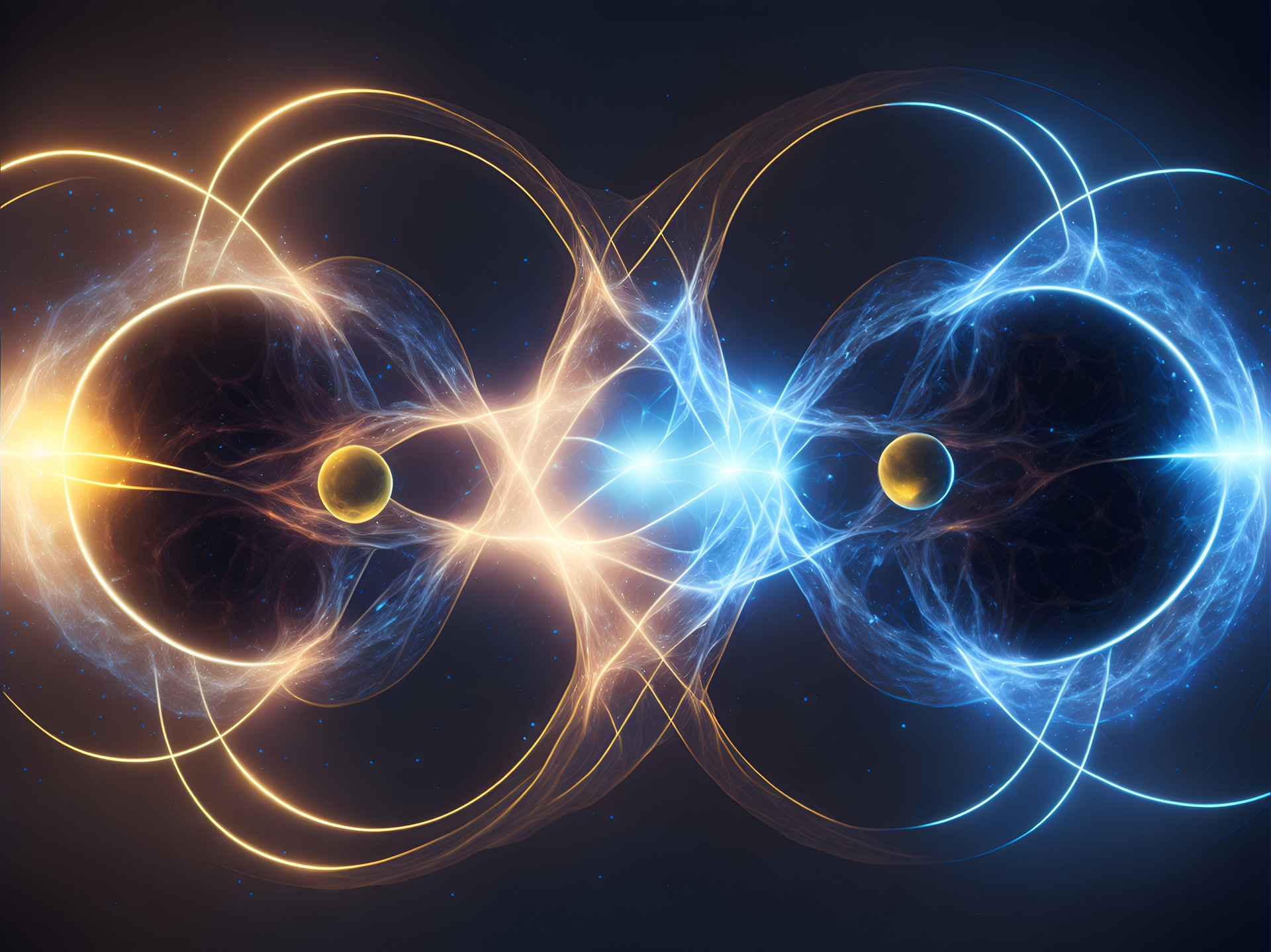 As an example of the universe “reaching out,” consider this example. I was talking the other day with a friend, recounting an experience of this sort that I had not thought about in decades. Back in the early 1990s, I was gathered with a small group of friends in a shamanic drumming circle. We each drummed and undertook a shamanic journey. During mine, at one point, apropos of nothing, I heard the “message” that I needed to acquire the feather of a sandhill crane. What? I wondered if there was such a creature and, if there was, why I needed one its feathers. After the circle, we gathered to share a meal, and during conversation I mentioned that I had received this “message.” The man whose house we were at listened, got up and left the room, and a few minutes later came back with a tawny-colored feather about ten inches long. It was a sandhill crane feather, and without a word he handed it to me as a gift.
Why did I need that feather? I had no idea. I just accepted that it would be useful in some way. Years later, I and two others were invited to the ancestral home of our full-blood Diné (Navajo) friend. During our visit, he pulled me aside and asked me join him for a walk. I had that feather with me on that trip, and I tucked it into my backpack. He took me to his father’s grave (which is unusual because the Diné usually don’t linger around graves) and told me about his father. During his sharing, he mentioned that somehow (I no longer remember how) his father was connected to the sandhill crane totem. Ah! Now I knew. I silently opened my backpack, removed the feather from the red cloth in which I had wrapped it, and laid it on the grave. And that was that.
Did having the sandhill crane feather to offer as an honoring of my friend’s father really matter? Probably not. The private talk was what mattered. However, the feather certainly was a nice touch. And maybe it was important to the universal consciousness or the spirit of his father in some way. To this day, I don’t know. It just was what it was.
We all have similar experiences. And lest you think, in my practicality, that I am dismissing them as unimportant or ho-hum, no. That is not why I present these kinds of experiences in the way that I am. The factuality of my presentation is meant to show us how deep our connections of ayni can go and how natural the energy dynamics of interconnection can become. From these types of anomalous events, we can gain not just knowledge of the energy dynamics of the living universe but experience of an interconnected universe. These experiential events bestow gifts upon us. What gifts? Let me call out five: attention, focus, awareness, curiosity, and engagement.
Anomalous experiences get our attention. Through that attention we can begin to enlarge our focus from the material, physical world to the liminal (in-between, metaphysical) realms to which we had previously been inattentive, dismissive, or even blind. Focus may lead to the development of awareness. Awareness is the gateway to everything! Especially to our restrictions. When we become aware of the liminal realms, we also are provided an opportunity to consider how we have been restricting our engagement with the world. We then might begin to loosen those restrictions. We previously may have attached to the belief that such experiences are random events from which we, in our illogic and scientific naiveté, are assigning a superstitious meaning. From our family, religion, science, education, society, and culture, we absorbed the idea that rationality and logic are among the highest of human qualities. They told us (and many continue to tell us) that belief in the liminal is magical thinking. However, when we expand our awareness and begin to experience the liminal, we soften the hold of such restrictive beliefs. We make room for curiosity. We could retreat almost immediately into denial of our experiences, but most of us become intensely curious.
I use the word “curiosity” as a catch-all term for a host of endeavors: releasing presuppositions about what we think we know, expanding our tolerance for the novel, widening the scope of the possible, and opening ourselves to the anomalous. These are qualities shared by almost all explorers and adventurers—and even by scientists. They also are qualities common to shamans and mystics. Curiosity becomes the springboard to experience, and experience is the springboard to engagement. Ultimately, we begin to understand our experiences not through the belief lens of magical thinking but through the first-hand experiential reality of our mystical engagement. We bring our whole self into reciprocal engagement with the whole of nature and the whole of the living universe. We move from dualistic thinking (either-or: real world vs imaginal world, physics vs superstition) to a dialectical one (both-and: physical world and metaphysical world, sensory awareness and supersensory awareness). We truly begin to live in ayni, for when we open ourselves to more of “reality,” more of “reality” opens itself to us.
 Q'enti Wasi - House of the Hummingbird
Really a wonderful article! Thank you so much for your thoughts and insights!
LikeLike
Great shift in perspective – thank you. Dialectical thinking is so much more fruitful and inclusive than trying to resolve ‘anomalies’. I loved reading about this means of living with broader horizons.
LikeLike
I absolutely love this!!
LikeLike