
One of the aspects of the Andean mystical tradition that first attracted me to studying the tradition and practicing its techniques is that it sees energy as free of moral overlay. Energy is just energy. Kawsay is the living energy, the life-force energy. Sami is its frequency as light living energy (light as in density, not  illumination). At the heart of the tradition there is no conception of bad, negative, evil, entrapping, or contamination energy. When I explain this to my students, I use the following examples: Are there harmful electrons? Evil photons? Entrapping neutrons? No! An electron is an electron and a photon a photon without moral overlay from human beings. This is the way we conceive of the universal fundamental energies, kawsay and sami—as free of human projection. Thus, in the realm of pure energy there is nothing to protect ourselves from.
But, you might be asking, what about hucha? You might explain that hucha is bad for us, and we don’t want it in our poq’po (energy field) as it can degrade our well-being. Well . . . that’s not an entirely accurate view of hucha. Hucha is not “out there” as an independent form of energy; it is not something that can trap us or invade our energy field. Hucha is not a cause of anything, but a consequence of the state of our own inner psyche. Hucha is what we create when we have degraded our overall well-being through our human foibles and weaknesses, our unhealthy attachments and rejections, our chaotic emotional state. When we are out of ayni in our interactions with other human beings—when we are ruled by our impulses and emotions, then we speak and act in ways that cause us to block or slow sami—that slowed or blocked life-force energy is what we call hucha. Humans are the only beings who create hucha. It has no meaning beyond being a consequence of our own conscious or unconscious disempowering behaviors. The more hucha we create for ourselves, the more difficult it is to motivate ourselves to take responsibility for ourselves and, thus, to consciously revise our way of being to improve our energy condition
When it comes to energy, it’s all about us and not about the independent state of the fundamental energy of the universe. For instance, although we don’t see energy itself as negative or harmful, there certainly are human beings with negative attitudes and harmful intentions. Of course, when we encounter people who are not acting from ayni, and thus may be creating a lot of hucha for themselves, we face choices: we can protect ourselves from physical or emotional harm and we can consciously choose to not allow their hucha to affect us (to create our own hucha from our responses to them). The teaching of the tradition is that no one else’s energy can enter our poq’po unless we consciously or unconsciously allow it. Therefore, no one can cause us to have hucha; we generate it for ourselves because of how we interact with or react to others.
Physicist Dean Radin, a researcher who works at the frontiers of energy and consciousness, explains the different underlying dynamics of universal energy versus human intentions about how to use energy. In his book Practical Magic, he explains that many cultures and religions reject and even condemn “magic”—a term he uses as an overall container for working with consciousness and energy—as sorcery, witchcraft,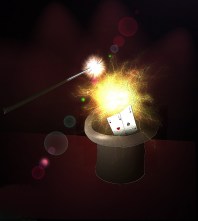 or the work of the devil. Then he counters that prejudice by explaining the physicist’s point of view (and for us, a fourth-level paqo’s point of view): “. . .the way magic is used is completely up to the magician. The power itself, like any fundamental force of the universe, is morally neutral.”
How we humans choose to use energy shifts the energy from the realm of neutrality into the realm of human values, ethics, judgement, and morality. We have neither the space nor the need to delve into the immense complexities of human consciousness, nor to discuss the Andean view of ayni (reciprocity) and our varying degrees of lack of it. I have written many other blog posts about those topics. The point here is that in terms of fundamental energy, the Andean tradition sees it as beyond moral overlay.
This view extends into many other areas. For instance, my primary teacher, don Juan Nuñez del Prado, has said that there is no moral overlay on the inherent sanctity of our Inka Seeds—our Spirit. Our Inka Seed is the “drop of the mystery” that animates us at the moment that our mother’s egg is fertilized by our father’s sperm. A drop of “God” as the Life Force animates matter to begin the creational process that results in each of us. And upon the death of our material body, our Spirit will return to this Source. While in the body, we may choose to consciously dedicate ourselves during our life to growing to be the fullest, most highly developed human beings we can be. But there is no imperative to do that. Those who choose not to grow are not rejected by Taytanchis (God, if you will), as we are given free will and we are valued and loved despite what we do with our will. Moral overlay comes into play as an influence in who we choose to be and how we choose to live while we are here, living as conscious human beings, and so it is of unquestioned importance in what our human world looks and feels like. This world is a reflection of us, not of the will of God or the forces of fundamental universal energies.
The sanctity of our Inka Seed, the fact that our Inka Seed is pure sami no matter how much hucha we are creating for ourselves, is why, don Juan says, when someone commits suicide, there is no moral overlay on that form of death. Fourth-level paqos would say suicide is factually one of many forms of death, and so they would not judge or condemn the person who died by their own hand. The Spirit (Inka Seed) returns to Taytanchis despite the person’s choice to take their own life. While that may be the fourth-level paqo’s view, don Juan also points out that suicide is rare in the Andes, because people have strong ayllu (family and community) ties and may have the energetic tools—such as saminchakuy—to deal with the hucha they have created for themselves before their mental or emotional condition deteriorates to the point of choosing suicide.
As one more example, this view extends to the way we understand our own personal energy dynamics. For instance, as I see it, all of our energy interactions can be reduced to four main dynamics: we are perceiving energy as compatible or incompatible, or the energy exchange is masintin (two similar energies in interaction) or yanantin (two dissimilar but complementary energies in interaction). I will focus here only on the first pairing. When we interact with anything—from the energy of an environment to that of another human being—we can sense that the other energy feels compatible (comfortable, easy to engage with, little or no feelings of resistance or dissonance) or incompatible (uncomfortable, difficult to engage with, producing resistance or dissonance within us). Because we are practicing the paqo path, we  are taught to take full responsibility for our own energy. All we can say is how to the energy feels to us, and we say nothing about the actual energetic state of the other person. So, when we meet with someone who feels heavy to us, all we can truly say is that we feel a flow of hucha. We can’t say with certainty that the other person is actually carrying a lot of hucha. What we may be perceiving is the hucha we are unconsciously generating within ourselves as we interact with the other person. Of course, we can use our commonsense, and sometimes it is obvious from the other person’s words and behaviors and other less-obvious clues that he or she is carrying a lot of hucha. We can choose to reduce our interaction or end it. But as paqos we want to be able to be in sami-filled relationship with everybody and everything, so we attend to ourselves. We bring self-inquiry to our perceptions, asking questions such as “Why do I feel such heaviness when I touch this person’s poq’po (energy body)?” “What can I do to shift this heaviness to sami?” We take responsibility and use our tools: doing saminchakuy on ourselves or hucha miqhuy on the flow of energy between ourselves and the other person. We don’t just say, “That person is heavy. Not my problem.” We say, “I feel heaviness in response to my interactions with this person. Let me refine my own energy so that I feel sami, or at least less hucha, in our future interactions.” That’s the impartiality we bring to our relationships and our energy work. Ideally, we reserve personal judgment as much as possible and deal directly with the energy flow.
There are other examples I could provide, but I trust that those I have provided illustrate the egalitarian nature of fourth-level Andean energy dynamics and our ayni with the living universe and fellow human beings. If we are truly going to walk through the world, and live our lives, according the fourth-level principles of this tradition, then we take back our projections and attend to the state of our own energy interactions.
 Q'enti Wasi - House of the Hummingbird
Thank you so much Joan. Beautifully said. Your perspective is very valuable to me. Sending Sami.
LikeLiked by 1 person