You and Your Poq’po

Sometimes, metaphorically speaking, we feel like our hands are tied. Like we are moving through life without our full capacities. We know we are capable of more, but we just can’t seem to manifest our intentions fully.  The way to free ourselves from restrictions is to refine the state of our energy bubble, our poq’po.

According to the Andean mystical tradition, your only true possession is your poq’po. It alone is yours. No one can infiltrate your energy bubble without your permission, so you are solely responsible for its condition.

There are no excuses in the Andean tradition! And there’s no free lunch. . .

When heavy energy accumulates on the skin of your bubble—because of your own perceptions, beliefs, emotions, actions—you perform saminchakuy to cleanse it. This is an energy technique driven purely by personal intention. The Andeans may have been unique in that they developed a tradition of the sacred arts that relies purely on intention to influence the kawsay pacha. With your intention alone, you can “play” in the infinite field of living energy. Intention is at the heart of all Andean ceremony, from healing to making despachos to energetically connecting/communicating with other human beings or the spirits.  To do anything in this tradition, you need only your own energy. You don’t need a misha, a kint’u, a ritual, a magical song or incantation, a feather or crystal—only your focused intention.

Your poq’po, however, is not some blob of energy. It is a highly structured energy body. It has an inside, an outside, and a skin, just as your physical body does. The inside of your poq’po, like your body, also has a structure, but a purely energetic one. The chunpis are four main belts (throat, chest/heart, belly, base of spine/pubic area), with the two physical eyes and third eye making up a quasi fifth belt. The energy concentrated at each of these belts has its own potentiality, its own particular capacities that you can express in your life.

Although these belts are associated with colors and elements, these are not really important. What are more important are the potentials that can be expressed by intentionally developing and then using the energy of each chunpi. For example, the qolqe chunpi, at the throat, is silver and is associated with wind, and sometimes with the moon. But the energetic capacity of this belt is rimay, the ability to express who you really are, to speak with the authority of personal experience, to conceptualize holistically so that you simultaneously see the whole and the details of a situation, and more. Each belt also has an eye, a ñawi, that is an opening through which you “see” the world according to the capacities of the particular chunpi.

But each chunpi also has an energetic cone within it. For all the chunpis, the large opening of the cone is at the front of the body, and the point, or root, of the cone is at the back, toward the spine. The exception is the lower belt, the yana chunpi, where the cone has the larger opening at the back and the point at the front of the body. There is a long, involved saminchakuy (and at some of the chunpis, saiwachakuy) practice in which you cleanse each chunpis through these cones, running energy through them, and then weaving the chunpis together with each other and with your spine, even projecting energy out of their ñawis to connect with the outside world. This is a deep cleansing practice, one that helps activate the capacities of the each chunpi while also “awakening” or activating the entire energetic structure of your poq’po. I like to think of it as fine-tuning your energetic anatomy.

Since we are not fully developed human beings, we all have work to do to empower ourselves and our poq’po. To help us we have eight helper energies or spirits. They represent that which is currently missing or underdeveloped in us. We work with these helpers at each of the chunpis to teach us what we need to grow and develop.

Within our poq’po, too, we have a seed, called the Inka Seed. It connects us to the Mystery, holding within it our full potential, like an oak-seed pod holds within it the potential for a mighty oak tree. The Inka Seed never has any hucha, but still we work with it intensely and intentionally as we fine-tune our energetic anatomy. We even move it out of our energetic body for a time and leave it, along with all eight of our helpers, in the earth while we work our poq’po in energetic ways to cleanse and prepare it for the recovery of our Inka seed. This is the work of the chaupi and lloq’e practices (middle and left sides of the tradition).
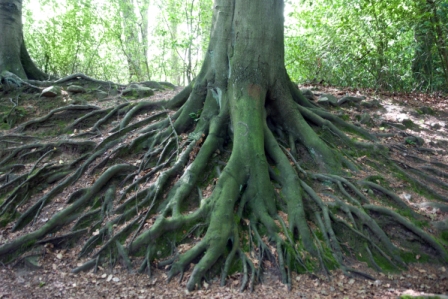
As you can see, working with your poq’po is a primary responsibility of a paqo. You are always seeking to refine your energy and increase your capacities (which together generate your personal power) so that you can live more fully engaged and with greater productivity and joy.

If you have been neglecting your poq’po, this is a reminder to refocus there—at the very least, to use your intention to cleanse your poq’po so that you can more effortlessly evolve into the fullness of your being. Your partners in this process are the kawsay pacha, the source of sami, and Pachamama, the cleanser of hucha. But they only respond to your intention. So always remember that your poq’po is your one true possession. Treasure it. Honor it. Work with intention to refine it.

Independence Day Andean Style

As we celebrate Independence Day in the United States, let’s look at what we could call the Andean Mystical Independence Day—August 1—so you can get ready for it.

Apu YanantinAccording to the ancient knowledge, August 1 is the day the Apus and Pachamama “awaken.” Of course, they are always “awake” and available to us, but on this day they lend an ear to us in an especially attentive way. I call this date Independence Day in this blog, but it also can be viewed as the mystical New Year’s Day. You’ll understand how it can be both in a moment. In addition, this is the day that paqos typically “feed” their mishas (mesas).

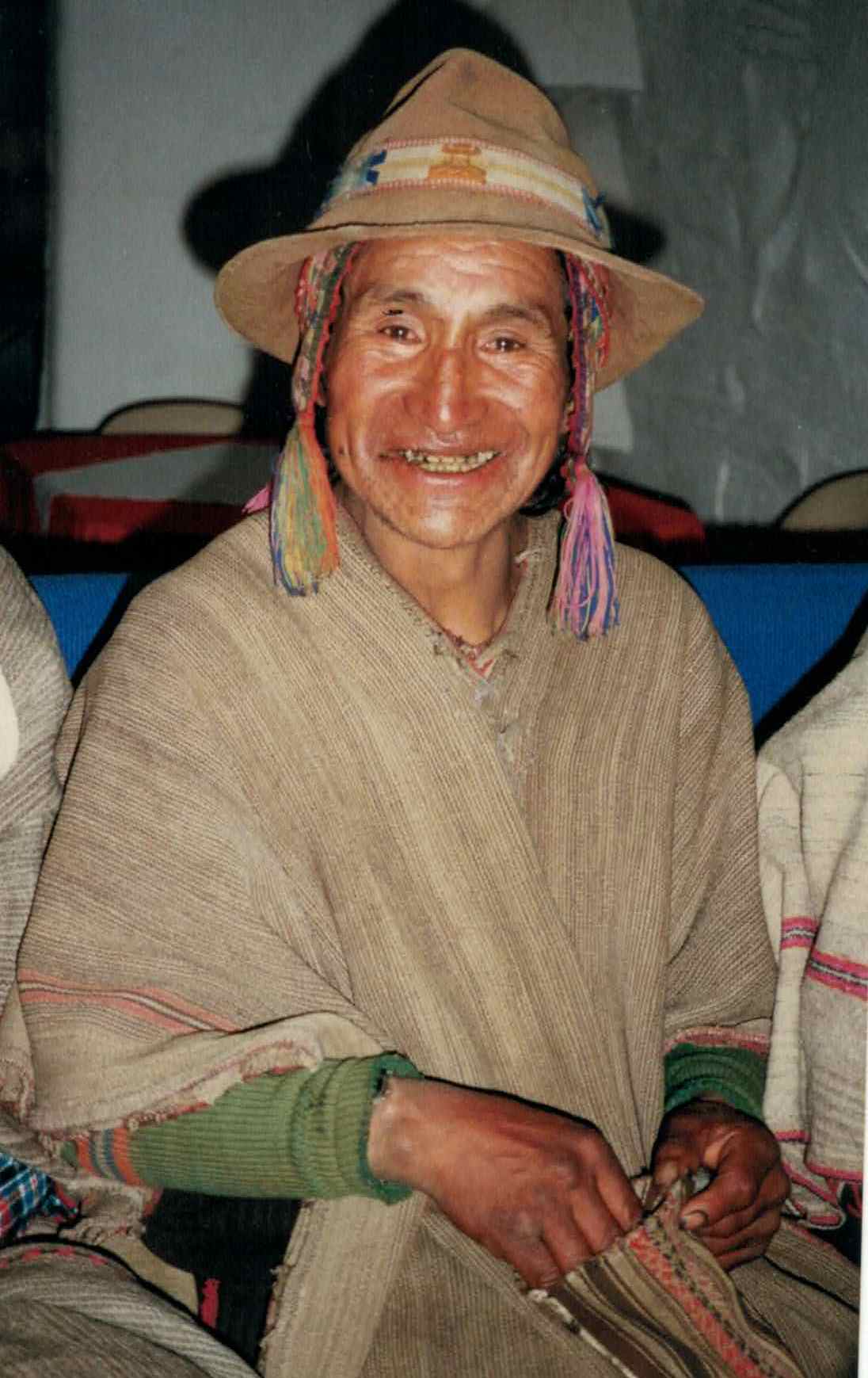
When I was interviewing the Q’ero for my book Masters of the Living Energy, don Julian Pauqar Flores gave me a gift of a khuya, a stone from his misha that I was to place in mine. He explained all the ways the khuya could be used, which I won’t go into here except to say that it has more uses than any other khuya I have. During his explanation, he mentioned the August 1 date, explaining this day of awakening along with a simple but powerful incantation that paqos can say to renew themselves. I pass this ceremony on to you, with my added instructions and explanations, so you can perform it yourself on August 1. I also explain
how to feed your misha and incorporate that practice into this ceremony.

The context of the ceremony is as follows. As the Apus and Pachamama awaken, we, too, can awaken or rebirth ourselves. We let go of the past and proclaim our intentions for the coming year. We claim our independence from who we were and declare who we are going forward. We cut the seqes, the energetic cords, to what no longer serves us and project forward toward our perfected selves.

Sit with your misha and honor how it has served you, as a representation of your personal power and a hucha-cleansing bundle. Then stand, holding your misha, to honor the spirits. You can honor the spirits through your intentions or your breath, blowing through your misha to connect with God the Father/Wiraqocha first, then Pachamama (the cosmic Mother) second. Then perhaps the teqse apus—the universal spirits—such as Tayta Inti (the sun), Mama Killa (the moon), Tayta Wayra (the wind), Mama Qocha (the lakes or seas), and so on. You can honor the six directions or the four directions—whatever feels right for you.

Sit again, and clear your mind and drop into your poq’po, especially the area around your heart and your Inka Seed. Cut the energetic cords to your past, releasing any hucha from your poq’po that you carry from your past, whether that is heavy energy from childhood or from ten minutes ago. Take as long as you need to do this.

When you are done cutting cords and releasing, it is time to refill yourself. Become clear about your intentions for the coming year, for who you want to be. Then stand and declare aloud to the spirits, “I am what I speak, not what I have spoken.” Speak aloud with clarity who this new you is: your expanded personal capacities and qualities, how you want to serve in the world, the kind of relationships you choose, and so on.

With these words you have released the past and declared to the universe that all of the intentions you have just clarified within yourself and spoken aloud are the new you. You are stating that from this moment forward, you are renewed, you are reformed, you are revitalized, you are realized in a new way.

You now need to “reintroduced yourself to yourself,” since you are a new you. Sit quietly with your misha and connect with your poq’po. Be alone with yourself and establish a relationship with the renewed you. Get to know yourself. Take all the time you need.

When you are done connecting with your newly defined self, open your misha and sit with your khuyas. As you grow and change, so does your misha, since it is a reflection of your personal power. As you sit with your misha, sense which khuyas want to be removed from it. Honor them, thank them, remove them and store them on an altar or return them to the earth. Perhaps there are other khuyas around your living space that are asking to be added to your misha. Greet them, honor them, introduce them to your misha and add them. Now is the time to reconfigure your misha according to your renewed state of being, according to who you are as you walk toward growing your Inka Seed and realizing your wholeness.

Once you have reconfigured your misha, “feed” it. Honor your misha and its khuyas, then sprinkle some wine or pisco or other sacred liquid over the khuyas, feeding them. Then close your misha and sit with it, absorbing its new, changed energy. This is your personal power as a new, improved you.

That ends the August 1 ceremony. I can’t promise that paqos do it exactly like that, but I can assure you that August 1 is the day to renew yourself and your misha, and that the incantation is from the lips of don Julian.

Note: Those who know how to do a kutichi despacho can incorporate that ceremony into this one, since it, too, is a powerful way to recapitulate your life and release cords to the past, to empty yourself and refill yourself.

The Mystery of Munay

In the Andean tradition, there are three aspects to being fully human: yachay, llank’ay and munay. Yachay is the mind, intellect, reasoning, logic. Llank’ay is the body, action, productive effort. Munay is love grounded in will.

While there are seldom hierarchies in the tradition, in this case there is one: yachay occupies the bottom of the triumvirate, llank’ay the mid position, and munay the top. Munay is valorized as the highest energetic expression of our humanness.

That said, these three expressions of our humanness also operate circularly, since one feeds the other and we need to master each aspect of the self to be whole human beings. It’s also true that we tend to be predisposed to excelling at one of these three, even while we seek to harmonize all three expressions of ourselves. For example, don Benito Qoriwaman was a tukuyyachaynioq, a master of yachay, and he was identified as a supreme paqo of the right-side paña work. Don Melchor Desa was a master of the llank’ay, a tukuyllank’aynioq. His expertise was the left-side work, the lloq’e. Q’ero don Andres Espinosa was master of munay, a tukuymunaynioq, and his mastery was in the chaupi work, the middle path. Don Benito also said that the Q’ero are “owners of the munay.”

It’s no surprise that munay—love—is the pinnacle of human expression. But what exactly is munay?

We know what munay is not.

It is not an emotion. It is not a feeling. It is not only love.

We also know something about what munay is.

It is the foundation of the Andean mystical tradition. It is often described as unconditional love, and the Andean paqos define it as love grounded in will.

We know its importance in our energy work. In the energetic body, munay is not found singularly in the heart (qori chunpi)  but is a fusion of the energy of our heart with our Inka Seed. When these two centers merge, something greater results, and that is munay.

Munay also is infused with the flow of energy from all the chunpis (energy belts) and with the kawsay from outside us, from the cosmos. Our Inka Seed can be thought of as the God/Cosmos Within; the kawsay pacha and world are the God/Cosmos Without. The union of “within” and “without” happens through munay. Only our munay integrates the two.

Because of this energetic back and forth, of the within and the without, it makes sense that munay must include will. Not as in willfulness or willpower, but as in directed intent—as in having the personal energetic power to carry out your intent.  Also, it is will as in direct personal experience.  You don’t develop any of your human qualities or capacities by reading about how others have acquired them or observing others using them. You must participate in life yourself, expressing your humanness.

So far, so good?

Well, I don’t know about you, but I have to admit that this hasn’t been good enough for me. I feel that I have been able to talk the talk, but I have never really walked the walk of munay. Yes, I’m loving. Yes, I am open to receiving the love of others, including and especially God’s love. But really, really, really “getting” munay? Nope.

So I have always been on the lookout for a more meaningful explanation or definition. And I finally found one—in the most unlikely of places!

I was reading François Fénelon, a 17th-century Roman Catholic theologian, when I came across the following words. They could have been written by an Andean paqo!

This explains munay!

“Pure love is in the will alone. It is not sentimental love, for imagination has no part in it. It loves, if we may so express it, without feeling, as faith believes without seeing.” It “abandons the demands of the self. . .”

 Nothing more need be said. Sit with those words, and I hope that you, like me, will drop into a deeper understanding of munay.

The Lamp of the Energy Body: Part 2—The Aura

In Part 1, I talked about absorbing and radiating the black and white light energies. In this post I continue that discussion and focus on the aura.  I’m no expert on the aura, so forgive any errors or misunderstandings. However, in thinking about the goal of being a paqo—to be able to absorb and radiate all forms of energy—it is inevitable that I started musing about the aura. Here is my take on the aura Andean style.

The aura is a visible glow, usually a colored one, around the body. Many people who can see auras say that the color of your aura reflects who you are, the quality of your energy, and more. However, I am beginning to question that.

If the Andeans have it right that we are in continual interchange with energy, whether consciously or not, and that we are always absorbing and radiating energy, then how can we know what the aura color means? It could have two very different interpretations:

1) It could mean that we are indeed radiating a certain predominate “flavor” of energy, which must be a form of sami, since it is energy that is freely flowing through us and not getting stuck.

2) But it could also mean that we are not absorbing that “flavor” of energy—that this particular energy is incompatible with our energy body—and so it is potentially a form of  hucha for us.

I don’t think we can really know which is the correct interpretation. We have to go back to my previous  post and the metaphor of the electromagnetic spectrum of visible light to understand why.

If we are seeing color, we are detecting the visible light spectrum (the frequencies that appear as the different colors we see with our physical eyes). In order to see color, that frequency of light must be bouncing off an object. Light left to itself, free flowing and not interacting with an object, is invisible to our eyes. You might say it is black. Outer space is full of “light” but we only see it when it reflects off an object, like the moon. Or, I should say, we only see the object because of the light that it reflects back and enters our eyes.

So, anatomical physics tells us that the colors we see are those that are not absorbed by the object.

The yellow rubber duck in the photo is that color because it is absorbing all the other frequencies of visible light except yellow. To anthropomorphize that duck, you could say it is “rejecting” the frequency of yellow.

I think you can see how this applies to the Andean conception of how our energy bodies work. Just to be clear, let me provide an example. Let’s use the color green and associate it with love/munay to examine the possible interpretations.

If we see a person with a green aura, that person may be a master of love. He or she is able to fully absorb the “green” energy and it flows freely, as pure sami, through his or her energy bubble. There is so much of that energy flowing through that person that he or she glows green.

Alternatively, that green aura may be evidence that the person has such difficulty with the energy of love that he or she cannot or will not absorb it, and so it is bouncing back off their energy bubble. It is incompatible with his or her current state of energy.

You can see the dilemma. Relying solely on the aura, unless we are qawaq (able to see reality “as it really is”), we can’t know which of the two energy states is the “correct” one. (We cannot fully trust intuition, as it, too, is dependent on the state of our energy body. Qaway is different from intuitive knowing.)

What does become certain is that we can’t make any judgment. We can’t declare what that green light means. We can only leave it to that person to become aware and determine what’s going on energetically for him- or herself.

And that approach is perfectly in line with the larger Andean cosmovision, which says we can only really know, and take responsibility for, the state of our own energy body. We don’t label or judge another person energetically; we can only sense whether or not we are compatible energetically with that person. (See my earlier post “No More Energy Vampires!”)

Although the Andean tradition is relatively simple in practice, its conception of energy is profoundly sophisticated and far-reaching. I offer this conjecture about the aura as another reminder about the importance of sensitizing your awareness of your own energy body and not labeling others according to preconceived ideas about their energy state.

All we really know for sure about the “aura” from the Andean masters themselves is that a sixth-level being glows, usually a white or golden light, which to my mind means they are perfectly absorbing and then radiating every possible energy. They create absolutely no hucha. According to the tradition, then, we can be certain that a sixth-level being is not “rejecting” all frequencies, but perfectly absorbing and radiating them.

Beyond that, and speaking only for myself, I am giving up having any judgment about the aura, because I think it is not possible, nor is it any of my business, to “interpret” another person’s energy condition. I just can’t know (from seeing with my outer eyes anyway) what the color of a person’s aura actually means.

The Lamp of Your Energy Body: Part 1—White Light, Black Light

“The eye is the lamp of the body; so then if your eye is clear, your whole body will be full of light. But if your eye is lead, your whole body will feel of darkness. If then the light that is in you is darkness, how great is the darkness!”

This is a quotation from The Bible, from Matthew 6:22-23 (NASB). While, of course, it is not written about anything concerning the Andean mystical tradition, it certainly applies! For me, it is an enlightening (pun intended!) statement about the importance of our attending to the state of our energy bubble, our poq’po, including the chunpis (belts of power) and the “eyes” of the belts, the ñawis.

In this quotation, the light can be equated with sami, refined energy; the lead/darkness with hucha, heavy energy.

In Matthew, I believe the “eye” refers to our perception—our way of seeing and being in the world. The more we cleanse our perceptions, divesting ourselves of hucha and filling ourselves with sami, the more productively  and joyously we can live. We do this cleansing using saminchakuy, the practice for releasing hucha and filling ourselves with sami, and through hucha mikhuy, whereby we transform hucha into sami. The chunpis play a role in this.

The chunpis, or belts, are a bit like chakras, as they are energy centers in our poq’po that interpenetrate our physical body. There are four primary chunpis: the yana chunpi that is like a girdle around the lower trunk and the root of our spine; puka chunpi at the belly (qosqo); qori chunpi at the heart or chest level; and the qolqe chunpi at the throat. There is also somewhat of a fifth belt, called the kulli chunpi, at the forehead that encompasses the two physical eyes and the “third eye.”

Each of these belts has an energetic opening, a ñawi. So in effect we have seven “eyes” in our body, the two physical eyes, the third eye and the four ñawis of the primary chunpis. We can “see” through these seven eyes, and they are related to our conscious evolution. If you remember, there are seven levels to human consciousness, only four of which are manifest so far on Earth. So, if we follow the message of Matthew and apply it to the Andean mystical tradition, there are seven eyes of the body, seven aspects to our energy, to keep “clean” and “light.” Since these eyes are spread across our body, by keeping them cleansed, we keep our entire bubble and body full of light/refined energy.

Notice the last sentence in the Matthew quotation: If then the light that is in you is darkness, how great is the darkness!”

Matthew is saying that  light can be “dark.” This, to me, is an incredibly Andean way of seeing energy. But we have to make a shift here to view the darkness not as hucha but as willka, the black light energy.

If you viewed my webinars, you may remember in the first one that I spent quite a bit of time talking about the black light energy, willka, which is the “highest” energy and the most difficult to master, according to the Andean masters. This is quite a reversal of most mystical traditions, which place the white light at the pinnacle. What does Matthew mean that light can be dark? Why do the Andeans valorize the black light instead of the white light? What exactly are we trying to do as paqos?

Let’s start by answering the last question first. As paqos, we are learning to be masters of energy absorption and radiation. We want to be able to absorb and radiate every kind of energy, without exception, though our energy bubble without slowing down the energy (turning sami into hucha).

In the webinar, I used a metaphor to explain this. I talked about how in the electromagnetic spectrum of visible light, black is the absorption of all color frequencies, whereas white is the reflection of all color frequencies. I was using this as a metaphor for our task as paqos. You can’t radiate white light unless you can first absorb the black light. You can’t radiate all possible energies unless you can first take all possible energies into your bubble and allow them to pass through without trapping them there and so turning them into hucha.

This, to me, is the brilliance of the Andean tradition. It teaches you to master the “darkness” so that you can be the “light.” (There is no sense whatsoever of the negative, bad, evil in the word “darkness.” Here I am referring to black—the ability to absorb all possible energies, without exception.) We must first be masters of “tasting” every “flavor” of energy of the kawsay pacha before we can hope to radiate the white light of the All.

So the “darkness” in the Matthew quotation can be read two ways in the Andean tradition. First, as lead, or heaviness—as hucha, which is still light energy (kawsay), only trapped or slowed down and so not contributing to our well-being. And second, as willka, the black light energy that is the highest form of nature/earthly energy and the metaphor for our task as paqos—to be such masters of our energy body that we can freely partake of the fullness of the kawsay pacha, the world of living energy.

The training in the tradition is perfectly sequenced to help you master the art of being a paqo, attending to the light within. The first training, paña, teaches you to perceive energy and to work with your energy body and the kawsay pacha. The second training, chaupi, to activate the chunpis and learn to consciously absorb and radiate energy. And the third, lloq’e, to empower the chunpis and ñawis and increase your personal power.

This long post has one main point and one main question/challenge for you: to be a master of yourself and your life, you must “clear” your “eyes” in every sense of perceiving, from your beliefs to your energy body, so that you can freely absorb the ALL and thus be able to radiate the ALL. How are you doing?

In Part 2, in my next post, I will discuss the aura.