
Note: In this post, I refrain from interrupting the flow of ideas with definitions of the Andean practices that are mentioned. If you have been studying the tradition through the two lineages I write about, you will know them. If you are new to the tradition, there are nearly ten years of posts in the archives that you can search for explanations and additional information.
I am closing out this year by writing about hucha, “heavy” energy, and how our practice is to transform our own hucha back into sami, the light living energy that empowers us. Let us end a year that has felt heavy in so many respects—from climate disasters to war and conflict to a spreading politics of cynicism and even violence—by shifting our perspective from feelings to action. Because the good news is that we do not have to deal with our hucha alone. As we close out the year, let us honor Mother Earth, who is always available to assist us.
Of course, we always start by taking personal responsibility for the state of our own energy. We all have hucha, and if we have studied the Andean sacred arts, we have tools to deal with it. When we block or slow down sami—the life-force energy—and so create hucha, we have our core daily practice of saminchakuy. To undertake a deeper clearing of hucha or to reduce hucha we feel between ourselves and others, we have hucha miqhuy. If we are carrying hucha from our personal past, we have wachay. If we have restructured our mystical body by weaving the chunpis (energetic “belts”), we have heightened our capacity to move energy upward through our ñawis, our mystical eyes. As our hucha moves up, it becomes more refined, dissipating its heaviness and regaining more of its lightness. This refinement improves the energetic quality of our wasi: our body and poq’po.
There is one constant in all these practices: Mother Earth. She is called both Pachamama and Mama Allpa. However, I prefer to make a distinction: Pachamama is the Mother of the Cosmos, of the entire created world, whereas Mama Allpa is the sacred being that is the planet Earth. There is a reason Andeans call the Earth by both names, but in the interest of brevity, I will not explain these nuances and will simply state my preference for calling her Mama Allpa.
Mama Allpa has no hucha. Nor do any of the creatures of the natural world. Only human beings block or reduce the flow of the life-force energy and so create hucha. But Mama Allpa is our greatest ally in dealing with our hucha. She is known as the Great Eater of Hucha. Although ayni—reciprocity, giving and receiving—is the natural law of the universe, Mama Allpa is always ready to receive our hucha without asking anything of us in return. We do not have to earn or deserve her help. Our relationship with Mama Allpa is not one of chhalay, meaning it is not transactional. She does not require a bargain. She gives without condition. She is part of a tawantin that freely sustains all life: the universal spirit beings of the Earth (Mama Allpa), Sun (Tayta Inti), Wind/Air (Tayta Wayra), and Water (Mama Unu). From this tawantin of life-force power we are given our hanchi, our physical body, and they freely sustain us physically and energetically throughout the span of our lives. Of course, if we are sensitive and generous, we always honor these spirit beings and choose to be in ayni with them. But as the foundations of life, they do not require anything of us.
Although I said that only human beings create hucha, it is useful to take a moment to understand that hucha also can be seen as the natural cycle of life. As don Juan Nuñez del Prado explains, the life cycle begins with sami and continues in a long arc of increasingly more robust expressions of sami until a peak  is reached. Then the arc curves downward, with a continuing reduction of sami, which we can see as hucha in that it is the slowing of life-force energy. Finally, the physical life force is extinguished. A seed geminates, a seedling grows, a plant flourishes until it reaches the apex of its growth, perhaps flowering and fruiting, and then slowly, over time, it begins to lose life force, until it collapses to the ground and its physical constituents are reabsorbed into the earth. We are in relationship with Mother Earth in the same way. She is one of the tawantin of powers that support and sustain the body in which we exist. When our life force is extinguished, our body returns to her. She asks nothing of us during this cycle of life.
In our hucha-transformation energy practices, however, we understand that we are in a kind of ayni with her. Mama Allpa’s core specialties are life, growth, evolution, change, transformation, support, and empowerment. When we give her our hucha, we are giving her an energy that she welcomes. Don Juan and some of the paqos have said that our hucha is “food” for her—one of her favorite foods! When we give her our hucha through such practices as saminchakuy and hucha miqhuy, she takes that slow life-force energy and performs her magic, returning it to its natural vibrant state. This may seem an unusual or unfair exchange to us with our Western mindset. We think of the things we “excrete” as dirty or negative. But Mother Earth is the great composter—one of her most robust powers is transformation through recycling and redistribution. Dung becomes fertilizer. The decaying wood of a tree revitalizes her soil with nutrients. The dead husk of a beetle becomes components for new life. From this perspective, our hucha is another form of life-force energy. It is only when we forget that hucha is sami (simply slow sami) that we misrepresent Mother Earth’s largesse to us by thinking we are hurting or burdening her by giving her our hucha to transform when we cannot fully do that for ourselves.
As don Juan has said, “Mother Earth is a co-creator with the cosmos. She fuels our evolution. She recycles our hucha, helps propel us forward. She feeds us [through the food she helps us grow, the animals whose lives she supports] and we feed her hucha.” In hucha miqhuy, a similar dynamic is in play. Don Juan says of hucha miqhuy, “We take control [of our hucha] following her example. We learn to recycle energy as Mother Earth recycles things. We become Mother Earth’s ally, helping her to digest human beings’ heavy energy.” In both practices—saminchakuy and hucha miqhuy—our hucha is a form of ayni that we engage in with Mother Earth.
Just about everything in our practice involves Mother Earth coming to our aid and enabling our greater well-being. For example, the energetic belts we weave into our mystical and physical body—the chunpis—are earth energy. It is not the chunpi paqo alone who creates the belts. Neither are the mullu khuyas the chunpi paqo uses to weave the belts responsible for their creation. The chunpis are created through the power of Mother Earth’s sami. Before the chunpi paqo begins the karpay to weave the belts, he or she connects with and pulls up Mother Earth’s energy, and that is what is used to create the belts. As don Juan has said, “The belts are not ‘natural’ [meaning, naturally a part of us], but are an energetic addition that improves us.” That addition is Mother Earth’s energy, the sami of the one who lovingly and without condition sustains us and supports us in cultivating ourselves.
In the left-side work—the lloq’e aspect of the tradition—we even plant our Inka Muyu (Inka Seed) in the earth. Our Inka Seed is an energetic structure and information field that holds within it our full potential. It is the Self, the core “I” that is both our humanity and our divinity. To use the Hindu terms, it is both Atman (God Within) and Brahman (God Without). We literally use intention to move our Inka Muyu outside of our body and plant it in the earth. Once in the ground, Mother Earth helps fuel our Inka Muyu’s development. We could say she is fertilizing it with her sami. What she is really fertilizing is our capacity for self-inquiry, self-awareness, clarity of intention, and efficiency of action—all the aspects of the self that help us climb the qanchispatañan, the stairway of the seven levels of human consciousness. According to the tradition as passed on by don Benito Qoriwaman, we are under no obligation to develop ourselves. However, if we choose to, we can refine our consciousness and energy until we reach the sixth level of human consciousness—that of the enlightened human being—and even the seventh level—that of a human with godlike capacities. We do not undertake the process of our expansion alone. Mother Earth lovingly helps us.
As we close out this year, I invite you to join me in appreciating—in celebrating—Mother Earth and all she does for us. We honor her. As we go into the new year, no matter what is going on in the world and how much hucha we feel around us—we know that we are free to consciously condition our own inner state and that we have help. Mother Earth is always assisting us, feeding us, even energetically fertilizing us to be the most glorious human beings we can be.
Postscript: This discussion would not be complete without mentioning ecology, so I am addressing it briefly here. We are in an environmental crisis because of our lack of ayni in caring for the natural world. We have polluted the land, oceans, and air. We have damaged or obliterated vast swaths of the habitats of animals, birds, and insects. We are creating conditions that threaten our own well-being. The Andean tradition teaches that we must see reality as it really is, and the reality is that we are degrading and even destroying much of the natural world as we know it. We can make no excuses for ourselves.
The reality also is that Mother Earth will be just fine. The rallying cry of “Save the Earth” misstates the problem. What we are seeking is to save ourselves. Our lack of ayni with Mother Earth may hasten our own demise and that of other species as we create environmental conditions less conducive to human life and other forms of life. Our lack of ayni, to be brutally realistic, is both potentially suicidal and murderous. However, Mother Earth will survive whatever we do. She has persisted through countless environmental stresses and ecosystem collapses from Ice Ages to massive asteroid strikes. She absorbs death, and she fuels life. Gone are the velociraptors and the wooly mammoths, and here are the birds and elephants. A thousand years ago there was a desert, and today there is a verdant forest. Mama Allpa— wondrous Creatrix that she is—adjusts, survives, and thrives.
 excited the anthropologists who were there. They had not heard this term before, and so they probed the Q’ero for more information. What we learned is that they make a distinction between two energies in a person’s or spirit being’s energy body: k’ara and sami. In this post, we take a deep dive into k’ara and its significance.
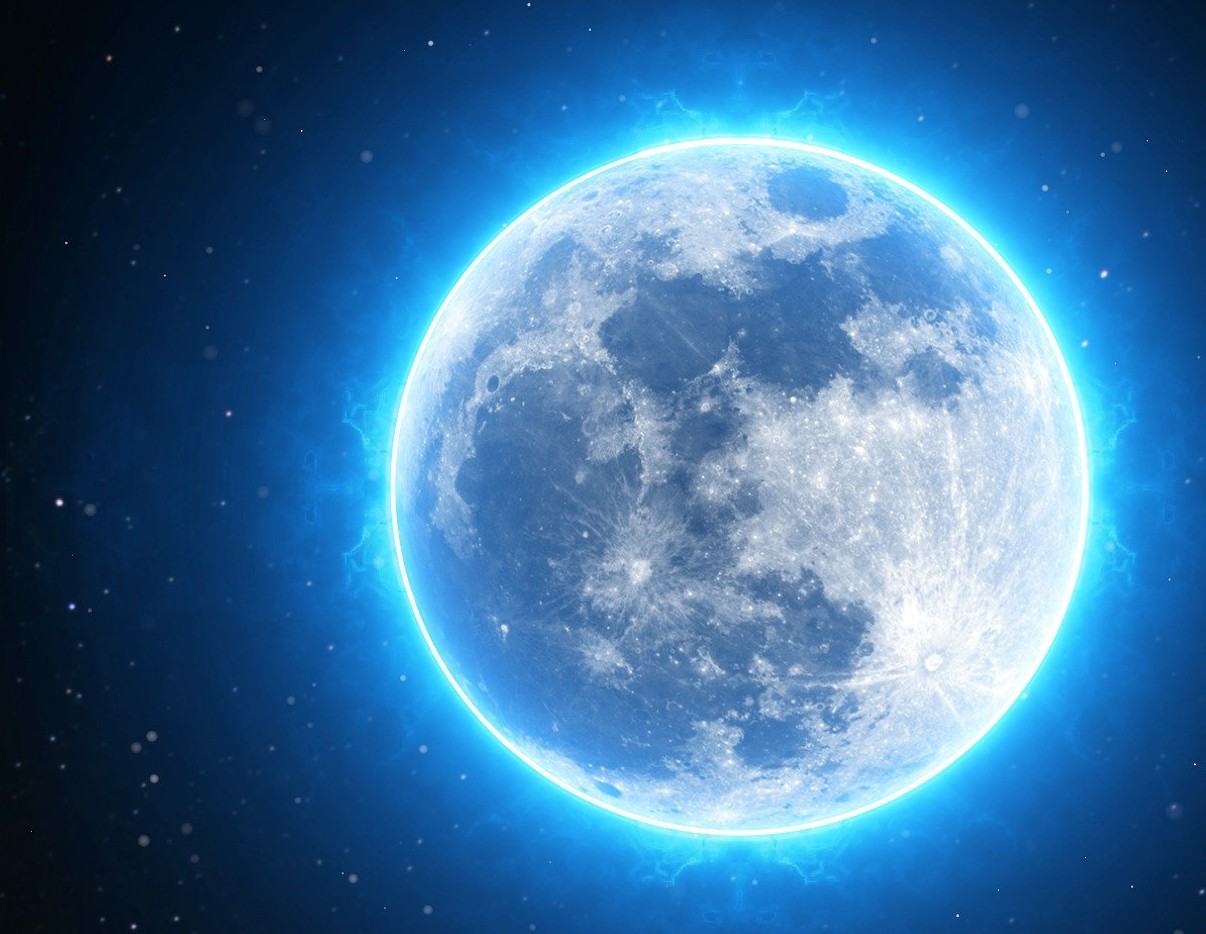 things, such as heal. (To understand the following quotation, you need to know a bit about the paqo he uses as an example: don Andres Espinosa. He was deceased by the time of our interview, but had been one of the top Q’ero paqos. In fact, he was a rare kind of paqo—a chunpi paqo, which is a specialized kind of paqo known for having especially powerful healing skills.) Don Juan Pauqar Flores said, “The moon has k’ara. The apus have k’ara, and by calling the k’ara of an apu you can heal a person. Don Andres Espinosa healed diseases by invoking the k’ara of the apu. The apu has more k’ara than a paqo. My master, Andres Espinosa, healed by invoking the k’ara of the condor and the apu. But I do not believe that ordinary men have k’ara.” The other Q’ero paqos concurred: “Only great men [or women] have k’ara.”
 condors in the group do not. There was further disagreement about whether the k’ara of the condor apuchin glowed red or white (with white being the likely color). The k’ara as the visible energy of the apus comes in different colors, according to that apu’s “quality,” which we took to mean power. The highest quality energy is white, followed in descending order by red, yellow, and black. The k’ara of an apu also
 supernatural is inexcusable—it is “magical thinking.” Yet, I prefer to think of what is called the “supernatural” not as inexplicable but as anomalous. Something that is an anomaly deviates from the normal, known, or expected. Science itself progresses because of anomalies, which hover on the border of the known and unknown. They not only draw attention but often beg for explanation. Discoveries frequently are made because during an experiment some parameter deviates from the likely or expected result or range, and then the scientists engage their curiosity and keep probing. Sometimes that probing leads to a eureka moment—something that was formerly unknown becomes known. Over time, it may become accepted and even incorporated into the mainstream. What was once above or beyond nature reveals itself to be an aspect of nature.
 In fact, I cannot even call what mystics and shamans experience occasionally as “anomalous,” for the ways of the liminal realms—those “in-between” realms in which we most often work— may be mysterious but they are played out in what is our normal operating theater. Their liminal nature intersects with our more mundane world, so the separation between “there” and “here” eventually blurs. What appears to be a “magical” event to those who don’t know how to work or live in shamanic or mystical ways is considered more or less normal for those of who do.
 As an example of the universe “reaching out,” consider this example. I was talking the other day with a friend, recounting an experience of this sort that I had not thought about in decades. Back in the early 1990s, I was gathered with a small group of friends in a shamanic drumming circle. We each drummed and undertook a shamanic journey. During mine, at one point, apropos of nothing, I heard the “message” that I needed to acquire the feather of a sandhill crane. What? I wondered if there was such a creature and, if there was, why I needed one its feathers. After the circle, we gathered to share a meal, and during conversation I mentioned that I had received this “message.” The man whose house we were at listened, got up and left the room, and a few minutes later came back with a tawny-colored feather about ten inches long. It was a sandhill crane feather, and without a word he handed it to me as a gift.
 world. We then might begin to loosen those restrictions. We previously may have attached to the belief that such experiences are random events from which we, in our illogic and scientific naiveté, are assigning a superstitious meaning. From our family, religion, science, education, society, and culture, we absorbed the idea that rationality and logic are among the highest of human qualities. They told us (and many continue to tell us) that belief in the liminal is magical thinking. However, when we expand our awareness and begin to experience the liminal, we soften the hold of such restrictive beliefs. We make room for curiosity. We could retreat almost immediately into denial of our experiences, but most of us become intensely curious.
 which many contemporary scientists do not). How we self-regulate places us on a “stair” or “level” of the qanchispatañan.
 Quechua word that means “to be.” Kanay is the capacity of knowing who we are and who we have the potential to become if we choose to grow into the fullness of our humanness.
 Seed—it also encodes our metaphysical self and is equivalent to our Spirit. At the moment we are conceived, we are created both from the DNA of our parents and from the energy of Spirit, or for convenience’s sake what I will call God. As don Juan terms it, we are a “Drop of the Mystery.” Literally, whatever “God” or “Creator” is—everything that It is—is held in potential within our Inka Seed. I express the promise of this aspect of the tradition by quoting Sri Aurobindo, who was the developer of Integral Yoga. He said that we humans are where “God-Spirit meets God-matter” and “divinity is in the body.” Through the Inka Seed, we literally are God-Spirit in the flesh, for the Andean mystical tradition tells us that the full expression of our humanness is to express God-like capacities while in the body and in this world.
 and power of the physical and metaphysical expression of ourselves.
 Q'enti Wasi - House of the Hummingbird