
During a recent ice storm, I spent my time housebound revisiting old transcripts of private conversations, small group discussions, and early classes with don Juan Nuñez del Prado. Within these folders was a trove of insights into hucha mikhuy (also spelled hucha miqhuy), which inspired me to compile and share these teachings with you. (You might also want to revisit last month’s blog post in which I discuss the basics of hucha mikhuy.)
Hucha mikhuy is an advanced technique used to transform or release hucha, or heavy energy. It is applied in three ways:
- Self-Refinement: Transforming our own accumulated heavy energy.
- Service to Others: Clearing hucha for the benefit of another person.
- Relational Empowerment: Refining the energetic flow between ourselves and others to reduce any hucha within a relationship.
Regardless of how we apply this energy “tool”—as don Juan calls it—the core process remains the same. We draw the hucha into the qosqo ñawi (the mystical eye or energy center at the navel/belly), intending for our spiritual stomach to “digest” the heaviness. The key to successful digestion lies in perceiving how the incoming stream of hucha transforms as it enters the qosqo and the digestion process begins: The single stream of hucha splits into two distinct flows. A portion of the hucha is accelerated back to its natural state of sami (light living energy). This refined energy diverges from the main stream of hucha and flows upward through the body, empowering us. The remaining hucha, which is not digested, flows down into Mother Earth, who graciously receives and expertly transforms it.
Through this practice, we truly come to understand that hucha is a kind of “food” for us and for Mother Earth. Don Juan beautifully explains this reciprocal relationship: “Mother Earth is a co-creator with the cosmos. She propels our evolution. Everything is sami, and only human beings create hucha. She recycles our hucha, which propels us forward. She feeds us sami as a kind of food and we feed her hucha, which is food for her. This is ayni, sacred reciprocity. When we do hucha mikhuy, we are following her example. She is the master at recycling things, and with hucha mikhuy we learn to recycle energy as Mother Earth does. Hucha mikhuy increases our sami: with the self, our relations to others, and the world. We become Mother Earth’s ally, helping her to digest human beings’ heavy energy. When we are digesting heavy energy in a relationship or for another person, we are doing three things: first we are giving food to Mother Earth. She is the best at hucha mikhuy, and she loves hucha! Second, we are clearing some of the other person’s hucha, helping that person. Third, we are empowering ourselves. There is a big impact because we are doing three things at the same time as we digest heavy energy.”
Don Juan further explained the ayni dynamic this way: “We don’t have Ten Commandments in this tradition. We have only one commandment, and it is ayni. If you receive something, you must give something. It is the moral rule to share. You have the right to increase your personal power, but if you do, you also must share your power with other people. We are not looking just to accumulate power; we are looking to share it. You know, there is nothing heavy about money, about accumulating a lot of money, if you share it with others who need it. In our Westernized cultures, we sometimes want money just to have money, and the more, the better! But in the Andes, we share what we accumulate. This is the law of ayni.”
Hucha mikhuy, don Juan says, is a “spiritual tool, and so it is a matter of training.” It is considered an advanced energy practice, and so there is a protocol for learning it. When don Benito Qoriwaman taught hucha mikhuy to don Juan, he explained this step-by-step sequence, and we would all do well to follow it. First, we work on ourselves, and to do that we must hone our ability to perceive energy. Energy is always coming toward us and through us, and we want to learn to perceive energy as it touches the “skin” of our poq’po, or energy bubble. Our poq’po, according to don Juan, “is sensitive, just like the skin of our body is. If you touch the skin on your arm, you will feel that touch. The poq’po has an outer boundary, which we can think of as its own kind of skin. When energy flows meet it, they are like fingers touching the skin of our body. We are sensitive to that energy having touched us. It might take practice to develop that level of sensitivity to energy, but like anything else, with practice we will develop the ability to do just that.”
Once we are adept at perceiving energy flows, we move to the next step in learning hucha mikhuy: mastering control of the mystical eye (qosqo ñawi) at our belly (qosqo). Don Juan explains, “You must learn to work with your qosqo, which is your spiritual stomach. You will feel how you can open and close your qosqo ñawi, the ‘eye’ or energy center there. You must learn to use this ñawi like the diaphragm of a camera. You don’t start with your qosqo ñawi wide open. You open it only a little. And then as the energy flows in you will feel something like a finger touching you. In the beginning, you may only feel a little flow of hucha into the qosqo. Then you use intention to open the qosqo ñawi more, and you will feel the periphery of the ñawi enlarging. Once you learn to control your qosqo ñawi, then you learn how to digest, to use your spiritual stomach. You just command it to digest, and it will do it! You will feel the flow of hucha coming into the qosqo and split into two streams: one of sami flowing up and one of undigested hucha flowing down. That’s it! Don’t overthink it. Just trust that your spiritual stomach knows what to do.”
To understand the energy dynamic, we must remember that hucha is simply slow sami (light living energy). As the hucha is digested in our spiritual stomach, some of the hucha is sped back up to its natural state and some it will resist transformation. Hence, the split flow of sami moving up and into us and hucha moving down to Mother Earth. That double flow is a key characteristic of “digesting” hucha. Don Juan says, “If you do not feel the split stream, then you are not digesting. So, you just stop, and you can try again another time.”
As an aside: If you are like me, sometimes you will not feel the split stream. When that happens, I don’t stop the hucha mikhuy session, because I trust my spiritual stomach more than my own perceptual sensitivity! Some days I simply am more perceptual than others. As don Juan said, our qosqo knows what to do, and I take that literally.
Once we know how to do hucha mikhuy, the learning protocol continues by working with varying degrees of hucha. “Don’t rush,” don Juan says. “Follow the teaching. Practice. Learn step by step. First learn to perceive your bubble and energy flows, and then your qosqo ñawi. Learn how to open and close that ñawi. Then learn to digest your own heavy energy, the hucha on the surface of your poq’po. When you know how to do that for yourself, you will know how to do it for another person. Start by processing the hucha of a person close to you, someone who is neutral in your relations with them or who you feel you have only a little hucha with. Then move to a person who is heavier, where your relationship is a bit uglier. Once you master the technique, it is a tool to use with a person who is ugly, who is heavy or heavy in their dealings with you. But do not go there first! You take it a step at a time.”
When learning hucha mikhuy, students commonly ask if there is any danger of taking in too much hucha, and, if so, if that can be harmful. The answer to both concerns is “No.” The worst that can happen is that we will not be able to digest the energy, and so we simply stop the practice. Don Juan reminds us that “when dealing with hucha, you are not touching something dark or negative. You are dealing with something heavy. Think of trying to lift a heavy stone in your yard and you cannot, and that is all that will happen—you cannot! So you stop trying, and come back to it later.”
As counterintuitive as it seems, any discomfort we might experience during hucha mikhuy is not from taking in hucha (even the heaviest of hucha), but from accumulating too much sami in our body and poq’po. “When you are digesting a lot of hucha,” don Juan explains, “you will be taking a lot of sami up and into yourself. So, sometimes you might feel a little too full, a little dizzy or something, like when you drink too much alcohol! You don’t have to stop digesting the hucha. Just send some of that sami up out of the top of your head and to someone who can use more sami. Share it! Then you will feel better, and through ayni you are putting some sami in the bank. If you send sami to someone who needs it, it doesn’t stop there. Maybe one day you will find yourself in a situation where you need more energy and you don’t have it. Then you can ask for it, and you will receive it. The living universe will know how you shared and it will send some extra sami to you. You can ask for it and receive it!”
 excited the anthropologists who were there. They had not heard this term before, and so they probed the Q’ero for more information. What we learned is that they make a distinction between two energies in a person’s or spirit being’s energy body: k’ara and sami. In this post, we take a deep dive into k’ara and its significance.
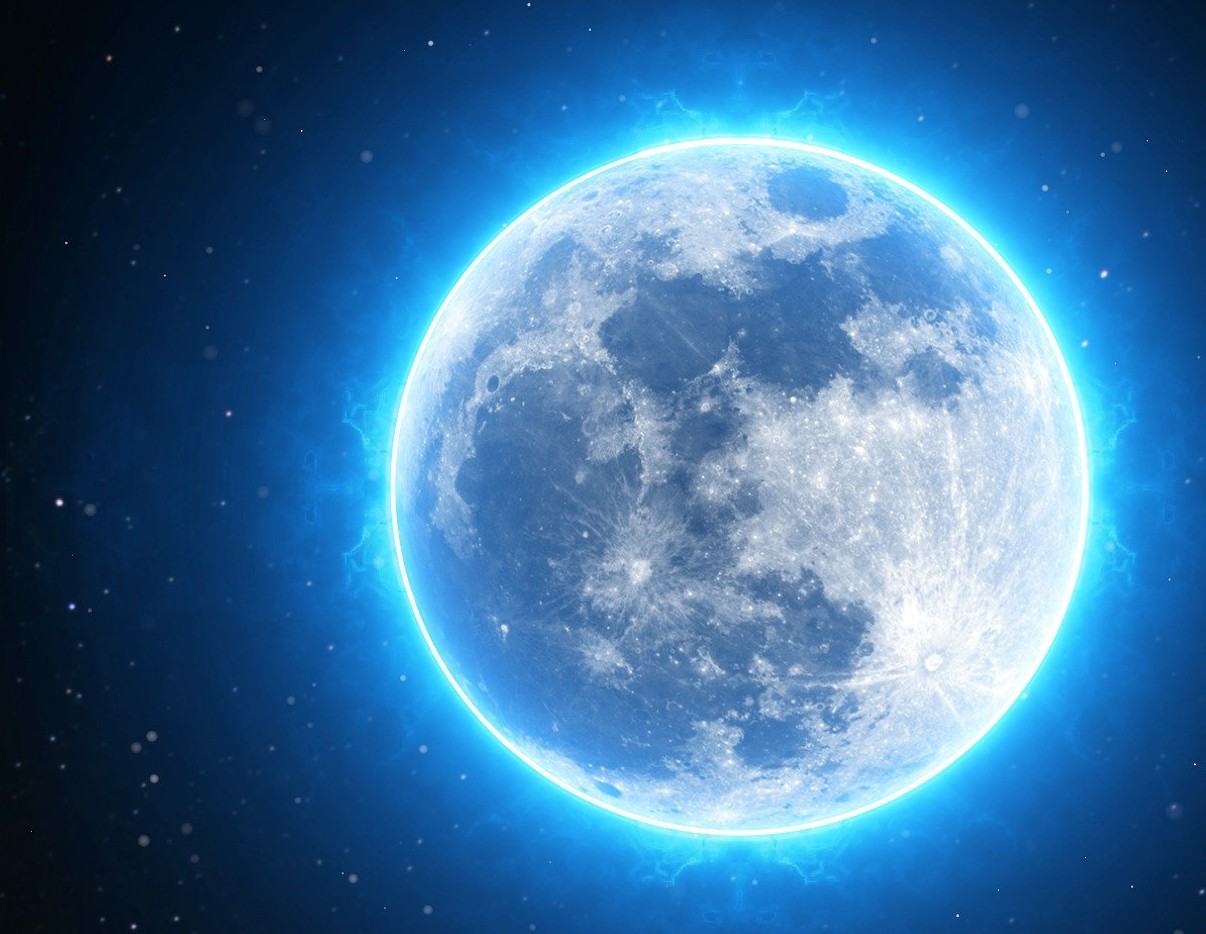 things, such as heal. (To understand the following quotation, you need to know a bit about the paqo he uses as an example: don Andres Espinosa. He was deceased by the time of our interview, but had been one of the top Q’ero paqos. In fact, he was a rare kind of paqo—a chunpi paqo, which is a specialized kind of paqo known for having especially powerful healing skills.) Don Juan Pauqar Flores said, “The moon has k’ara. The apus have k’ara, and by calling the k’ara of an apu you can heal a person. Don Andres Espinosa healed diseases by invoking the k’ara of the apu. The apu has more k’ara than a paqo. My master, Andres Espinosa, healed by invoking the k’ara of the condor and the apu. But I do not believe that ordinary men have k’ara.” The other Q’ero paqos concurred: “Only great men [or women] have k’ara.”
 condors in the group do not. There was further disagreement about whether the k’ara of the condor apuchin glowed red or white (with white being the likely color). The k’ara as the visible energy of the apus comes in different colors, according to that apu’s “quality,” which we took to mean power. The highest quality energy is white, followed in descending order by red, yellow, and black. The k’ara of an apu also
 Q'enti Wasi - House of the Hummingbird