Beyond the Mirror: Perceiving Spirit and Nature Beings

“. . . with an eye made quiet by the power
Of harmony, and the deep power of joy,
We see into the life of things.”

                                        —  William Wordsworth, “Lines Composed a Few Miles above Tintern Abbey” 

My guess is that most people who practice shamanism or mysticism would have no objection to my adding another line to this stanza of Wordsworth’s poem: “And they see into us.” The Andeans tell us that everything is a “being,” so if we see into the life of all the things of this world, they see into us as well. In the Andean mystical tradition, this reciprocity is called ayni.

Ayni is neither transactional nor casual. It is about seeing into the heart of another being, whether that is a human being, tree, or mountain. We see through our mystical vision and connect through our feelings—in the Andean way through munay, or conscious caring or even love. Wordsworth description of an “eye made quiet by the power of harmony, and the deep power of joy” is a beautiful rendering of the energetics of ayni. He speaks of a perceptual connection that is conscious, humble, respectful, and curious.

Continuing with my blog posts about mystical abilities both within and outside of the Andean cosmosvision, developing this quality of perception into the “life of things” is of paramount importance. A core goal of many types of mystical practices is to develop a perception that can look into the life of things, achieving a direct, unmediated connection to the physical and non-physical reality of this world. This kind of awareness, this contact, is a verifiable reality for mystical practitioners. But is truly unmediated awareness possible?

I believe it is, but only rarely. For most of us, most of the time, the answer is no. This is the great paradox of mystical perception: Our “seeing into the life of things” is, overwhelmingly, an act of seeing ourselves reflected in the things we observe. Our human brain is hard-wired with a perceptual habit to anthropomorphize—to project human abilities, behaviors, emotions, and qualities onto non-human beings. For many scientists, especially evolutionary biologists, we are structurally incapable of doing otherwise. As Reza Aslan writes in God: A Human History: “We are . . . evolutionarily adapted to implant our own beliefs and desires, our own mental and psychological states, our own souls, in other beings, whether they are human or not.” (Italics in original.) We are the ultimate mediator. Our personal experience is the lens through which we apply meaning to the entire universe, blurring the line between pure observation and self-projection.

Let us drill down into a few of the profound implications of anthropomorphization: of projecting human traits onto spirit and nature beings. The core philosophical challenge is the limits of knowledge. We must confront the fact that we can only ever know our perception of the world, not the world itself. While mysticism suggests that everything is connected—for example, that knowing a tree is a deep-down way of knowing ourselves—moments of such “at-one-ment” are exceptional. More commonly, our connections with non-human beings are exchanges that reveal more about ourselves than them. Despite how mystical training can increase our capacity to sense and apprehend non-human beings, I am suggesting that most of the time we cannot know their true nature beyond the lens of our own projection.

As meaning-making creatures, our human perspective is the absolute starting and ending point of all sense-making. Even in moments of perceived reciprocity with a spirit or nature being—when we hear them speak or feel a shared emotional connection—it is impossible to know if the dialogue or feeling originates from the non-human entity or if it is mostly or entirely self-constructed. The mere act of hearing a tree “talk” is, by definition, an anthropomorphism.

Given this limitation, perhaps the term that best defines mysticism is “preternatural.” In its more theological and philosophical definitions, it refers to our apprehension of spirit or nature beings as unexplainable and unverifiable independent of our own minds. That said, mystical experiences are not intellectual; they are phenomenological. Their reality is undeniable to the experiencer, but their meaning and value are inherently personal, determined by our own state of consciousness, feelings, and beliefs.

This dependence on the self does not diminish the worth of mystical encounters, but it requires that we approach them with qaway. This Andean mystical capacity helps us see reality as it “really” is, forcing us to acknowledge the predominant energy dynamic: the inherent tendency to overlay our humanness onto everything. Poetry best captures the essence of this point. Wallace Stevens’s “Tea at the Palace of Hoon” explores the fluid boundary between the inner and the outer, showing how self-realization stems from our own conscious, creative power to shape ourselves through shaping the world: “I was the world in which I walked, and what I saw / Or heard or felt came not but from myself; / And there I found myself more truly and more strange.”

Given the inherent limitations of the human perspective, how can we approach mystical communion with spirit and nature beings with less self-projection? How might we achieve greater comfort with the fact that although these entities may possess some measure of consciousness, they may or may not be aware of or even much interested in human beings? While mysticism holds that we and they are expressions of a larger, interconnected web of being, or likely of an uncharacterizable One Consciousness, the question remains: How do we respect that their conscious existence might be profoundly different from our own? Here are three suggestions for easing ourselves into this frame of reference.

Release Agendas

Observe, connect, and be in union with non-human beings free from the expectation that they can, will, or want to act on our behalf. When we seek out connection mostly to have personal needs or wants met (e.g., insight, problem-solving, learning)—or even when we approach making a connection so we can have an “experience”—we are centering the interaction around ourselves. We are being more transactional than we are genuinely reciprocal. We are in danger of making ourselves dominant and even superior to the nature or spirit being. We don’t know the Mind of God, but it is likely that nature and other kinds of spirits do not exist to bring us pleasure or to serve our needs. We are certainly free to ask for counsel or guidance, and our experience tells us that they do assist us. But we must remain aware that the tree, mountain, or other non-human entity is under no obligation to assist, may not be able to assist, and even may be entirely indifferent to us. It is far more likely that what we “receive” from our connection to a spirit or nature being is an opportunity to listen to the voice of our own unconscious—to our own inner knowing, and even inner wisdom. At the very least, we must remain aware that the nature or spirit being may be functioning more as a mirror than as a human-like problem solver or teacher.

Allow Nature to Reveal Itself

Mystically, everything is a being and possesses some measure of consciousness, although not necessarily one resembling human consciousness. Nature may be a teacher (a metaphor), and if we approach a plant, for example, with an openness to receiving its true nature, sometimes information may be exchanged in ways that are currently unknowable. We might receive the inspiration that this plant, when prepared as a tea, aids human digestion or relieves pain. The key is the shift in approach: We do not approach it with an expectation that it will reveal its “secrets.” Instead, we approach it with respect and humility, simply seeking to know it as itself. Sometimes, from that pure knowing, insights into how the plant can serve our needs will spontaneously arise. The crucial attitudinal difference is that this is not an “ask,” but a reverent connection from which a “receiving” may sometimes emerge.

Honor Selflessly

It is a common spiritual or sacred practice to make offerings—such a sage or tobacco, or in the Andean tradition a despacho—to Nature or specific nature or spirit beings. Usually, we do that as an act of ayni (reciprocity): an offering precedes a request or is an expression of gratitude for the fulfillment of a request. While the act of making an offering embodies our respect, we must guard again allowing a genuine feeling to become merely performative. Too often, a ritual becomes centered on the one saying “Thank You” rather than on the one who is due the thanks. The energy dynamic of projection is subtle: In the act of honoring, we can easily connect more with ourselves than with the being. I am making this offering. I am giving thanks. Genuine honoring is a selfless form of connection; it is a way of connecting that moves us beyond the ego.

Trees, mountains, rivers—they existed for millions of years before human beings did. Even if mystically we acknowledge that they have their own kind of consciousness and intelligence, their form of “beingness” is fundamentally unknowable to us. As ancient entities, their lifespans extend across time scales we cannot possibly imagine. Their form of consciousness may have evolved in radically different ways than ours and may take forms bizarrely distinct from human thought. Very simply, they are highly unlikely to be humanlike.

Perhaps a river’s reason for being is simply to flow. A star’s is to shine. A mountain’s is to rise. That is enough; they do not require any more purpose.

They know their own true nature. If we desire genuine mystical connection, these admissions are necessary. Releasing our human projections frees us to be our authentic selves, and allows them to be authentically theirs. This respect for their profound autonomy is the minimal starting point for establishing an ayni connection with spirit and nature beings.

A Mystic’s Sense of Wonder

What are mystical sensibilities? A core one is to perceive and feel the sacred in the mundane—to find the joyous and even the miraculous in the everyday. For the rest of this year, I will be exploring how we can cultivate various mystical sensibilities, starting with the simple, profound act of wonder. As Emily Dickinson writes, “Tell all the truth but tell it slant— / Success in circuit lies.” Her words are a reminder that wonder, like truth, often comes to awareness subtly and obliquely. As she says of truth, wonder might “dazzle us gradually.” While wonder can strike unbidden, more often it is a sensibility we actively choose to develop.

The word “wonder” has two core forms and meanings. As a verb, it means to think about, speculate, be curious. As a noun it means to be astonished by or marvel at something. Many of us begin our mystical pursuits because we are curious about aspects of the world that fall outside of consensus or scientific reality. We are keen to experience the supernatural, witness the unusual, touch or be touched by the magical. So, where do we start? Right where we are. As poet E.B. White advised, the key is to “always be on the lookout for the presence of wonder.” It is good advice. And it is confirmed by generations of wisdom-keepers from a variety of cultures and spiritual traditions who tells us that wonder starts when our attention and awareness are focused on the here and now, particularly on the mundanities of life.

How often do we truly notice the world around us? Williams Carlos Williams’s most famous poem may be “The Red Wheelbarrow,” which although rife with layers of meaning, on its face asks us to simply notice the thereness, the beingness of what is in front on us. In this case it is a well-used wheelbarrow sitting in a barnyard in the rain: “So much depends/ upon / the red wheelbarrow / glazed with rain / water/ beside the white / chickens.” Instead of overlooking the familiar wheelbarrow, if we bring it into awareness, we appreciate its centrality to the harmony of the universe as a farm. From the way Williams deliberately breaks the lines of this poem, we also are asked to notice the rain itself and the chickens, things that normally do not catch our attention but that possess their own kind of marvelousness.

How much we overlook in our everyday lives! Is not the weed that sprouts in the crack in the cement a testament to the ferocity and fecundity of life? Is not the hammock strung between the trees the holder of sweet memories of lazy days and daydreams? When we pay attention, not all of what we perceive is pleasant but still may be profound. Is not the dumpster stuffed to overflowing with trash bags and household cast-offs a container for our causal and even thoughtless relationship to abundance, our voracious appetites, our aloofness to frugality?

When that dumpster image came to me, I almost immediately rejected it, because, really, how can trash provoke a sense of wonder? Then I discovered A.R. Ammons’s monumental book-length poem “Garbage.” He set me straight! He writes, “. . . the bulldozer man picks up a red bottle that / turns purple and green in the light and pours / out a few drops of stale wine, and yellow jackets / burr in the bottle, sung drunk, the singing / not even puzzled when he tosses the bottle way / down the slopes, the still air being flown / in the bottle even as the bottle / dives through / the air! the bulldozer man thinks about that / and concludes that everything is marvelous, what / he should conclude and what everything is: on / the deepdown slopes, he realizes, the light / inside the bottle will, over the weeks, change / the yellow jackets, unharmed, having left lost, / not an aromatic vapor of wine left, the air / percolating into and out of the neck as the sun’s heat rises and falls: all is one, one all: / hallelujah: he gets back up on his bulldozer / and shaking his locks backs the bulldozer up.”

If we have the eyes to see and the heart to feel, wonder may erupt out of the background noise of nature and life and crack us open. I recently experienced the unbidden arrival of such beauty. Last spring, I was sitting in my screened porch drinking my morning coffee when a single bird sang beauty into existence. What usually captured my attention were the green fields, the massive century-old oak trees across the fields, the rising sun. And when I think of wonder and birds, I own my bias toward the hummingbirds, hawks, and owls that I share this land with. But this! A song I had not heard before from some kind of bird unknown to me. It was a wonder! Even as other birds began to sing the same song, this bird stood out; it was the Bocelli of this flock. A capella simplicity, clarity, and purity—the closest sound to angelic I had ever heard. I felt I was in the presence of the holy; that I was being infused with the holy. Morning after morning, this wonder repeated: a single bird’s song like a prayer offered to the sunrise, to the giant oaks, to the green intensity of the fields, and to me. It was a mystical experience made more profound because it was inseparable from the mundane, inserting itself into my routine: me sitting in my chair in a screened porch at sunrise sipping coffee. Then one morning nothing. As abruptly as it had arrived, this wonder of a song ceased. This bird and its mates had moved on. How I miss it! And how grateful I am that I was witness to it and in some way imprinted by it. I eventually identified the bird and its song via YouTube: a white-throated sparrow. Theirs is a rather pedestrian call. But not from this bird. Its variation was at a level of artistry far outside the norm. I can assure you that if you go online to hear the trill of the white-throated sparrow, you will find nothing that compares to the wonder of this one bird’s hymnal song.

It might seem cliché to suggest that we cultivate wonder as a mystical sensibility by appreciating the marvelous in the mundane and, more importantly, feeling that marvelousness. Wonder is more of the body than the mind, and there is  nothing cliché about experiencing it. As poet Mary Oliver declares in “The Plum Trees,” “. . .Joy / is a taste before / it’s anything else, and the body / can lounge for hours devouring / the important moments. Listen / the only way / to tempt happiness into your mind is by taking it / into the body first, like small / wild plums.” She asserts this truth again in “The Roses,” “. . . there is no end / believe me! to the inventions of summer, / to the happiness your body / is willing to bear.”

Many of us have lost our childlike capacity for wonder. So, when we are adults, sometimes it takes a child to be our teacher. I remember a lesson I received while visiting some friends. I was drawing with their daughter, who had several severe developmental challenges. We were sprawled on the floor; we each had a huge sheet of paper and a plastic bucket crammed with crayons. When she finished her drawing, she tugged on my sleeve to show it to me. There across the top was a narrow horizontal swath of blue sky. Most of the paper was blank, until down along the bottom was an equally skimpy swath of green grass and two stick figures: her and me. I was taking it all in, so I did not immediately comment. And I admit that my attention was on the blank expanse of the paper. Then our eyes met, and without giving me a chance to speak, she said, “Don’t worry. We’re closer to the sky than you may think.” Whoa! I could not have been more surprised, nor more humbled, if a wizard had hit me upside the head!

William Wordsworth reminds us of the importance of cultivating a childlike wonder (“Ode: Intimations of Immortality from Recollections of Early Childhood”): “There was a time when meadow, grove, and stream, / The earth, and every common sight, / To me did seem / Apparelled in celestial light, / The glory and the freshness of a dream.” When was the last time you felt like this? That the common things are harbingers of delight? That the mundane is magical, such that a simple pine tree can sweeten your body; a white iris can beautify you? (Paraphrase from Wallace Stevens’s “In the Carolinas.”) When was the last time your everyday surroundings and the activities of your common life felt fresh and glorious?

How easy it is to take our lives for granted. It took a friend to remind me that I was so busy, I was missing my life. How about you? Shall this blog post be a wake-up call—a friend’s gentle reminder to take a break from all the “doing” and refocus on “being”? For to choose wonder—to notice the marvelous and even the divine in the everyday—is to choose everything important.

The Yanantin of the Solstice

Many of us soon will be marking the solstice, a day when the “sun stands still.” This literally is the meaning of the two Latin roots from which the word “solstice” comes. There are a multitude of Sun winter-Petra - Pixabay -3323879_1280ceremonies being held for the solstice, both for marking the start of winter and honoring this as the day of the year with the longest period of darkness. We see this solstice as a metaphor for going deeply within and emerging anew—as a kind of shamanic or spiritual journey of death and rebirth. Our metaphor is based on ancient metaphoric overlays, such as the winter solstice marking the death of the sun and its almost immediate resurrection. We connect it with the rhythms of nature, especially with plants that go dormant or animals that hibernate, experiencing a physical cessation of outward activity even while within they are recharging themselves for reentry into life.
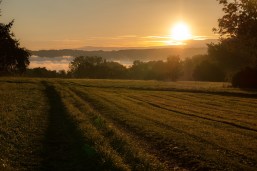
But the “sun standing still” cannot be understood in a singular way. A solstice is a yanantin event: what for some people is a descent into darkness is for others an emergence into the light.

I think many of us forget that a solstice is the same event with completely different effects (and meanings and metaphoric overlays) depending on where you are in relation to the sun. A solstice marks the exact moment when half of the Earth is tilted the farthest away from the sun. At that same moment, half theSunrise-Thomas Picabay 954604_1280 Earth is tilted closer to the sun. So, for those of us living in the Northern Hemisphere where the tilt is away from the sun, the December solstice marks the first day of winter and is the day with the longest period of darkness. But for those in the Southern Hemisphere, who are tilted toward the sun, this solstice marks the first day of summer and is the day with the longest period of daylight.

Yanantin is a relationship of two dissimilar but complementary energies, entities, or characteristics. Light and dark. Up and down. In and out. Love and hate. Joy and sorrow. Body and spirit. Each aspect of the duality maintains its innate individual character, while together they make up a unified whole, usually a whole that is greater than the sum of the parts. The challenge when experiencing a yanantin is perceiving the unity within the apparent duality. That unity is the japu (Quechua), or the harmonious relationship of the two different aspects into a singular wholeness without subtracting anything from the completeness of each of the two energies. As writer Alan Watts says, and I think as most paqos would agree, “Every explicit duality is an implicit unity.”

The yanantin nature of a solstice is a reminder of how so much of the Pachamama—in this context meaning the entire physical world or cosmos—is comprised of yanantins. There are the distinctly physical yanantins, such as the juxtaposition of light and darkness at a solstice or the great ayni and yanantin of birth and death. And there are the distinctly human ones, such as feeling both the joys and pains of life or of our capacity to be both kind and cruel. We are yanantin beings both physically and psychologically (and in many other ways). I concur with screenwriter Joss Whedon’s opinion that “to accept duality is to earn identity.”

The core duality in relation to having identity is the distinction of self and other. For example, we negotiate the twin impulses of knowing and living as our authentic selves and of blending our sense of beingness into a shared communal identify. That yanantin is the motto on US currency: E pluribus unum: out of many, one. That is an ideal—a statement of a japu—and it is, of course, still an aspiration in the puzzle-Piro - Pixabay 3476931_1280United States. But it does remind us of another important yanantin—that the world is both “out there” and “in here.” Each of us chooses how to be in the world, and the state of the world is the way we present our combined individual selves as a collective.
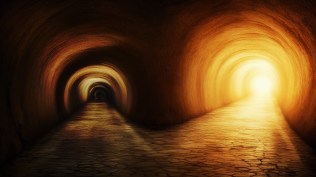
At the risk of stating the obvious, if we don’t like the state of the world out there, because of the nature of the yanantin we must look within ourselves to find the causes and to make the requisite changes. The state of the world—our collective expression—reflects our individual yanantin energies: we each are both light and dark, both sami and hucha, both beatific and horrific, both awake and asleep. Just as the solstice is both a period of long darkness and of long light depending on where we are on the Earth, each of us is both long in darkness and long in light, depending on the state of our inner “tilt.”

What are we tilted toward and away from? Our inner sun is the integrated Inka Seed (what we might call our drop of Creator or divine spirit) and sonqo ñawi (the energetic seat of our feelings, especially our capacity for love/munay). Together, these are the center of our mystical selves, and they are comprised only of sami, the light living energy, the most refined frequency of kawsay, which is the life-force energy. The Inka Seed and sonqo ñawi have no hucha—they never produce any heavy living energy, which is slow or sluggish sami/life force. Thus, when these two aspects of ourselves are integrated, they act like our “inner sun,” illuminating our sense of self and together generating our capacity for “identity.” One of the terms in Quechua for this identity is kanay, which roughly translates to “I am,” although it is imbued with the energy of the unfolding self, with the process of becoming who we “really” are. When we achieve kanay, we say that we not only know who we are but we also have the clarity of vision and the personal will to liveOpposites dark light tunnel-Joe Pixabay 7484734_1920 as who we are (rather than as how our culture or others see us or want us to be).

I hope you will notice that when I ask “what are we tilted toward and away from?” I used the conjunction “and” instead of “or.” We are simultaneously partially in touch with and screened from our kanay. None of us are fully developed human beings, what in the tradition we would call beings of the sixth-level of consciousness, which is the level of the enlightened ones. At the sixth level we have reached japu (inner unity), but until then we are struggling to harmonize our yanantin aspects. The dual aspect of a solstice—where half the world is experiencing the darkest day of the year and the other half of the world is experiencing the brightest day of the year—is an apt metaphor for our yanantin inner world. The japu is that this yanantin it is all about the sun, which is always and only a source of light, although when it is screened, we experience shadow and even darkness. When in the shadows, we might forget that darkness is only possible if there is first a continual, stable light source.

The Inkas were the Children of the Sun, but for those of us on the Andean path today, it is not the physical outer sun that concerns us, but our inner light—our sami, which is the light living energy. As less than enlightened human beings, we have put up screens and filters around our Inka Seed so that our kanay energy is diminished or partially deflected, or even stalled or blocked. Einstein said that nothing happens until something moves. So, at this solstice, during this fleeting moment of “standing still,” perhaps as part of our ceremony we might undertake a self-examination of the yanantin nature of ourselves and our lives so that we can work through our darkness and shine with our greater light.

Part of our self-inquiry might be asking the following questions: How far am I tilted toward the self-illumination provided by an integrated Inka Seed and sonqo? How far am I tilted away from acknowledging and taking responsibility for my hucha? What are the causes of these deviations from my center, and what would it take to realign myself or course correct? How do I choose to move into the next season of my life?

Acknowledging and taking responsibility for our hucha—for how we are slowing the flow of or even blocking the movement of our life-force energy—is a glorious endeavor, for it helps us realize that there is unlimited light living energy available to us and within us. Perhaps as we honor and mark the solstice this year, we could take speaker, author, and former pastor Rob Bell’s advice to heart: “Why blame the dark for being dark? It is far more helpful to ask why the light isn’t as bright as it could be.”