The Tukuy Hampeq: The Infallible Healer

Healing is a mystery. We don’t understand the human body, mind, emotions, or spirit. Yet no doubt each plays a role in healing. We don’t understand the nature of physical or metaphysical energy flows, yet each likely plays a role in healing. Whatever healing is, we can make a distinction between it and curing. Healing often means finding peace of mind with “what is,” which can range from physical or emotional limitations to impending death. Curing most often means turning a diseased body into a disease-free body. Yet these distinctions hardly matter, because we don’t fully understand either healing or curing.

In the Andean mystical tradition, paqos develop a range of mystical capacities and assist their communities in a variety of ways. At the top of the paqo hierarchy are the fourth-level alto mesayoqs, and one of their most consequential roles is as hampeqs (healers). Andean prophecy tells us the time is ripe for the emergence of a new level of healing mastery—that of the Inka Mallku, or fifth-level paqo. None has emerged as far as we know. And we would know—for a fifth-level paqo is a tukuy hampeq, a total healer. The astonishing capacity of tukuy hampeqs is infallible healing. With a touch of their hand, they cure every disease, ailment, and condition every time, without fail.

Paqos cannot train to be tukuy hampeqs. The karpay to the fifth level is said to be a transmission of energy directly from Taytanchis (God). Paqos become candidates for this karpay when they are tukuymunaynioqs, total masters of munay, which is defined as love under our will. This kind of love is not a feeling or an emotion—it is a power. And munay is the primary power for healing.

Although fifth-level healers have highly developed capacities for love, and so for healing, the tradition tells us that healing does not come from the paqos, but through them. Tukuy hampeqs channel the powers of Mama Allpa (Mother Earth), Pachamama (the Cosmic Mother), Pachatayta (Father Cosmos), and Taytanchis (the metaphysical God). They are channeling the combined energies of the four great Creators to activate the ill person’s own self-healing capacity. At least that is what the tradition suggests, although we have no idea what the actual mechanisms for healing are.

Tukuy hampeqs would appear to be performing miracles. Conventional medicine would call these healings “spontaneous remissions” of disease or, more cynically perhaps, the placebo effect. A less pejorative characterization might be “anomalous.” But these terms are at least half empty, because no one yet knows what causes a spontaneous remission or which psycho-biological processes are at play in the placebo response. Yet they happen. The same is true for energy or spiritual healing: although there are plenty of rigorous scientific studies and reams of anecdotal evidence supporting the reality of both, no one knows how they work.

I have spent time thinking about fifth-level healing, and although I have no experience of it and only a little knowledge about it, I do have speculations. From the little we know about tukuy hampeqs, I think it is fair to say they are performing a mast’ay: through just a touch they are reordering or restructuring the person’s body-mind. (More accurately, they channel the power of the four Creator powers mentioned above to reorganize the body.) When I wonder about what is being restructured, I think of Jungian analyst Robert Johnson’s description of psychological shadow work: there is nothing wrong with us, nothing to fix, there is only the right thing in the wrong place. Perhaps with their touch, tukuy hampeqs initiate a mast’ay such that everything in the body once again is in the “right” place and operates in the “right” way. Even though we don’t know how they might trigger the mast’ay, it seems reasonable that cells, organs, or biological processes that are dysfunctional somehow regain their normal, natural operations.

I lean toward this view because I have had my own experiences, few as they are, performing energy healings. In one case, after only two sessions there was an astounding result (to me, to the person on whom I was working, and to that person’s team of doctors). Some of my students also have shared the impressive, and in some cases astonishing, effects of their sessions. From their reports and my own experiences, I have come to believe, as many energy healers do, that a highly effective way of working with body-based illness is not to try to extract a disease or eradicate the “wrong things” (such as kill tumor cells). Instead, robust healing responses seem to occur more frequently when we marshal the life-forces of everything that is “right” in the body.  On a wave of munay, we broadcast energy and intentions to all the well-functioning aspects of the body, supercharging them to deliver whatever signals (biochemical, bioelectrical, ionic, and so on) that help dysfunctional neighboring cells, organs, or whatever “remember” how to be normal. We not only honor, but work with the intelligence of the body. The mast’ay is the restoration of the community—of the natural interdependence of cells, processes, signals, and such. Healing happens when the rogue elements that have split off from the community return to it. The word “healing,” after all, comes from an Old English root meaning “to make whole.”

Science slowly is validating the healing force of love and amassing persuasive support for energy healing approaches that emphasize a return to wholeness. In one laboratory study using different healing intentions on three lines of cultured tumor cells, the intention that most diminished their growth (by 39 percent) was “Return to the natural order and harmony of the normal cell line” (p. 268, Spontaneous Evolution, Bruce H. Lipton and Steve Bhaerman). Adding visual imagery to the intention doubled the effect. Many other laboratory studies, including those involving William Bengston, the author of The Energy Cure, have shown the same robust effects of what are variously called wholeness, coherence, or resonance healing intentions.

From his own experience with hands-on healing, Bengston believes we are not working directly with energies of the physical body, but within a unitive consciousness field: an energy-information field he calls “Source.” As he so artfully and succinctly puts it: “Consciousness has no plural.” He humbly admits he does not know what his own statement about Source means. Nor does he know what Source is. Nonetheless, he is sure that all he is doing is channeling Source energy. He uses a metaphor about traveling through this unitive field to explain what he thinks might be happening during an energy healing. His speculation dovetails with Robert Johnson’s analogy of psychological problems arising because the right things are in the wrong place. Bengston says, “When I am treating you, what I think of as my consciousness and what you think of as yours may be traveling through concurrent existences together. If mine is an experienced traveler, perhaps I can nudge yours into a place where your body would prefer to be . . . You may think I am changing something physical in you the way a doctor would, but maybe you get better because I take you to the right place . . .”

I was given a similar type of message from Q’ero paqo don Juan Paquar Flores, although the context had nothing to do with healing. Back in 1996, while I was conducting the interviews for my book about the paqos, don Juan pulled me aside to gift me a khuya (a stone or object charged with a particular intention.) He explained how it was to be used and then provided an invocation or prayer to say while using it. The invocation reminds me of Bengston’s idea of healing as travel through space-time (or consciousness). Don Juan’s invocation was translated from Quechua to English as “May the path that I walk be walked; may the words that I say be spoken; may the wish that I make be wished: that the walk that I do be done.”

Both Bengston’s form of traveling and don Juan’s prayer are imbued with two core Andean sensibilities. First, that space and time are energetically intertwined (or even a singular state within consciousness). And second, that consciousness (intention) influences or even directs energy. While channeling the four Creator powers, perhaps tukuy hampeqs have power over time itself (or the illusion of time). Through their touch the journey from illness to wellness happens in an instant. With a touch, “so it is.”

Currently, there are healers across the globe who occasionally display fifth-level abilities. Their rare successes are evidence that it is possible to heal with only a touch. William James, author of The Varieties of Religious Experience, has addressed the doubt of those who rely on inductive reasoning (think scientists!) to dismiss these experiences: all swans we have ever seen are white, so we can assume all swans everywhere are white­—until we see our first black swan. Still, we end where we began. We don’t know what energy healing is. We can do nothing but speculate about the mechanisms of infallible healing. However, Andean prophecy tells us the emergence of fifth-level healing abilities is imminent, so if we put our faith in that prophecy we may soon find out.

Wañuy: An Alternative Use

If you have taken the three-part Andean training with me, don Juan Nuñez del Prado or his son don Ivan, or other teachers trained by them, you will remember that as part of the Chaupi training we learn the practice of wañuy. This Quechua verb literally means “to die.” The practice is used to release any fear we have around our own physical mortality. When we release our hucha, or heavy energy, from around possible forms of our death, we can meet death as a friend. We can celebrate our return to our paqarina—our place of origin, which is with Taytanchis or God, or whatever term you choose to use for First Consciousness or Source.

The beauty and power of Andean practices are that they get to the fundamental dynamics of energy. They are not wholly dependent on form, nor are they restricted by a singular intent. So, while this is a practice used to prepare us for a conscious death, it may be used productively for other purposes. This blog post offers ways to adapt this practice to alleviate any fear, anxiety, or worry.

In the traditional practice, we start by initiating a saminchakuy, and we tune the sami to munay. We may do a general hucha-release of our wasi (poq’po and body), and take the munay through most of our mystical “eyes”—the ñawis—to release hucha from those in which it accumulates. (There is no hucha at the sonqo ñawi.) Then we choose a possible death, that is, we choose one way we think we may be likely to die. (Because there are so many possible ways we can “drop the body,” this is a practice that we do repeatedly.) We begin a visualization: a conscious, creative envisioning of the process of death. For the purposes of illustration, let’s say it is heart disease.  We move slowly from the present moment forward in time, feeling the impact of what unfolds: our initial diagnosis, our worsening state, our slow decline, our physical challenges or suffering, and such. There is no emotional avoidance. We immerse ourselves in the process. We engage our inner vision, our imagination, and, most importantly, our feelings. As we touch points of hucha, we release that heaviness into the saminchakuy stream of munay and give it to Mother Earth to transform.

In addition to releasing the hucha of our imagined physical and emotional decline, we may also become aware of the seqes—the energetic cords—that stubbornly attach us to our lives. We may struggle with letting go of our body. We may feel resistance to leaving our families and loved ones. We may face obstinate attachments to our status, achievements, money, or possessions. As we experience these resistances, we put any of that hucha into the saminchakuy flow as well. Eventually, when we feel as free of hucha as possible and we are ready to drop the body, we see ourselves do just that: our soul and spirit exit the body and we return “home.”

We are complete with the practice when we feel we have released our fears or hucha around that specific death scenario. Of course, we may have to do several sessions to achieve that level of personal freedom. Then we go on to deal with the next type of death we feel hucha around.

When I teach this practice, it is inevitable that some students feel resistance, or outright alarm. The most common questions are, “Isn’t doing this calling in that death? “Are we in danger of creating that reality?” No, we are not. I usually make two main points. First is the focus of our intent. We acknowledge that “energy follows intent” according to the Andean sacred arts. However, our intent is not to die or to die in any particular way, but to be free of fear about any possible way we may die whenever our life span is up. Our intent is hucha release—to be able to pass from this body with beauty infusing our souls whenever our death does occur and in whatever way it happens.

Second, we are giving ourselves a lot of credit if we think a half-hour visualization, despite how richly detailed and feeling-oriented it may be, will create reality. If that were the case, we would all be healthy, rich, famous, and sipping umbrella drinks on the beach of Waikiki. (Or whatever you feel the pinnacle of life looks like.) To be more realistic, we are a mess of contradictions, because our conscious and unconscious (shadow) are driving our energy moment to moment in conflicting ways, expressing our light and our darkness. We have a lot of hucha, which creates all kind of energetic filters that reduce our power. One relatively short visualization session is not going to cause us to acquire the coherence and personal power to call in any fixed version of reality. None of us (or at least no one I have heard of or know of) is free of power-reducing filters, and so none of us has mastered driving energy perfectly, such that a single visualization creates that reality.

Which is why, I like to think, the paqos in their wisdom designed a practice such as wañuy. It is a kind of hucha-filter cleaner or remover, one of many the tradition teaches. Although the paqos may have created the practice to help us deal with hucha around our mortality, I believe it can be adapted usefully to deal with many other common kinds of possible hucha, particularly fear, anxiety, and worry.

Let’s look at how we can adapt this practice to deal with those and similar kinds of issues. Let’s use one of the most common fears as our example: fear of public speaking. The way to adapt the process is to use it in a way that is similar to other forms of fear-reduction—desensitization. Wañuy does this in a purely energetic way, but I believe combining it with action out in the world is a way to supercharge its effects. Ayni, after all, is intention followed by action.

We would begin the way every wañuy session does: begin a saminchakuy, tune the sami to munay (love energy), and clear our wasi of as much hucha as possible. Then we begin the visualization. We move through it step by step, encompassing the entire process and releasing hucha related to any part of that process. We might begin by seeing ourselves accepting the invitation to deliver a speech, preparing the talk, researching and writing it, and then practicing it at home. We release any hucha into the stream of our saminchakuy. We continue by visualizing ourselves dressing to go deliver the talk, driving to the venue, being greeted by the host, seeing the audience as we walk onto the stage, being introduced, and then giving the talk. At every point where we feel hucha, we put it into the saminchakuy. The visualization process ends when we finish the talk and receive applause. We might have to do this process many times before we find our fear of even thinking about giving a public talk diminishing.

Sometimes we might not see results if we go right into visualizing the whole event. It is just too emotionally overwhelming. If that is the case, another way to use wañuy is to undertake, over time, a series of sessions that each desensitize us to portions of the process. We “chunk” the process and do as many sessions as necessary to clear hucha from one small part of the activity. Then we work on the next chunk of the process. And so on, until finally we can visualize the entire process without feeling any significant fear.

We can follow this protocol for any kind of hucha and emotional heaviness that has an unusually tight grip on us: anxiety, guilt, shame, worry, judgement, dislike of or shadow projection onto a person or group, shadow triggers . . . The paqos have provided us a way to release these kinds of emotional heaviness in a non-analytic, non-therapeutic way. Using wañuy, we are tuning ourselves purely energetically, although the effects reverberate through our emotional and physical selves.

Ideally, we will want to follow the release of our emotional heaviness with action in a way that tests the results out in the real world. While not everyone would follow up releasing their fear of public speaking by engaging in a public talk, we can easily find ways to put ourselves in similar situations and check in on whether we are indeed free of anxiety or fear. We might volunteer to give a presentation at work, or offer a toast or give a eulogy. In other, more concrete cases, such as a fear of elevators or snakes, we certainly can put our energy work to the test. We deliberately take an elevator or go to the zoo to see snakes. We might still feel nervous, but we ideally will be free of our normal anxiety or fear. If we find we are not, then we can always engage in further wañuy sessions.

We often don’t think of wañuy outside of the context for which it is used in our training. But it is a hugely adaptable practice that can be a powerful tool for helping us to stop avoiding aspects of the world and instead reengage with life in more expansive, confident ways.

The Yanantin of Yachay and Llank’ay

The Andean sacred tradition identifies three primary human powers. They are, in order of prioritization, munay (feelings), llank’ay (action), and yachay (knowledge). I find it interesting that although yachay is at the bottom of that hierarchy of three human powers, it is the first human power that we develop in our training. Our training begins with understanding the Andean cosmovision and energy dynamics, especially the core dynamic of ayni, or reciprocity.

From the Andean view, understanding fuels action. And through that action and the resulting experience, understanding deepens. We tend to translate yachay into English as knowledge, reason, logic, or understanding. However, for the Andeans, and specifically for the paqos, yachay has a more precise definition: our accumulated knowledge as gained through personal action, and thus through direct personal experience. Llank’ay, or action, is embedded in the very meaning of yachay, and vice versa.

In this way, yachay and llank’ay form a yanantin. A yanantin is a pairing of entities, items, or energies that appear to be oppositional or contradictory but are complementary. The two are relationally bound one to the other to create a unified whole, such as night and day, up and down, male and female. If we probe into the yachay and llank’ay human powers, we will see that everywhere in our work with the Andean sacred arts, they are yanantin in nature.

Our training usually begins with learning the core energy dynamic of ayni. In the larger Andean society, ayni is defined as reciprocity and explained using the phrase, “today for me, tomorrow for you.” It is the personal and social ethic of giving and receiving for mutual benefit. In the sacred arts, as in the social sphere, ayni means we do not just think about helping someone or promise that we will, we express our willingness and we follow through.

In the sacred arts, the meaning of ayni expands from a social energetic reciprocity with our fellow human beings to energetic reciprocity with nature, spirit beings, and the world of living energy. Ayni is a two-way flow of energy: a back-and-forth flow between the two entities. But it must be initiated by one of the parties to get the energy moving. That initiating dynamic is what we will look at here.

Our focused awareness—our intention—moves energy, or as don Juan Nuñez del Prado often phrases it, “drives the kawsay.” When he uses the word “drive,” he does not mean controlling energy or willfully forcing energy in one direction or another. Rather, he is suggesting only that our intention can influence energy, gently nudging it here and there in our favor. Despite the maxim that “energy must follow intention,” don Juan and the paqos tell us that intention by itself is not enough to drive ayni. We are not going to think (yachay) the living energy into partnering with us in this dance of ayni. We must act (llank’ay) as well. We want to move energy in an intentional way that is useful to us. This takes both yachay and llank’ay working in unison.

One way to view this yachay–llank’ay initiating dynamic is through the following sequence of practice. Ayni as “intention put into action” arises from feelings and will (with “will” meaning choice). Ayni as intention is informed by our sonqo ñawi (feelings, including munay), our Inka Seed (the seat of our will), and our siki ñawi—an energetic center, or “eye,” at the root of the body, where the capacity is atiy. Atiy is, among other things, how we measure our personal power. Checking in on our abilities through the siki ñawi, we ask, “Do I have the capacities available to realize my intention through action?” Asking and answering this question is process governed by yachay. If we believe we have sufficient personal power to achieve our intention, then we go to the qosqo ñawi, the mystical center at the belly. Ayni as action is influenced mostly by the qosqo ñawi. This is the energy center where we enlist our khuyay (passion, motivation) and follow through on our intention by taking action.

From this sequence, we can see how the prerequisite for engaging in ayni is a well-developed yachay: our knowledge about ourselves. We must be able to honestly assess the state of our feelings, will, atiy (capacities), khuyay (motivation) and karpay (amount of personal power). Ideally, through yachay we undertake a realistic, honest self-assessment. That assessment then determines whether we go on to initiate our llank’ay energy and take action.

This yanantin of yachay and llank’ay comes into play even when ayn is not involved: when, for example, we have a completely spontaneous energetic or mystical experience. During such an event, we will be fully immersed in it perceptually and viscerally; we will not be actively processing it intellectually or analytically. Doing so would keep us from fully experiencing it. Once the event is over, however, we might seek to understand its nature and value. If it has meaning for us, the lived experience itself and its meaning are incorporated into our yachay. Remember, yachay is knowledge gained through personal experience. So, that experience enlarges our yachay. This expanded yachay adds to our kanay—who we know ourselves to be— and increases our karpay—our persona power, which is our capacity to act in the world day by day, moment by moment.

Although yachay literally means to have knowledge of or to know, don Juan reminds us that it also means “to learn, to find out, to have skill, to realize, to have experience, to have wisdom.” Yachay as one of the three human powers is the capacity at the kunka ñawi, or the mystical eye at the throat. It is paired there with rimay: the power to communicate with honesty, integrity, and a sense of the sacred self. Rimay is entwined with our yachay and llank’ay: we express who we are because of what we have learned throughout our lives from our first-hand personal experiences. Ideally, over a lifetime of experience we move from knowledge to understanding to wisdom. Part of what Andean pasqos mean when they say they want to be able to “work with both hands” is to work simultaneously with both the right-side yachay aspect of the sacred path and the left-side llank’ay aspects of it. Working this yanantin fuels their aspiration to be hamuta: a wise man or woman.

Musing about K’ara

When I was conducting the interviews with Q’ero paqos back in 1996, they spoke about k’ara, which Quechua translator Riccardo Valderrama, don Juan Pauqar Espinosa and Joan - book interviews - 1996excited the anthropologists who were there. They had not heard this term before, and so they probed the Q’ero for more information. What we learned is that they make a distinction between two energies in a person’s or spirit being’s energy body: k’ara and sami. In this post, we take a deep dive into k’ara and its significance.
The distinction the Q’ero paqos made is that sami (the light living energy, the life-force energy) is the essence of a person, and k’ara is the visible manifestation of their sami and thus of their essence. For example, k’ara is what we see when we say that a sixth-level person literally glows. The Andean qanchispatañan is an upward progression of development of human consciousness. A sixth-level human being is one who is enlightened. The meaning of “enlightened” is two-fold: the quality of the person’s consciousness is such that they create no hucha (heavy energy) and the characteristic that identifies an enlightened person is that they visibly glow. With k’ara, we now have an explanation for that characteristic: the glow is the visible sami essence—the k’ara—of the person.

Not everything has k’ara. The paqos insisted that we “ordinary” people do not have k’ara. Of course we have a sami essence: we are light living energy and we all have an Inka Seed (which is our Spirit, a drop of God/the Mystery). But, according to these Q’ero paqos, we don’t have k’ara. Our essence not of sufficient quality or power to become visible. The extrapolation from this information is that we don’t have what is commonly called an aura. Some nature spirits do, as I will discuss below, but more of us do not.

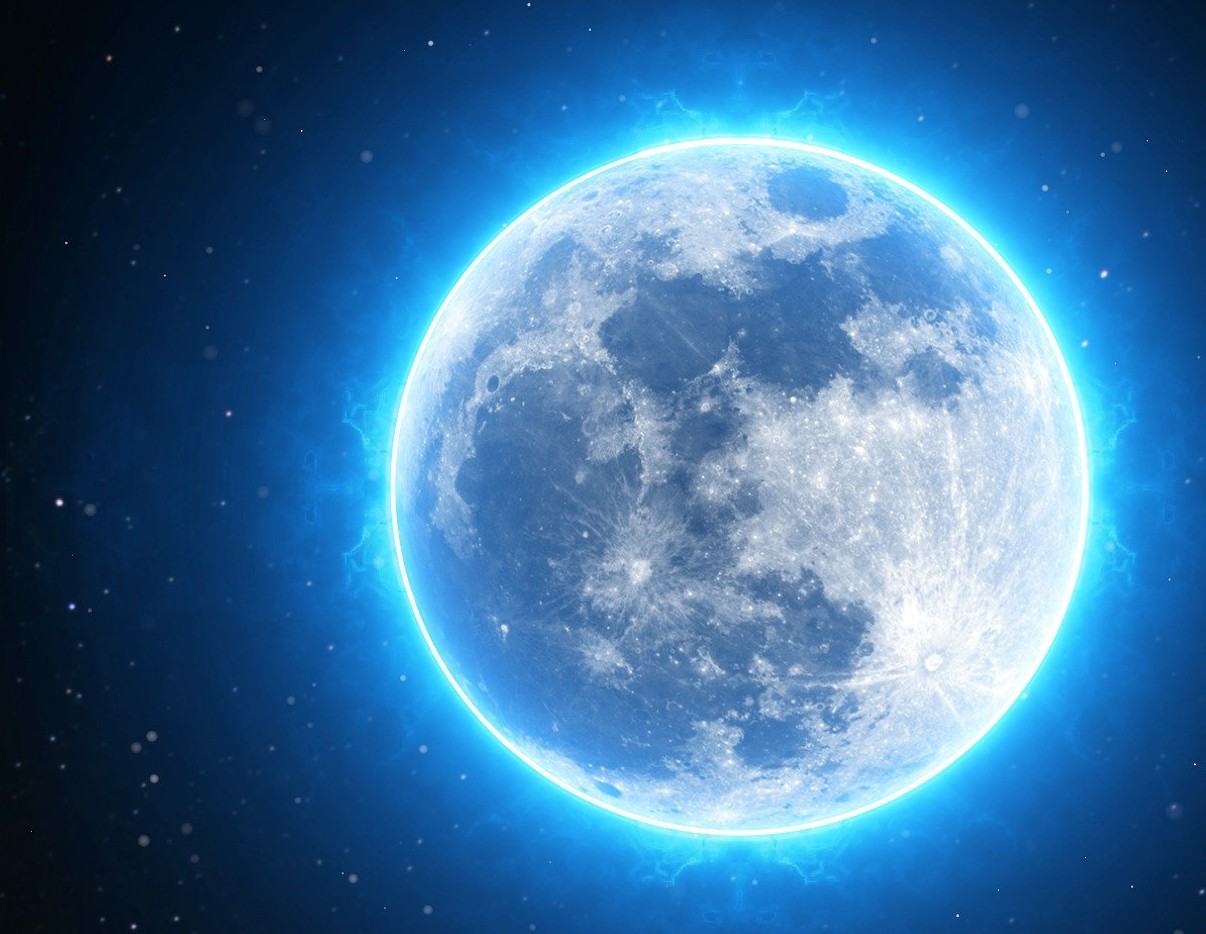
Simply from this minimal amount of information, we can determine that k’ara can be thought of in two ways: 1) as the inherent high-quality power of a person and 2) as the visible manifestation of that quality and power. The paqos told us that as a power, k’ara can be invoked and utilized. Juan Pauqar Flores explained that a paqo or spirit being who has k’ara can share it with us. By using their k’ara, we can dofull-moon ring glow Pixabay cropped -2055469_1920 things, such as heal. (To understand the following quotation, you need to know a bit about the paqo he uses as an example: don Andres Espinosa. He was deceased by the time of our interview, but had been one of the top Q’ero paqos. In fact, he was a rare kind of paqo—a chunpi paqo, which is a specialized kind of paqo known for having especially powerful healing skills.) Don Juan Pauqar Flores said, “The moon has k’ara. The apus have k’ara, and by calling the k’ara of an apu you can heal a person. Don Andres Espinosa healed diseases by invoking the k’ara of the apu. The apu has more k’ara than a paqo. My master, Andres Espinosa, healed by invoking the k’ara of the condor and the apu. But I do not believe that ordinary men have k’ara.” The other Q’ero paqos concurred: “Only great men [or women] have k’ara.”

The larger discussion was difficult to understand for many reasons, but don Juan Nuñez del Prado came to feel that an accurate interpretation of what the Q’ero were saying overall is that all beings have k’ara, but most of us have too much hucha (energetic heaviness) for that light to shine through our field and become visible. Great men [and women], however, are those who have mastered their personal energy and stepped up the qanchispatañan of conscious development. The quality of their essence is such that they have visible k’ara and can share their power with others.

According to the Q’ero, the same dynamic holds true for nature beings and spirit beings: some have k’ara and some do not. For example, although there was confusion and even disagreement among the Q’ero, the ultimate consensus was that only the lead condor, the condor apuchin, has k’ara, while the rest of the Condorcondors in the group do not. There was further disagreement about whether the k’ara of the condor apuchin glowed red or white (with white being the likely color). The k’ara as the visible energy of the apus comes in different colors, according to that apu’s “quality,” which we took to mean power. The highest quality energy is white, followed in descending order by red, yellow, and black. The k’ara of an apu alsorelates to its dominant capacity. One apu’s essence might be to confer healing, whereas a different apu’s specialty might be to help resolve family problems.

What I took all of this to mean for those of us practicing the tradition is that our ayni connection (reciprocal energy exchange) is not to a spirit being itself as an outer form but to its inherent power. That might seem obvious, but it is a good reminder, for I have seen plenty of students mistake form for function. As an example, we are not so much connecting to an apu itself as a mountain or whatever form it takes (not all apus are mountains). Our connection is to the apu’s quality and power: its k’ara is what we call to us and the apu shares with us. We invoke, receive, and use its k’ara, and when it shares that with us, we can do things we might not otherwise be able to do. We get beyond form to function. The apu (or whatever spirit we are connecting with) is first and foremost a source of power. To “carry the k’ara” of something, as the Q’ero paqos characterized this kind of ayni, means to be with it, to be connected with or resonating with it its essence, so that its power is accessible to us and can be used. Therefore, we can refine the two meanings of k’ara: it refers both to the quality of a human being’s or spirit being’s power and the availability of that power to be shared.

If that interpretation is even halfway correct, it has a few significant ramifications. One that I will call out here is that it means we should never hesitate to reinforce our own personal power with that of a more developed paqo or spirit being, both of whom presumably have k’ara. This view is supported by something don Juan Nuñez del Prado said once: if a paqo (an Andean or non-Andean who practices the tradition) has more power than us or even claims to have more power than us, we can take some of his or her sami to empower ourselves (if we feel we need empowerment). We don’t have to ask permission. That person is a source of power for others. But if a person is the same level as us or lower, no! We cannot partake of his or her power.

A final musing is about ayni dynamics. When we are in ayni with a paqo, nature being, or spirit being with k’ara, what is happening? From what the Q’ero paqos said, we are touching their core essence and they are sharing that essence (quality and power) with us. Is something different happening in our ayni with a being who does not have k’ara? My guess is that it is: we are simply sharing a resonant field we have set up between our poq’pos (energy bodies). Although we may not be accessing their essence directly, we can be empowered just by being resonant with their poq’po—with their karpay, which is the power they have available to share at the moment. Of course, this is all speculation. Yet perhaps these are musings that help us understand at a deeper level what we are doing as practitioners of “driving the kawsay” (the life-force energy) and being in ayni with human beings, and nature and other kinds of spirit beings. Q’ero paqos, and other paqos of the Andes, acquire knowledge and understanding through yachay—personal, firsthand experience. Maybe our knowing about k’ara can motivate us to refine our perceptual abilities so that we can begin to detect it and have our own firsthand experience of it. For, as don Juan says, don’t believe a word I say. That is willay, which is secondhand knowledge. Instead, we must find out for ourselves. We must practice and become the masters of ourselves through our own experiences. Then we can decide for ourselves how we can best honor the quality and level of power that is k’ara, and we can learn how to use it for what we most need or want to do when it is shared with us. And, of course, we might even realize, despite what the Q’ero paqos say, that we have k’ara ourselves.

Global Summit on Spiritual Awakening


Larger Banner

I welcome you to join me and the dedicated team at Shamans Directory for the free “Gathering at The Cosmic Fire Summit,” which unfolds over five days: 07-11 October 2024. The summit brings to the world an impressive array of shamanic, mystical, and earth-based healers, teachers, and wisdom-keepers to share their insights about what awakening means and how we each may follow the call to live a conscious, joyful life in alignment with our own Spirit, and with Nature and the living universe.

Every year Shamans Directory—a nonprofit, online global directory created to bring shamanic, mystical, and earth-based healing, wisdom, and medicine to the world’s doorstep—gathers some of the most respected wisdom teachers to sit with you at the, “one fire” and share the “one medicine.” Their yearly global summit is an opportunity to meet some of these teachers and practitioners and become more empowered through their gracious offerings. And it’s all free!

The more than 40 honored wisdom-keepers who will be speaking this year include elders from Original, Indigenous, and First Nation Peoples, and Western-born shamanic and mystical practitioners from across the continents. They have dedicated their lives to forwarding the world’s living lineages to us in our time and forward for the benefit of future generations.

I am pleased to be one of the featured presenters, speaking about “Awakening What’s Within You,” and offering a more than 5,000-word article describing the “Seven Signposts Along the Spiritual Journey” as my free summit gift to you. During my talk and in this article, I identify seven common features of a spiritual awakening and journey, from the Call to the Crisis to the Disengagement to the Reconnection. At some point during our journey, we will find ourselves at one or more of these stages of awakening, so knowing about them may help us move with more grace through the difficult stages and propel us more purposefully through all the stages.

The offerings during this summit are impressive in their scope and inspiring in their content. This list is a sampling of the speakers and their subjects: 

  • Grandmother Jyoti Ma – Cosmic Fire 2024 Opening Ceremony
  • Sandra Ingerman – Practicing Shamanism in a Modern Day World
  • Elio Geusa – From Plant to Spirit: The Shipibo Path to Spiritual Awakening
  • Heather Ash Amara – Wild Willing Wisdom: When to Paddle, When to Rest, and When to Jump Naked into the River of Life
  • Don Jorge Luis Delegado – The Inka: The Culture of Light
  • Yeye Luisah Teish – OriVisions: Understanding Universal Consciousness through a Cultural Lens
  • Doña Agustina Ccapa Champi and Doña Monica Q’espi Flores – Ñust’as and Ñust’a Paqos: The Female Wisdom Lineage of Q’ero
  • Wolf Marinez – Ceremony and Life: The Source of a Continual Waking Up
  • Karen Ward – Ancient Irish Goddess Wisdom: Preserving the Lineage for Us Today
  • Patricia Aywan Lehman – Sophia Rising: Opening Our Hearts to Awaken the Wisdom Within
  • Christina Allen – Every Initiation Is a Death and a Rebirth
  • John ‘Crow’ MacKinnon – First the Sleep, Then the Awakening
  • Magaly Quispe Singona and Nelida Vilca Huaman – Choosing to Walk the Medicine Path
  • Joan Parisi Wilcox: Awakening What’s Within You
  • Renee Baribeau – From the Eye of the Storm, Embracing Dismemberment for True Healing
  • Lei’ohu Ryder – Weaving a Rainbow of Aloha: Departing on the Sacred Journey of Light
  • Elizabeth B Jenkins – Phantia Qolla: The Feminine Mystical Wisdom of the Q’ero
  • David Cumes – Connecting with Primal Indigenous Wisdom: The Original Medicine which Will Never Change

And this list includes fewer than half of the presenters. You won’t want to miss any of the rich, insightful offerings that are focused on helping each of us step into the light and walk with illumination.

Each day of the seminar, nine interviews will be featured (pre-recorded). Once you register, they are available for free for two days from the time they aired. If you would like to have lifetime unlimited access to the videos, there is a modest fee of $55 USD.

To register for The Shamans Directory’s free Gathering at The Cosmic Fire Summit, follow this link:
https://www.gatheringatthecosmicfire2024.com/

Please help spread the word by letting others know about this amazing summit.

See you there!

P.S. These yearly global summits are created through the love and hard work of the Shamans Directory team (https://shamansdirectory.com/). The Shamans Directory is a non-profit online platform to provide searchable access to a global array of shamanic, mystical, and earth-based practitioners, healing services, and educational and training opportunities. If you have not already visited or joined Shamans Directory, I urge you to consider doing so.