
If there is one persistent belief in the metaphysical community, it is that money is not 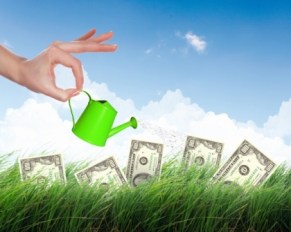 compatible with spiritual pursuits. From an energetic perspective, nothing could be more untrue. Material wealth or possessions may be way down your list of priorities within your ethical belief system, but there is nothing unspiritual about material bounty from an energetic perspective.
We can all agree that money is an energy, just as everything is. But if you have any conscious or unconscious limiting beliefs, it’s worth your while to take a look within to see if you are confusing your ethical beliefs with your spiritual beliefs or beliefs about energy. You can be a mega millionaire and a fantastic paqo with no contradiction! In fact, your goal as a paqo is to grow in all ways—material, spiritual, energetic.
You might think that in the Andean tradition the exchange of money for services, goods, or work is ayni, or reciprocity.
It’s not!
It’s ch’allay. And it pays to know the difference between ayni and ch’allay (pun intended!).
- Ayni is a selfless exchange, such as helping a friend in need or offering a prayer. Ch’allay is a self-directed and self-interested exchange, such as making a purchase in a store or trading a massage for a bag of fresh produce from a neighbor’s garden or a monetary payment.
- Ayni is “spiritual” reciprocity that extends beyond the immediate return, although by definition it guarantees a return, so you often receive in greater measure than you gave. Ch’allay is a mundane, mercantile exchange. A shop owner marks a book for sale for $19.95, and that’s what you pay.
- Ayni in its fundamental spirit, as the evolutionary force of the natural world and the energetic law of the cosmos, includes the material world and extends beyond it. No matter how small the act of ayni, it is cosmic in its reverberations. Ch’allay is rooted in the material world, limited in its effects to the people involved in the exchange.
The point is that the service you offer, whether in a healing clinic or a boutique, is offered for the exchange medium of the marketplace, which in our society is money. It’s a ch’allay exchange. As a human being with human needs—food, shelter, clothing, etc.—you need money to survive. You may have a family to support, and you certainly want to take good care of them. You also may want to create such abundance that you can freely assist others, support worthy causes, and have the leisure to enjoy life in all its wonders.
While the trade of goods and services for money is ch’allay, that monetary payment is not all that is involved in such an exchange. There is also the spirit in which you offer your goods or service—fairness, kindness, good value, caring and compassion, etc. That spirit has its own energetic value, separate from the material value. It is an energetic exchange beyond yourself and your material needs, so it is ayni. In this way, you can see how ayni and ch’allay are correlated—the actual goods or services and the spirit by which you offer your goods or services go hand in hand.
There is absolutely no shame in making a living from your gifts—and not just an adequate living but a phenomenal one. According to the Andean tradition, the cosmos of living energy—the kawsay pacha—is overly abundant. There is more than enough for everyone.  You can take whatever you want and it is given freely according to your personal power, which is your energetic ability to push the kawsay to follow your intentions. The fact that you take a lot does not ever mean that someone else has to get less. That is a falsehood perpetuated by scarcity thinkers. Energy is just energy. It has no moral overlay. Your ethical and moral system guide you in choosing what you desire and how much you want to manifest. But make no mistake about it—energetically you can have as much as want.
So, strive for and expect success at both levels of being—material and energetic. It is up to you both to value yourself enough to prosper bountifully in the material plane and to consciously evolve as a human being to increase beauty and joy in the immaterial plane.
 body. When you add in your poq’po, your potential energy is unlimited. In the Andean mystical tradition, you learn how to both liberate and harness your “personal power,” but Bryson’s question remains: What “point” do you wish to make through your energy exchanges?
 three. . . .
 driven materialistic undertaking, but a spiritual pursuit and an energetic practice.
 chunpi—and that infuses your words with power. It is “right speech” in the sense that you speak with truth, clarity, and integrity. But it is more than that, too. Rimay is a vibration that can affect the material world.
 have hucha accumulated in your poq’po, and probably a lot of it at your throat center.
 Don Melchor stopped and directed his voice toward the fleeing man, blasting a sound toward him. The thief stopped, frozen in place. Don Melchor walked up to him, took his package back, and then touched the thief on the shoulder. He immediately become reanimated and ran off. This is an example of a master of rimay!
 elements are found not only in the material world, but are spirit beings of the metaphysical world. This is true in the Andean tradition, where there is a hierarchy of seven universal spirit beings called the teqse apukuna.
 world is the universal masculine and feminine.
 might work with Tayta Wayra, Father Wind. Or perhaps Mama Unu, Mother Water (she is associated especially with rain).
 bringing his sami into your bubble and pushing out hucha, the result of which is a cleansing that can heighten your ability to see the situation clearly and deal with it better. To use saminchakuy, you could connect with Tayta Inti through any of your mystical eyes (ñawis) or chunpis (energetic belts) and draw in his sami. As you do, you cleanse your bubble of hucha (heavy energy) down through your lower spine (siki ñawi) or feet and feed it to Mama Allpa, Mother Earth.
 of the teqse apukuna. As in all Andean practices, you use your intention. You intend to connect with a particular teqse apu, you communicate with him or her and ask for what you need or want, and you expect that in the spirit of ayni you will both give and receive. In both saminchahuy and saiwachakuy you give your hucha as a gift and receive the teqse apu’s sami as a gift.
 If you have taken a workshop in the Andean sacred arts with Juan and Ivan, or with me, you know that we stress that everything we are learning as paqos is for one purpose—to live fully in the human world with greater well-being.
 energy. It expresses itself in the material as Pachamama. Pachamama is not just the earth. It is the entire material universe. (Mother Earth specifically is called Mama Allpa.) Ayni is what drives the evolution of the Pachamama, the material universe, and everything in it, including our own human evolution both personal and collective.
 have left behind in the Pachamama. A khuya is a stone infused with the energy of human affection. Our energetic anatomy (cones, belts, mystical eyes) are integrated into our physical anatomy and impart increased perceptual abilities. The three “powers” are mind (yachay), body/action (llank’ay) and love (munay), all distinctly physical or emotional human expressions.
 tradition and practice its techniques. They help me evolve as a more conscious human being. They help improve my relationships with others. They help me to more fully engage my immediate environment, nature, and the cosmos on a level both material and energetic. They help me accumulate the personal energetic power to do what I am here to do, as encoded in my spirit.
 Q'enti Wasi - House of the Hummingbird