
There is a clear path to personal development in the Andean tradition as I have learned it  and teach it. It’s a path of conscious evolution, both for each of us individually and for us collectively as a species. According to the prophecies of the tradition, we are accumulating the personal power to birth a grander self and the “new humanity.”
As metaphysical as this goal seems, it is actually a path of sobriety. It requires that we do our sacred inner work. And that begins with a commitment to our practices as paqos.
Let me review some of the core practices.
1) Ensure your energetic “cleanliness.” Bring coherence to your energy body to accumulate personal power, perfect your ayni, and increase your ability to push the kawsay on behalf of yourself and others. The practice is saminchakuy.
2) Practice ayni. Your responsibility as a paqo is to use your personal power on behalf of yourself and others. If you see others in need, address that need, whether that is to foster healing, empowerment, or something else. The practice is saiwachakuy. If you feel hucha in your relations with others, cleanse that stream of energy. The practice is hucha mikhuy.
3) Harmonize the three human powers. To be in harmony within, you must master the three primary human powers—llank’ay, the ability to do work and make an effort; yachay, the ability to reason, use logic and intellect; and munay, making a choice for love, compassion, empathy and non-judgment. The supporting powers are rimay, kanay and atiy.
4) Live your life as the treasure that it is, and live fully and passionately no matter the outward circumstances. Seeing the world as a awe-inducing creative experience is a point of view that comes from the inside and can change everything about the outside. As some Hindu mystics say, you are not in the world, the world is in you. You project awareness out into the world and into your experiences, which colors all the meanings you give to what is happening around you, to you, and through you. In the Andean tradition, the goal is to engage all of life with passion, and the power is khuyay.
To live these principles is not about seeing through rose-colored glasses or living a fairy  tale. It is about being the passionate yet sober energetic warrior who lives from his or her Inka Seed. Expanding your personal power may not be easy or comfortable. For whatever reason, we humans tend to learn and grow through challenges. As paqos we strive to “see reality as it really is,” and sometimes reality appears to be a opponent rather than a ally. Our work as paqos is to look beyond appearances to what physicist Bruce A. Schumm calls the “deep down things.” The power is qaway.
Gloria Karpinski, a wise friend of mine (and a gifted author and international teacher and lecturer), provides a pithy way to understand one of the common ways spiritual and energetic intention (ayni) works in the real world. She writes, in her book Where Two Worlds Touch, “Once we start paying attention to what’s happening in our own environment, we begin to see that the universe is giving us all sorts of clues about our path. If we believe in love and we are making a commitment to being love, there’s a good chance the universe will send us thirty people in a row whom we don’t love. Our assignment: Love those thirty people.”
 The law of ayni can be surprising! Using Karpinski’s example, as we develop munay, we may indeed draw to us those we can easily love. But we might just as easily draw to us those whom we struggle to love. Both results fulfill the law of ayni, although the latter is decidedly more difficult a lesson in the ayni of self-awareness and growth. No rose-colored glasses here! But no need for them either, as you, as a paqo, have all the practices and tools you need to meet the challenge (or, more accurately, the opportunity) the kawsya pacha has seen fit to offer you.
You don’t need to be a philosopher to be a paqo, but I do think that you can more easily and quickly master the practices of the tradition if you dive down into the deeper levels of what you are doing and why. When you seek those deep, down things, then you must take off the rose-colored glasses because will not see your life as a paqo as one-dimensional or single-hued. The kawsay pacha is rich in creativity and blessings beyond your wildest imaginings. Why would you think that your life, and indeed our human world, would be any less so? Even your cruelest challenge can be turned to good if you approach the world “as it really is,” which is under the guidance of your munay and ayni.
 The whole point of this post is to urge you to pay attention to more than the surface roads of your work as a paqo along life’s journey. Your destination is certain—you will one day return the gift of your life back to the kawsay pacha. The question is if you will have evolved as much as you can through your practice. Have you discovered and then used all of your gifts? Have you shared them with the world?
I love this quotation from Erma Bombeck: “When I stand before God at the end of my life, I would hope that I would not have a single bit of talent left, and could say, ‘I used everything you gave me.’” An Andean paqo can speak no truer words than those!

 this equal playing field of love, joy, and manifestation.
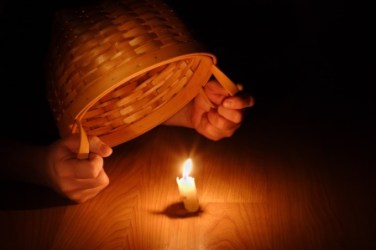 This is a message I have to constantly remind myself of. I am aware that I do not laugh enough in my life. I feel joy, but I tend to keep the expression of that joy inside. Too often my joy is private. That’s like keeping a light under a bushel basket. The glow barely escapes. . .
 experience what Pierre Teilhard de Chardin says of joy: “Joy is the infallible sign of the presence of God.”
 You are a drop of the Mystery. There is no one else like you. Your life is a gift of the cosmos. In ayni, some day you will give that life back. Your goal as a paqo is to ensure that you return as a grander, more marvelous, and fully realized you.
 Munay is the treasure of the Andes. Love is not an impulse but a choice. It is under the control of your will. It is an energy in which you are always self-sufficient and that you can make more of at any time. It is beyond the needs of the self. It is a force of personal and natural evolution.
 The only thing that is absolutely yours in this lifetime is your poq’po— your energy body. No one can enter it without your permission—not even God. Your intention, through ayni, activates your relationships with all beings, from God and the Spirit Beings (teqse paqos) to your fellow humans to the creatures of this world. Cleansing your poq’po and bringing coherence to it propels your conscious evolution and enhances your capacity to live with khuyay (life passion).
 Your responsibility as a paqo is to live with joy and well-being, and to foster joy and well-being in others. A paqo is always striving to be a fully developed being in the human world. So whatever personal power you have accumulated, it is your duty to use that power on behalf of yourself and the world. You don’t have to ask permission to use your power for the well-being of another. Well-being is fueled only by love/munay, and you never have to ask permission to share munay to another.
 The kawsay pacha is gloriously abundant! Energy has no moral overlay except the ethical and moral code you choose to live by, so you can manifest anything you want from the universe of living energy according to your own values.
 of your intention out into the universe so it can be more easily manifested.
 Another helpful metaphor is that of a filter. When our filter is clogged, not as much energy flows through us. When our filter is unclogged, we can freely absorb and radiate kawsay/sami and so have more unrestricted personal power. As our personal power increases, so does our effectiveness at influencing the cosmos. Energy more effortlessly follows our intentions and we become better at manifesting our desires.
 be done.”
 By keeping my affirmation general in content but crystal clear in quality, I allow the universe to direct me toward my goal of becoming the most consciously evolved human being I can and of living with the greatest amount of well-being. I know the kawsay pacha is overly abundant and that joy is the natural state of human nature, so I don’t sweat the details because I know that by affirming to the universe that I want to realize its highest vision for me it will no doubt infuse that journey with its own highest qualities: abundance in all forms, love and joy, and overall well-being.
 answer by asking a question: What are you extracting?
 Masters of the Living Energy. Although I used the word “extraction” there once, that is not a accurate word choice. We are not extracting anything, even though we use all kinds of linguistic metaphors to describe getting the kawsay to move freely again. We talk about cleansing hucha, eating it, digesting it, pulling it, pushing it, unblocking it, and so on. Really, all we are doing is helping people get what is slow within them to move more naturally, which means faster. You are helping them unlock their own self-healing potential, which is subject only to their will, not to yours.
 kawsay pacha using nothing but their intent. I ask them to view everything outside of their intent as a “fetish.” Using fetishes—whether a khuya, feather or even the misha—can be fun, but they are not necessary. Using them is a choice, and as consciously evolving human beings we want to make conscious choices. Once you can move energy using your intent, then you are free to do anything and use anything because you know you don’t need it but simply choose it. In this way you always maintain and act from your own personal power and you assist your clients to access and use theirs as well.
 Q'enti Wasi - House of the Hummingbird