
What’s been your response to the turmoil and anxiety—if that is indeed how you feel or how you discern others are feeling—in the world, in your country, in your community in response to Covid-19? What’s been the response of those closest to you? Of your leaders?
It’s important to examine our responses because our outer behavior reflects our  inner state. I suspect that you, like me, are seeing or experiencing three general varieties of response. One view is, “What’s the big deal? Not my problem. I’m not changing how I live my life.” Another is, “Stay six feet away, because you are a threat to my well-being. What if I get sick and I can’t get a test or a hospital bed or a ventilator if I need one?” A third is, “Take care of yourself and I will take care of myself. Let me know how I can help, and I will call on you if I need help. We are all in this together.”
Those of you who know the seven levels of consciousness, as passed on from don Benito Qoriwaman through don Juan Nuñez del Prado, will recognize the characteristics of the second, third and fourth levels in the responses above. Of course, there are a host of other responses, but it is probable that the majority of the responses you are witnessing fall into these three common levels of awareness. (For a brief overview of the levels, see my “Birds of Consciousness” post of May 11, 2016.)
By discerning how people we know and others we hear about on the news are reacting—and how we ourselves are feeling—we can tease out opportunities for growth to the fourth level in the midst of this pandemic. Here are some perspectives from which we can view Covid-19 based on the Andean path, and offered not as a teaching but as food for thought.
We recognize that we are yanantin beings: we are both physical and energetic beings. We are not either-or, but both-and. In the physical world we are subject to the vagaries of germs and viruses, of our own immune system, of our habits for or against health, of the near impossibility of controlling our environment. We cede the need for control while respecting our ability to influence our own and others’ health. We don’t succumb to fear but use commonsense to do what we can to slow or stop the spread of the virus and keep ourselves and others healthy.
As energetic beings we use our tools. We continue our daily saminchakuy, and we add in occasional saiwachakuy to empower ourselves and strengthen our energetic 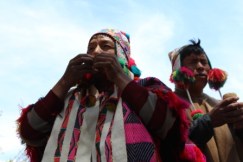 and physical immune systems. We can use hucha miqhuy to reduce the fear or anxiety we experience or that is being experienced by those we love or care about. We can send sami to our leaders, from our town mayor to our president to other decision makers. We can send sami to the first responders, from EMTs and pharmacists to nurses, doctors, and the other health professionals on the front lines of our health care systems. We can send sami to those who support our sustenance and well-being while we are under “stay at home” orders, from the grocery store clerks to the restaurateurs who are making food for pick up or delivery to the people still picking up our trash and the employees still processing our health insurance and other claims. We can send sami to the volunteers who are making masks on their home sewing machines, the companies retooling their plants to provide protective gear, and the artists of all stripes who are posting songs, comedy routines and the like online to boost our spirits.
As paqos, we are not idle during our “down time,” but participators.
We can use this down time to lift ourselves and others up. The one thing the hustle and bustle of normal daily life squelches in many of us is the energy for creativity. This is a time for qaway and khuyay: being present in the moment and seeing reality as it really is, and for engaging with munay and passion. You can go online to see  videos of the many ways people are marshaling their compassion and creativity to say, “We are all in this together. I see you. You see me.” Italians singing from their balconies. American nurses in non-Covid wards waving and making funny faces and fashioning their hands into heart symbols through the closed glass doors to their colleagues in the sealed-off Covid-19 wards. The children writing letters and drawing pictures of appreciation to their teachers, local health professionals, first responders, and others. A son talking by phone on one side of a window to his grandmother on the other side. The neighbors of a cul de sac standing at the end of their driveways with their kids, each family group separate by together saying the Pledge of Allegiance before they start their home-schooling day.
We can do a gratitude inventory, giving thanks that we have homes to go to, water and food to sustain us, family and friends to support us, books and movies to amuse and educate us. That most of us have freedom of speech to speak out and stand up, that we are not subject to government censoring of our tweets and online posts, that while we are being asked to curtail our movement and act responsibly to “flatten the curve” of contagion, we are not giving up our human rights, and on and on. We can reflect on how we might have come to take our comforts for granted. How we might have become complacent, or even lazy, in our mindfulness of our bounty and well-being. Years ago I saw a sign in the front yard of a church in rural North Carolina that brought my own complacency, lack of gratitude, and even sense of entitlement to the forefront of my awareness, and caused me to change both my thinking and my behavior: “There are millions of people praying for what you take for granted.” When you really stop and take that truth to heart, you may feel prompted to make the most gratitude-filled despacho of your life!
There are all kinds of ways we can make this time of outward slowing down and even self-isolation a useful period of active flowering and expansion, both within ourselves and among our communities. For most of us, in this age of smart phones, tablets, and other electronics, there is no such thing as isolation. And for paqos, there is no such thing as not knowing what to do!
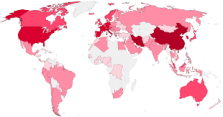 The COVID-19 coronavirus is at pandemic proportions, and while I hope we are all dealing with it calmly and sensibly at a human level, we as paqos have a role to play at an energetic level as well. As the paqos of old have told us, we have a responsibility to use our tools to increase the well-being of ourselves and others. And so it is with this responsibility in mind that I post now about what we as paqos can do.
 organized to help control it. Of course we can join their intentions and practices. According to tradition, at the end of the 19th century, don Garibilu Quispe, one of the founders of our spiritual lineage, used the practices of the Andean spiritual arts to counteract an epidemic of smallpox, which occurred in Peru at that time. In the current circumstances, we can use the basic practices of our art for similar purposes, as follows:
 uppermost ñawis, or mystical eyes, saying that these were the three ñawis he least understood how to use. Our discussion prompted this post. However, I alert readers that this material is advanced knowledge and will only make sense if you have taken the training through don Juan Nuñez del Prado and his lineage or from his well-trained students, and only if you have had the Ñawi K’ichay and Chunpi Away karpay. Also, I recently emailed with don Juan about this and I will quote from him directly, as you are better off hearing the teaching from him when you get the chance than from me!
 from the perspective of its practicality (llank’ay).”
 integration of the views provided by our three uppermost eyes, we have to know our kaypay—our stage of development of personal power at the current moment. We have to know, clearly and deliberately, our starting point. That means, as I always stress to my students, as you do energy work you have start from right where you are and in the exact psychological and energetic condition you are right now. Wishful thinking about your capacity to use your powers gets you nowhere. So, it is wise to be realistic about how well you are using your personal power, the three human powers, your ñawis, and your other mystical and energetic capacities. When you find room for improvement, the solution is to diligently practice your energy techniques.
 attention and work.
 focuses his intention, he can use it as a kind of motor for the [looping] exercise. When this happens, the small field rotates as a kind of mill that extracts hucha. Of course this hucha comes primarily from the head of the practitioner, but by intention it can be made to be of the whole body, or of the [personal] present or of the [personal] past, or of the three eyes that are in the head [ the two physical eyes and the seventh eye]. But it depends on the intention of the operator. One consequence [meaning, one effect] is the property of the small field, but another is the will of the operator. You can intend to move the energy in many ways through this looping flow: between two people, to clean your three upper eyes, to clean the energy of a client’s poq’po or body, to clean your personal past, and so on.”
 your desired goal. The same practice that helps you develop your qaway ability, to deeply cleanse the three eyes so you can more fully and comprehensively “see” reality as it really is, also can be used for many other ends. With each conversation I have with don Juan, and with his son don Ivan, I marvel at how my understanding of our work deepens, and I further appreciate how it is indeed a sacred art. While this post has focused on the three upper eyes, the information applies to how we work with our entire poq’po and use each of our practices. Speaking only for myself, practicing in an “artful” way deepens my absorption in the practice and, usually, improves the result I achieve. The same can be true for you.
 software. There is no known title, nor is the author known. (The line breaks may differ depending on how you are viewing it.)
