
Andeans spatially position time differently than we do in Western Judeo-Christian cultures, and this blog post examines the Andean conception of future and past in relation to the Upper World (hanaqpacha) and Lower World (ukhupacha).
Generally speaking in our culture, we think of the Upper World—sometimes as a  heaven—as representing the future. After all, we won’t go there until after we physically die and its most common characteristic is that of redemption, something we may not be worthy of in the current time but may attain or be blessed with in the future. The Upper World is a perfected world and a place beckoning us through future possibility and even potential reward. It presumes a future state we might attain. On a more personal level, in terms of our body and spatial positioning, we locate the future in front of us: we are walking into our future, creating it moment by moment. It is unformed until we form it through how we live. It is full of potential because we can improve how we live and thus impact our future for the better.
In contrast, generally speaking our conception of the Lower World is of the past. It is the place we may go once we die because of the conditions of our past—the quality of our past character, the thoughts and actions of our recently ended life. Spatially, the past generally and our personal past more specifically is behind us: they are comprised of our collective or personal completed thoughts, words, actions, and so on. We are walking away from our past toward our future, but our future is conditioned by the consequences of our past.
Andeans see things differently.
Let me start with the Upper World, the hanaqpacha. It is associated with the past, which Andeans call the ñaupa pacha. In terms of its characteristics, the Upper World is eternal and perfected. What was now is and forever will be. It is the abode of the  Mystery, or whatever you want to call God, who is unchanging. According to anthropologist Jan Szemínski and his collection of oral testimonies of indigenous Andeans, the Upper World’s chief characteristics are stability, permanence, duration, in front (spatially), and past (chronologically). He also reports that Andeans associate it, in terms of the direction of left or right, with the right (paña). In the Andean mystical tradition, the right-side work is that of yachay and perception—of knowledge. The Upper World is the place of those who know or who have perfected their perceptions (qaway). It is the place of perfect ayni, and hence occupied by God and those beings who practiced ayni well during their lifetime (their past).
In terms of each of us as humans, we have a personal hanaqpacha, which encodes our true and eternal self—our ñaupa pacha, or past. It is our inner heaven, where we are revealed for who we really are—drops of the Mystery/God, already enlightened and perfected, although as beings in human bodies in this material world our past as an aspect of Gods is something we have forgotten and must recover. Thus, enlightenment is held in potential in our Inka Seed, and on this material plane we must grow into who we really are. Anthropologist Constance Classen, in her book Inca Cosmology and the Human Body, confirms this association of the past with divine time and eternal space. She reports that Andeans correlate the Upper World and the past with the moment of creation, when “Viraqocha sets the body of the cosmos in motion with his animating breath . . .”
In terms of spatial position in the physical world, the hanaqpacha is above us. But in terms of its association with the past in relation to the human body, both the  mystical tradition and the indigenous peoples of the Andes place the past in front of us. We know it, we have seen it, and we have experienced it. It is in full view for us. In terms of our personal poq’po (energy body), we can have a striking clarity about our past because we have six mystical eyes (ñawis) in the front of our poq’po looking at it. These are the qosqo ñawi at the belly, the sonqo ñawi at the chest, the kunka ñawi at the neck, the two physical eyes, and the qanchis ñawi in the middle of the forehead. This mystical vision can provide deep insight into our past, which can be liberating; or it can cause us to become fixated on our past, as so many Westerners do through our psychological and analytical propensities.
But we also have a personal hanaqpacha inside of our poq’po. It is located in the space between the top of our head and the upper inside of our poq’po. This mystical knowledge is supported by anthropological knowledge, as Classen tells us that for Andeans the hanaqpacha is said to be located not only in the upper part of the world but also around the upper part and top of the head. Mystically, this is the place of the three eyes (the two physical eyes and the qanchis ñawi). Our two physical eyes provide the vision to see ourselves as we have been in this human life whereas our seventh eye provides the mystical vision to see beyond this world—to our eternal past and our original perfected, enlightened selves.
In contrast, the ukhupacha, or Lower World, is associated chronologically with the future (called kaya pacha) and spatially is situated behind us. The ukhupacha in Andean cosmology is not a place of punishment or damnation but of regeneration. It is the place of potential—of the future self. Those who occupy it did not live their lives in ayni, and now they are in the Lower World to learn ayni and, thus, to improve themselves. They are being given an opportunity for personal transformation and growth. If they succeed, they can rise up to the hanaqpacha.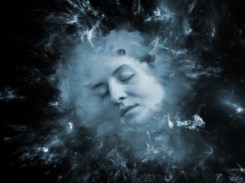
According to Classen, the ukhupacha symbolically is the place of the “dark, fluid future.” Szemínski confirms this information: he reports from his discussions with hundreds of Andeans that the Lower World is associated with future time, with a spatial position in back of or behind us, and with the main characteristics of change and creation. He also says Andeans place it in a position/direction of the left. This makes sense, since in the Andean tradition the left-side work (lloq’e) is the place of action, which is certainly what the people in the Lower World are undertaking on their path of regeneration.
As already mentioned, in terms of the body the future is located behind you, which has an important connection to the mystical eyes, the ñawis. Classen reports that for most Andeans “the future . . . is not something one can walk ahead into, but rather, is something that one has to turn oneself around . . . to reach.” This may not be a literal turning. It may instead refer to the single ñawi that is in the back of the body/poq’po. Remember that you can see your past with clarity because you have six mystical eyes in the front of your body/poq’po looking at it. But you can’t easily see your future—or potential future, since it is not set but is a field of potentialities—because you have only one eye, the siki ñawi, at the base of your spine looking at it.
Classes also points out that in terms of the human body, the Lower World is associated with the feet and is considered a place of transition. This correlates perfectly with the mystical tradition, where the personal ukhupacha is located within your poq’po in the space between the bottom of your feet and the lower inside of your poq’po. It is your place of personal inner regeneration and transformation, where you undertake the work of realizing your potential.
There is much more I could say about the Upper and Lower Worlds and their time and space relations, but let me end  by mentioning the Middle World, or the kaypacha. The kaypacha is this world—our material, human world. According to Szemínski, the kaypacha results from the interaction of the two other worlds. The hanapacha and ukhupacha energies, the past and the future, meet in the now to create your personal kaypacha. We can turn to psychology to help explain more about this process. The Lower World can be associated with our unconscious and conscious selves, and the Upper World with our divine and Higher Self. We become whole in this life, in our kaypacha, when we bring our unconscious impulses under our will and integrate our unconscious and conscious selves to express our Higher Self. Our inner Lower World/ukhupacha expands and moves upward while our inner Upper World/hanaqpacha expands and moves downward, with the two coalescing into a more perfected personal human world or kaypacha.
 to plant and to sow. In effect, you are a muyu, or seed, and you are learning to plant yourself in this wachu—the universal field of living energy—so you can grow and evolve. You literally have an energetic seed within you, the Inka Seed, which is close to your heart in your chest and which contains within it your fullest potential. When you grow your Inka Seed you not only can realize who you are (exactly as you are) at the current time, but you can perceive your highest potential—that of an enlightened sixth-level being. Everything you need to realize this potential lives within you. You have only to use your energy practices to germinate this potential and grow yourself into the fullness of your individual beingness over time.
 Wayra respectively), you can work with them through your poq’po (energy body). He explained, “Working with those spirit beings at your ñawis is a type of phutuy, or flowering. You offer yourself as a flower to Wiraqocha. You germinate, bloom, grow. For example, you can lay on the ground and connect your four main ñawis to the Earth and grow as a mallki (an energetic tree) and see the project of your life.” The mallki, or sacred tree, is a symbol of the enlightened human being, a “self-made” being just as a tree is self-made using the gifts of the spirit beings of sun, earth, water and wind. When you pull in these powers you can catch a glimpse of yourself in your future potential, as a sixth-level being. And that glimpse can be enough to motivate you to do the day-to-day work of seeding, germinating, and growing yourself and your poq’po.
 physical eyes, and the qanchis ñawi (seventh eye) in the middle of your forehead.
 When I am with my teacher, don Juan Nuñez del Prado, we have wide-ranging conversations and he inevitably offers enlightening off-hand remarks that, unbeknownst to him, alter my perceptions of the work we are doing together or with a group. Recently he said, “Sanctuaries are spiritual engines. You pull energy from them.” That might seem an obvious statement, but it got me thinking about my relationship to the sanctuaries we work at and how to expand and deepen the work I, and others, do there.
 much deeper—beyond specific energy practices at individual sites within a sanctuary to touching the very heart of the poq’po (energy bubble) of the sanctuary as a engine of living energy.
 are commonalities between each sanctuary—for example, they may all be engines of the sami of the earth. And, they are all sites at which paqos throughout time have worked, so they are imprinted with the energy of the collective energy of those paqos, which itself can be a source of power from which you can draw. But they also each have their own energy signatures. When you connect with that power source, then you may eventually become, as Juan would phrase it, an “owner” of that particular power as well.
 connection to human experience. Second, you can work with the energy of the site’s mystical significance within the paqo lineage.
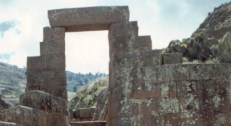 This is just a flavor of the work you can do with these sanctuaries as engines of power. I hope this post has inspired you both to see the creative ways you can apply Andean mystical practices and to develop a new appreciation for the sacred sanctuaries of Peru (or of anywhere else). Remember that everything is a being, including the sacred sanctuaries, and through ayni you can work with these “beings” to help you along your path as paqo and in your life as a human being.
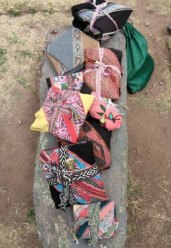 to you in this post is: How often and well are you practicing Andean techniques?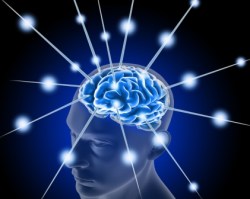
 power deliberately, rather than allowing random thoughts to flow through your mind, and you start to consciously direct the formation of neural tissue. After a few weeks, your brain changes substantially. Keep it up for years, and you can build a brain that’s habituated to process signals of love, peace, and happiness.” Instead of matter to mind, the foundational flow is mind to matter. As Church explains, “What the mind does then determines which brain circuits are engaged. The neural pathways in the brain that the mind’s choices stimulate are the ones that grow. In this sense, the mind literally creates the brain.”
 your brain, Andean mystical practices need to become habitual and conscious to help you accumulate personal power and be in more efficient and effective ayni (to able to consciously influence the kawsay pacha to manifest your desires, from greater well-being to a more satisfying job to a new car).
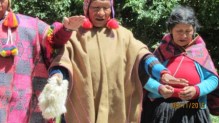 At the start of every Andean mysticism training I offer, I get on my soap box and tell students the same thing—sustained practice matters. I advise them to not make the training just another workshop—fun while you’re there and then off to the next workshop on a different energy modality or esoteric tradition. If you value the Andean tradition and you want to reap its benefits, then you have to commit to practicing its techniques often and consciously, using directed intent. You’ll be glad you did.
 “awaken” to hear our prayers and accept our offerings. Of course, they are always “awake” and available to us, but on this day they lend an ear in an especially attentive way. In a sense it is a kind of mystical New Year’s Day, one on which paqos undertake personal work and ritual from feeding their mishas to honoring their spirit guides. (As a note of reminder, the word Pachamama, while commonly used to refer to Mother Earth, is really the name for the Mother of the Cosmos. She is the entire material, physical universe. Mother Earth as the planet is Mama Allpa). So, this is the day we set aside special time to be in ayni consciously and purposefully with the universe of living energy and with all the physical manifestations of that living energy, such as the various spirit beings. But most importantly, at a personal level, it is about undertaking a conscious, personal mast’ay, a reordering of the self.
 undertake a mast’ay, a restructuring or reordering of the self.
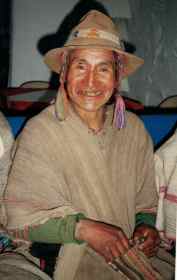 energetically your new inner personal mast’ay. I usually hold my misha while I do this part of the ceremony.
 mast’ay, a new ordering of the contents of your misha.
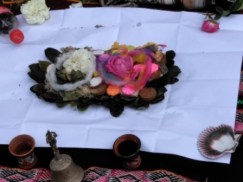 the wachay, to mark the cleansing of hucha and release of any heaviness from your personal past. Or after the incantation and statement of your intentions, honoring your commitment to be a “new you.” Or at the end, to mark the conclusion of the entire mast’ay and honor the spirit beings. Decide what feels right for you. Ceremony should never be robotic. There are no absolutes, especially in method. The Andean path is one of ayni, and ceremony is best seen as the externalization of your internal state, not of following some schematic touted by others. That’s why I say you can do this series of rituals in any order and, really, any way you want. Find what is true for you—that approach is why we call this work the Andean sacred arts. In any case, Pachamama Day is the perfect time not only to reflect on your gratitude for the knowledge offered by the masters of old and through the grace of God and the Spirit Beings, but also to purposefully work your energies as a growing, evolving paqo and human being.
 Q'enti Wasi - House of the Hummingbird