A Paqo Approach to Relationships: Part 2

In last month’s blog post, I wrote about how if we want to know how well we are in ayni with the living universe, we can glean clues by looking at how well we are in ayni with our fellow human beings. If you have not read that post, I suggest you do before reading this one.

In that previous post, I said that I have revised the common adage “How you do anything is how you do everything” to “How we are in our relationships with others is how we are in relationship with the living universe.” I find truth in that statement because why would we expect the living universe to give us in ayni what we begrudgingly give, or even refuse to give, others? Why would we expect to receive all the desirable, sami-filled things in life if we are not also generating them? Ayni is an expression of our sami and munay, and it seeks not only self-fulfillment but also the well-being of those with whom we are in ayni. This reciprocal flow Atomis not a system in which we have to earn or deserve the good things in life. It is not a reward system, and it not a moralistic system. It is a core energy dynamic where like energy generates more like energy and attracts like energy.

I have just pointed out that ayni is not a reward or score-keeping system, and it is not moralistic. There is a term for those kinds of interactions in our tradition—chhalay. Ayni is not chhalay, which is a purely transactional interchange, and usually one that puts self-interest above all else. Contrary to common belief, ayni also is not just an energetic two-way interchange. It is more than that—it is a process. Ayni is 1) intention, 2) followed by action, 3) followed by feedback from an “other” (a response from a person or the living universe that can take myriad forms), 4) followed by our awareness of that feedback (we realize the events, situation, response is the return on our ayni), 5) followed by a course correction if needed in response to the feedback.

The last two steps in the process of ayni are the ones most often overlooked. This part of the ayni dynamic most often comes into play when we expect something “good” and get something we judge as “negative” as a response to our ayni. When we notice and try to understand the feedback (step 4 of the process), but it is not what we expected or does not seem commensurate with our intention and action, we are being asked to complete the ayni process by taking step 5, which is course correction. There are all kinds of ways to do that, from using saminchakuy to generally release our hucha to working to change a habitual detrimental personality trait to acknowledging and doing our inner work to release fears, judgments, and prejudices that keep us restricted and closed off from others and from the bounty and benevolence of the living universe.

We can most easily understand steps 4 and 5 of the ayni process by activating and using our three upper eyes: the two physical eyes (paña ñawi and lloq’e ñawi), which help us to see the human world both mystically and rationally; and our seventh eye (qanchis ñawi), which is our fully mystical eye, the perceptual center for seeing the flows of energy, especially the intuitive and non-rational aspects of reality. Using these three ñawis together generates qaway, the ability to see the fullness of reality as it really is instead of how we would like it to be or how the subconscious and conscious aspects of ourselves collude to create stories in which we usually come out looking better than we actually are!

However, qaway can cause an ayni Catch-22 situation, so let’s look at a few of the possibilities. Through qaway we can assess the quality of our ayni without slanting that assessment in favor of ourselves. However, one difficulty in doing this is that the universe is generous. Even if our ayni is weak, the universe responds beyond our measure. According to the Andean cosmovision, the living universe returns to us more than we give out. So, we can misread the ayni signals. It is human nature to think we are making the greater effort in comparison to others: study after study shows that when people are asked to compare themselves to others, we tend to give ourselves the benefit of the doubt. We say we are smarter, kinder, more generous, less judgmental—whatever the quality is—than the “average” person. And that may be true . . . or not. Using qaway, we can be more clear-eyed and so not overestimate the sami we are sharing with our fellow human beings, and thus with the living universe. We recognize that the return may be of greater proportion than what we offered. As one possibility, if we are the recipients of healthy, nourishing, and sami-filled energy from others, we have to consider that we are receiving more sami than we are gave out. As another possibility, if we are experiencing a lack—if what we are receiving (or are willing to receive) from others seems paltry—then we have to considerEmotions compressed AdobeStock_48004376 how we may be giving out even less than we think we are! In other words, what we see as lack actually is the universe being generous! There are many other possibilities, and I raise the issue here, right up front, to provide us with a sobering reality-check about what it means to understand the ayni feedback, both from our fellow human beings and from the living universe.

Despite these potential complications, assessing what we are giving and what we are allowing ourselves to receive—and how and why—in our human relationships can reveal the sensitivity of our awareness of the dynamics of ayni and the strength or weakness of our atiy—our capacity for rising above an unconscious impulsive way of being to cultivate conscious and purposeful intentions and actions, which are at the heart of ayni.

Don Juan Nuñez del Prado once made the declaration: “Nothing is going to touch you, if you don’t allow it. Even God has to ask permission. But people don’t give permission for something unconscious [within themselves].” His point is that self-inquiry and self-awareness are keys to assessing our ayni. Our subconscious impulses, needs, desires, beliefs, and more are what mostly determines what we are allowing or restricting in our human life and relationships, which in turn may reveal what we are allowing or restricting from the living universe. Ora Nadrich, mindfulness coach and writer, says, “The words ‘I am’ are powerful. We are declaring who we are to the universe.” That is only partially true, for there can be a huge gulf between declaring something and actually living it! Our kanay is the mystical capacity to know who we really are, but most of us are still discovering our kanay, and so how we think of ourselves and how we are “being” in our lives are two different things. This not the place to discuss shadow work—a deep dive into uncovering the hidden, denied, or rejected parts of ourselves—but our shadow energies are usually running the show we call “the self.” Our shadow acts out all the time! And our ayni is affected by how our shadow is causing us to think and move, especially in our relations with our fellow human beings and, by extension, in our ayni with the living universe.

To give you an example of the kinds of self-inquiry we might bring to our shadow selves, and we can begin to bring as inquiry into our ayni, we might ask ourselves a series of probing questions, such as the following:

  • What will you never or rarely let others know or see about yourself?
  • What do you refuse to see in others (either their sami, because acknowledging their gifts makes you feel less than; or their hucha, making excuses for them or justifying their heaviness because there is some pay-off for you)?
  • Who or what type of people do you gravitate towards and even seek out? Who or what type of people do you avoid, almost at all costs?
  • What kinds of people do you think negatively about or harshly judge (about everything from physical appearance to sexual orientation and self-identity to religious views to political affiliations to financial status to ethnic origin to social behaviors to physical or conversational mannerisms and more)?
  • Whom do you try to impress? Whom do you never try to impress, because you really don’t care whether they like, accept, or include you, so why bother?
  • Where in your life are you making half-hearted efforts? How are your efforts inconsistent and dependent on how you feel in the moment or according to how you judge the pay-offs? Where are you feeling things are difficult and so that you need to undertake unrelenting and even Herculean efforts?

As you think about these questions pertaining to your life and human relationships, consider that all of them involve various aspects of (usually subconscious) needs, desires, expectations, and motivations. Needs, desires, expectations, fears, aversions—these are the stuff of every great story! Including the “story” of our ayni. At this point, we circle back to the energy perception of our three uppermost ñawis (two physical eyes and qanchis ñawi). Our two physical eyes as mystical ñawis help us see the human world and our interactions with it without the overlay of the subconscious stories we concoct to rationalize why our needs and desires are not being met. The seventh eye is fully mystical, helping us get beyond the perceptual screens through which we view the world and others. A developed seventh eye is in its own way compensatory: it provides additional information so that we do not fool ourselves, especially through conscious rationalization. The qanchis ñawi is an intellect-free—and a story-free—zone! It is focused on the actual energetics of the interaction rather than our oh-so-human perception of that interaction. It connects us to the “truth meter” that is our Inka Seed.
By using both our physical-mystical eyes and our seventh purely mystical eye, the paqos tells us, we can see reality as it really is. In terms of ayni, these three ñawis help us make connections between how we are in ayni with others and how we are in ayni with the living universe. Go back to the series of questions listed earlier to see how “what you are attaching to” and “what you are rejecting” in your relationship with yourself and others might be creating hucha in your human life and so keeping that same dynamic active in your ayni with the living universe. Author Vera Nazarian reminds us of this deep-down two-way connection when she writes: “When you reach for the stars, you are reaching for the farthest thing out there. When you reach deep into yourself, it is the same thing, but in the opposite direction. If you reach in both directions, you will have spanned the universe. “

Despite Nazarian’s belief that reaching out and reaching in are the “same thing,” there is an important aspect to our ayni that is not always evenly weighted energetically: not everything related to ayni is personal. There is a measure of randomness in the universe. If we take everything personally, we will fool ourselves just as much as if we take nothing personally. Let’s turn to don Ivan Nuñez del Prado to enlighten us on this point [edited for clarity]. He says, “In the sphere of ayni . . . there is a big part of your life that is related with your actions and relationship with the environment and your personal connections. And at that level, in that sphere, you can track your actions to see how you did something, how the energy moved, and how you have received the feedback. But that is only one sphere—the part of reality of your own life, where you have certain control. But there is another, higher sphere that is random. And it is related to you but not really related to the kind of things you do. Have you ever heard people ask why bad things happen to good people? Well, good things and bad things happen to all people independently of people being good or bad. That’s the random part of our life. Those are things that are not really connected with our actions, so we cannot prevent them or make something else happen. Once randomness crashes into our lives—like when we have an accident—we have to deal with it and find a way to survive. But it is not necessarily that you made it happen. If you think that everything that happens is because of your ayni, then you are going to start to feel guilty. The thing is that everything that is under your power is your responsibility. But there is a sphere that is not in your power. And that part needs to be accepted. So, we need to know our power, because that’s the only way to know the difference [between what is our ayni and what is random].”

One final point. When it comes to both our human relationships and our relationship with the living universe, we have the freedom to choose how we are in interaction with both. There is no secret formula, magical incantation, or sacred ritual that can help us to improve our ayni with others and with the universe. There is only the energy dynamic between sami and hucha. In the Andean tradition, even if we feel we are receiving hucha as feedback, we don’t fear that hucha but we learn to pay attention. Hucha, remember, is not negative or harmful energy; it is just slow sami (life-force energy). Slow energy cannot hurt us, but having a lot of hucha can reduce our personal power. Ayni depends on personal power, which involves intention, will, action, and awareness. Juan sums up this view beautifully in the following personal story he shared: “In the beginning [of learning this tradition], I was not so kind with a lot of people and with myself. I know that. But how could I improve my way of being? I discovered something—this is not a moralistic tradition. It’s not about don’t do that, don’t do this . . . The only commandment is to be aware of ayni. At a certain point, I discovered how when I project hucha, hucha feeds back to me and even enlarges. That hucha was not a punishment—it was just feedback. The measure in which you start to discover that for yourself, you are going to start to be careful with what you are projecting in every aspect of your life.”

I would add that the moment you start understanding the entire dynamical process of ayni is not only the moment you bring care to your interactions, it is the moment that you begin to claim your freedom. To repeat something I said in Part 1 of this blog subject: “There’s a huge difference between choosing not to be in relationship with someone and not having the ability to be in a (more or less sami-filled) relationship with a person. If we have no ability to be in a relatively ‘right’ relationship with someone, we lose our freedom because both choosing and refusing are beyond our capacity. We lack even the perception of what it means to even be in ayni with another human being.”

The same goes for our relationship with the living universe. In a way, we can see that developing skill in our ayni in our human relationships is like practice for our being in ayni with the living universe. We are honing our ability to interact with everything. Don Juan has said of our training that we must be willing and able to touch our own and others’ hucha, so that we grow comfortable not closing ourselves off from experiencing human life. The same goes for practicing “tasting” (perceiving) the enormous variety of expressions of sami in the physical world. The more skilled we are at perceiving and generating sami, the more capable we are of enthusiastically exploring the less known or the unknown, which greatly expands the boundaries of the world in which we can be at play.

I agree with Eckhart Tolle’s declaration: “You are the universe, expressing itself as a human for a little while.” Our wasi—our temple—is comprised of both aspects of ourselves: our body and poq’po (our humanness) and our Inka Seed (our drop of the Mystery that is the living universe). Our ayni is a two-way energetical process between our humanness and our divinity. The sacred self is always, first and foremost, known through and reflected by the quality of our humanness. And that is why I think it is safe to say that how we are in our relationship with others is how we are in relationship with the living universe.

A Paqo’s Approach to Relationships: Part 1

There is an aphorism used in psychology, leadership training, and even the military that goes, “How you do anything is how you do everything.” It’s a good reminder that how we attend to the ordinary, mundane, and seemingly inconsequential things of life Reaching Full Potential Speedometer Tracking Goalreveals how we will likely perform when dealing with things of consequence. We do not save our best effort for rare occasions, but bring our best to every occasion.

I have coined my own version of this kind of aphorism about our ayni, our energetic interchanges: “How we are in our relationships with others is how we are in relationship with the living universe.”

This is a phrase I currently use to lead off teaching a three-hour course I call “Holy Relationships.” Don Juan Nuñez del Prado coined the phrase ‘holy relationships” when talking about a type of relationship, rare though it is, that we can cultivate when we are moving with tawantin energy, tawantin being the highest tuning or vibration of sami and munay. I love that phrase, because the word “holy” comes from the Old English word hālig, which means “blessed.” It also relates to the word “whole.” A tawantin relationship, or “holy relationship,” is one that is blessed because of how two people bring the whole of themselves to each other. They are each living the realization of their Inka Seeds within the interchange of their relationship.

So, to tweak the opening aphorism: How we do anything in a relationship with our fellow human beings is how we do anything in every relationship, including our relationship with Nature, spirit beings, and, most importantly, the kawsay pacha—the living universe. In this blog post, we will look at our human relationships, and in next month’s post we will see how the state of our ayni with our fellow human beings is a good indicator of the quality of our ayni with the living universe.

Ayni yokes our intention to our action. From the energy this union generates, we fuel our interactions with others and with the kawsay pacha. Before we can truly cultivate ayni, or at least a high vibration of ayni, we have to cultivate our munay, which is the union of our love with our will. This is not an exclusively Andean energy dynamic. We can look to others, such as Indira Gandhi, for a similar view. She said, “There is no love where there is no will.”

When we look at the munay energy dynamic as paqos, we relate munay with our sonqo, our mystical heart and the center of our feelings, and with our Inka Seed, which is the center of our will. Interestingly, the integration of the energies of our sonqo (love and feelings) and Inka Seed (will) informs our kanay. Kanay is the essential human capacity to “know thyself.” The word “kanay” comes from the Quechua root “ka,” which means “to be.” Kanay, however, is not only knowing who you truly are, but also having the personal power to be able to live as who you truly are.

Paradoxically, if we are able gain even the merest glimpse of our kanay, we have to see ourselves not in isolation, but in relationship. Although kanay is the realization of the self, it is not solipsistic. It implies engagement between the self and others,Illustration of woman and man with aura, chakras and healing energy and between the self and the world. Kanay it knowing how to bring ourselves to the world as authentically as possible and, as we do, being in ayni with others without projecting, getting ensnared in story, wanting them to be who we need them to be instead of who they truly are. When we are in relationship with a high vibration of ayni, we allow others to help us cultivate our kanay as we help them to cultivate theirs. We again can look outside the Andes for both a beautiful rendering of and confirmation of this truth. Trappist monk Thomas Merton wrote, “The beginning of love is to let those we love be perfectly themselves, and not to twist them to fit our own image. Otherwise, we love only the reflection of ourselves we find in them.”
Gloria Steinem also hits the perfect note about kanay when she says, “Far too many people are looking for the right person, instead of trying to be the right person.” [Italics added] Kanay is all about being—in “right” relationship with ourselves and with others. We reveal whether or not we are “right” within ourselves and our relationships not only when we are engaged in consequential interactions with others, but in every interaction with anyone: with a precious child, a loyal friend, an adoring spouse or significant other, a caring parent and doting grandparent, as well with the harried delivery driver, offensive opposition candidate, ruthless business competitor, or bitter rival.

With the latter group, it is not that we have to like these people, or anyone for that matter. We are allowed to choose our friends and others. Yet, we cultivate ayni even with those we don’t personally like by being in “right relationship” with them in spite of any uncharitable value judgment we have about them. In this case, being in “right relationship” does not mean faking our feelings or suppressing them, but rather that, at the very least, we choose the neutral stance rather than act in ways that generate hucha. Ideally, we release any heavy moral judgment by taking back our psychological projections, healing our triggers, and transforming our prejudices. Being “right” within ourselves is the antithesis of being self-righteousness.

There’s a huge difference between choosing not to be in relationship with someone and not having the ability to be in a (more or less sami-filled) relationship with a person. If we have no ability to be in a relatively “right” relationship with someone, we lose our freedom because both choosing and refusing are beyond our capacity. We lack even the perception of what it means to even be in ayni with another human being. Don Juan Nuñez del Prado says that “lack of perception indicates a person has erected boundaries or has fear of opening their poq’po to incoming energies, including sami. [They become] too private, or fear life, relationships, enjoyment, growth.”

In the Andean mystical tradition, we focus our work in two primary relational domains: on developing a conscious and sami-filled Two love hearts in being protected in a nest. Conceptual designrelationship with ourselves (and our Inka Seed) and on learning to perceive and manage the energy dynamics of our relationships with others. Hucha mikhuy, especially, is an energetic tool devoted to improving our interpersonal relationships. But the ayllu poq’po training is at the heart of interpersonal work. As don Ivan Nuñez del Prado explains, the ayllu poq’po training is based on the energy of taqe—joining. He and don Juan say that each one of us must really see and know at least one human being deeply. Through seeing and knowing the glorious kanay and Inka Seed of that one person, we find it easier to see how amazing everyone one else is (or has the potential to be). Husband, wife, child, friend, mentor, coworker, neighbor—it does not matter who the other person is. To be fully in this human life starts with being in full communion with another human being, one to one.
What we can achieve with one, we can achieve with many—and with the living universe. Which brings us full circle to my opening aphorism: how you are in your relationship with others is how you are in relationship with the living universe. We will explore our relationship with the living universe in Part 2, which I will post next month. Between now and then, our work is to bring our intention, attention, and perception to ourselves—through our love and our will, through our capacity for munay—and continue to refine our own energy, so we can, in turn, more easily cultivate our ability to raise our relationships with others closer to a state of “holy relationship.”

The Deep Structure of Andean Mysticism

I feel compelled to launch this post with a caution. This is an extremely long and a decidedly nerdy post, one that takes a deep-dive into the esoteric aspects of Andean energy dynamics. If you are not well versed in the karpays of the Chunpi Away and Ñawi K’ichay, this discussion may be confusing, or even unintelligible, to you. (And there are no illustrations or pictures!) So forewarned is forearmed . . .

My primary teacher, don Juan Nuñez del Prado, has described our training in the Andean sacred arts as a protocol. This means there is a sequence of tasks in our training, which we follow toward the goal of being in ayni more efficiently, effectively, and joyously with our fellow human beings and with the living universe. We would do well, he suggests, to review the entire training—in the order and according to the sequence in which we learned it—once a year to refine our capacity for perceiving and moving energy and to attain greater mastery of the practices.

Once I understood our training as a protocol—that it has a deep structure—I was able to see how it also has many subprotocols (protocols within protocols). For instance, one of the core energy dynamics of the tradition is ayni, or reciprocity. It can be seen as a kind of subprotocol in that there is a set order or sequence to practicing ayni: first using intention, then taking action, and, finally, being aware of the feedback. Another important aspect of our training is the qanchispatañan, which is a sequence of the seven stages of the development of human consciousness, so it too can be seen as a subprotocol. I also saw—based on teachings from don Juan and don Ivan and on my own thinking about the topic—that there is another qanchispatañan of human relationship—it is a set sequence of increasingly refined energy dynamics for developing our interpersonal relationships: tinkuy/tupay, taqe, munay, ayni, masintin, yanantin, tawantin.

There is no skipping a step or reordering steps in a protocol or a subprotocol. The sequence is everything in terms of gaining proficiency in the energy dynamics. For example, in seeking to achieve high-level, quality interpersonal relationships, we can only establish an ayni dynamic in that relationship after we have developed our munay. People tend to generalize munay as love and ayni as any two-way interchange, but these energy dynamics take on particular qualities and characteristics within the development of a meaningful interpersonal relationship. Likewise, there is no achieving a truly harmonious yanantin relationship without first doing the work associated with the masintin energies of the relationship. So, the sequence is crucial.

In my capacity as a teacher of the tradition, I eventually began to develop standalone advanced classes, which I call the “deep-dive classes,” that are devoted to examining some of these subprotocols in depth. For example, my thinking about the relationship qanchispatañan described above turned into a class I call “Achieving Holy Relationships,” which focuses exclusively on this sequence—this protocol—of the energy dynamics of the seven stages of interpersonal relationships. A new deep-dive class, which I will offer for the first time this year, is about willka (the black light energy). As I was thinking about willka and all the ways it shows up in the Andean tradition, I couldn’t help but probe more deeply into its importance in our mystical body. We create willka during the karpays of the Ñawi K’ichay and Chunpi Away (activating the mystical eyes and weaving the energetic belts, which I will call a “joint” karpay since we do them together). I realized that this joint karpay can been seen as a type of subprotocol, where the sequence of the energies we move has a precise order that is not accidental but quite meaningful. When I took a deep, and admittedly speculative, dive into trying to unravel these energy dynamics, I realized that the logic of this sequence reveals interesting aspects of how we are tuning our mystical body (and even our physical body) in this joint karpay. I began to see why the karpays took this form in terms of energy dynamics. So, in the rest of this blog, I am going to focus on these joint karpays as an example of the value of understanding some of our core practices as having a deep structure. I trust that this explication will provide insight into the protocol nature of this energy work—into what may be going on energetically, why the sequence matters, and how the sequence is helping us achieve a more sensitive and holistic mystical awareness.

I feel compelled to stress that this information is just my way of seeing things, and it is not intended to suggest that don Juan, don Ivan, or any of the paqos of our two lineages would agree with me. This is my own take on the energy dynamics, although everything I am about to suggest is based on the broader teachings from these masters. (And, again, if you are not well acquainted with the form of this joint karpay, this view of its energy dynamics may be challenging to follow.)

The karpays of Ñawi K’ichay and Chunpi Away are karpays we perform together, as a single integrated karpay with two goals: to awaken or activate our mystical eyes (called the ñawis) and to weave the belt-like energy fields (called the chunpis) into ourselves. The combined purpose is to energetically connect the separate ñawis into a fully integrated system. As we do that, we also activate the energies of the universal spirit beings associated with each ñawi (e.g., Mama Unu, Mother of the Waters; and Tayta Inti, Father Sun) and begin the process of refining the human capacities at each ñawi (e.g., rimay, khuyay, atiy).

We use five khuyas (called the mullu khuyas) to perform this combined karpay, and their form is, in and of itself, significant in this subprotocol, although discussing them in any depth is beyond the scope of this blog post. But that’s where we will start: with the mullu khuyas, because they guide the energy dynamics of this joint karpay.

The five mullu khuyas we use to perform this ceremony have names that refer to the number of “nubs” or protrusions on them. They are ch’ulla (one, singular), yanantin (two, dual and complementary), kinsantin (three), tawantin (four, the number of wholeness or unity), and pisqantin (five). Very briefly, let me share that odd numbers and even numbers have meaning in terms of Andean energy dynamics: odd numbers refer to a vertical movement of energy, whereas even numbers refer to a horizontal movement.

In the energy dynamics of this joint karpay, we start with the ch’ulla khuya, which we place on the pukyu, the energy point at the top of the forehead at the hairline. Through this single-nubbed khuya, we initiate a vertical flow of energy: we connect to the singular source of our paqarina, our place of origin, which for the sake of convenience I will call God (devoid of religious dogma and referring more generally to First Cause, Originating Consciousness, Creator, or the All). Kawsay is always flowing from our place of origin (from God) through a point at the top of our forehead and down into our Inka Muyu (Inka Seed). So, we start the karpay with the single khuya moving a singular, unitary energy, which to me is an undifferentiated energy (we and God in effect are this same life-force energy). This is the foundational and essential connection: the energy flow from Spirit to Flesh, from the Immaterial to the Material, from God-Spirit to God-Matter.

You will note that I italicized the word “undifferentiated” above. This term is important! My insight into this karpay is about how the protocol leads us—tunes us—from a state of unitary, integrated energy (undifferentiated energy) to increasingly discrete, or differentiated, kinds of energy and then back toward an undifferentiated, unitary (or integrated) energy. This is the deep energy dynamic of this joint karpay, at least according to my thinking about it as a kind of protocol. So, I will be focusing on how energy moves from an undifferentiated state to differentiated states and then back to undifferentiated.

The next step in this protocol involves our changing to the yanantin mullu khuya, which does most of the work of the karpay. Using the yanantin khuya, we move this unitary, undifferentiated energy of Creator up and back to the uma, the top of the head, where through the yanantin khuya (twoness, dual but complementary) we pull in a split stream of energy that is the abstract Creative energy of the material realm. I see the uma serving, in this joint karpay, as a kind of “reverse chaupi” point. A chaupi is usually a place where two energies merge into one. So, a reverse chaupi point would be where a singular, unitary energy splits into two. So, the uma as a reverse chaupi point is where we separate out from the undifferentiated unitary God energy the differentiated cosmic creative energies of the material cosmos: we simultaneously pull a gold stream and a silver stream of energy from the cosmos through the yanantin khuya. The gold and silver streams of energy can mean different things to different people, but usually they represent the male gold cosmic energy and the female silver cosmic energy. I see these as the unitary energy of God splitting into the Pachatata (Father Cosmos) and Pachamama (Mother Cosmos), the two universal yet differentiated energies necessary for creation in the physical world. They are the Father and Mother of the created world.

Two, as an even number, signifies a horizontal movement of energy. That’s what is happening here. We pull this yanantin energy over our skull as two fields that spread over skull on each side and then narrow down into thin streams of energy (seqes), which we cross over at the back of the neck (at the root of the kunka ñawi). Using the yanantin mullu khuya, we pull these two seqes (one gold, one silver) down to the bottom of the spine to the siki ñawi. Then we lift this khuya off the body and, at this point, the person undergoing the karpay uses only their intention to differentiate the energy further by pulling up the (green) energy of Mama Allpa (Mother Earth). We can think of what is about to happen as the two creative cosmic energies (as a yanantin) touching the energy of their creation—the physical earth, the energy of Mama Allpa.

The person pulls this green Earth energy up along their spine to the crossover point of the gold and silver in the middle back of the neck. We now have a new yanantin pair: physical, cosmic energy (the combined unit of gold and silver, Father and Mother Cosmos) and physical, earthly energy (Mama Allpa). And here, at the back of the neck, the person merges these three energies together, creating willka energy, or black light energy, as they move the energy down to the root of body, to the siki ñawi.

I see this crossover point at the back of the neck as another chaupi point: it is the point at which we begin to merge separate energies (the paired cosmic energies with the earthly energy) into a single, unitary energy, which is the black light energy. The person integrates these differentiated energies into a single, undifferentiated energy, which is the willka energy.  Thus, differentiation leads back to a new kind of undifferentiation. The outer is now inner! In the willka energy, we have created a personal source of Creator energy inside our physical and mystical body; we have “incorporated” the three physical Creator energies as one within, and from now on we are self-sufficient in this “Creator” energy. We can pull from our own source of willka energy at any time to restructure, reorganize, or reset ourselves (or use it to help others to do the same). According to don Juan, don Benito Qoriwaman would speak of the God Without and the God Within. At this point of the karpay as protocol, I see the integration of the God Without and the God Within as exactly what is happening along the spine from the neck (root of the kunka ñawi) to the tailbone (eye of the siki ñawi).

Something equally as interesting happens next. We are about to weave the four discrete chunpis (black, red, gold, and silver energy belts). I see the process of weaving these belts as resulting from the energy dynamics of another “reverse chaupi” point at the siki ñawi. From the integration of the creative energies into the singular willka energy, which is a restructuring or reorganizing kind of creative energy, we are about to break energy apart again into discrete types or frequencies to weave the four chunpis. We begin now to again work with differentiated energy and to restructure ourselves by “wiring” up the discrete ñawis into a unified perceptual system. As we move up the front of the body, we will be working in the karpay only with differentiated energy to weave each belt, activate and wire up each ñawi, and connect with and receive attunement from discrete universal spirit beings.

Using the yanantin mullu khuya we make the black belt, awaken the siki ñawi, and connect with and are tuned by Mama Unu (Mother Water). Next, we use the kinsantin mullu khuya to make another differentiation of energy, creating the red belt (the puka chunpi), awakening the qosqo ñawi (eye of the navel/belly), and connecting with and being tuned by Mama Allpa (Mother Earth). We switch to the tawantin mullu khuya to make the qori chunpi, or gold belt, activate the sonqo ñawi (eye of the feelings/heart), and connect with and be tuned by Tayta Inti (Father Sun), and then we move the tawantin mullu khuya up to the neck.

At the front of the neck, we back to another chaupi point, where we are going to reverse the process again and work toward integrating differentiated energies back into an undifferentiated unity energy. I think it’s not too much to see these shifts as mini Pachakutis (or world reversals) within!

Here at the throat, we use the pisqantin mullu khuya to weave the qolqe chunpi (silver belt), awaken the kunka ñawi (eye of the neck), and connect with and be tuned by Tayta Wayra, or Father Wind. We have completed the work of weaving the fourth and final chunpi. We have four chunpis, and only four chunpis. Together they form a tawantin of the differentiated energies of the mystical body. A tawantin represents wholeness, perfection, and harmony, and by activating our four (discrete) main ñawis and connecting them together into an integrated system through weaving the four chunpis, we have achieved a tawantin of mystical capacity and perception in the body. The tawantin also is of the four primary universal spirit beings, which represent the four aspects of Nature that anything physical needs to live: water, earth, sun, and wind/air. These are the energies necessary for life; the energies we need to be, as don Juan says, a “self-made human being.” (However, we are not working with these energies as “elements,” but as universal spirit beings.) So, now having created this energetic tawantin—the mandala of the self, as don Juan has termed it—we begin the move back from working with discrete kinds of energies to working with unified or integrated energies. We do this at the kunka, the neck, which, to me, makes the kunka ñawi, as the top of the tawantin, another chaupi point.

At the neck, we use the five-nubbed pisqantin mullu khuya to weave the silver belt. Five is an odd number and so indicates a vertical energy flow. Once we have woven the silver belt, we are about to “lift” energy from the physical back to the metaphysical in a way we have not done previously in this joint karpay. As we move up past the neck, we are back to moving toward undifferentiated energy, the energy of Oneness, as I explain below. And we are about to end the karpay very close to the starting point of the pukyu, which is always flowing undifferentiated Oneness (God) energy into us.

At this point in the karpay, we take the pisqantin mullu khuya off the body of the person undergoing the karpay and ask them to pull sami in from all around them, filling themselves from the siki (root) up to the kunka (neck) with sami. When they have done that, the person giving the karpay (the chunpi paqo) pulls in sami through him- or herself and into the pisqantin mullu khuya toward the person while the person sends some of the sami they just filled with out their kunka ñawi. Just off the skin of the throat these two streams of sami meet: the sami that the chunpi paqo is sending inward meets the sami that the person is sending outward, so that at this chaupi point the “inner and outer sami” become one. Again, the God Within and the God Without merge, and the chunpi paqo pulls this integrated (undifferentiated) sami up over the person’s face and uses it to activate the person’s two physical eyes (which are the paña and lloq’e ñawis) and the qanchis ñawi, or the seventh eye in the forehead, which is the eye through which we perceive the non-material (or metaphysical) world.

These three upper eyes are activated almost as a unity. There is no chunpi (belt) here, but we see these three eyes as a unit. It is through these three upper ñawis that physical perception and metaphysical perception are integrated, so that we can learn to see the Whole, which is to simultaneously perceive both the physical human world and the metaphysical world. We are back at a place of integration, of undifferentiated perception. If we train ourselves well, we now have the capacity to “see” with the equivalent of the eyes of God: the Whole of reality.

But there is an even greater integration that ends the karpay. Once these three upper eyes are activated, the chunpi paqo removes the pisqantin mullu khuya and the person connects with the cosmos and fills their body and poq’po (energy body) with the violet energy of the cosmos. This is the final incorporation of undifferentiated universal energy. During the karpay, and now most strongly while filling with the violet energy, the person releases their connections (seqes) to everyone in their life. (This happens automatically and doesn’t involve conscious intent). By the end of the karpay, as they fill with violet light, they are an utterly singular human being. The karpay ends with this experience of the state of complete inner integration of the Self.

Whew! Are you still with me? Many thanks to those of you are. I have gone into such great depth not only to offer a hopefully interesting (and maybe even an enlightening?) view of the sequenced energy dynamics of this important joint karpay, but also to show you why and how we can see this and other important practices of the Andean tradition as protocols: as ordered dynamical progressions of energy work that contain an inner logic. I often tell my students that if you take a deep dive into the Andean tradition and stick with it, you will attain the equivalent of a PhD in energy dynamics! I think you can see why from this post. Whether you agree with the interpretation I have shared here or not, I hope that you will have deepened your respect for the incredible sophistication of the energy work that has been passed on to us and that you will hold that knowledge and our practices as I do—as a precious gift.

Life as a Spiritual Path

“There are two great days in a person’s life—the day we are born and the day we discover why.” —William Barclay

Sometimes people ask me about choosing a spiritual path, as if there are multiple choices. But for each of us there is only one path—our life. The modifier “spiritual” is not necessary, and, really, it is redundant. The core root of the word “spirit” means to breathe, to be alive—to be filled with the life force that animates physical matter. According to the Andean mystical view, we are allpa camasca: animated earth. I believe it is wise for us to honor that core truth: every life is a spiritual life by the fact that it is astairwary-metaphyscial-compressed-adobestock_102606538 life. So, from this perspective, we don’t choose a spiritual path, we become consciously aware of the nature of the one we are living.
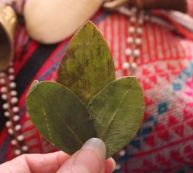
That said, I understand that when people are asking about a spiritual path, they are really asking about a methodology or a philosophical framework by which to deepen their conscious connection to their lives. They are using the word “spiritual” in a gnostic sense: to deeply and truly experience the essence of their lives. They are seeking to revitalize their lives, to resacralize them. Let’s face it, from the factual biological perspective, we did not have a choice for life. If we are here, it is not because we did anything to be here. Our “spiritual” belief about the nature of existence is another thing entirely. To imbue physical life with a sense of the sacred is a choice, even an act of will. Since we are here, we are free to seek meaning, to understand the possible “why” of it all. The irresistible magnetism of meaning-making is what elevates us above our purely biological life and informs our humanness. Every life matters, but we alone, among all creatures, decide to consciously choose how to ascribe meaning to our lives. Doing so presupposes that we have chosen a framework to explain that “why.”

In my own exploration of the “why” of life, and as a means to sacralize my life and choose to consciously develop myself, my choice for a “spiritual” approach is the Andean tradition. That choice comes after decades of exploring, testing, and practicing in other traditions. The same might be true for you. From the fourth-level perspective, following the Andean “sacred arts,” as don Juan Nuñez del Prado likes to call the tradition, is an exploration of our inner world, but without that inner focus being either an over-absorption with the self or a rejection of the outer world. So much of what matters in the outer world is shaped by and even dependent upon the state of our inner world.

In the Andean cosmovision, we are seeking to know ourselves, called kanay: to know who we really are and, more importantly, to have the personal power to live as who we truly are. Our approach is not outwardly directed either through formulaic practices or channeling power through sacred objects. Ritual, ceremony, and supernatural connections are wonderful, and there are good reasons for them, but they also can become a distraction or even a trap. What matters is our connection to ourselves, because the quality of all that we can share with the outer world is proportional to the quality of our inner state of being. As the Vedic tradition teaches, we are not in the world, the world is in us.

Via the Andean tradition, how we engage the world is dependent of the quality of our consciousness and of the sami energy we can share through our ayni. One of the most insightful teachings I have received from don Juan Nuñez del Prado is that there can be more power in offering a single k’intu than in making and offering an elaborate despacho. Our most important work is invisible: itK'intu Lisa Sims cropped compressed is inner directed and yet utterly relational to the outer world and other people. We work on the inside so that we connect more authentically with what is outside, as free as possible of our heaviness (especially the heaviness created through our projections, illusions, personal judgments, and the like).

This inward exploration is focused both on the “who” and the “why” of ourselves. In the Andean tradition, the Inka Seed is the repository of that information and knowledge. The Inka Seed is said to be the connection to our origin, which is with God, The Unknowable, The All, Wiraqocha—or whatever name you give to the non-physical force that is the bestower of the originating breath (spirit) that gives life to inanimate matter. In one respect, our Inka Seeds are exactly alike: they contain every capacity that a human being is capable of expressing. In another respect, no two Inka Seeds are alike, for each of our Inka Seeds constellates these capacities differently, so that we each truly are unique in the expression of our humanness.

For me, when it comes to the “why” of our beingness, there is a “Big Why” and a “Small Why.” The Big Why of our lives is why any of us are here at all, in human form with our astonishing human capacities. The Small Why, which to my mind is the more important one, is utterly personal: it is “why” of our individual lives, of our distinct expression of this humanness. It is this Small Why that Barclay is speaking about in the opening quotation, and it is this Small Why that can set us on the search for a “spiritual path.” We share the same common and singular path: life. But we have an amazing variety of frameworks that can help us access the personal power to singularly express ourselves and create a life that reflects our kanay.

There is an almost infinite distance between the belief that there is no meaning to life and the belief that each of our lives is imbued with sacred significance. Don Juan, and his son, don Ivan, very poetically express this latter view by saying each one us has a distinctive place in creation that no one else can fill. If we are not aware of why we are here, if we don’t know ourselves and our singular kanay—and therefore are not living our individual expression of whatever God is—then it is like there is a hole in the fabric of creation. They are not the first to express this idea (others from Eileen Caddy to Dr. Suess have said as much), but it is an idea worth being reminded of repeatedly: there is one, and only one, spiritual path—your life. There is only one of each us. Forever and forever and forever there will only ever be one you. Whether you believe that to be true or not, what a tragedy not to live as if it were true!

All of this can sound cliché. You’re unique. You’re special. You should take how special you are to heart and start acting like it. We’ve heard it a hundred times, right?

Well, knowing and doing are two entirely different things. Which is why the “doing” of actually living your life as you is so rare. We are used to being who others think we should be, or who we think they think we should be. When we are mindless or dismissive about how we shape ourselves not to our own inner “truth of being me” but to what others’ value or prefer we be, we disconnect from ourselves (our Inka Seed) and, thus, from our lives. As Shakespeare wrote in As You Like It: “All the world’s a stage, and all the men and women merely players.” This is a quotation that tends to pop up (tiresomely) when someone wants to remind us that we are all pretty much alike, just making it up as we go along, and living our fictions, or even our delusions, of ourselves. And there is some truth to that. But, keeping with the theatre quotations, we also can live upon the stage of life as creative artists of the self. As playwright Lee Small said, “The point of theatre is transformation: to make an extraordinary event out of ordinary material right in front of an audience’s eyes.” That is the point of life as a spiritual path: to reveal the extraordinary within our very ordinariness—and then not be afraid to show our extraordinary selves to the world.

We are not being solipsistic or cultivating a false grandiosity. And our approach certainly is not to take ourselves too seriously. It is hard to be creative when we are overly serious, and life as a spiritual path is about nothing if not serial acts of creative expression. From the Andean perspective, paqos are beings who cultivate their inner joy. So, to resacrilize our lives we would benefit from cultivating two core sensibilities: that of pukllay, a sense of playfulness; and of tusuy, of performance. Life is our ritual. Life is our ceremony. Rather than find or choose a “spiritual path,” we treat our lives as the one and only path, where every ordinary moment can become imbued with a sense of the sacred. The very word “individual” comes from the root meanings of indivisible, inseparable, one, unified. For each of us, every insight into our individual kanay—into what makes you you and me me—becomes a way of more lovingly gathering the disparate or disowned aspects of ourselves into a realized whole.

However, when it comes to actually living life as a spiritual path. . . well, that is easier said than done. I will leave you with a quotation I just came across that is the perfect conclusion to this post and reminder that ayni is not just about intention, but action.

From T.E. Lawrence’s The Seven Pillars of Wisdom:

“All men dream; but not equally.
Those who dream by night in the dusty
recesses of their minds wake in the day
to find that it was vanity; but the dreamers
of the day are dangerous men, for they may
act their dreams with open eyes, to make it
possible.”

©Photo of k’intu is copyrighted by Lisa McClendon Sims.

Working with Khuyas: Part Three

To finish our discussion of working with khuyas, this long post continues the question-and-answer format, focusing on using khuyas, especially for healing. If you have not read Part One and Part Two, please go to the archive to access those posts.

Because the majority of the information in this post concerns healing, please be aware that energy healing is not a substitute for certified, professional healthcare if someone has a medical condition. We are yanantin: we have both a mystical body and a physical body. A paqo deals with the mystical body. An allopathic medical professional deals with the physical body. Of course, there is overlap, but our areas of responsibility are different. As don Juan Nuñez del Prado says, “As a paqo we have to be absolutely clear that we are not medical doctors. We don’t do that kind of healing. We are healers of the soul. That is our part, unless you are at the fifth level [the level of consciousness associated with infallible healing]. You can only think in those terms if you are fifth level, and we know there are no fifth-level healers around yet. In the meantime, let the medical doctor do his job and you stay as the soul doctor, which is what the paqo is.”

What are the various uses for khuyas?

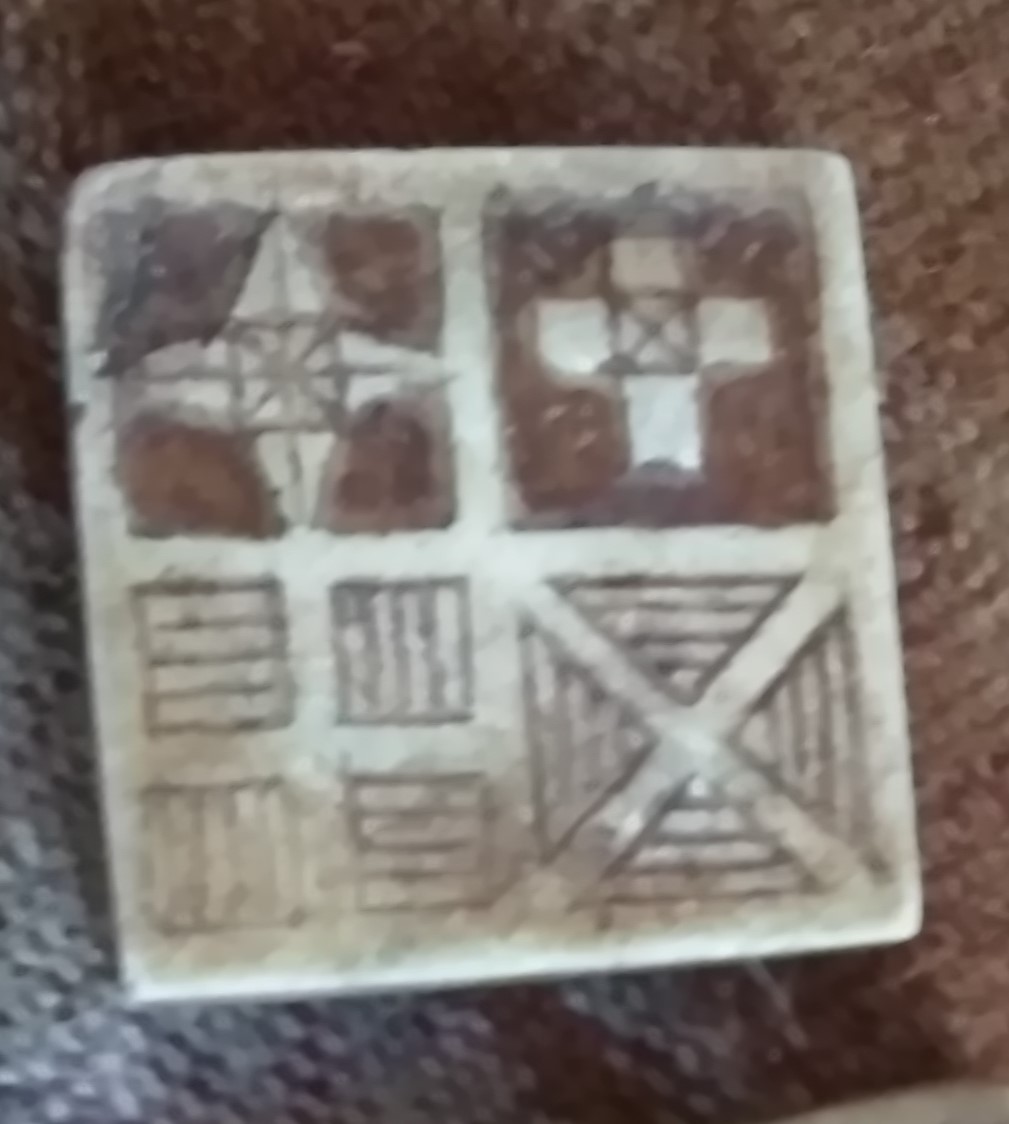
There are many ways to use a khuya, a few of the most common of which are focusing a paqo’s attention while moving energy to aid healing, for teaching, and for connecting with a teacher or the lineage. Don Benito Qoriwaman had a large, square, carvedMasintin-Yanantin Khuya cropped khuya that he used to teach the principles of masintin (similar) and yanantin (dissimilar but complementary) energy dynamics. It had four quadrants, with a representation in each quadrant of an object that is considered either of female or male energy. He would test his apprentices by asking them about the various masintin or yanantin relationships among the sybmols.

If we have a khuya that was given to us by a paqo, we can use it to  connect with that paqo, perhaps even to receive mystical teachings through it. And of course, through such a khuya, we also can connect to the entire lineage associated with that paqo, or more generally with the lineage of all paqos. If a khuya comes from a sanctuary or a natural sacred site such as an apu, the same type of connection can be made to the power of that site, which we can pull to us through the khuya

Does a khuya have healing power?

Yes, but not in and of itself. Most paqos who perform healings will tell you that they are not doing the healing; they are channeling or marshaling the power of Mother Earth (Mama Allpa), or of the whole material universe in its feminine representation as Pachamama (Mother Cosmos) or masculine representation as Pachatayta (Father Cosmos), or of a spirit being of nature, such as an apu or ñust’a. In addition, they are channeling their own sami and munay through the khuya. From the fourth-level perspective, they are using intent to move energy in the service of healing, and so they are not turning their khuyas into fetishes. A festish is an object that we think has power or into which we invest our own power, so if we lose that fetish, we have lost a source of power (its power or our own) and are unable to work. Seeing objects as having power in and of themselves is more of a third-level perspective. Seeing them instead as outward symbols or conduits of our inner power (or as objectified channels of a nature spirit’s power) is more of a fourth-level approach. So, in healing it is not the khuya that matters, but our karpay. Our karpay is the amount of personal power we have available at the current time to use to tune energy, and then to do something with that tuned energy, such as sharing it during a healing session. So, for the most part when it comes to healing, a khuya is only as powerful as our own karpay.

How do we use a khuya to channel our power?

The effective use of that khuya as a channel for our own sami is influenced by the quality of our ayni and munay. All healing comes through munay, which is love under our will. When we have cultivated our munay, we can be in deeper and more profound ayni with the person on whom we are performing the healing. Don Juan Nuñez del Prado tells us that when we are in ayni, when we are channeling our energy through munay, then in healing we are willing to touch the other person’s hucha. There will likely be no healing without the willingness to do that. And there is nothing to fear in doing so, as we know that hucha is not harmful, contaminating, dirty, or evil energy: it is just slow sami. Still, we have to be willing to totally and deeply connect with the person, which means touching their hucha and helping to transform their hucha.

It’s important to understand that hucha does not cause disease. Illness is often caused by a purely physical vector: a virus or bacteria, exposure to toxins, genetics or the immune system gone awry, and the like. The virus, bacteria, and genes are pure sami: they are living, natural energy. There is no moral overlay onto them, because they are just doing what they do—what nature designed them to do. Our health habits and other personal choices can open us to infection by these natural agents, and our genesIllness or cold Pixabay cold-g0c81af917_1920 and immune systems are subject to influence by our thoughts, emotions, stress levels, repressed energies, and the like. These mental and psychological influences are what most often cause us to create hucha for ourselves, which may keep us from dealing well with our health or other challenges. Thus, there almost always is an emotional component to experiencing illness: heaviness can arise because of fear, anxiety, conflicted feelings and ideas, and the like. None of those emotions or mental states automatically creates hucha. These emotions may be perfectly appropriate responses to something happening to us. But when they become chronic or are inappropriate to or misdirected beyond the immediate situation, then they can create hucha. As paqos, we are working on a person’s mystical body, and we can use many different methods, from focusing mostly on their poq’po (which we can see as their psyche) to working to clear hucha from the  ñawis. As a result of improving a client’s energy field by reducing their hucha and increasing their sami, the disease also may be affected in positive ways. Remember, sami is the life-force energy, so increasing it—regardless of which method is used to do that—is a way of indirectly working on the disease itself.   
If we don’t need a khuya to perform a healing, why use it all?

All of the factors explained in the above paragraphs influence why we (working from a fourth-level perspective) tend to see khuyas as not having powers of their own, but as serving, if we so choose to use them, as externalizations of our internal state. We don’t need a khuya to perform a healing, but we can choose to use one to help direct our intention and energy. We can use it as a focal point for our attention, intention, and personal power rather than as an instrument of healing power itself. In this regard, don Juan says that “working with khuyas is a creative endeavor.” He reminds us that sami is always moving, and through a khuya we can remember that and so better channel, direct, and use that sami energy. We can use a khuya to help us focus and connect to sources of power, both within ourselves and outside ourselves, such as with a spirit being or our yanapaqkuna (personal helper spirits). Then, as don Juan says, “How you use that power is up to you.”

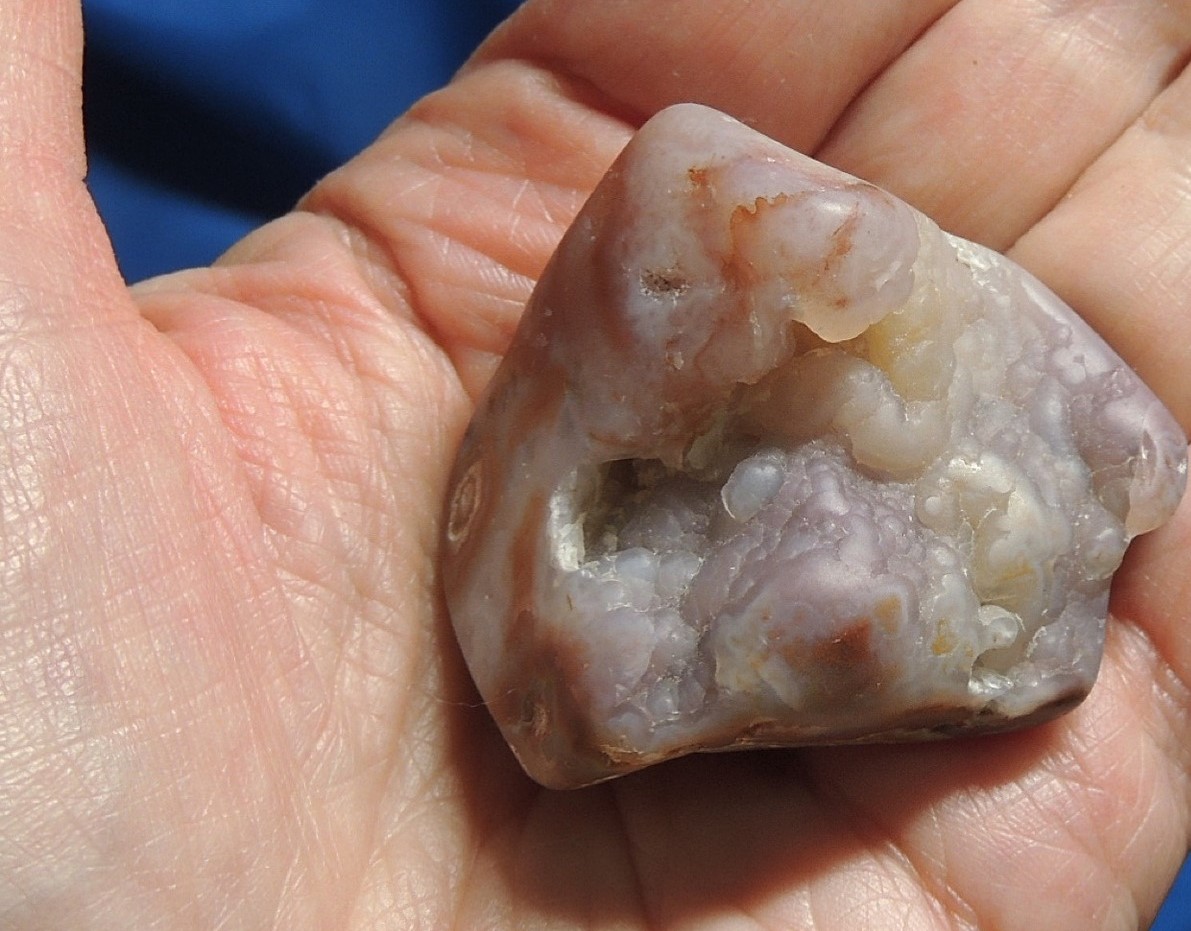
More importantly, our clients may need us to use one or more khuyas, or even some other object of “healing power.” Clients, especially those new to energy work, may have a psychological need to see some kind of outer action or ritual in order to believe anything is happening and, thus, to consciously or subconsciously engage their own self-healing capacities. For this reason, weKhuya cropped chalcedony-g1baa106b3_1920 may choose to meet their expectations and provide that “healing experience” for them. We are not duping or manipulating them. We are simply undertaking the energy work just as we always do—which is invisible work, marshalling and channeling our own sami and munay, our own personal power and intent, or channeling that of a spirit being—but we can do that while also creating an outward display that meets the emotional needs of our client. There is one “must do” I tend to tell people who ask about healing through an outward ritual: the important stance is not that we do what we always do or were trained to do in a rote manner—such as always using the same methodology or ritual for each person—but that we always, first and foremost, meet the other person exactly where they are and creatively adjust what we do and how we do it to meet their individual needs.
How do we work with khuyas or other objects, such as our misha, if we choose to use them in healing work?

For brevity, and assuming most readers of this blog have been trained in the techniques of saminchakuy and saiwachakuy, and understand the mystical anatomy, I will provide a list of ways we can channel energy while choosing to use an externalized representation such as a khuya.

Saminchakuy/Pichay and Saiwachakuy

We can perform a pichay, which means “sweeping.” This is a saminchakuy during which we move the khuya, or our misha, over the person’s body and through their poq’po with the intention of pulling in sami and sweeping hucha down to Mother Earth. It’s always a good idea to follow this practice with a saiwachakuy, which is pulling up sami from Mother Earth to empower the person. During the pichay, the siki ñawi is the ñawi to spend a lot of time on because, for almost all of us, it holds the most hucha.

Khuya Karpay

A khuya kaypay, says don Juan, is “learning to work through structure.” In this case, the practice is a structured or organized way of using a khuya to focus our intention to release hucha from all of a person’s ñawis (mystical eyes), one at a time, and then after the hucha cleansing, to empower each ñawi by bringing sami from Mother Earth up and into it. We have some flexibility, as energy artists at the fourth level, to decide how we do this: 1) we can do the full cycle of cleaning and then empowering each ñawi, one by one, or 2) we clean all of the ñawis first, moving down the body, and then move back up the body and empower each ñawi in two separate sweeps.  

Either way, usually we start the process at the top of the body, at the qanchis ñawi, the seventh eye, and then move down the body. If we are using the first method, we would perform a pichay, sweeping hucha from the qanchis ñawi and then empowering it with sami from Mother Earth in a saiwachakuy. Then we would work on the two physical eyes, which are ñawis, repeating the process. We skip cleaning the sonqo ñawi because it has no hucha, and we just empower it. We continue to move down the body to the qosqo ñawi, and we end at the siki ñawi, where we tend to spend the most time since it usually has the most hucha. If a person is lying on their back, work on the siki ñawi through the root, which is at the front of the body, rather than the eye, which is at the back of the body.

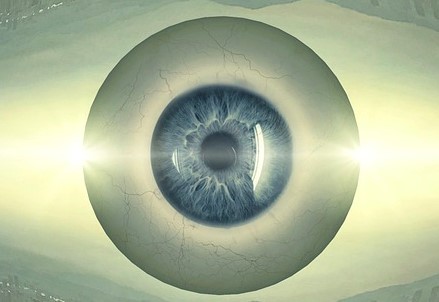
Another form of a khuya karpay is to receive the assistance of the teqse apukuna—universal spirit beings—who are associated Mystical eye Pixabay fantasy-gc83e0a966_1920with each ñawi. In this variation, we might place a khuya on or near each of the seven ñawis. Then we work down each ñawi, one by one, from the top of the body to the root. As we do, we call in the specific teqse apu associated with that ñawi and use the khuya we have placed there to work with that spirit being to do a pichay at that ñawi, sweeping hucha from it. (Except at the sonqo, which has no hucha). Once the hucha release is done at a ñawi, together with the helper spirit, we pull up earth energy (in a saiwachakuy) to empower that ñawi and its capacities. Then we replace that khuya and move down to the next ñawi, using the khuya placed there and calling in the spirit being associated with that ñawi and repeat the process. And so on down the body.  

The ñawis and their related teqse apukuna are: upper three eyes have no specific helper spirit, but we connect to the cosmos through them, so we can call on the assistance of Pachatayta, Father Cosmos. At the kunka, the spirit being is Tayta Wayra, Father Wind. At the sonqo, Tayta Inti, Father Sun (for empowerment only at the sonqo). At the qosqo, Mama Allpa, Mother Earth. And at the siki, Mama Una, Mother Water.

There is no fixed way—and no right or wrong way—to perform a healing or empowerment, so we can be energy artists and change things up, perhaps even receiving inspiration and counsel from the teqse apukuna. For example, the empowering sami might not come from Mother Earth, but be directed into the ñawi directly from the spirit being itself, as each is a source of pure sami. What matters most is that in some way or another, each ñawi be cleansed of hucha and then empowered with sami.

Increasing a Client’s Access to their Inka Seed

This is a way that I see we could productively undertake a slightly different kind of khuya karpay. It is based on a teaching from don Ivan Nuñez del Prado. As he so eloquently discussed in one of our conversations, we can see the various ways we carry hucha as different kinds of screens or filters that prevent us from fully accessing and expressing our human capacities and, thus, our Inka Seed. If we have a lot of hucha, as we go to express our Inka Seed or any of the capacities of our ñawis, the energy emerges and flows but then hits one of our emotional screens and that energy reflects out as hucha rather than the pure sami of our Inka Seed. So, I have adapted the khuya karpay to focus on cleaning these hucha screens from each ñawi (except the sonqo), focusing our healing intent on the human capabilities that may be diminished by those hucha screens. After clearing some of the hucha that is acting like a screen around each ñawi, we can empower the ñawi and that capacity by bringing up sami from Mother Earth or, if we are working with the teqse apukuna, allowing the spirit being that is associated with that ñawi to empower the ñawi and associated capacities with its own sami. In this kind of khuya karpay, the process is the same as the process described previously, and the difference is in our intent, which rather than focusing on a general hucha release is purposefully directed at moving the energy around any emotional screens that may be affecting each ñawi and its capacities.

The capacities are as follow. The three uppermost eyes are associated with qaway: the ability to see the reality of ourselves and this world as it really is while also developing mystical vision. So, qaway relates to being able to simultaneously bring awareness to both the material and mystical worlds so that we can know the whole of ourselves and the whole of reality. At the kunka ñawi, the capacity is yachay (experience and thoughts) and rimay (expression). There is no hucha at the sonqo ñawi, which is the seat of the most refined feelings and of munay. Even though there is no need to perform a hucha release, we can work here to bring in more sami, helping the person more easily access and express their highest feelings, especially munay. At the belly, the capacity of the qosqo ñawi is khuyay, the ability to use personal power to take and sustain action in the world and to make healthy emotional bonds with others (and with beliefs, values, causes, etc.) At the siki ñawi, the capacity is atiy, bringing our impulses under our conscious control, and measuring and marshalling our personal power to act in the right way at the right time.

These are some of the core methods of working with khuyas, especially in healing. No doubt there are many others, but, to my knowledge, most are some form or another of the basic healing practices of saminchakuy and saiwachakuy. (I deliberately am not discussing hucha mikhuy, because we wouldn’t need or want to use a khuya or misha during that practice.) Of course, anything we can do for another person, we can do for ourselves. So, we can use any of these techniques to heal, improve, and empower ourselves.