
The word karpay in the Andean mystical tradition refers to an initiation, but if we dive  deeper, the meaning expands to bring light to what an Andean initiation is really all about—and it takes us beyond the initiation itself into the heart of this energy tradition.
As an initiation, a karpay is a transmission or interchange of energy. Thus, it is most often thought of and experienced as ayni—an energy exchange of sami.
For example, in the Karpay Ayni you exchange your finest sami with another person. You place your hands on the person’s head and transmit your finest sami to that person through your makis (the secondary energy centers in the palms of your hands). When you are done, the other person reciprocates by sending his or her sami to you in the same manner.
A karpay does not have to involve ayni as we usually think of it in terms of an energy exchange of sami between people. For example, in many karpays—such as the karpay to the second or third level of the path—a paqo might take you into the mountains to a sacred lake. There you both would strip down and immerse yourselves in the lake, releasing hucha into the water and empowering yourselves with sami from the cosmos and/or from the apu. So this karpay is a form of saminchakuy (a cleansing and empowering) and an exchange with nature and/or spirit beings.
When we take that dive deep into what is going on in a karpay (initiation), we discover the root meaning of the word: it is your personal power.
 Your karpay is your capacity for personal power at the current time. It is related to atiy, the capacity at the yana chunpi (the belt around the lower trunk of the body) and the siki ñawi (mystical eye at the base of the spine), where you measure your power at the current time and under the current conditions. You can only energetically accomplish what you have the personal power to do, so your karpay is your capacity for pushing the kawsay at the current time. The quality and amount of energy you transmit and receive in a karpay as initiation is proportional to your own capacity for radiating, absorbing, and using energy—which is another way of saying it is your personal power.
As one example of karpay in its “deep” meaning, consider that when you have a goal or desire you want to accomplish or realize, you can only fulfill that desire according to your karpay—the amount of personal power you have avaiilable to use. Perhaps you want to start a business. But as you do, you find that you are running into many difficulties and making a lot of ill-timed or ill-conceived decisions. You can’t get the business up and running smoothly. Of the many factors that are influencing that turn of events, one may be your capacity to push the kawsay. You just don’t have the personal power to accomplish that goal at that time. Realizing this, you can work to accumulate the personal power—and skills and talents and other factors; and of course, the cleansing of your poq’po and absorption of sami—to help you be successful next time you try.
Here’s another example, which demonstrates a different aspect of karpay as personal power. I remember Juan telling me about don Melchor offering him the karpay to the second level. He, don Melchor and don Melchor’s son, Marco, went up to Apu Ausangate to do the karpay, but Marco got very sick and they had to return home and so did not get to do the initiation. Later, don Melchor expressed the opinion that Marco’s sickness was not due to any physical condition or outside factor but to his inner lack of energetic capacity—he did not have the personal power to deal with the intent and work of the initiation. His karpay was not sufficient.
One final example: When don Benito first saw a new client in his healing clinic, he would assess energetically both his own capacity and the client’s for the healing. He might determine that the client needed to first see a physician before coming back to be treated by a paqo. Or he might see that this client was not “for his hand,” and so refer him or her to another paqo who was better suited to deal with this client’s problem. In certain ways, this process was don Benito’s assessment of his and his client’s karpays—his measure of  his own personal power as it relates to this client and the client’s energetic capacity to participate in his or her own healing with don Benito.
We don’t often use the word karpay to refer to personal power, but that is at the heart of its meaning. When you think of karpay as an initiation, consider that at the root of this transfer of energy are two people and their capacities—one must have the personal power to transmit the energy and the other to receive it and use it well. Both are in an energetic exchange based on their measure of karpay (personal power) at the time they are seeking to make the exchange and on their capacity to share that energy.
Now that you have a fuller appreciation for the word karpay and its meanings, you can better assess your own karpay. Pay attention to your root—yana chunpi and siki ñawi—in order to measure your personal power at the current time. Attend to your belly center—puka chunpi and qosqo ñawi—to remain aware of how you are engaging your main power center, the place from which you most interact energetically with the world. Bring awareness to the condition of your entire poq’po (your energy body) and use saminchakuy to cleanse and empower yourself.
Doing so will allow you to better “see reality as it really is” in terms of your kapay. You will more clearly know what you need to do to increase your energetic capacity so that you can more effortlessly push the kawsay to fulfill your goals and desires. Rather than seeking “initiations,” your more profitable work as a paqo is to accumulate personal power so that you can engage fully and wisely in the world of living energy and in the real, action-oriented, relationship-rich human world.
 At a recent workshop I was teaching, I mentioned that I think doing some psychological “shadow” work can propel you along the Andean path toward conscious evolution much faster.
 Jung’s Map of the Soul, “the shadow is the image of ourselves that slides along behind us as we walk toward the light. The persona, its opposite, is named after the Roman term for an actor’s mask. It the face we wear to meet the social world around us.”
 shadow. You can see, then, how important shadow work is to your endeavor as a paqo. One of your goals as a paqo is to be qaway—to see reality as it really is. If you are not exploring your shadow self, you cannot easily realize that goal.
 In his book High Country: The Solo Seeker’s Guide to a Real Life, depth psychologist David M. Alderman quotes Cal Jung about the value of fostering union with the inner and outer self—the conscious and unconscious selves. As a paqo, you can think of this as a yanantin pursuit that reaches japu. “Through the union of the opposites within us, we are able to discover our true selves beyond what our conscious awareness alone could ever make of us. . . . Through the conscientious union of the opposites within us, the true self emerges spontaneously into the conscious light of day; the conscious ego-based ‘I’ is literally transcended, and in its place arises a real, self-renewing, living being.”
 sonqo ñawi) have no hucha. Therefore, there is no need to ever “clean” these areas. They are pure sami, and so while you can bring more sami to them for additional empowerment, you never have to clean them.
 hate, admiration, jealousy, joy, disappointment, and on and on.
 to be easily influenced by what we are experiencing and they change over time. Emotions, thus, are a major generator of hucha.
 your approach to cleansing your poq’po. Perhaps you will see progress with emotional hucha that has until now been intractable. When you work on the centers that really matter—especially the qosqo—perhaps you will find your well-being radically increased. As interesting will be the effect in clients for those who work in the healing fields. If you are working at the level of the heart with clients, perhaps your effectiveness at helping them activate their self-healing capacities might be enormously increased through this shift of awareness and focus to the qosqo as their emotional energetic center. I would love to hear from you about this!
 teaching of don Benito Qoriwaman, there are seven levels of consciousness that can manifest in humans on earth, although currently we have manifested only four and are eagerly awaiting the fifth level, which is part of prophecies that foretell the rise of the New Humanity.
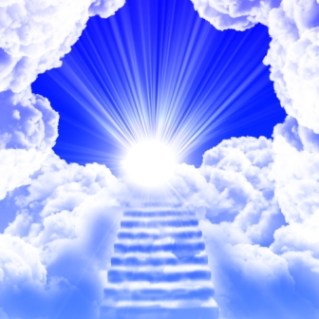 Stairway of Seven Steps. This stairway of consciousness starts at the zero level, which is the ground floor from where you step up and onto the first step.
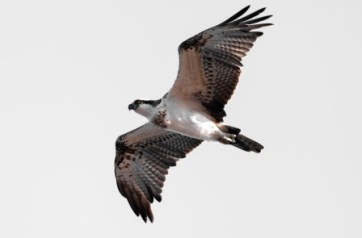 e ability to direct your own personal destiny. In the Andes, the bird of the first level is the killichu, a small falcon.
 e truth and I have finally found it” mentality. This is the level of consciousness most common in the world at the current time. It drives the most common religious and political agendas. It displays as stubborn nationalism (democracy is the best system, the U.S. is the best country), narrow views of spirituality (“X” is the only path to salvation), and intensely committed political affiliation (the rabid communist, socialist, Libertarian, Republican, Democrat). Very often this mindset drives one to become the “savior” of others, who don’t yet have the truth and so must be shown the way. The anka, or eagle, is the Andean bird of the third level of consciousness.
 figures and teachers can be guides but can’t solve problems for you—you need to find the answers through your own personal experience and insight. A fourth-level teacher guide students but allow students total freedom; they teach so the student can leave and walk their own walk. While you find your own way and see beyond boundaries, this is not an “anything goes” level of consciousness. You choose your personal beliefs and have opinions, but they are subject to change as you change. You stand up for what you believe in, but you don’t insist others believe as you do and you never belittle or ostracize others who hold different views. You are totally yourself and allow others to be totally themselves. The kuntur, or condor, is the Andean bird of the fourth level.
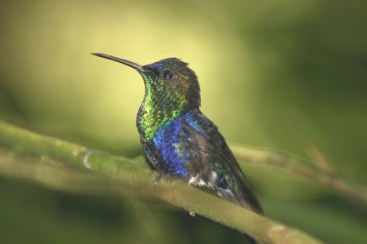 those found in the Bible in the Book of Acts, including raising people from the dead. At the fifth level you can also manipulate matter in others ways (such as manifesting a gemstone out of thin air) and can overcome the constraints of time and space as we know it (such as by teleporting or bilocating yourself). You can move in realms beyond the current known laws of physics. The bird of the fifth level is the q’enti, the hummingbird.
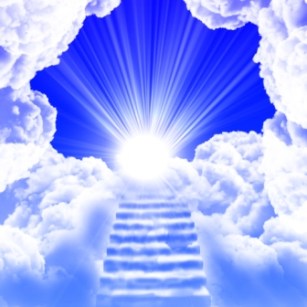 and teach it. It’s a path of conscious evolution, both for each of us individually and for us collectively as a species. According to the prophecies of the tradition, we are accumulating the personal power to birth a grander self and the “new humanity.”
 tale. It is about being the passionate yet sober energetic warrior who lives from his or her Inka Seed. Expanding your personal power may not be easy or comfortable. For whatever reason, we humans tend to learn and grow through challenges. As paqos we strive to “see reality as it really is,” and sometimes reality appears to be a opponent rather than a ally. Our work as paqos is to look beyond appearances to what physicist Bruce A. Schumm calls the “deep down things.” The power is qaway.
 The law of ayni can be surprising! Using Karpinski’s example, as we develop munay, we may indeed draw to us those we can easily love. But we might just as easily draw to us those whom we struggle to love. Both results fulfill the law of ayni, although the latter is decidedly more difficult a lesson in the ayni of self-awareness and growth. No rose-colored glasses here! But no need for them either, as you, as a paqo, have all the practices and tools you need to meet the challenge (or, more accurately, the opportunity) the kawsya pacha has seen fit to offer you.
 The whole point of this post is to urge you to pay attention to more than the surface roads of your work as a paqo along life’s journey. Your destination is certain—you will one day return the gift of your life back to the kawsay pacha. The question is if you will have evolved as much as you can through your practice. Have you discovered and then used all of your gifts? Have you shared them with the world?
 Q'enti Wasi - House of the Hummingbird