
A common question people who are new to the Andean tradition have is whether the chunpis—the energetic belts of the poq’po (energy body)—are similar to the chakras. They are not. The misunderstanding arises for several reasons that I won’t go into here. But let’s take a look at the differences, acknowledging that both are complex subjects and I will provide only a cursory overview.
Tradition of Origin
The concept of chakras is Eastern—usually Hindu or Buddhist in origin.
The chunpis are Andean.
To call the chunpis “charkas” is to confuse two entirely different traditions, for as you will see below, there is little to no similarity between chunpis and chakras.
Energetic Structure
Chakras are usually described as spinning or swirling vortices of light energy. The  word itself is Sanskrit for “wheel” or “disk.” Traditionally, there are seven of them, aligned along the spine from the root of the body to the top of the head. They are centers where energy and matter meet, facilitating the flow of the life-force energy. The chakras are aligned with major nerve plexuses and organs of the body, and each is associated with a color and with various human emotional traits and states of consciousness, which we will discuss briefly later.
The chunpis are belts or bands of kawsay, the animating energy of the universe. This Quechua word literally means “belt,” and there are four belts, with a quasi fifth belt. The lower belt is at the trunk of the body, wrapping around the hips and between the legs. The three other chunpis are around the belly area, the chest area, and the throat area. The quasi fifth belt encompasses the two physical eyes and the seventh eye (called the third eye in other traditions) at the center of the forehead.
The chunpis are not wheels or disks. I remember once giving the karpay to weave the belts to a large group. A man who had been taught the karpay by another teacher and then coached by me was helping me. I overheard him say to the person he was working with something along the lines of: “Now see a brilliant red energy around your belly. See a brilliant spinning disk of red.” I had to stop him. The chunpis are not disks! They are bands that wrap around the body and interpenetrate it. They are not connected to or aligned with the spine, as chakras are, nor do they spin.
Each chunpi has an “eye,” called a ñawi. Except for one, the ñawis are opposite the  spine. For the three upper belts, the ñawis are at the front of the body. For the lower belt, it is at the back of the body, near the base of the spine.
The chakras always exist. You come into human form with them. For optimal well-being, the chakras must be “opened” and balanced. If they are not balanced, then some chakras become overactive to compensate. Energy practices include opening the ckakras (there are various methods and practices) and restoring balance to any underactive ckakras.
The chunpis do not exist until you weave them into your poq’po, which is what you do during the karpay, called the Chunpi Away (pronounced “ah-why” and which means “to weave” in Quechua). In contrast, the ñawis exist from your birth. The work is to “awaken” or “open” these mystical eyes. This part of the karpay is called the Ñawi K’ichay.
Both the chakras and the chunpis are associated with colors and elements. The seven chakras from the lower chakra to the higher are associated with the following colors: red, orange, yellow, green, light blue, dark blue/indigo, violet.
For the chunpis, the lower belt is black and is associated with water. The belt around the belly is red and is related to earth (and, by the way, this belt is not 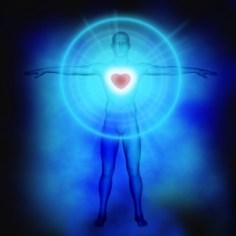 associated with the sacral and solar plexus areas; it is around the entire trunk of the body at the belly area and the eye is usually located below the navel). The belt around the chest/heart level is gold and associated with the sun. The belt at the throat is silver and linked with moon and wind. The quasi fifth belt for the two physical eyes and the seventh eye is violet. However, it is not really a violet band of energy. The color of the belt is that of your two physical eyes. It is sometimes, for ease of reference only, called the violet belt because at the end of the karpay you pull violet light into your poq’po through the seventh eye. But you move that violet light through your entire poq’po and body, not just through this eye area of your head.
Capacities of Consciousness
Both the ckakras and chunpis mediate flows of energy to and through the energy and physical bodies. The consequence of blocked or stalled energy is the same in both systems, loss of well-being. However, the similarities of the energy dynamics stop there.
For the chakras, the four upper chakras are said to relate to spirituality and our  higher cognitive and emotional capacities, such as insight, creativity, and love. The three lower chakras are associated with our more physical and instinctual selves, including survival, self-image, social bonds, power, family, and the like. The elements and senses of the belts are usually identified as follows: the root chakra with earth and sense of smell, the sacral with water and taste, solar plexus with fire and sight, heart with air and touch, throat with ether and hearing, third eye with light and perception, and crown with spirit and being.
The capacities of conscious for each chakra are too long a list to go into here, but generally the root chakra is the life-force and connection to earth and physicality, survival instinct and capacity to be a stable physical being in the physical world. The sacral chakra is about relations and relationships, sexuality, impulses, creativity, and confidence. The solar plexus is associated with emotions, identity and self-image, power, and strength. The heart relates to feelings, love, trust, and safety. The throat capacities include communication, expression, and will. The third-eye chakra relates to ideas, mind, insights, inner expression, and intuition. The crown is associated with spirituality, wisdom, and awareness.
The chunpis, in contrast, each confer a specific range of capacities. They are not, as some say, belts of “protection.” The entire range of energy practices in the Andes (as passed down through the two lineages I was taught) is to master your energy so that you can perceive and relate to every nuance of kawsay. Since the entire cosmos and everything in nature is made of sami, there is nothing to protect yourself from. The capacities of consciousness encoded within the belts can be both realized abilities we already use in the world and potentials that are as yet not developed. The specific capacities are as follows:
- The three eyes (two physical eyes and seventh eye) confer a capacity for insight and mystical vision, called qaway.
- At the throat, the capacity is rimay, which is to speak with integrity and power, and also to speak with magical power, such that the sounds or vocalizations you make can affect physical reality.
- At the heart and Inka Seed level is kanay, the capacity to be who you really are, to express and live your mission here on earth.
- At the belly, the qosqo, is personal power, especially in relation to the kinetic capacity to take action in the world and to live with khuyay, or engaged passion.
- At the root, the capacities involve being able to time your actions for maximum effect and to measure your power at the current time.
As you can see, the physical, mental, emotional, psychological and energetic capacities of the chunpis are quite distinct from those associated traditionally with the chakras.
This has been only a brief overview, but I hope you now better understand how different these two systems of “energetic anatomy” are and why using terminology from one tradition when referring to the dynamics of an entirely different system is not only imprecise but can be downright confusing.
 energy, negative or positive energy, angelic or demonic energy within the kawsay pacha itself. There is nothing contaminating about kawsay to extract from your own or another person’s energy body (poq’po). If you have enough personal power (ayni), there is no need to protect yourself from energy and, thus, the chunpis, or energetic belts, have nothing to do with protection, even though some still perpetuate that misunderstanding. In the kawsay pacha, energy is just energy, just like an electron is an electron and a photon is a photon. I want to extend this discussion now to talk about the nature of evil and how we can view it from the perspective of Andean mysticism.
 enlightened or nearly enlightened being) who perfectly absorbs and radiates energy on behalf of the community. All humans have the capacity to be Enqas/Inkas—perfect mediators of kawsay, allowing it to flow in to nourish us and to flow out again to continue to move through the universe. A metaphor is the rain cycle: water droplets flow through the atmosphere, fall to earth, are absorbed by the earth to fuel plant growth, and then the plants respire and the water condenses and rises again, and so the cycle goes. Nothing is trapped; it is absorbed, fuels life, and flows on.
 hucha) fool you into thinking this sets up a dichotomy for kawsay itself. It does not. Kawsay moves along a spectrum, from sami (unrestricted flow) to hucha (slow or stuck energy) in relation only to humans. Hucha is still kawsay, only slow moving. Learn to improve your ayni (energetic reciprocity, capacity to absorb and radiate kawsay) and you reduce your hucha and/or stop creating it. And, if you can’t yet turn hucha into sami, then give it to someone who can, like Mother Earth or a skilled paqo, both of whom “eat” hucha and return sami (or, in other words, get slow energy moving again).
 inhabited the underworld. But from what we know of the “underworld” according to the mystical system, these were probably not demons as we think of them in the Westernized, Christianized sense. The people of the lower world—the ukhupacharuna—don’t know ayni. They are unable to participate in the core energy dynamic of the cosmos—energetic reciprocity. Thus, as mystics, we can see them as devoid of knowledge rather than as demonic in nature.
 understanding. (There are seven levels of consciousness; most of the world currently is at the third level). The Hebrew Bible was first translated into Koine Greek, and the Koine Greek word for what came to be translated into “Satan” was kategoro, which means to “categorize” or to create a “division.” The Greek word for “Devil” was diabolos, which means “accuser” or “slanderer.” I think you can immediately see that the meanings of these words are a far cry from “evil.” It is interesting that when I asked several paqos about the devil or fear of evil, they said that the devil or evil is that which divides us or separates us—separates us from knowing ourselves and from knowing and being cooperative or empathetic with others. Their understanding is closer to the Koine Greek meanings than to the codified Christain meaning of Devil and Satan.
 the heaviest way. . .
 history. Let’s look (in grossly simplified terms) at what a few of those philosophers have to say so that we can see how the Andeans sit alongside these giants of thought.
 He ascribed to this energy a “logos,” or a rational structuring principle that controlled, arranged, and ordered the cosmos. He was a major proponent of the ontological philosophy of “becoming,” believing that while the Whole is ordered, beneath it everything is always changing, moving, in flux and flow. In this sense, he, like Anaximander, saw “becoming” as arising in relation to space and time. He also articulated a law of transformation, which some misunderstand as a law of opposites, by which things flow from one state—for example, hot—to their counterpoint—cold. Unlike Anaximander, Heraclitus believed in a creator.
 itself. In one of its many senses, the Wu cannot be separated from nature, because it is a metaphysical or transcendent “first principle” that cannot be separated from that which arises from it. This immanent creative force both underlies and infuses nature. It also is always changing, giving rise to the concept of yin-yang. Yin-yang is the polarity aspect of nature and being, where things are inseparable but complementary in their relation to each other, such as the polarity of male-female and light-dark. Bringing balance to the two poles creates harmony.
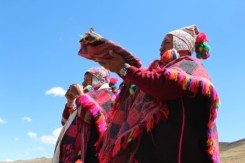 pacha. It is the primordial “living” energy from which all matter arises. It is First Cause, the immaterial and infinite moving energy and the energizing principle that fuels creation and evolution. From it arose all matter—called the Pachamama, which is the entire material universe, including space and time. In fact, the word pacha means both space and time, as inseparable aspects of the one Pachamama. Like Heraclitus, Andeans believe that there is a creator, one of whose names is Wiraqocha, which means something like “foam of the sea,” the sea perhaps being the vast expanse of the flowing energy of the cosmos. Kawsay, as this living energy, is beyond human moral overlay. There is not good or evil energy, not angelic or demonic energy. Energy is just energy.
 energy there are really only four core energy dynamics, and they are pairs of polarities: light/refined energy and heavy energy (although lightness and heaviness run along a spectrum) and compatible and incompatible energy (in relation to your own energy body, the poq’po). Awareness of these flows helps us to manage them and, thus, to avoid creating hucha (heavy energy) and to increase our sami (refined or “light” energy).
 story about who you are when you are at a job interview, another when you are stepping out to a nightclub, another when you are sitting with a group of other parents as you watch the kids play, and so on. You are quite literally a different person depending on the situation you find yourself in. That’s not to say that you don’t have a stable core personality, belief system, point of view, and so on. You do. But you parse the facts of that inner landscape and, just like a novelist, play up one aspect of the self at the expense of another depending on the needs of the present moment. Your career path highlights different facets of the self than does your dating style than does behavior at a family reunion. So one way to take a self-inventory is to examine the stories you tell about yourself, where and when you tell which story, and how stories shift according to your emotional state.
 “Gosh, I have been working so hard. I am going to tie one on tonight!” The id is what says, “I love those shoes, and they’re on sale! Another $50 of my credit card is not going to break the bank. Those shoes are mine!” The id inserts itself in your life in all kinds of ways, and it pays to look for its voice in your stories. The id tends to surprise you, even ambush you. It’s what we tend to call “losing self-control.” The id is a great companion when you really do need to cut loose and lighten up, stop being so serious or overloaded, and need to take a break. Pleasure is fine. Self-indulgence within limits is healthy. But if your id has taken over the writing of any portion of your story, it’s worth a look at why, how, where, and when so that you can bring yourself back into balance.
 there are going to be parts of yourself that you reject, deny, and even repress. These aspects of the self—that you learn or believe are not acceptable to the world or others—get stuffed down into the “shadow self.” They are alive and well there, below the threshold of consciousness. Part of the path of self-actualization is to return these denied aspects of the self to the light of awareness, acceptance, or understanding. The methods of doing that are too complex and numerous to discuss here, but they include identifying your emotional triggers, taking back your projections, probing for the emotions and wounds fueling the story, and gaining access to as yet unexpressed gifts and talents. The ego and the shadow are the main author of our stories, so it’s almost impossible to write the story of “who you really are” without doing shadow work.
 guilty, shameful, and so on depending on the situation and expectation. Bottom line is that you feel you have let yourself or others down. Your conscience also stirs you toward living up to the concept of your ideal self: toward expressing compassion, empathy, good deeds, etc. Your ideal self is just what it says it is: the “perfect” you. Your belief about what constitutes perfection is heavily influenced by your families, friends, culture, mass media, religion, and so on.
 instance, many of your core beliefs about yourself and the world are projected onto you, and you accept those projections. Who you are as a child may be the figment of others’ imaginations! As a child, your parents projecting their own beliefs, judgments, and stories onto you, and you take all of that on as if it were really who you are. Maybe you were labeled the quiet one, or rebellious one, or smart one, or athletic one, or stupid one, or mouthy one, or kind one. Chances are that the way your parents saw you is the way you see yourself at the unconscious shadow level, and those beliefs rear their unruly heads in your adult stories, no matter who much you try to edit them out or revise them.
 administration and how much fear they feel imagining what the next four years holds for our country.
 “there’s nothing I can do” attitude many of us have shared. A renewed time of self-reflection to determine personal opinions, beliefs, and boundaries. A renewed sense of civic duty and purpose. A renewed demand that our elected officials have to give up partisan power plays for a return to good old-fashioned statesmanship.
 words, change isn’t easy. And during change, there can be a messy transition as the old morphs into the new.
 squeeze an orange, what do you get?” Orange juice, of course. Exactly what you would expect. In other words, the quality of your “beingness” is commensurate with the effect you can have in the world.
 dive into—and begin to own up to and heal—our shadows. He can be seen as the perfect foil to force us to inquire about and explore our individual and collective shadow.
 what level of consciousness they are at. You cannot reason at the fourth level with someone on the second level. It’s like talking French to a Hindi speaker. So don’t waste your energy. You would be better off trying to deeply understand where that person is—and where you are—and acting from the level you are on rather than descending to the other person’s level (as so many protestors are). Better yet, find a fourth-level way to communicate at the second level so that person will hear and understand.
 For the new times, the totem has changed to the hummingbird, which is a producer of sami. While there is still plenty of hucha around, the focus has shifted from eating hucha to making sami—and that’s a seismic shift.
 Working to increase the sami in an already hucha-filled field doesn’t mean you won’t be distressed by the words and deeds of Trump and Bannon and others when they espouse discriminatory and even hateful views or try to pitch lies and half-truths as policy. But it does mean that you don’t do similar things—such as shout vile slogans or get emotionally overheated by your own rhetoric. The stance of the paqo is that we do a personal mast’ay—we organize ourselves. And once we do, then we can contribute to the collective mast’ay. A mob cannot create a state. But a group of individuals who are doing their own inner work—and doing it as a paqo within the field of the Taripay Pacha—can come together and fuel an incredible transformation in the public body.
 Q'enti Wasi - House of the Hummingbird