
In my trainings, the general topic of the “spiritual calling” sometimes comes up, as well as discussions of how all too often when we feel we are progressing along our spiritual path our lives seem to become chaotic and challenging for some time before they improve. In our discussions, I usually refer to the “stages” or “signposts” of the spiritual journey, and that’s the subject of this blog post.
There are many philosophers, mythologists, spiritual teachers, and others who have written about the stages spiritual seekers pass through or the signposts seekers commonly find along their path. The map of the journey that I draw below is my own view on this topic. I provide only an outline of the stages of the journey. There is a lot more to say, but this will suffice to alert you to where you are in your spiritual journey.
- The Disquiet
The first indication that you are on a spiritual quest or beginning a spiritual journey is what mythologist Joseph Campbell designates “The Call.” That is a  beautiful and apt term to describe the first stirrings within yourself that life as you know it is not acceptable to you and that you desire something more: more connection, more peace, more joy, more engagement, more service, more meaning. . .whatever it is about your personal experience and state of being that feels unexplored, unlived, undeveloped. Simply put, there is either a calamity in your life that shouts to you “Enough!” and you are propelled toward change; or there is a niggling voice within, often quite subtle, that pesters you toward change. Either way, you come to the realization that you want more, can do more, can be more. Most of us at some point in our lives feel this inner disquiet. Unfortunately, many people tend to ignore it and instead just get back to the business of life, the pull of everyday responsibilities, and the safety of the known. Those who listen to this inner call, however, have stepped onto the path of their spiritual quest.
- The Search
Once you heed the call, your journey begins. Almost universally, it starts with a search for answers to sometimes existential questions about meaning, strategies for change, and people who can provide advice, information, and insight. The search can be the longest stage of the spiritual quest, as there are many paths to growth and they can create inner confusion because they may provide competing and even conflicting strategies for self-development. Sometimes the cacophony of voices you listen to can be so overwhelming that the spiritual journey ends here, with you throwing up your hands in despair and taking the easy path back to what you know and the life you have lived to this point. You squelch the call and retreat to the familiar or rationalize that the spiritual quest and self-development is just not worth the effort. For those who can withstand that task of sorting through the vast reams of information and handling the often conflicting advice, the search becomes an experience rich in the widening of your intellectual, emotional, and spiritual life. The search itself becomes a journey of growth.
The downside of this stage is twofold. First, you can become addicted to knowledge at the expense of practice, sucking in information but not really using it to transform yourself and your life. Or, alternatively, you can become so unsure of yourself that you never end the search. This is what I call the “workshop junkie” response, where you seek, and seek, and seek (always gaining knowledge) but you don’t trust yourself to end the search and begin the true work of transformation. The “best” answer always seems to be the next book, training or teacher, and the next, and the next. . . . Ultimately, however, you have to settle on an “answer” and a practice, which leads you to the next stage.
- The Answer
If you are to transform, you finally have to do the work of transformation. You have to settle into a sustained practice, committed to using it fully and over time to  reap the benefits. This doesn’t mean that you have to choose a single path forever—say a particular school of meditation, or the practices of a particular tradition such as the Celtic or the Andean or whatever—but you do have to commit to a single path or practice for long enough to use it well, perhaps even to master it, so that you incorporate its beneficial effects. You might then move on to another practice, but you then also give that practice sufficient time to help you do your inner work. The trap of this stage is also two-fold: you become dogmatic in believing you have found the single only “real” answer and become fanatical about it. Or, you don’t give sufficient time to that practice to reap its rewards.
I remember being in the Amazon working with the Mother of All Plants, ayahuasca, and her telling me during an inner journey: You can heal through anything: tai chi, meditation, psychotherapy, but you have to have the integrity to follow that path deeply and well and sufficiently. The bottom line is that at different stages of your growth, there will be different answers: different practices that can best help you grow to the next level of consciousness. Being committed and flexible is an useful approach.
- The Crisis
In the Andean tradition, we call the inner transformation and our conscious development a mast’ay. This is a restructuring, or better yet a reordering, of the self. That is sometimes not a comfortable or graceful process. A crisis can be what propels you onto the path of personal transformation in the first place, becoming your call to action. But crises also often occur as a consequence of your inner work.
For many spiritual seekers, there is a view that if they are successfully working their practices and path, their lives will change for the better and continually improve. That is often true. But it is also true that just as often improvement is interrupted by crisis. The crisis may actually be a good thing! It may be a sign that you are doing your work and are ready to up your game. Here’s why: You have to walk your talk. You will be asked by Spirit to take off your rose-colored glasses and see yourself as you really are—what you have mastered and what you still need to work on. And the universe will provide that opportunity. In my trainings, when I am talking about this, I often quote from wise woman Gloria Karpinski. She wrote in one of her books, as an example of this kind of “test,” that when you put out the intention to the universe that you want to “be love”—live from love, treat others with love, etc.—the universe probably won’t send you thirty people to love. It will send you thirty people you cannot stand and say, “Love them.” Those are wise words indeed. If you truly want to walk a spiritual path, you will have to—sometimes moment by agonizing moment—put your intention into action.
It can take discernment to figure out what is going on as a crisis or challenge develops. It could be that you have not done your work well, and you inner shadow is coming out and wreaking havoc. This the call for self-observation. You need to realize something about yourself and make an effort to own it, heal it or transform it, and grow. Or, it could be that you have done your inner work so well that the universe is going to provide you the perfect opportunity to live it out loud. To my mind, this is not the universe testing you. It is rewarding you! But only you can determine which of these possibilities is true in the crises that may come up in your life.
- The Renewal
As your personal mast’ay (inner and outer restructuring) continues—and, really, this is a lifelong process—you may well emerge from any crisis to a higher level of consciousness: what we would call the fourth level in the Andean tradition. This is a state of being in which you can transcend boundaries, seek cooperation instead of competition, remain clear in your own opinions and beliefs while allowing others to have their own, and find a bridge between the mundane world (which you live in more fully than ever) and the spiritual (which is an understanding that allows you to live in a different, healthier and more productive way in the world and to interact with your fellow human beings in a more harmonious way). The renewal stage can make you feel high! You can be the picture of contentment, happiness, and even joy. And you foster that in others, because you have explored your shadow self, taken back many of your most disturbing projections, and calmed your most explosive triggers.
The challenge of the renewal stage is change. It is my experience that three common reassessments take place—and they can have huge reverberations in your life. 1) You reassess what you are doing with your life, especially your form of service or  work and you make a change; 2) you reassess the people and relationships in your life to more clearly see how they are (or are not) serving you and how you are (or are not) serving them, and you make necessary changes; and 3) you reassess your place on the Mother (your home location) and you relocate. In other words, in their most dire expressions, you break up a relationship or marriage, your quit your job, and you move. Sometimes these are necessary transformations, because, after all, you are changed and you see the world (and act in the world) in a changed way. But usually such major disruptions are not necessary—at least not in an abrupt way. My best advice is that when you feel the best (and are reassessing most deeply), do nothing! At least not for a good long while. The old Buddhist adage “After enlightenment, the laundry” applies. Your goal is not to be spiritual and surrounded by spiritual people. Your goal is to be most self-actualized human being and to live in the very real world that way. The question is, “Can you take your relationship, job, and home environment to the next level of satisfaction?” Doing the work on these three most important aspects of your life may be the deepest aspects of the renewal period.
That said, it is also true that during the renewal reassessment, you can also discover “who you truly are” and what your life mission is. Living from truth and clarity may mean that some aspects of your life need to be transformed. The challenge then is to not wait from a sign from God or the Spirits, but to actually undertake the transformation even with incomplete knowledge or feelings of insecurity. When making either small but consequential changes or sweeping and even dramatic changes, risk is involved and so courage is called for.
- The Disengagement
Most, if not all, of the stages of the spiritual quest up to this point are about doing: change, transformation, decision-making, and action. This stage is completely opposite, as its name indicates. It is about non-doing. Well, to be accurate, it’s not so much about non-doing as it is about not wanting to do. Not everyone goes through this stage, but enough of us do to make it worth talking about. It’s a difficult stage to describe because it can take many forms and occur with varying force.
The overriding sensibilities at this stage are feelings of lack of connection, motivation, and passion. This is what might be called the existential crisis—a period when you question all meaning, and if meaning even really exists (as some independent “thing” outside of yourself).
This stage usually arises when you have completed important inner work, especially  that of self-actualization. You have taken back projections, unhooked from triggers, learned self-observation and self-monitoring (self-control), attended to incongruities within yourself and outwardly in your life (relationships, profession). You have reduced your “needs” and realize that mostly what is left is “choice.” But you may be experiencing such equanimity that choices seem pointless. You feel dispassionate about everything! You can end up lacking motivation to engage in life, instead only going through the motions and putting on a mask so your family and friends don’t worry about you. If that is the case, you may have to, as some psychologists advise, fake it until you feel it (engagement in life—meaning) again.
The challenge is that this ennui can shift into a real depression and you may withdraw from life. The antidotes to such reclusive impulses are contemplation and patience. It’s time to stop judging or analyzing yourself (and life) and just let yourself be. This is a stage in which you can wean yourself from the highs and lows of human emotions: with needing those emotions to tell you what you feel and what is worth moving toward or away from, and from needing emotions to stimulate you and make you “feel alive.” Thus, this is a stage of inner stillness, which just happens to be mirroring itself in outer stillness. Don’t confuse the two! When you realize you are unhooking from the sugar high of emotions, you can “detox” in a healthy way and not confuse the move toward inner equanimity with the loss of self.
Ultimately, you will emerge from this stage. Usually, it takes the realization that while there might be some grand spiritual plan for your life, the reality is that you may not be able to know it except through the day-to-day living of life. In other words, to use a cliché, it really is the journey and not the destination that matters. There might not be any supernatural hand guiding you (or you might not need to feel it anymore), so you will just have to guide yourself. This realization does not mean you lose a spiritual perspective or belief; instead, it is your recognition that spirit will be realized through you so you are better off just being you and living your life again. Another cliché rears its head here: you learn that the magical is the mundane. And, finally, you learn to be comfortable in the lap of paradox and to befriend the Unknowable.
- The Reconnection
When you are able to deeply honor the simple, mundane, and every day, you are ready to reconnect with and revision your life. You might or might not regain your  passion, but emotions don’t matter. You are making a choice: to re-acknowledge your humanness and to retake your place in the human world. To steal the title of book of physics that sits on my bookshelf, you are the owner of the “deep down things” within yourself, and you are ready to rise up and explore the mysteries of being yourself in the world—really yourself. This means that while you may feel like an island, you are part of an archipelago—a community. You both choose your closest community with newfound awareness and you open yourself to the boundary-less of your connection with all of humanity (and all of life). That is not some grand sentiment. Instead, it simply means that no one is off limits, except those you choose not to invite in. Choice is imperative. You do not have to a friend of everyone to be a friend to everyone. In fact, in the reconnection, you never waste your energy pretending. You own your choices. That includes choices where you say, “No, thank you.”
In fact, being able to determine your true choices, wants, and needs (we all still have them!) and acting on them without being hypocritical, duplicitous, or manipulative and without losing your manners (kindness and consideration) is the liberation that comes with this kind of reconnection. Life is always about the externalization of your internal state of being. In reconnection with or the revisioning of the self—this seventh stage of the spiritual journey—that externalization is of the state of both fidelity to yourself and humility about yourself. As Ernest Hemingway wrote, “There is nothing noble in being superior to your fellow man; true nobility is being superior to your former self.” In reconnection, no matter how far you know you can still go, you never forget how far you have had to come.
 are nothing like chakras. I am adamant about this, even though very early in my training, before I knew better, I too used the word “chakra” as an analogy to explain the energetic concept of chunpis. (See the glossary definition of “chunpi” in my original book Keepers of the Ancient Knowledge and the revised and updated paperback version Masters of the Living Energy.) I was wrong. I came to know better. It is not my intention here, in this blog post, to explain or try to persuade you of why there is no connection between chunpis and chakras. I have done that in a previous post: “Chunpis and Chakras,” May 12, 2017, which provides an overview of how the chunpis differ energetically and structurally from chakras. Here I am making a different point, because many students have also been taught that there are more than four chunpis . They talk about seven, like the seven main chakras. Some students even tell me that they have been taught that our poq’pos—our energy bodies—are evolving and that in the future there will be more chunpis, up to twelve.
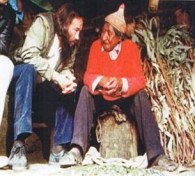 Prado. These teachers were don Benito Qoriwaman and don Melchor Desa from Wasao and the Waskar lineage, and don Andres Espinosa from Q’ero and the Inkari lineage. That leaves a vast range of knowledge from other lineages and teachers (past and present) from the Andes untapped and unknown. So, I acknowledge that I know only a tiny portion of this far-reaching and eons-old tradition. But the teaching itself that we already have is what convinces me that there will never be more than four chunpis—there simply is no need in the future for more.
 tory of the energy of future potential as fully enlightened beings. Also within our Inka Seed are all the capacities we need to express and live our unique life mission as human beings here on Earth in the physical. We don’t need anything more. We just need to develop consciously what is already within us. Our evolution is not dependent on forming new energetic structures, but on developing the consciousness to connect to and express what is already energetically part of us, especially in the Inka Seed.
 belts into our poq’pos, or energy bodies, we have everything we need to realize our enlightened selves. The four belts encode capacities that arise when we learn to harmonize and use the three human powers. When we do that, then we can consciously express our mystical powers. Compared to our mundane capacities, these mystical capacities appear to be supernatural capacities. But, really, they are not. They are our natural capacities, those already energetically encoded within us, only heightened because of our conscious evolution, which depends on releasing hucha so that our poq’po is mostly sami and thus is more harmoniously and energetically coherent.
 energy centers and not technically ñawis. They are the uma at the top of the head, the two makis (one in each palm) and two chakis (one in the sole of each foot)
 natural world we are part of. When scientists, particularly mathematicians, are seeking the fundamental laws of nature, things are very complex when they start. Their white boards are filled to overflowing with complex equations. But then they finally have the eureka moment—when they discover the law of nature—and they find they can express that law in incredibly simple terms. The wall of dense equations becomes e = mc2 or F = ma. Of course, that is not always true, but you get my point. Why complicate the beauty, grace and simplicity of the Andean tradition with overlays of philosophy from other traditions, such as Hinduism? It isn’t necessary, and, in fact, it can prevent you from developing as quickly. When you think you need to evolve more energetic capacities or mystical organs in some future time, you see yourself as incomplete in the here and now. That is not what the old paqos tell us or teach us. We are complete already. We only need to do the (hard) work of bringing to consciousness all that we are and increasing our energetic coherence to use what we already have.
 group. During that trip, as always, I learned new information and received refinements of old information about our practice as paqos and the tradition in general from Juan Nuñez del Prado and his son, Ivan. Since I cannot write directly to all my past students, I am hoping to inform them of this information here. Of course, I hope everyone who practices the tradition, former student of mine or not, benefits from this information.
 convenience sake. There are only four belts, and this area is simply an energy center comprising the three eyes. While you pull in violet light here at the end of the Chunpi Away karpay, the color of this belt, as I have always stressed to students, is the color of your physical eyes. Also, there is no cone here, as there are in the other four belts. Instead, there is a seqe (energetic cord) from each of the three eyes that converge in the middle of the head and then curve down as a single seqe to meet the spine at the top of the spinal column.
 skull with the yanantin mullu khuya are actually fields of energy, one gold (on the right) and one silver (on the left). The fields cover each side of the head, but as you draw the yanantin mullu khuya back over the skull and toward the neck, these fields narrow into cords/seqes. You then cross the gold and silver cords at the middle of the neck and pull them down to the base of the spine.
 willka as the highest nature energy, higher than huaca/waka energy (sacred energy). It is, he said, the “most sacred of the sacred.” In addition, it is the most pristine energy of nature, and it persists in nature wherever it is found no matter what happens at that place over time. In fact, willka is the natural sacred energy that infuses places identified as healing sanctuaries (such as Wanka in Peru, or perhaps Lourdes in France, etc.). And, of course, you can produce willka yourself. Whether you experience it in nature or generate it within yourself, when you touch willka energy and work with it, it can trigger visions, bring to light information you did not previously have, and reveal to you what is inside you (your state of being).
 being makes the choice to grow or not. As Ivan said, you can have a perfectly great life at the zero level as a “natural” human being. However, if you do choose to grow and to climb the stairway of the seven levels of human consciousness, then it is important to be able to know when you have achieved the next level. Juan described one way of knowing: You have reached the next level when your three powers (munay, llank’ay and yachay) are all expressed at that level. In other words, if two of your three powers are fourth level, but one is still being expressed within you at the third level, then you are at the third level, not the fourth. Only when all three powers are being expressed at the same level can you say you have achieved that level.
 came to stay with me in North Carolina. During his multi-week visit, he shared this “journeying” technique with me. I now pass it on to you. Traditionally, you need to have chunpi stones (formally called mullu khuyas) for this practice. However, since everything in our practice is intention, if you
 don’t have chunpi stones, you simply can find a stone that is shaped like a triangle or dome, or that has a single protrusion that is mountain-like. Work with the stone, connecting it to a mountain or apu that you feel a relationship with. Build that relationship and connection for a week or so before doing this journeying practice. When you feel ready, use the stone as outlined below for the journey.
 lightning. My elders, especially my grandmother, used to say to me, “You are a special daughter and child; you have a star, you carry the star medicine.” At that time I didn’t know what they meant. The star medicine means the medicine of the elders. When they worked, I assisted. It was very familiar. It was one more thing that we did in our lives. Very familiar. I assisted my elders, and then my parents sent me to school. At the end, when you are ready you will know what path to take. I could have chosen the career. I went to university, and that showed me how to have a career, to stay in line. But my wish was to help people. Why? Because in my dreams, even when I wanted to stop, my elders in my dreams are always talking to me.
 me. I talk to them, but sometimes I don’t receive an answer. Mostly they talk to me rather than me talking to them. I work with Apu Pachatusan and Apu Manuel Pinta. Also Apu Wiraqochan. The elder apus of my area. However, only alto mesayoqs can always talk with the apus. Today, it is very, very rare to find someone who can talk with the apus. I use my condor, my guide too. My ancestors who can talk through me. I am a mediator. In Wasao we have four holy caves. In those caves, people live even until this day. People like elves or fairies. We call them machulas, elders. I call them elders. They are alive and we live with them. You don’t see them but they see you. But you can feel them. Elders from the mountains and elders from the caves. They guide us in the medicine. Every day we are learning. Nothing is finished as a student or a healer. What I recommend to my people is to meet the elders, as they are like doorways. Learn how to connect, how to deal with them. There are rules. For example, they don’t like be insulted or used. We only talk to them if they allow us. They send a message to us and allow us to talk to them. They send us a sign. They carry the medicine. And this area, this valley, is the valley of Waskar. This is the lineage of Waskar Inka. Warkarpay Lake is a top sacred place here.
 Q'enti Wasi - House of the Hummingbird