A Paqo in a Turbulent World

Recently, students and fellow paqos in several classes I teach or co-teach have expressed their dismay at the state of the world, especially the state of the information universe as created by podcasters, news-media pundits, and politicians in the United States. They ask, “How did we get to this level of complaining, exaggerating, lying, shaming, ostracizing, tribalism, anger, and even violence? And, how can so many people be swayed, persuaded, even fooled by the outlandish conspiracy theories and easily-refuted misinformation that floods the online landscape and television airways? What happened to logic and reason, to debate and compromise? When did we lose respect for moral standards, tolerance, and just plain old politeness?

Good questions. There are no easy answers, but these conversations prompted my thinking about good old-fashioned manners. And that led me to thinking about the human value called “virtue,” which not only is out of fashion, but by today’s standards seems downright Victorian.

Don Juan Nuñez del Prado and his son, don Ivan, have said that in order to better develop munay, we would do well to first develop virtue (among a few other values). Virtue, to define it as directly and simply as possible, is behavior fueled by high moral standards. Morality, of course, is a concept itself that is difficult to pin down, for usually it arises from a world view or even an organized dogma. There are various “moral universes.” In terms of virtue, there is the religious sense of virtue, the humanistic sense of virtue, the atheistic sense of virtue, the utilitarian sense of virtue, and on and on, including standards that we adopt not from an established system of authority but from our own individualistic value system. So, when we talk about virtue as high moral standards, we have to ask ourselves to whose standard are we seeking to conform?

To answer this question, I turn to the point of view of a group of Santa Clara University professors, who co-authored an article “Ethics and Virtue.” They write, “For many of us, the fundamental question of ethics is, ‘What should I do?’ or ‘How should I act?’ Ethics is supposed to provide us with ‘moral principles’ or universal rules that tell us what to do. Many people, for example, are passionate adherents of the moral principle of utilitarianism: ‘Everyone is obligated to do whatever will achieve the greatest good for the greatest number.’ Others are just as devoted to the basic principle of Immanuel Kant: ‘Everyone is obligated to act only in ways that respect the human dignity and moral rights of all persons.’”

These scholars then ask: “But are moral principles all that ethics consists of? Critics have rightly claimed that this emphasis on moral principles smacks of a thoughtless and slavish worship of rules, as if the moral life was a matter of scrupulously checking our every action against a table of do’s and don’ts. Fortunately, this obsession with principles and rules has been recently challenged by several ethicists whoDos And Donts Button Style argue that the emphasis on principles ignores a fundamental component of ethics—virtue.”

They list certain “virtues”—honesty, courage, compassion, generosity, fidelity, integrity, fairness, self-control, and prudence—and explain that virtue is not something we choose based on an idea or ideal, but is something we develop through our own experience. (I am pulling together various points they make into the following paragraph.) “Virtues are developed through learning and through practice. Virtues are habits. That is, once they are acquired, they become characteristic of a person. At the heart of the virtue approach to ethics is the idea of ‘community.’ A person’s character traits are not developed in isolation, but within and by the communities to which he or she belongs, including family, church, school, and other private and public associations. The moral life, then, is not simply a matter of following moral rules and of learning to apply them to specific situations. The moral life is also a matter of trying to determine the kind of people we should be and of attending to the development of character within our communities and ourselves.”

That explanation sounds a lot like what the Andean mystical tradition calls ayni. Ayni is often translated as reciprocity, but we have to dive into it a little deeper to discern its broader meaning. Ayni is intention coupled with action, which are then followed by both awareness that there will be an outcome and a commensurate new action/response in relation to that outcome. For indigenous Andeans and Quechua peoples, ayni is a value that serves, among other purposes, to strengthen social cohesion. When you search through the various definitions beyond reciprocity, ayni refers to doing a favor and returning the favor, or doing something for someone and expecting nothing in return (although the energy dynamic is that the living universe will return sami to you). So ayni always involves self and other, such that our choices are based on a consideration of how both parties can benefit. Ayni as an application of virtue, then, is a lived value. A value is a choice about who we want to be. Virtue, like ayni, is an application choice signs compressed Gerd Altmann Germany Pixabyof will to apply that value—or cluster of values—to reveal how we actually show up in the world.
As CS Lewis explained the relationship between a value and a virtue (as presented by Terry Glaspey in his review of Lewis’s teachings, Not a Tame Lion), “A ‘value’ is an idea we hold in our head about how things should be, it is a morally neutral term which specifies a preference. ‘Virtue’ in the other hand, is a quality of character which leads to action. All too often, values are something we only argue about; virtue is a way of living.”

Even the Buddha has something to say about virtue as action: “Just as treasures are uncovered from the earth, so virtue appears from good deeds, and wisdom appears from a pure and peaceful mind. To walk safely through the maze of human life, one needs the light of wisdom and the guidance of virtue.”

Virtue, as a  kind of ayni, is a stepping stone to munay, because munay is not the emotion of love, but the choice for love. It is love under your will. CS Lewis (again through Glaspey) says we should be wary of our emotions, because they are fleeting and changeable. “[I]f we wait to act with virtue until we feel like it, we might wait for a very long time. We don’t have to feel charitable to act with charity. I may feel no love for a difficult neighbor, but I may be called to help him or her.”

Whether you call this value virtue or ayni, it’s clear that it is much needed in the world today. Instead of practicing commonly shared values, we tend to be steeped in a kind of moral relativism where there is no consensus about the conventions by which we measure our words and actions as useful, helpful, and uplifting or not. At the extreme, there seems to be a complete absence of the awareness for the need for moral standards. Despite the complexity of any discussion about moral standards, I think we can all agree that when there is a lack of moral sensibility, we teeter on the precipice not only of social chaos, but also of personal inner turmoil. As Yeats writes in his poem “The Second Coming”: “Things fall apart; the centerCrumbling - hole-croppsed Pixabay2489333_1920 cannot hold; / Mere anarchy is loosed upon the world, / The blood-dimmed tide is loosed, and everywhere / The ceremony of innocence is drowned; / The best lack all conviction, while the worst / Are full of passionate intensity.”

Sounds a lot like our world today. . . 

This “center” is our moral center, the capacity for shared values that lift us up and fuel both our individual evolution and that of our collective humanity. The individual cannot be cleaved from the collective without losing an essential quality of what it means to be human: that we each are our brother’s and sister’s keeper. If ayni teaches us anything, surely it is this.

A chakaruna in the Andean tradition is one who builds bridges: between him- and herself and others, between communities, between traditions, between heaven and earth. When two groups find themselves separated by a turbulent river, each group gathered on opposite sides, the chakaruna—through an application of will, of ayni or virtue—begins building a bridge.

With that thought in mind, perhaps deep down it is not our disappointment or despair about the media onslaught of misinformation and our distrust (or disgust) at the people creating and perpetuating it that really disturbs us. Perhaps, deep down our discomfort is that we are witnessing, in unprecedented ways, the cleaving of the individual and of the warring “tribes” from awareness of our personal and collective responsibilities to each be productive and compassionate members of a human family. The disintegration of social cohesion can take us down one of two paths: it either leads to a potentially disastrous dissolution of collective bonds or to our collective transformation. Our discomfort right now may be that it is an entirely open question to which end we are racing.  

So, in our brief discussions of these topics in classes, my students and fellow paqos and I tend to agree that there is only one certain approach. It’s not an earth-shattering insight. It is the age-old adage that we have heard from Buddha, Christ, Gandhi, and so many others: take responsibility for yourself.

If each of us chooses to be a bringer of sami rather than of hucha, to be chakarunas—if we choose to cultivate our munay and improve our ayni  (and act from virtue in whatever measure we can)—then we Healing Hands Ayni Compresssed Dollarphotoclub_67573261each are undertaking a truly revolutionary act, and no doubt even an evolutionary one. Intention alone is not enough. Without action, we practice neither ayni nor virtue. Retreat from the social or political sphere certainly is an option, but one that, to my mind, is an abdication of responsibility both to the personal and the collective. None of us can thrive alone. But we cannot thrive collectively if we don’t agree to honor our common humanity, which starts with treating each other with tolerance, compassion, humility, and kindness.
As I tell my students, “You don’t have to like everyone or be friends with everyone, but you want to be able to bring some measure of sami to every interaction, no matter how challenging or difficult. Some of us choose not to do that. But some of us, because of our state of consciousness and the amount of hucha we carry, are unable to do that. If we are not able to do that, then choice ceases to be a factor and we have lost some of our personal power. If we are able to (despite our very human emotions), then we have acquired greater personal freedom.

The Rainbow Spirit Being

Who doesn’t love a rainbow? So, let’s talk about rainbow energy.

Let’s start by putting to rest one of the biggest and most persistent myths about the rainbow: that it was a symbol of the Inkas and of the Tawantinsuyu, the Inka Empire. The information circulating on the Internet that the Rainbow Flag, which you can see flying around Cuzco and nearby areas of Peru, was in any way associated with the Inkas and the Tawantinsuyu is false. As the National Academy of Peruvian History says: “The official use of the wrongly called ‘Tawantinsuyu flag’ is a mistake. In the Andean World there did not exist the concept of a flag, [and] it did not belong to their historic context.” The Congress of the Republic of Peru concurs. So how did the rainbow flag come to be the Rainbow Flag of Peru - Cuzco“official” flag of the city of Cuzco, which historically was the administrative center of the Tawantinsuyu? Chalk it up to marketing—by a radio station!
The rainbow flag seen around Cusco was created in 1973 through the influence of Raúl Montesinos Espejo on behalf of the Tawantinsuyu Radio station, which wanted something special with which to mark the twenty-fifth anniversary of its creation. Raúl Montesinos Espejo claimed that the rainbow was an emblem of the Inkas, but never produced any evidence to support that claim. However, that claim entered the stream of misinformation that plagues the Internet.

So, what can we say about the rainbow from an Andean perspective? Here’s what I have discovered. Although I assess sources as carefully as I can, I cannot attest that every fact about the rainbow shared below is accepted by the majority of scholars, anthropologists, folklorists, and others who share information about the Andean concept of the rainbow.

Depending on the dialect of Quechua you are using, the most commonly used words meaning “rainbow” include k’uychi, kuychi, chuychu, cuichu and kurmi. In the Amazonia regions, it is chirapa. Originally, the rainbow as a spirit being was not considered a “high” spirit or on par with the gods. But, the story goes, eventually the Inka nobles elevated it to equal stature because they considered it a symbol of the beauty of nature—but beauty that was reserved only for the nobles. Even once elevated in stature, K’uychi’s ranking was less than that of the two great yanantin deities, Tayta Inti (Father Sun) and Mama Killa (Mother Moon), and he was considered to be in service to them. Some scholars say that Chinceros, a village in the Sacred Valley not far from Cuzco, was considered the birthplace of the Inka rainbow deity, and so Chinceros is sometimes referred to as the “community of the rainbow.”

The Inkas generally came to see K’uychi as an important deity associated with agriculture, fecundity, and fertility in general, since during the rainy (agricultural) season it was common to see a rainbow stretching across the sky. The Inkas saw K’uychi as responsible for regulating the cycles of rain and sunshine, which are so important for the health of crops. They even considered the rainbow a protector of the crops. He is celebrated and venerated in festivals devoted to him, the main one occurring in December, which is in the rainy season in Peru. During this time, and at others, the Inka and the common people honored K’uychi by offering him sacrifices of llamas or other animals (and, as some sources indicate, perhaps even child sacrifices).

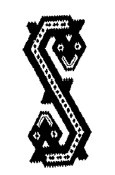
You may have notice I used the pronouns “he” and “him” in relation to K’uychi. The rainbow god was considered male. The attribution of the male gender to K’uychi may have had something to do with how the Inkas associated this spirit being with the Amaru, the anaconda. They sometimes represented K’uychitextil-serpiente-bicc3a9fala as a double-headed serpent: the head on each end of its sinuous body burrowed into the earth (submerging into underground springs) and the body arced across the sky. In other representations, the rainbow as serpent is depicted as held aloft by the jaguar god. K’uychi, though, is represented in its more common form as an arc of seven colors in its own temple within the sacred sanctuary of Qoriqancha.
Rainbows are associated with the occurrence of storms, and so with lightning, thunder, and hail. These same associations are attributed to the black (female) cat deity, Choque-Chinchay. Since both Choque-Chinchay and K’uychi were the harbinger of storms, and the forecasters of rain, hail, thunder, and lightning, an association formed between these two heavenly deities as well.

Andeans identify two kinds of rainbows: the celestial or hanaq pacha rainbow and the terrestrial or kay pacha rainbow, and their import for human beings could not be more different. The celestial rainbow was seen as a bridge between the hanaq pacha and kay pacha, and is associated with joy, healing, and beauty (as well as rain and fertility). The terrestrial rainbow is one created by light striking the surface of water, such as a river, puddle, or even the water filling the basin of an ornamental fountain. Seeing such a terrestrial rainbow can be dangerous, even causing illness. The Q’ero confirmed this view of earthly rainbows, but also ascribed danger to celestial rainbows as well. Back in 1995, I and a few friends were spending an evening sitting under a starry sky in the Raqchi sanctuary and talking with a group of six or so Q’ero paqos who (through a translator) told us about the rainbow, sharing information that is not found in the anthropological literature and, in some cases, contradicting that information. Here are how their comments were translated:

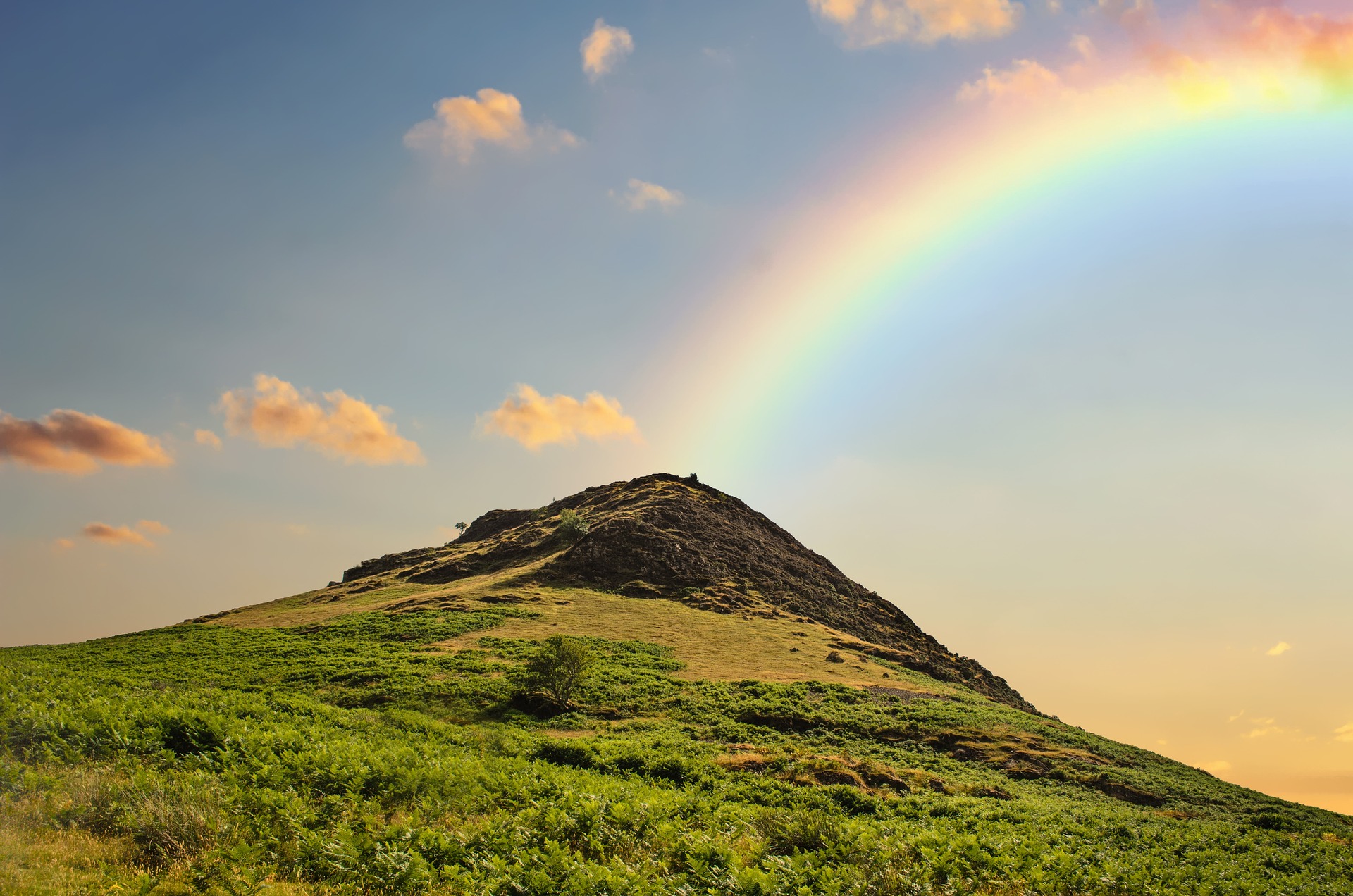
“When the rainbow emerges, all the magic of the sky weakens and withdraws; the sun even weakens. That’s why a rainbow is so powerful and dangerous. You should never watch a rainbow being birthed, because you can go mad, lose your mind. The rainbow is birthed of the water and the stars, and it is not until it puts on its disguise, its clothes, that anyone can see it. Without its disguise, it is invisible. You can rainbow-Pixabay 2571256_1920never see its original form; you can only see it when it puts its clothes on, its cloak.

“On Tuesdays and Fridays, seeing a rainbow is good luck, but on [Mondays], Wednesdays and Thursdays it can make you sick, giving you diseases that even the doctors cannot recognize or treat. However, paqos are the only ones who are supposed to read the message of the rainbows that come out on Tuesday and Fridays. On Mondays, Wednesdays, and Thursdays, sorcerers [called layqas] can manipulate the power of the rainbow. On Tuesdays and Fridays, the rainbow is on the left-hand side of the mesa, and on Mondays, Wednesdays and Thursdays it is on the right-hand side of the mesa.”

The paqos even described some of the illnesses a person can get from seeing a rainbow on a Monday, Wednesday, or Friday: gum disease or mouth ulcers and stomach ailments of various kinds. It is interesting to note that, according to information I have received over the years, many paqos hold their healing “clinics” on Tuesdays and Fridays. I don’t know if there is any connection to the power of the rainbow. I believe that the reason these two days are seen as auspicious for healing has more to do with each day’s connection to a specific planet. However, that these two days devoted to healing work are associated with the left side of the mesa [paqo path] makes perfect sense, as the left side is the path of action, including healing. One comment specifically about terrestrial rainbows came from another Q’ero paqo at another time: if a woman happens to see a rainbow reflecting from the surface of a river as she crosses the river, the rainbow can impregnate her. (Another sliver of evidence that the rainbow is considered a male spirit!)

As you can see, we risk misunderstanding the Andean culture, past and present, if we project our own nature myths onto them. For most Andeans, there are no pots of gold at the end of celestial rainbows. Just healthy, thriving crops. And the only thing we should do if we see a rainbow shimmering on the surface of an earthly body of water is avoid it!

Living a Good Life

In the Andes, and especially for paqos, a primary, if not the primary, goal of life is to achieve sumaq kawsay, which means, among other things, “living a good life.” Sumaq means good, nice, or happy. Energy human resized -4855706_1280 Image by Gerd Altmann from PixabayKawsay means to live, to be alive. Other ways of saying this include kusisqa kawsay, which means to have a happy life; and allin kawsay: to live the right kind of life or a life of goodness.
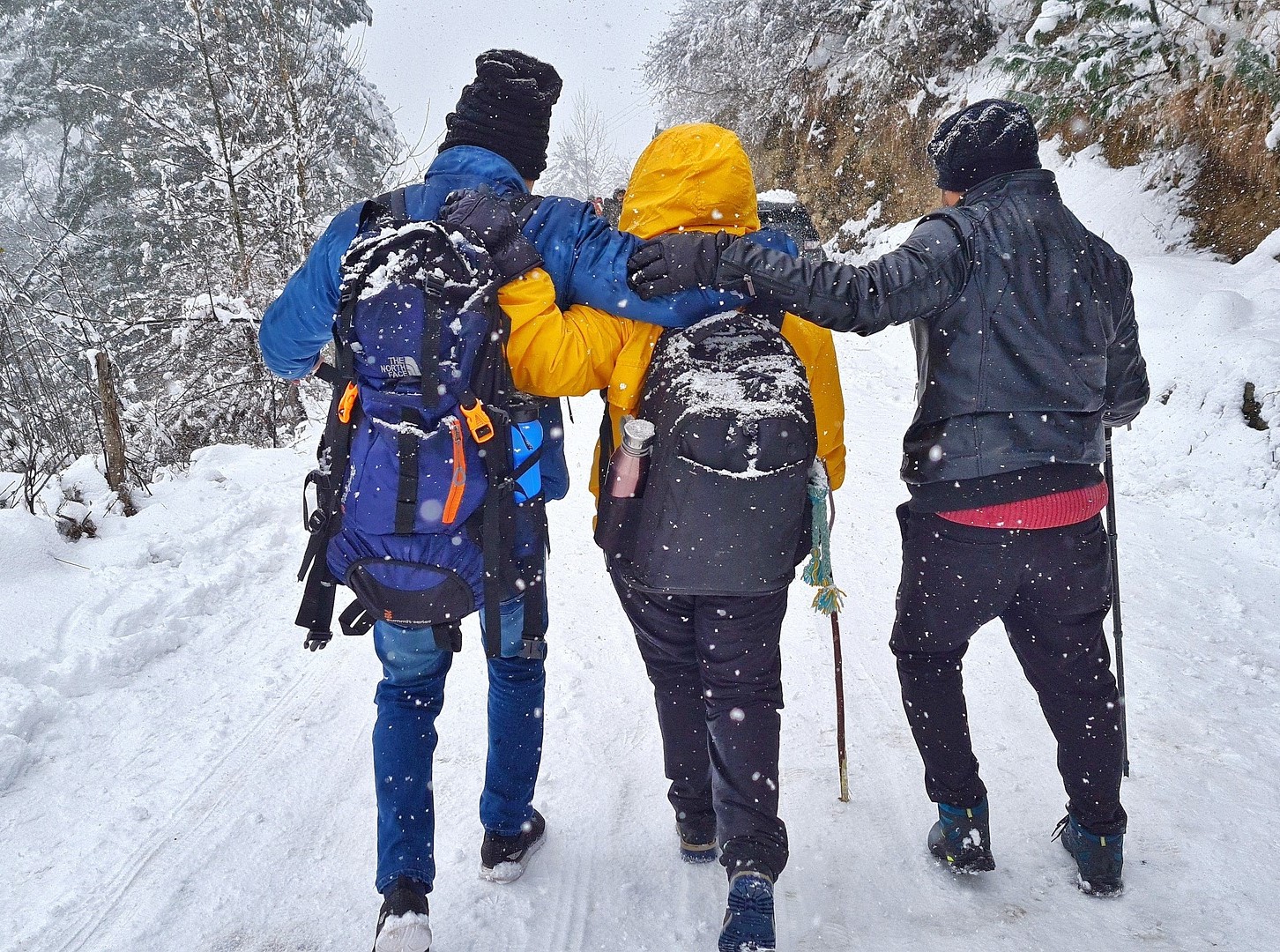
What does living a good life mean? Most of us aspire to do just that, although what it means is personal to each of us. What do you mean when you say, “I want to live a good life”? Have you ever stopped to consider this question with specifics instead of abstractions?

The article in the sentence matters. Living a good life implies something significantly different (in English vernacular) from living the good life.

The good life most often implies pleasure, leisure, freedom to do as we want, money, travel, adventure, expensive or quality possessions, significant accomplishments that confer status and draw the respect or even envy of others, and other such material and emotional characteristics and qualities. Generally speaking, the good life tends to be judged as a superficial life. Yet, if we are being truthful, most of us (maybe only secretly) aspire to attaining it for ourselves.

A good life, in contrast, tends to be described as one that includes having loving family relationships and friendships, caring for and displaying kindness toward others (and others doing the same toward us), an enriching spiritual or religious practice, productive and satisfying work, financial and emotional security, laughter and lightheartedness, and, perhaps most importantly, a sense arising from the core of our souls that we matter as individuals and that our lives have meaning.

I could, of course, have described both the good life and a good life in myriad ways, but the lists of qualities I have mentioned above suffice to make the point that at first glance we tend to judge living a good life as more valuable than living the good life, although we may also think, quite rightfully, thatchoice signs compressed Gerd Altmann Germany Pixaby there is no reason we cannot choose to have both. In the Andean tradition, there is no moral overlay on energy, so we can direct energy to influence the kawsay pacha to manifest both.

Still, there is often quite a stark contrast between the two concepts of life. Even Aristotle made a distinction. He used the term eudaimonia (u-da-MON-e-ah) to refer to a good life, in contrast to the word hedonia (from which we get the English words hedonism and hedonistic), which refers to the good life. This distinction was discussed by Robert Walkinger, PhD, and Marc Schulz, PhD, in their recent book Good Life: Lessons from the World’s Longest Scientific Study of Happiness. They write that eudaimonia “refers to a state of deep well-being in which a person feels that their life has meaning and purpose. It is often contrasted with hedonia . . ., which refers to the fleeting happiness of various pleasures. To put it another way, if hedonic happiness is what you mean when you say you’re having a good time, then eudaimonic happiness is what we mean when we say life is good. It is a sense that, outside of this moment, regardless of how pleasurable or miserable it is, your life is worth something, and valuable to you. It is a kind of well-being that can endure through both the ups and the downs.” [italics in the original]

The authors discuss what a “good” life means in terms of assessing our state of happiness (or lack thereof). It is not surprising to learn that money, possessions, status, and such are not reliable markers of happiness. Instead, these and other researchers say that the most important factors in our deep-down, long-term happiness are the robustness and richness of our personal relationships.

It might surprise you, as it did me, that this research finding about the importance of relationships in the equation of happiness and living a good life is imbedded in the very meaning of the word “good.” Even though the modern definitions of good are broad and varied, they tend to cluster around qualities such as preferrable, pleasant, pleasing, enjoyable, satisfying, admirable, positive, superior, morally upstanding, ethical, and worthy. But this cluster of meanings is nothing like the cluster of meanings from the possible roots of the word “good.” Although the word “good” has an uncertain etymology, it can be traced to roots that generally mean “to fit together,” or “to belong together.” Examples include the Proto-Indo-European root ghedh, which means “to unite” or “to be associated with,” and the possible root gōdal, from the Proto-Germanic, which means “fitting together.” It also has a connection to the Old English word gædrian, meaning “to gather” and “to take up together.”

So a “good life” is not about me, but we. The quality of our social connections appears to be the most reliable indicator of our overall well-being: from the way we rank our own level of happiness, to how we see the world (from a glass half full or half empty perspective), to how we find meaning in life, to the state of our long-term health and even the probable length of our lives. We do not have to have a lot of relationships; a few will do. What matters is that those we do have are stable and fulfilling—with people friends 1 Pixabay-7048820_1920we trust, can rely on and confide in, and can be our “true” self with—and for whom we provide the same level of intimate emotional stability, availability, and honesty.
The questions that arise for each of us are “Do I have the relationships that fulfill me, support me, ground me, and lift me?” and, of course, in the spirit of ayni, “Am I there for others to fulfill, support, ground, and lift them?” We flourish when we are in relationships that not only are emotionally secure, but also emotionally varied. One person might be our safe harbor from the storms of life, providing the respite and rest we need before reengaging. Another might be our complementary opposite—our yanantin—pushing us (through the example of who they are and how they engage life) past our own self-imposed boundaries and restrictions. Maybe the best friend for a serious scholar or driven businessperson is someone who was the class clown. Perhaps the urban wild child and the conventional suburbanite will appreciate the way that together they create a happy medium in the middle emotional realms. The relationships of the highest value in terms of our living from our Inka Seeds in a “good and happy life” are not necessarily with those people who are like us, but those who—with humility and yet confidence, and in safety yet also with a touch of restlessness and even abandon—help us get in touch with and tease out of hibernation the novel yet natural aspects of ourselves that we are not yet able or willing to express. Of course, developing such relationships is only half the equation. The other half is our making such contributions to the other people in our relationships. And also valuing those people enough to sustain and nourish the relationship—to make it a priority so that it continues to bloom. Moving away, having kids, and such are not reasons for a valued relationship to wither. Gratitude, nurturing, appreciation, love—they defy time and space.

The foundation of our relationships with others starts with our relationship with ourselves. We may not yet love ourselves, but we can work to befriend ourselves—all aspects of ourselves. Some psychologists identify three types of happiness, which apply to three different aspects of life. They don’t identify these three aspects of life as relating to our inner life, but that is how I see them and their value. There is the happiness generated by living a “pleasant life,” which is one in which we feel safe, competent, and connected, so that despite life’s slings and arrows our engagement in life is fueled mostly through our positive emotions and ability to see the good in others. There is a “good life,” which is one in which we feel satisfaction, value, and self-worth through our interactions and engagements—in relationships, work, and leisure pursuits. And there is a “meaningful life,” which is one in which we see beyond our own self-interest, where we develop and apply our moral or ethical values and express our unique combination of capacities to serve others or champion causes that benefit others.

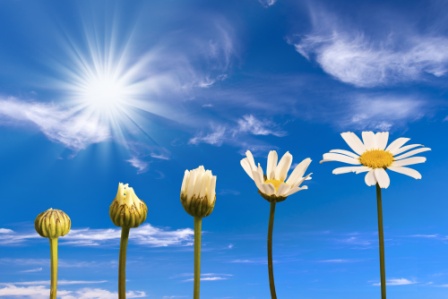
I see these three types of happiness and three domains of life as arising from what in the Andean tradition we would call the three human powers, which are capacities common to all of us. One power is our yachay—our ability to learn and grow through our first-hand experiences and to express ourselves with truth and integrity based on how we see the world through the sum of those life experiences. Another is our munay—our feelings, and our capacity to love ourselves and others even as we acknowledge our own and their faults and frailties. And there is llank’ay, our ability to take action, to participate in the world with both purpose and playfulness, and to marshal the motivation to leave our world a better place (no matter how limited or circumscribed our reach is). Ideally, over time we are consciously refining these three aspects of ourselves, and thus increasingly enriching all aspects of our lifeFlowering compressed AdobeStock_30430837 in the process. In the Andean tradition this is phutuy, the “flowering” of our Inka Seed.
If as practitioners of the Andean mystical path, we are (like both Andean people at large and paqos) seeking to achieve sumaq kawsay—to live a good life—then we would do well to slow down and drop in to decide what a good life, a happy life, a meaningful life means to us and looks like to us. While your idea of what constitutes a good, happy, and meaningful life may be quite different from anyone else’s idea of that, I am confident that we all share one core disposition: if we are not feeling the good, happy, and meaningful in our present lives, it is unlikely we will recognize—of feel—those qualities at any stage of our lives in the future. We can aspire to be happier and live a more fulfilling life, but the truth is that we are living a life of some measure of goodness, happiness, and meaning right now. These qualities cannot be “out there” in some unforeseeable future, if they are not already energies embedded in and enabling us today.

Therefore, a powerful spiritual practice for living a good, happy, and meaningful life—for realizing sumaq kawsay—is not only counting the blessings we feel we have received already, but also actively fostering the relationships and engaging in the activities by which blessings continually flow both from us and to us. For, as American fiction writer Margaret Bonanno so succinctly and wisely reminds us, “It is only possible to live happily ever after on a daily basis.”

Impartiality and Andean Mysticism

One of the aspects of the Andean mystical tradition that first attracted me to studying the tradition and practicing its techniques is that it sees energy as free of moral overlay. Energy is just energy. Kawsay is the living energy, the life-force energy. Sami is its frequency as light living energy (light as in density, not Atomillumination). At the heart of the tradition there is no conception of bad, negative, evil, entrapping, or contamination energy. When I explain this to my students, I use the following examples: Are there harmful electrons? Evil photons? Entrapping neutrons? No! An electron is an electron and a photon a photon without moral overlay from human beings. This is the way we conceive of the universal fundamental energies, kawsay and sami—as free of human projection. Thus, in the realm of pure energy there is nothing to protect ourselves from.

But, you might be asking, what about hucha? You might explain that hucha is bad for us, and we don’t want it in our poq’po (energy field) as it can degrade our well-being. Well . . . that’s not an entirely accurate view of hucha. Hucha is not “out there” as an independent form of energy; it is not something that can trap us or invade our energy field. Hucha is not a cause of anything, but a consequence of the state of our own inner psyche. Hucha is what we create when we have degraded our overall well-being through our human foibles and weaknesses, our unhealthy attachments and rejections, our chaotic emotional state. When we are out of ayni in our interactions with other human beings—when we are ruled by our impulses and emotions, then we speak and act in ways that cause us to block or slow sami—that slowed or blocked life-force energy is what we call hucha. Humans are the only beings who create hucha. It has no meaning beyond being a consequence of our own conscious or unconscious disempowering behaviors. The more hucha we create for ourselves, the more difficult it is to motivate ourselves to take responsibility for ourselves and, thus, to consciously revise our way of being to improve our energy condition

When it comes to energy, it’s all about us and not about the independent state of the fundamental energy of the universe. For instance, although we don’t see energy itself as negative or harmful, there certainly are human beings with negative attitudes and harmful intentions. Of course, when we encounter people who are not acting from ayni, and thus may be creating a lot of hucha for themselves, we face choices: we can protect ourselves from physical or emotional harm and we can consciously choose to not allow their hucha to affect us (to create our own hucha from our responses to them). The teaching of the tradition is that no one else’s energy can enter our poq’po unless we consciously or unconsciously allow it. Therefore, no one can cause us to have hucha; we generate it for ourselves because of how we interact with or react to others.

Physicist Dean Radin, a researcher who works at the frontiers of energy and consciousness, explains the different underlying dynamics of universal energy versus human intentions about how to use energy. In his book Practical Magic, he explains that many cultures and religions reject and even condemn “magic”—a term he uses as an overall container for working with consciousness and energy—as sorcery, witchcraft,Magic Hat Cropped conjure-up-407649_1920 Image by Dieter from Pixabay or the work of the devil. Then he counters that prejudice by explaining the physicist’s point of view (and for us, a fourth-level paqo’s point of view): “. . .the way magic is used is completely up to the magician. The power itself, like any fundamental force of the universe, is morally neutral.”
How we humans choose to use energy shifts the energy from the realm of neutrality into the realm of human values, ethics, judgement, and morality. We have neither the space nor the need to delve into the immense complexities of human consciousness, nor to discuss the Andean view of ayni (reciprocity) and our varying degrees of lack of it. I have written many other blog posts about those topics. The point here is that in terms of fundamental energy, the Andean tradition sees it as beyond moral overlay.

This view extends into many other areas. For instance, my primary teacher, don Juan Nuñez del Prado, has said that there is no moral overlay on the inherent sanctity of our Inka Seeds—our Spirit. Our Inka Seed is the “drop of the mystery” that animates us at the moment that our mother’s egg is fertilized by our father’s sperm. A drop of “God” as the Life Force animates matter to begin the creational process that results in each of us. And upon the death of our material body, our Spirit will return to this Source. While in the body, we may choose to consciously dedicate ourselves during our life to growing to be the fullest, most highly developed human beings we can be. But there is no imperative to do that. Those who choose not to grow are not rejected by Taytanchis (God, if you will), as we are given free will and we are valued and loved despite what we do with our will. Moral overlay comes into play as an influence in who we choose to be and how we choose to live while we are here, living as conscious human beings, and so it is of unquestioned importance in what our human world looks and feels like. This world is a reflection of us, not of the will of God or the forces of fundamental universal energies.

The sanctity of our Inka Seed, the fact that our Inka Seed is pure sami no matter how much hucha we are creating for ourselves, is why, don Juan says, when someone commits suicide, there is no moral overlay on that form of death. Fourth-level paqos would say suicide is factually one of many forms of death, and so they would not judge or condemn the person who died by their own hand. The Spirit (Inka Seed) returns to Taytanchis despite the person’s choice to take their own life. While that may be the fourth-level paqo’s view, don Juan also points out that suicide is rare in the Andes, because people have strong ayllu (family and community) ties and may have the energetic tools—such as saminchakuy—to deal with the hucha they have created for themselves before their mental or emotional condition deteriorates to the point of choosing suicide.

As one more example, this view extends to the way we understand our own personal energy dynamics. For instance, as I see it, all of our energy interactions can be reduced to four main dynamics: we are perceiving energy as compatible or incompatible, or the energy exchange is masintin (two similar energies in interaction) or yanantin (two dissimilar but complementary energies in interaction). I will focus here only on the first pairing. When we interact with anything—from the energy of an environment to that of another human being—we can sense that the other energy feels compatible (comfortable, easy to engage with, little or no feelings of resistance or dissonance) or incompatible (uncomfortable, difficult to engage with, producing resistance or dissonance within us). Because we are practicing the paqo path, we Energy human resized -4855706_1280 Image by Gerd Altmann from Pixabayare taught to take full responsibility for our own energy.  All we can say is how to the energy feels to us, and we say nothing about the actual energetic state of the other person. So, when we meet with someone who feels heavy to us, all we can truly say is that we feel a flow of hucha. We can’t say with certainty that the other person is actually carrying a lot of hucha. What we may be perceiving is the hucha we are unconsciously generating within ourselves as we interact with the other person. Of course, we can use our commonsense, and sometimes it is obvious from the other person’s words and behaviors and other less-obvious clues that he or she is carrying a lot of hucha. We can choose to reduce our interaction or end it. But as paqos we want to be able to be in sami-filled relationship with everybody and everything, so we attend to ourselves. We bring self-inquiry to our perceptions, asking questions such as “Why do I feel such heaviness when I touch this person’s poq’po (energy body)?” “What can I do to shift this heaviness to sami?” We take responsibility and use our tools: doing saminchakuy on ourselves or hucha miqhuy on the flow of energy between ourselves and the other person. We don’t just say, “That person is heavy. Not my problem.” We say, “I feel heaviness in response to my interactions with this person. Let me refine my own energy so that I feel sami, or at least less hucha, in our future interactions.” That’s the impartiality we bring to our relationships and our energy work. Ideally, we reserve personal judgment as much as possible and deal directly with the energy flow.

There are other examples I could provide, but I trust that those I have provided illustrate the egalitarian nature of fourth-level Andean energy dynamics and our ayni with the living universe and fellow human beings. If we are truly going to walk through the world, and live our lives, according the fourth-level principles of this tradition, then we take back our projections and attend to the state of our own energy interactions.

Photo Copyright: Photo 2 by Dieter/Pixabay, Photo 3 by Gerd Altmann/Pixabay

What Is a Chunpi Paqo?

In my February 11, 2023, blog post, I wrote about the deep structure of Andean mysticism, focusing on the weaving of the chunpis (in the Chunpi Away karpay) and awakening of the ñawis (in the Ñawi K’ichay karpay). The word ñawi means “eye” and in the mystical tradition refers to the mystical eyes or energy perception centers in our body. The word chunpi means “belt” and in the mystical tradition refers to bands of energy we weave into our body to link up the ñawis into a coordinated and connected system. The joint karpay is given by a chunpi paqo. But just what is a chunpi paqo? Is he or she different from a “regular” paqo? If so, how? We will look into these questions in this post.
I’ll start by reminding you that we don’t know much about chunpi paqos. The chunpi energy work is a teaching from the Q’ero, and the only chunpi paqo we know of is the late don Andres Espinosa, who was recognized as a master chunpi paqo both by the Q’ero and by other top non-Q’ero paqos of the time, such as don Benito Qoriwaman. Don Andres ran a month-long “paqo school” in Q’ero Totorani every year until his death in 1981. My primary teacher, don Juan Nuñez del Prado, attended that school in 1980 and learned the chunpi teachings directly from don Andres. It is possible that there are Q’ero elders who know the teachings, but none that we know of are passing on the knowledge as don Andres taught it or working as chunpi paqos. In fact, don Juan and his son, don Ivan, have been teaching the karpays to several Q’ero paqos, in effect helping them recover what appears to be a lost teaching.

There are others who teach about the chunpis and perform the joint karpay, but none that I know of teach it the way that chunpi master don Andes did. For example, the Q’ero paqo don Mariano Quispe Flores teaches about the chunpis and performs a chunpi karpay, but his work is radically different from what was taught by don Andres. Other teachers from outside of Q’eros, or even Peru, who perform the karpay to weave the chunpis, such as Oscar Miro-Quesada and Alberto Villoldo, do so, to the best of my knowledge, in ways that are significantly different from the original teachings of don Andres.

In addition to learning about the chunpis, and the two joint karpays from don Juan Nuñez del Prado, I have had several conversations with him both about these mystical belts of power and about how a chunpi paqo differs from a “regular” paqo. As I said, there is not much information, but the points I make below will, I hope, help you understand what a chunpi paqo is and how he or she differs from a regular paqo. This is, of course, my own understanding of the teaching, and so I do not speak for don Juan.

The chunpis are energy belts that paqos purposefully add to their physical and mystical bodies to help accelerate their conscious personal development. This developmental path, called the qanchispatañan, is a teaching from don Benito Qoriwaman, and I will describe its basic features below. The qanchispatañan is crucial to understanding not only the role of the chunpis, but the special abilities to which a chunpi paqo aspires. While both pampa mesayoqs and alto mesayoqs could receive the joint karpays to weave the belts and awaken their ñawis, traditionally those paqos who actually worked as chunpi paqos were fourth-level alto mesayoqs—and they were considered candidates for the fifth level of human development.

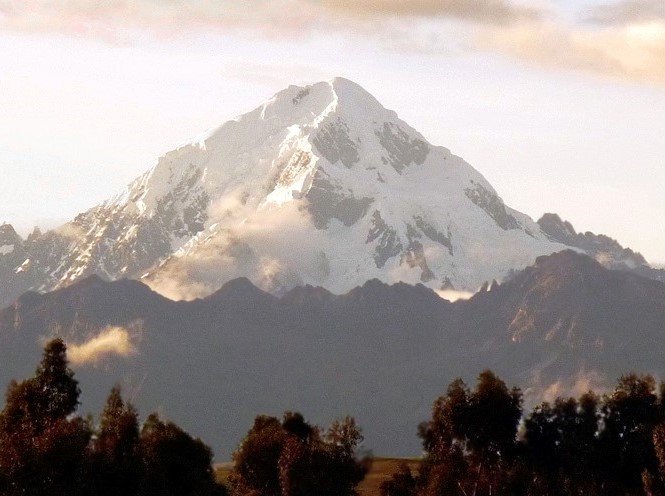
According to don Benito’s teaching about the qanchispatañan, an apu (mountain spirit) was considered a runa micheq, or shepherd of human beings and human communities. Paqos—and specifically alto mesayoqs—developed according to how their own personal power became commensurate with each level of apu. There are three levels of apus: ayllu apus, which oversee a village or small town; llaqta apus, which serve as guardians and teachers for the people of a cluster of villages or a larger town; and suyuWayka Willka - cropped Edubucher Wikipedia, creative commons license apus, whose power covered a wide region. A paqo would progress along the qanchispatañan by working consecutively with the power of each type of apu.
However, apus have power only through the third level (suyu apus), and so they can only help take an alto mesayoq to the third level of development. The first-level paqo is the ayllu paqo, or an ayllu alto mesayoq who has the power to shepherd a small community. A second-level paqo is a llaqta alto mesayoq, able to shepherd an intermediate-size community. A third-level paqo is a suyu alto mesayoq, who can shepherd large communities or the people across wide regions. To move beyond the third level, a paqo had to switch from working with apus to working with the teqse apukuna, or universal spirit beings. There are seven: the divine masculine, which in the Andes after the Conquest was seen as Jesus; the divine feminine, which was seen as Mother Mary; and then the major universal nature spirit beings of Mama Killa (Mother Moon), Tayta Inti (Father Sun), Tayta Wayra (Father Wind), Mama Allpa (Mother Earth), and Mama Unu (Mother Waters). These are considered teqse spirit beings because they reach all of humanity: teqse literally means “universal.” So, a paqo who achieves the fourth level of personal power is one who can (potentially) shepherd all of humanity. A fourth-level paqo was also sometimes called a kuraq paqo, or Great or High Paqo.

While all human beings have ñawis—or mystical eyes for perceiving energy—the purpose of the Chunpi Away and Ñawi K’ichay karpays for paqos is to create energetic belts that connect these separate mystical perceptual centers into a fully integrated system. The rest of this paragraph is information directly from don Juan and don Ivan. While it has been edited and contains paraphrase, I will put it in quotation marks: “The chunpis are made of Mother Earth’s sami, so there is no hucha. The belts are connectors of the ñawis, and energy flows through them. Once they are in place and the ñawis are activated, they can collect your hucha. Once they are in place, they interact with two sources of sami: from the cosmos and from the earth. This flow helps bring resolution to our hucha. The chunpis are like big wires that help energy flow, especially when connected with our heart and Inka Seed. All of these are sources of light living energy inside of us, and so we can develop heightened perception. That’s what the work of the ñawis and chunpis is about: being able to integrate information within. Then we can reflect that understanding through the quality of our own actions, feelings, affections, and thoughts. Every one of these energies helps us improve all the aspects of ourselves and our power. Once all the ñawis are connected into a system [by weaving the belts], if we have hucha in one center [ñawi], the other centers can help clear it; they can compensate for each other. Then, when something causes us a lot of heaviness, we are stronger. We can deal with it better. The chunpis help improve our personal power. Instead of separate ñawis, now they are all connected through the belts. The ñawis are natural, everyone has them. The chunpis are not natural, but are an energetic addition that improves us.”

Even after receiving these karpays, having a capacity for heightened perception does not automatically lift fourth-level paqos to the fifth level. Instead, it prepares them to be able to develop more easily to that level. What is this fifth level? It is the domain of the Inka Mallku or Tukuy Hampeq—the fully developed healer. Although paqos have to do their personal inner work to prepare for this new level of power, no teacher or spirit being can lift them to it. The doorway to the fifth level is opened when a paqo, especially a chunpi paqo, receives a very special karpay—the Mosoq Karpay, which simply means “new karpay.” It is a karpay that is given only by Taytanchis/God. The paqo is touched by the energy of God, either directly or through the mediator spirit of the hummingbird. So, truly developed chunpi paqos—those who are also tukuy hampeqs—are not only a special kind of paqo, but they are rare.

The particular power, or gift, of all chunpi paqos is healing. However, if they achieve the fifth level of development and receive the Mosoq Karpay, they are considered to have powers that go beyond the usual kinds of healing abilities—they are tukuy hampeqs, or “total healers,” meaning infallible healers. They can heal any disease or malady every time. Don Ivan Nuñez del Prado has made an interesting point, and to my mind a crucially important one, about the difference between the fourth and fifth levels of personal power. He said that it is as if the Andean mystical system has baked into itself a safeguard, so there can be no imposters to the fifth level. While paqos of all levels of development can perform healings, tukuy hampeqs experience no failures of healing. They can heal anything with just a touch—from cancer to the regrowth of an amputated limb to the resolution of emotional and mental ailments, even neurobiological ones such as schizophrenia. There certainly are instances where fourth-level paqos have facilitated almost miraculous healings, but these are rare occurrences. As don Juan says, healing at the fourth and lower levels is hit and miss. In contrast, at the fifth level, complete and total healing is the guarantee. So, while there may be “imposters” magical  loving heartto the lower levels of development, there can be no faking being a fifth-level paqo.

Being able to tune energy seems to be crucial to achieving the infallibility of the chunpi paqos as tukuy hampeqs. In the part of the training in Andean mysticism where we weave the chunpis and awaken our ñawis, we learn to tune and move energy. Tuning energy means raising the frequency of sami (the light living energy) up the spectrum, first to munay (love and will) and then, by incorporating two other kinds of energy into the munay, to hampi munay (healing love). From there we can raise the vibration of hampi munay to willka energy, the most powerful restructuring and creational energy on the healing spectrum. There is still another level of tuning, where we move from willka energy to tawantin energy, which again requires a specific protocol for merging different kinds of energy to create this pinnacle energy of wholeness and unity. However, the doorway to all healing is munay, for this energy of love and will allows us to connect deeply with the person who seeks healing. Through this munay connection, we touch their hucha directly. Without being willing and able to touch the other’s hucha, it is unlikely that there will be any lasting healing. Not surprisingly, then, in don Andres’s paqo school, most of the month-long training was about learning to generate munay, tune it to these healing frequencies, and use it. You could say, therefore, that a chunpi paqo is a master of munay.

At the fourth and lower levels, healing mostly is accomplished by sending sami or munay (or one of the other tunings of munay) to the other person to activate that person’s self-healing capacity. The paqo usually does not heal directly—he or she actually is creating temporary conditions in their clients’ energy body and physical body so that they can marshal their own energy for healing. Thus, healing can be a challenge—and hit or miss, as don Juan says. While people might improve for a while, the chances are that they will revert back to their old ways, beliefs, and states of energy. But at the fifth level, the fully developed chunpi paqo—the tukuy hampeq—can transmit power through intention or touch and absolutely, without fail directly heal the other person. They have the power to restructure the body and soul.

From the little information we have or can surmise about chunpi paqos, I trust you can now better understand why (in the previous generation of paqos) the joint karpay to weave the belts and awaken the mystical eyes was freely available, but that working as and being recognized as a chunpi paqo was relatively uncommon—and that becoming a tukuy hampeq was a rarity. The prophecies tell us, however, that we are living in a time when the fifth level of personal power will be much easier to achieve. That is why many paqos—including you and me and other non-Peruvian and non-indigenous people who are trained in the tradition—are actively working to develop ourselves and aspiring to reach this heightened expression of our Inka Seed.