Break Out of Energy Jail!

According to the Andean tradition, we live in a world of living energy, called the kawsay pacha. Like so much of this tradition, the conception of energy is simple yet elegant and powerful.

The animating energy of the universe, kawsay, is just that—energy. It has no moral overlay. There is no good or bad energy, no negative or positive energy, no angelic or demonic energy. There is only energy that is moving freely or slowed down.

Sami is the energy of the cosmos and everything in it. It is refined, free-flowing energy. Another meaning of the word sami is “nectar.” Energy is the nectar of the cosmos on which everything feeds.

However, we humans have a singular talent. We alone can slow energy down, and we can even cause it to get stuck or blocked within us. When that happens, the energy is called hucha, or heavy energy. Only humans create hucha. But here’s the rub. It’s not bad or negative energy. It’s just sami that is slowed down and so not flowing freely. There is nothing to fear about it. If you feel weighed down by heavy energy, you simply cleanse your energy body, using simple intentional techniques.

You never have to fear energy. You never have to protect yourself from energy—unless you believe you do. What you may perceive as “negative” energy is energy onto which you have projected fearful beliefs. It’s not really negative, and you do not have to fear it or protect yourself against it. It’s just energy constrained from moving freely, and it has no capacity to harm you. If an energy feels too heavy for you, just leave it alone. Empower yourself so that one day you can freely interact with it. This is the liberating news of the Andean mystical tradition. So if you are in protective mode, if you have put yourself in an energetic jail, it’s time to break out, permanently.
It’s time to stop wasting your energy by being fearful of what can’t hurt you. There’s no need to surround yourself with white light or a golden shield or whatever symbol of protection you favor. It’s time to determine what about your awareness is causing the nectar of the universe to slow down and become heavy. The Andean tradition has simple intention and energy techniques to cleanse your personal energy body of hucha and empower it with sami. In fact, according to master paqo don Benito Qoriwaman, using only the two primary cleansing and empowering techniques, you can reach enlightenment. How’s that for simple yet powerful?

The bottom line in the sacred, mystical work of the Andean path is that any energetic jail sentence is a self-imposed imprisonment. You can set yourself free at any time. In fact, the goal of the sacred work is to cultivate such a refined energy body that you can freely interact with the energy of the universe in all its permutations. You want to joyfully “taste” every cosmic “flavor” of energy,  be open and receptive to the experiences of life, and be in free and unrestrained ayni (interchange) with the animating field of living energy.

Learn the Andean Sacred Arts

For training inquiries, email Joan Parisi Wilcox at qentiwasi@gmail.com

NORTHERN CALIFORNIA WORKSHOP, AUG 1-2, 2015

Special workshop over the weekend of the Andean Mystical New Year’s Day

I am adding a Sonoma County/Sebastopol workshop while I am in CA (teaching in the Los Angeles area prior to this; see below for details). Space is extremely limited so if you are interested, don’t delay in registering! This is a special workshop because it falls on the mystical New Year’s Day of August 1, the day Pachamama and the Apus “awaken.” While this workshop is a training on the right-side paña work, we will also do a special August 1 “New Year’s Day” ceremony to “reintroduce yourself to yourself” and set or clarify your intentions for the coming year. Cost is $260. Email QentiWasi@gmail.com for registration or more details.

PROPOSED TRAINING IN ENGLAND

I have received interest from several people in England for training. Are there others? We are trying to determine interest so we can proceed with planning. If you are in England and are interested in a workshop, please let me know! Email me at qentiwasi@gmail.com.

________

UPCOMING TRAININGS

July Paña Training in Southern California

Dates: Saturday-Sunday, July 25-26, 2015, 9:30 am – 5 pm each day.

Location: Woodland Hills, CA

Cost: $260

This workshop onthe right-side work is limited to 15 people, so if you are interested, please email today for a registration form. Deposit required by July 7; final payment by July 16. Email me at qentiwasi@gmail.com for more information and to register.

If you are interested, please email qentiwasi@gmail.com.

______________________________________________

After spending time recently with my primary teacher, Juan Nuñez del Prado, and his son, Ivan, I am inspired to re-enter the landscape of teaching. Juan and Ivan have suggested that I represent them and their way of teaching the tradition in the US, and I have agreed. So, if you are interested in getting a group together for training in the Andean sacred arts, please contact me at qentiwasi@gmail.com.

The formal training follow a three-part track. You must complete one course before taking the next.

First is the right-side work, called paña. This is an introduction to all the core symbols, signs, spirits, practices and techniques of the tradition. Paña focuses primarily on the mystical work of the lineage of don Benito Qoriwaman and involves mastering your energy body and working the energies outside of your personal energy bubble. It also focuses on core techniques for cleansing your bubble of heavy energy and empowering it with refined energy.

The second workshop is about the work of the “middle,” called chaupi, following the Mullu chunpislineage of Q’ero master don Andes Espinosa. It involves the integration point between energies outside the personal bubble and those inside it. During this work, we awaken the belts of power, the chunpis, and begin working with them.

The final part of the training is the left-side work, lloq’e, largely based on the teachings of don Melchor Desa. This is the magical and practical work of mastering the energies inside the personal bubble and weaving the chunpis gracefully but deeply into the personal bubble and physical body. It also reviews healing and other techniques.

Each of the workshops involves many exercises in learning to perceive energy, move it, and work with it, especially cleansing hucha, the heavy energy that keeps us from well-being, and sami, which restores and empowers our personal energy bodies. You will also learn about the haway (in Spanish the despacho) and the use of the misha (in Spanish the mesa.)

Don Juan Pauqar Espinosa and Joan Parisi WIlcoxI look forward to stepping back out from behind the curtain of my low public profile to openly and joyously share this exquisite and powerful tradition. My goal, in agreement with Juan’s and Ivan’s, is to foster the conscious evolution of humankind—to further the prophecy of the rise of the New Humanity.

Game on!

If you would like to gather a group and host a workshop, please contact me at qentiwasi@gmail.com. Ideally, a group will form an ayllu of an minimum of 12 people and a maximum of 24.

Two Misperceptions about the Q’ero

Having traveled the path of the Andean mystical tradition for two decades, I’ve come across a few persistent misperceptions about the Q’ero. I’d like to offer a few comments about how the Andean mystical tradition as we know it extends beyond the Inkari lineage of the Q’ero.

The Q’ero Rock! But So Do Others.
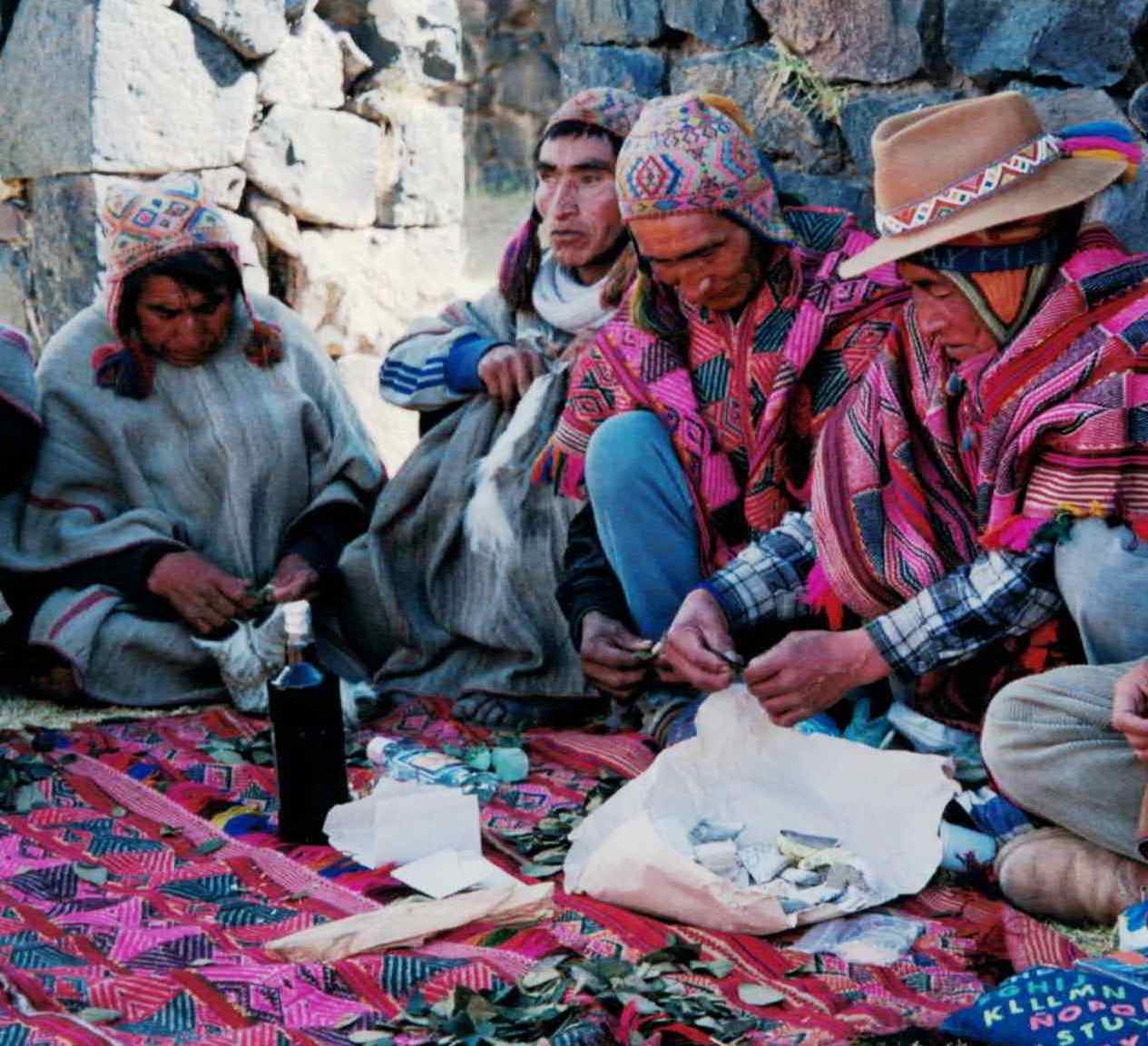
Without question, the Q’ero are honored as the group who have most purely retained many of the traditions, both sacred and social, of the Inka into modern times. They Q'ero making despacho at Raqchi- Bernadino, Sebastian, Juan Flores, manuel Q'espi, American Yabar CROPPEDspeak an unusually refined form of Quechua and wear traditional clothing similar to that worn during Inka times. They are generally recognized and respected by non-Q’ero paqos and the general indigenous population in the area as “keepers” of the Andean spiritual tradition. They are associated with the sanctuary of Qoyllurit’i and are said to be the “owners of munay,” the power of love and will. However, giving all honor to the Q’ero (as I do in my book, Masters of the Living Energy), it’s a misperception to think the entire tradition as revealed to those of us from outside of Peru is Q’ero-based.

If you have read my book, you will discover that even some of the most respected Q’ero masters did not know certain energy techniques, such as hucha mikhuy. Most of the young paqos and many of the elders I met had no knowledge, or only a vague knowledge, of the chunpis (energy belts), even though their ancestor, don Andres Espinosa, was a master in this area.

As Juan Nuñez del Prado teaches the tradition—and to my mind and in my experience his teachings are the most complete and untainted—important aspects of the work have been preserved not by the Q’ero but by paqos in other lineages. For example, the right side work (paña) and the left side work (lloq’e) came down to Juan and others from non-Q’ero masters, such as don Benito Qoriwaman for the paña work and don Melchor Desa for the lloq’e work. Both of them are of the Waskar/Huascar lineage.

I feel it is important to honor the entire scope of the Andean mystical tradition and that practitioners from outside Peru understand the context of what they are learning. These sacred arts truly are Andean in scope, so let us give credit to all of the masters, not just the Q’ero.

What Secret Knowledge?
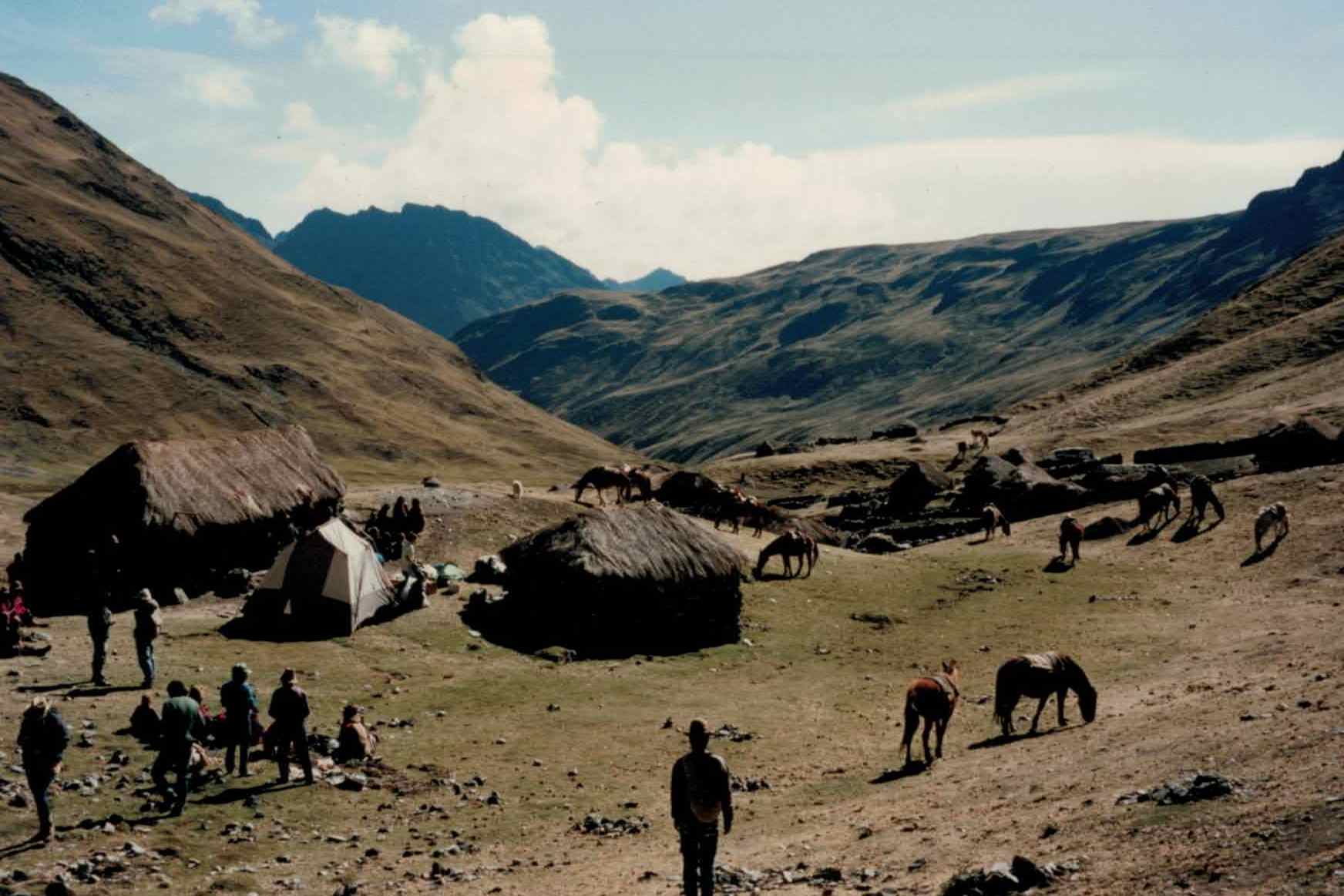
There is also a persistent, and often romanticized, story that the Q’ero closeted themselves in the mountains awaiting the propitious time to reveal their secret Camping at Q'ero village Chua Chua on our way to Q'ollorit'iknowledge. I have found no evidence of this. In my interviews with the Q’ero, from the knowledge of my mestizo teachers, and from respected anthropological sources, we learn that if you ask for the teachings, the Q’ero and other paqos freely give it.

Keeping the tradition a secret goes against the very the heart of the tradition. This knowledge is for all human beings, according to the Q’ero and other paqos.

Historically, the Q’ero and other indigenous peoples kept their sacred beliefs to themselves for fear of reprisals from the Spanish, especially the hacendados, the landowners who kept the Q’ero and others tied to a life of servitude and near serfdom. And into modern times, you wouldn’t know about the mystical tradition unless you went looking for it. But if you looked, you found paqos; and if you asked, they openly shared their knowledge and wisdom. Secret knowledge held until the world was ready and only then revealed? A nice legend, great advertising, a romantic spiritual trope, but only a grain of truth.

The Happy Mystical Tradition

The Andean tradition is not complex. In fact, it is simple. Like life.

Life is pretty simple: We choose happiness.

young businessman opening doorHappiness encompasses everything. Health, safety, shelter, food, clothing, career/work, prosperity, family, friends, community, creativity, passion. . . How can we truly be happy if one of the primary areas of our human expression feels lacking?

Happiness does not mean our lives are perfect. We would be bored silly if there were no challenges or opportunities for personal growth. A core aspect of our humanness is to reach beyond where we are, even as we engage from the “now.”

Some spiritual traditions and schools of psychology tell us it is not our circumstance that make us unhappy, it is our reaction to our circumstance. They say happiness is a state of mind. You can be happy no matter what is happening if only you choose to be. True. But not likely, at least for most of us. We are just not “there” yet.

So how can we get “there”? The ways as are varied as each of us. However, certain worldviews and spiritual cosmologies seem to have a lock on simplifying our complexities. The Andean tradition is such a worldview and cosmology.

laughing buddha isolatedThe Buddhists ask, What is the meaning of life? Their answer is awareness. The Andean mystics would concur. What is so useful about the Andean mystical worldview, however, is that the goal is not to cultivate awareness so that you can leap beyond the human, experience satori, reach nirvana, or escape the wheel of karma. Instead, the Andean masters would say that our mission is not to release suffering but to be joy. It’s not our state of mind that matters, but first and foremost the state of our energy.

This is a shift in focus that counts! The Andean way is not the Buddha under the Bodhi tree contemplating life, it’s the laughing Buddha fully engaged in life.

New don manuel at Q'olloritiAndean mystics believe our true nature is joyful, but that we have forgotten this truth. Theirs is a path of remembering that we are beings of joy. It is that simple. Everything they teach propels us forward toward that singular end: To remember who we really are and to live as who we really are—happily ever after.

Welcome to Q’enti Wasi

In the Andean mystical tradition, the hummingbird is the messenger of the metaphysical God and the symbol of the conscious evolution of humanity. Like the paqos (practitioners of the Andean mystical tradition), they love sweetness and impart joyousness.

Don Manuel Q'espi, Joan Parisi Wilcox, karpay ayni
Don Manuel Q’espi gives Joan Parisi Wilcox the Karpay Ayni

My name is Joan Parisi Wilcox. I have studied the Andean sacred arts for two decades and written a book, Masters of the Living Energy: The Mystical World of the Q’ero of Peru, about the tradition, preserving core aspects of it in the words of the masters themselves.

In this blog, my goal is to share the grace and power of this tradition and to let you know about opportunities to learn the Andean sacred arts. I welcome your comments, insights and questions.